
By Kajal Rajpoot · Reviewed by Arshi Chadha, Founder
What is a Hybrid Solar System? On-Grid vs Off-Grid vs Hybrid Explained (India 2026)
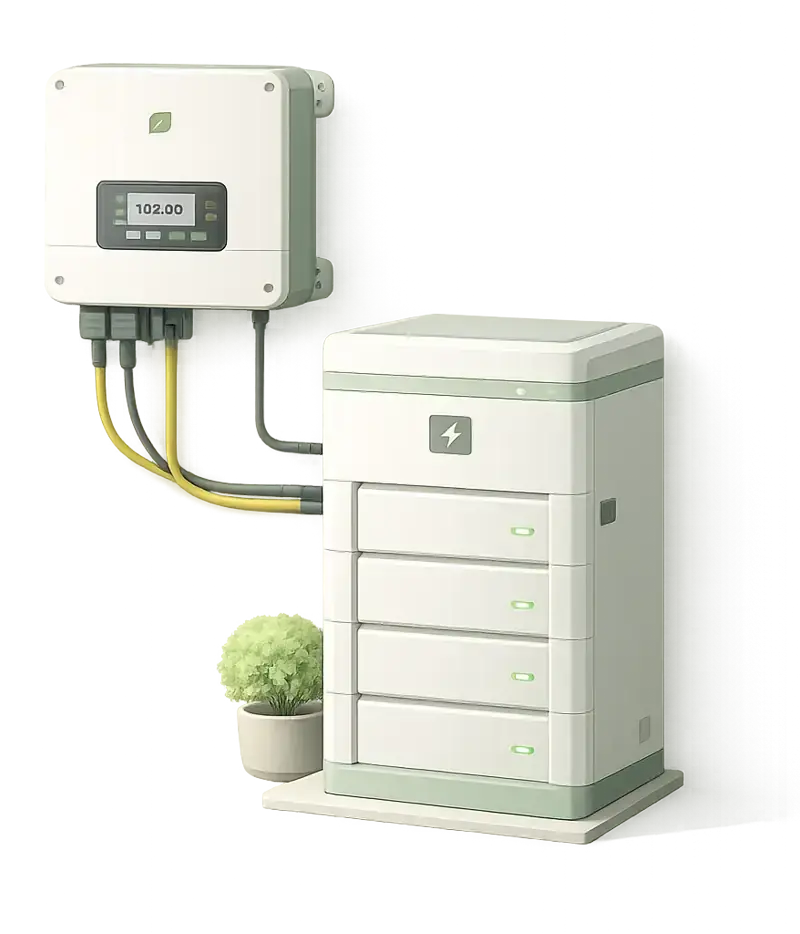
- •Technology: Hybrid Solar System (Grid-Tied + Battery Backup)
- •Cost (5kW System): ₹5–5.5 Lakh (including 5kWh battery)
- •Net Metering: Supported (Send excess power to the grid)
- •Power Backup: Seamless transition during power cuts
- •Best For: Areas with frequent outages or critical load requirements
Are you tired of the dilemma between lowering your electricity bill and ensuring your home stays powered during a blackout? In India, traditional "On-Grid" systems help you save money but shut down during power cuts to protect line workers. On the other hand, "Off-Grid" systems provide backup but don't let you sell excess power back to the DISCOM.
Enter the hybrid solar system — purpose-built for the Indian grid. Especially in 2026, as grid stability remains a concern in expanding suburbs of Delhi NCR and the PPAC surcharge in Delhi continues to inflate bills, hybrid technology offers the "all-in-one" solution. It combines the financial benefits of net metering with the security of a dedicated battery bank.
What is a Hybrid Solar System?
A hybrid solar system is a sophisticated setup that integrates both a connection to the utility grid and a local battery storage unit. It uses a specialized hybrid solar inverter that can manage power from three different sources: solar panels, the utility grid, and the battery bank.
How It Works: The Smart Logic
- Solar Priority: During the day, solar energy powers your home loads directly.
- Battery Charging: Any excess solar energy not used by your home is used to charge the battery bank.
- Grid Export (Net Metering): Once the batteries are full and your home loads are met, the remaining surplus is exported to the grid, earning you credits on your bill via net metering.
- Evening Discharge: At night, the system pulls energy from the battery first. Only when the battery reaches a set discharge limit (usually 15-20%) does it switch to grid power.
- Power Cut Mode: Unlike standard on-grid systems, if the grid fails, the hybrid inverter instantly creates a "micro-grid" using the battery, keeping your lights, fans, and WiFi running.
On-Grid vs Off-Grid vs Hybrid: The Ultimate Comparison
Choosing the right system requires understanding the trade-offs. While on grid vs off grid vs hybrid is a common debate, the "right" choice depends on your local grid stability and budget.
Technology Comparison Table
| Feature | On-Grid System | Off-Grid System | Hybrid System |
|---|---|---|---|
| Grid Connection | Mandatory | No Grid | Yes |
| Battery Backup | No | Yes (Mandatory) | Yes (Optional/Included) |
| Net Metering | Yes | No | Yes |
| Power During Outage | System Shuts Down | Works Normally | Works Normally |
| Cost | Lowest | High | Highest |
| Ideal For | High Bills, Stable Grid | Remote Areas, No Grid | Frequent Power Cuts |
If you are in a city like Noida or Gurgaon where the grid is available but unreliable during summer peaks, the hybrid model is generally the winner.
The Cost of Going Hybrid in India (2025–2026)
A hybrid system is an investment in both savings and peace of mind. Because it involves a more expensive inverter and a high-spec Lithium Ferro Phosphate (LFP) battery bank, the initial capex is higher than an on-grid system.
Hybrid Solar System Pricing (Solar + Battery)
| Solar Capacity | Battery Capacity | Estimated Total Cost (Incl. GST) |
|---|---|---|
| 5 kW | 5 kWh | ₹5,00,000 – ₹5,50,000 |
| 5 kW | 10 kWh | ₹6,50,000 – ₹7,00,000 |
| 10 kW | 15 kWh | ₹8,50,000 – ₹9,00,000 |
Note: These prices include standard GI structures and Topcon Mono PERC panels. For elevated structures, refer to our solar structure cost guide.
Key Components of a 2026 Hybrid Setup
1. The Hybrid Solar Inverter
The "brain" of the system. In 2026, leading brands include Growatt, Goodwe, Solis, and Deye. These inverters are now highly efficient, often supporting "Time-of-Use" settings where you can program the battery to discharge during peak tariff hours to maximize savings.
2. Lithium Batteries (LFP)
Move over, lead-acid. Modern hybrid systems use LFP (Lithium Ferro Phosphate) batteries.
- Life: ~12 years (6000 cycles).
- Efficiency: 95% round-trip efficiency.
- Maintenance: Zero.
- Safety: High thermal stability. Do solar batteries explode? Not if you use Tier-1 LFP cells.
3. Solar Panels
High-efficiency modules like Topcon Mono PERC (580Wp+) are standard. They generate more power in low-light conditions, ensuring your batteries charge even on cloudy days.
Talk to a solar engineer — not a salesperson
Enter your pincode and monthly bill. If we install in your area, an engineer answers on WhatsApp with your numbers.
What would solar save on YOUR bill?
When Does a Hybrid System Make Sense?
Not everyone needs a hybrid system. It is significantly more expensive than an on-grid setup. You should consider it if:
- Frequent Power Cuts: If you face more than 2 hours of power outages daily.
- Critical Loads: You run home offices, medical equipment (CPAP, oxygen concentrators), or high-end security systems that cannot afford a 1-second blackout.
- EV Charging: If you charge your EV at night and want to use solar energy stored during the day. Learn about solar for EV charging.
- High Peak Tariffs: In states with high evening electricity rates, using your own battery power at night is cheaper than buying from the grid.
Real-World Example: A Gurgaon Bungalow
A homeowner in Sushant Lok, Gurgaon had a monthly bill of ₹12,000 and faced frequent 1-hour "trippings" during summer.
They installed a 5kW hybrid solar system with a 10kWh battery bank.
- On-Grid Cost (3.5L) vs Hybrid Cost (6.8L).
- Result: Their bill dropped to nearly zero because of net metering during the day.
- Backup: During the massive 4-hour blackout last June, their AC (1.5 Ton Inverter AC), fridge, and lights ran entirely on solar/battery, while the neighbors' petrol generators were roaring.
- ROI: While the payback period for on-grid is 3-4 years, the hybrid payback is 6-7 years. However, the homeowner considers the "peace of mind" during power cuts to be worth the extra 3 years.
Common Mistakes to Avoid
- Oversizing the Battery: You don't need to run your whole house (including 3 ACs and a Geyser) on the battery during a power cut. It’s better to size the battery for "critical loads" (Lights, Fans, WiFi, Fridge) to keep costs manageable.
- Ignoring Net Metering: Many people think "Hybrid" means "Off-Grid." Ensure your installer applies for net metering in Delhi or your respective state so your surplus isn't wasted.
- Mixing Lithium and Lead Acid: Never do this. The charge controllers are entirely different.
Financing Your Hybrid System
Since the cost is higher, many Indian homeowners opt for solar loans. Bridgeway Power partners with several institutions to offer competitive rates:
- PSU Banks: SBI Solar Loan and PNB Solar Loan offer rates around 6.5-7% for residential systems.
- Fintech Partners: ECOFY and Aerem provide faster processing and zero-down-payment options for those who prefer convenience.
Related Deep-Dives
Want to go deeper on the pieces of a hybrid system?
- Solar Inverter Types: String vs Micro vs Hybrid → — how the hybrid inverter compares to the alternatives, with a cost table.
- Hybrid Solar Wiring: ACDB, DCDB & Safety → — the wiring diagram, protection devices, and what budget installers skip.
Frequently Asked Questions
Does a hybrid solar system work without a battery?
Yes, most modern hybrid inverters can function as a standard on-grid inverter without a battery. However, you won't have any power backup during a grid failure until a battery is added.
Can I run my 1.5-ton AC on a hybrid solar system?
Yes, but it depends on the inverter's "surge" capacity and your battery size. A 5kW hybrid inverter can easily run one inverter-type AC, provided you have at least a 10kWh battery bank to sustain the load for a few hours.
Is there a subsidy for hybrid solar systems in India?
Under the PM Surya Ghar Muft Bijli Yojana, the subsidy is calculated based on the solar plant capacity (kW), not the battery or inverter type. You can get up to ₹78,000 for a 3kW system, even if it is a hybrid. However, the extra cost of the battery is not covered by the subsidy.
How long do the batteries in a hybrid system last?
In 2026, we exclusively use LFP batteries which typically last 10 to 12 years or 6,000 charging cycles. This is a massive improvement over old lead-acid batteries that lasted only 3–4 years.
Can I add a battery to my existing On-Grid system later?
Only if you have an "AC-coupled" battery system or if you replace your existing string inverter with a hybrid solar inverter. It is much cheaper to decide on a hybrid setup during the initial installation.
Conclusion
A hybrid solar system is no longer a luxury—it's a practical necessity for those who value energy independence. By combining the savings of the on-grid model with the reliability of a solar with battery backup India requires, you future-proof your home against rising tariffs and grid instability.
Bridgeway Power's team brings 35+ years of solar experience across 5,000+ sites. If you're ready to see if a hybrid system fits your roof, use our Solar Calculator or book a free consultation with our experts today. We’ll help you design a system that maximizes your ROI while keeping your lights on, no matter what.
Every 1 kW of solar on your roof offsets 1.5 tonnes of CO₂ per year
That's 40 trees planted — every year, for 25 years.
A typical 5 kW home system offsets 187 tonnes of carbon over its lifetime. That's equivalent to taking 8 cars off the road.
See your impact →How much can you save with solar?
Enter your electricity bill → get system size, subsidy amount & payback period
Get StartedLiked this article? Get a free solar quote
Tell us about your rooftop — we'll call with exact savings for your home.
Related Articles
What Is Captive Open Access Solar (100% Equity Model)
Learn how Captive Open Access Solar (100% Equity Model) helps Indian businesses cut electricity costs by 40% using off-site solar plants. Guide on rules, savings & ROI.
Read moreHow Rooftop Solar Can Eliminate Your Electricity Bill
Discover how Net Metering and PM Surya Ghar subsidies can reduce your monthly electricity bill to near-zero. Learn about system sizing, costs, and real-world savings.
Read moreSolar Subsidy in Uttar Pradesh 2026: ₹1,08,000 for Noida, Ghaziabad & Greater Noida
UP's stacked solar subsidy 2026: ₹78,000 central + ₹30,000 UPNEDA state top-up = ₹1.08L. Real PVVNL net-cost math for Noida, Greater Noida, Ghaziabad & Meerut.
Read moreRelated guides
Delhi Electricity Rate 2026
BSES & Tata Power per-unit rates, PPAC, subsidy — sourced from DERC.
ExploreDelhi Solar Policy 2026
Free rooftop solar up to 3 kW for homes under 400 units. Eligibility & apply.
ExploreSolar Panel Price in Delhi
Live 2026 rooftop prices in Delhi after ₹1.56L subsidy. 1,200+ installs.
ExploreSolar Company in Gurgaon
Gurgaon's rooftop solar installer — 800+ systems, ₹78K PM Surya Ghar subsidy.
ExploreSolar Company in Noida
Noida & Greater Noida rooftop solar — 500+ installs, ₹1.08L stacked subsidy.
ExploreSolar Panel Price in Faridabad
Live 2026 Faridabad prices after ₹78K PM Surya Ghar subsidy. 350+ homes.
Explore