
By Kajal Rajpoot · Reviewed by Arshi Chadha, Founder
Solar Inverter Types Explained: String, Micro, and Hybrid — Which One Do You Need?
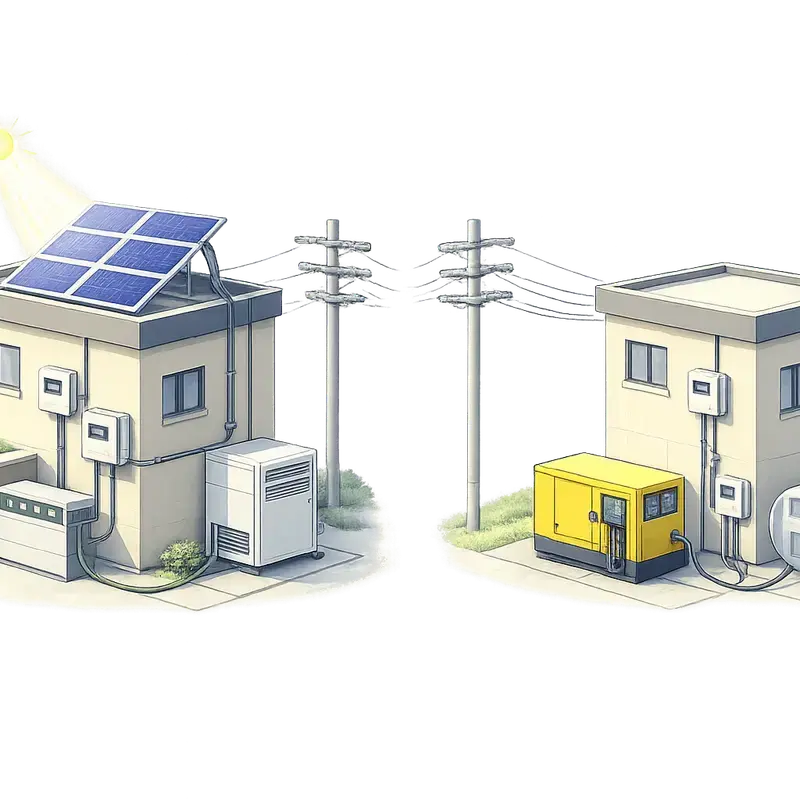
- •Primary Choice: String Inverter (Budget), Microinverter (Performance), Hybrid (Backup)
- •Cost (5kW System): ₹2.28L (String) to ₹5.5L (Hybrid with Battery)
- •Efficiency: 93% to 97.5% depending on technology
- •Best for India: Hybrid Inverters for areas with power cuts; Microinverters for shaded city roofs
Imagine you’ve finally decided to go solar. You’ve looked at the subsidies under the PM Surya Ghar Yojana and picked out high-efficiency Topcon Mono PERC panels. But then your installer asks the "Million Rupee Question": Which inverter technology do you want?
In the Indian solar market, the inverter is often called the "brain" of the system. While panels sit on the roof and generate Direct Current (DC), your home appliances run on Alternating Current (AC). The inverter performs this conversion. However, not all brains are wired the same way. Choosing the wrong inverter topology can lead to a 20-30% loss in generation or the inability to add battery backup later.
Whether you are dealing with the notorious dust of Noida Extension or the frequent power fluctuations in Raj Nagar Extension, understanding the nuances of string vs micro inverter India models is critical for your ROI.
The Core Solar Inverter Types in India
In 2026, the market has matured significantly. We no longer just look at "Solar Inverters"; we look at specific topologies designed for specific roof conditions.
1. String Inverters: The Reliable Workhorse
String inverters are the most common and cheapest option in the Indian market. In this setup, your solar panels are connected in a series (like a string of holiday lights). This "string" of high-voltage DC power travels to a single central inverter installed on a wall near your distribution board.
Why they are popular:
- Cost-Effectiveness: They are significantly more affordable than other technologies.
- Simplicity: One unit to maintain and monitor.
- Efficiency: Modern string inverters from brands like Growatt or Solis offer 96%+ efficiency.
The "Christmas Light" Problem: The biggest drawback of a string inverter is that it is only as strong as its weakest link. If one panel in the string is covered by bird droppings or shaded by a nearby water tank, the performance of the entire string drops to match that shaded panel. This is why many homeowners now research solar inverter comparison guides to see if the extra cost of Microinverters is justified.
2. Microinverters: The High-Performance Alternative
Microinverters are small units installed directly behind each solar panel. Instead of converting power for the whole system at once, they convert DC to AC at the panel level.
Why choose Microinverters?
- Shade Tolerance: If a tree shades one panel, the other 9 panels continue to produce at 100% capacity.
- Safety: There is no high-voltage DC running across your roof, reducing fire risks.
- Monitoring: You can see exactly how much electricity every single panel is producing via an app.
3. Hybrid Inverters: The Smart Future
A hybrid solar inverter India residents are increasingly choosing is essentially a string inverter with a built-in battery charger. Unlike a standard on-grid inverter, which shuts down during a power cut for safety (Anti-Islanding), a hybrid inverter can "disconnect" from the grid and keep your home running using solar power and a battery bank.
Technical Comparison of Solar Inverter Types
Below is a detailed breakdown of the costs and specifications you will encounter in the Indian market today.
Table 1: Inverter Tech Specs & Pricing (2026)
| Feature | String Inverter | Microinverter | Hybrid Inverter |
|---|---|---|---|
| Typical Cost | ₹15,000 - ₹25,000 | ₹5,000 - ₹8,000 (per panel) | ₹50,000 - ₹90,000 |
| Units Needed | 1 per system | 1 per solar panel | 1 per system |
| Efficiency | 93% - 96% | 95% - 97% | 93% - 96% |
| Warranty | 5-10 Years | 15-25 Years | 5-10 Years |
| Battery Ready? | No | No (needs AC coupling) | Yes (Directly compatible) |
Table 2: Best Use Cases for Indian Roofs
| Rooftop Condition | Recommended Inverter Type | Why? |
|---|---|---|
| Unshaded, Large Roof | String Inverter | Best ROI and lowest upfront cost. |
| Partial Shading (Trees/Tanks) | Microinverter | Prevents system-wide power drops. |
| Complex/Multi-directional Roof | Microinverter | Panels can face East and South on the same string. |
| Frequent Power Cuts | Hybrid Inverter | Provides backup when the grid goes down. |
| Planned Battery Addition | Hybrid Inverter | Avoids expensive equipment replacement later. |
Brand Options in India: Who to Trust?
Bridgeway Power has installed over 5,000+ systems. Based on our field data, these are the most reliable brands available in 2026.
Table 3: Leading Inverter Brands in India
| Type | Economy Choice | Premium Choice |
|---|---|---|
| String | Havells, Solis | Growatt, SMA |
| Micro | APsystems | Enphase (IQ8 Series) |
| Hybrid | Goodwe ES, Deye | Growatt SPH, Victron |
Deep Dive: The Hybrid Advantage in Delhi NCR
For a resident in Sushant Lok or Palam Vihar, power cuts are a reality. A standard on-grid system will leave you in the dark during a 2 PM outage, even if the sun is shining brightly.
This is where the best solar inverter for home India search usually ends at "Hybrid." A hybrid system allows you to manage three power sources: Solar, Battery, and Grid. During the day, solar powers your home and charges the battery. At night or during a cut, the battery kicks in.
Talk to a solar engineer — not a salesperson
Enter your pincode and monthly bill. If we install in your area, an engineer answers on WhatsApp with your numbers.
What would solar save on YOUR bill?
The Most Common Mistake: "I'll Add Batteries Later"
We see this daily: a customer buys a standard on-grid string inverter to save ₹40,000. Two years later, they decide to buy a home solar battery system.
The heartbreak: They realize their string inverter cannot talk to a battery. To add backup, they must either:
- Scrap the old inverter (massive loss).
- Install an "AC-Coupled" battery inverter (extra cost and complexity).
If there is even a 20% chance you will want a battery in the next 5 years, buy a hybrid inverter now.
Real-Life Example: 5kW Installation in Rohini
A homeowner in Rohini with a monthly bill of ₹8,000 faced 2 hours of daily power cuts. They had a small water tank that shaded the roof at 3 PM.
- Choice A (String): Cheaper, but the afternoon shadow would kill 30% of daily generation. No backup during cuts.
- Choice B (Micro): Better generation, but still no power during cuts.
- Choice C (Hybrid): Chosen! They installed a 5kW system with a hybrid solar inverter India approved model and a 5kWh Lithium battery.
The result:
- Cost: ~₹5.4L (Gross) - ₹78k (PM Surya Ghar Subsidy) = ₹4.62L net.
- Payback: Approx 4.5 years.
- Benefit: Zero electricity bills and zero "dark moments" during power cuts.
Comparing Generation: The "Dust & Shade" Factor
In dusty cities like Faridabad or Ghaziabad, panels get dirty quickly. Bird droppings are another major issue.
With a string inverter, if one panel is 25% covered in dust, every panel in that string acts as if it is 25% covered. With Microinverters, only the dirty panel suffers. This "mismatch loss" is why Microinverters often produce 5-10% more energy over a year in urban Indian conditions.
How to Choose: A Decision Framework
- Is your roof 100% shadow-free? Go with a String Inverter.
- Do you have shadows from a chimney, tank, or neighbor’s tree? Choose Microinverters.
- Do you want to run your AC during a power cut? You need a Hybrid Inverter with a high-discharge battery compatible with your load.
- Is your budget extremely tight? String inverters are the way to go, but ensure you buy a Tier-1 brand with a local service center.
If you are confused, our Solar Calculator can help you estimate the ROI for different inverter types based on your specific roof size.
Maintenance and Longevity
Bridgeway Power’s 35+ years of experience has shown that inverters are usually the first thing to require service.
- String Inverters: Usually need a capacitor or fan replacement between Year 7 and 10.
- Microinverters: Highly durable (often 25-year warranties), but if one fails, someone has to climb under the panels to replace it.
- Hybrid Inverters: More complex electronics mean they need a dust-free, well-ventilated area to maximize life.
Regardless of the type, we recommend a Solar AMC to ensure your "brain" is always functioning at peak efficiency.
Frequently Asked Questions
Can I mix different types of inverters in one system?
Generally, no. You choose one topology for your system. However, you can add Microinverters to an existing String system using "AC Coupling," though this is technically complex and more expensive than choosing the right system from day one.
Does the government subsidy cover Hybrid or Microinverters?
Yes! The PM Surya Ghar Yojana subsidy is based on the kW capacity of the solar panels, not the type of inverter. Whether you choose a string or a microinverter, you are eligible for up to ₹78,000 in central subsidy for a 3kW+ system.
Which is the best solar inverter for home India (2026)?
For most urban homes with 100% shadow-free roofs, a Growatt or Solis String Inverter offers the best value. For premium bungalows in Greater Kailash with complex roofs and a need for backup, an Enphase Microinverter or a Deye Hybrid system is the gold standard.
Are Microinverters better than String inverters for Indian heat?
While India is hot, Microinverters are designed to shut down safely if they overheat. However, String inverters are installed indoors or in shaded balconies, which keeps them cooler. In extreme heat zones like Rajasthan, both performed well if installed with proper ventilation.
Can I use a Hybrid inverter without a battery?
Yes! Many customers buy a hybrid inverter now to save on upfront battery costs. It works exactly like an on-grid solar system but gives you the "plug-and-play" option to add a battery next year without changing any wiring.
Conclusion: Making the Right Choice
Selecting from the various solar inverter types India offers doesn't have to be stressful. If your roof is simple and you have no power cuts, save money with a String Inverter. If your roof is complicated, invest in Microinverters. If you value energy independence and backup, Hybrid is the only way to go.
At Bridgeway Power, we don't just sell equipment; we design systems that last 25 years. With over 25 MW installed and a 4.6-star Google rating, we can help you pick the perfect "brain" for your home.
Ready to see which inverter fits your roof? Book a free site survey with Bridgeway Power today.",excerpt:
Every 1 kW of solar on your roof offsets 1.5 tonnes of CO₂ per year
That's 40 trees planted — every year, for 25 years.
A typical 5 kW home system offsets 187 tonnes of carbon over its lifetime. That's equivalent to taking 8 cars off the road.
See your impact →How much can you save with solar?
Enter your electricity bill → get system size, subsidy amount & payback period
Get StartedLiked this article? Get a free solar quote
Tell us about your rooftop — we'll call with exact savings for your home.
Related Articles
What Is Captive Open Access Solar (100% Equity Model)
Learn how Captive Open Access Solar (100% Equity Model) helps Indian businesses cut electricity costs by 40% using off-site solar plants. Guide on rules, savings & ROI.
Read moreHow Rooftop Solar Can Eliminate Your Electricity Bill
Discover how Net Metering and PM Surya Ghar subsidies can reduce your monthly electricity bill to near-zero. Learn about system sizing, costs, and real-world savings.
Read moreSolar Subsidy in Uttar Pradesh 2026: ₹1,08,000 for Noida, Ghaziabad & Greater Noida
UP's stacked solar subsidy 2026: ₹78,000 central + ₹30,000 UPNEDA state top-up = ₹1.08L. Real PVVNL net-cost math for Noida, Greater Noida, Ghaziabad & Meerut.
Read moreRelated guides
Delhi Electricity Rate 2026
BSES & Tata Power per-unit rates, PPAC, subsidy — sourced from DERC.
ExploreDelhi Solar Policy 2026
Free rooftop solar up to 3 kW for homes under 400 units. Eligibility & apply.
ExploreSolar Panel Price in Delhi
Live 2026 rooftop prices in Delhi after ₹1.56L subsidy. 1,200+ installs.
ExploreSolar Company in Gurgaon
Gurgaon's rooftop solar installer — 800+ systems, ₹78K PM Surya Ghar subsidy.
ExploreSolar Company in Noida
Noida & Greater Noida rooftop solar — 500+ installs, ₹1.08L stacked subsidy.
ExploreSolar Panel Price in Faridabad
Live 2026 Faridabad prices after ₹78K PM Surya Ghar subsidy. 350+ homes.
Explore