
By Bhawna Thakur · Reviewed by Arshi Chadha, Founder
Solar Structure Cost per kW in India (2026 Guide)
Get the structure cost for your roof, not an average
Structure cost swings with roof type, height and span. Send a roof photo and we'll price the right one.
Quick answer
A standard fixed-tilt mounting structure is included in the per-kW price of a rooftop solar system; it is not a separate line item. Costs rise when you need an elevated structure to clear water tanks and parapets, a carport, or a shed-integrated design — the premium depends on steel weight and height, so insist on an itemised quote that separates structure from panels and inverter. Hot-dip galvanised steel is the minimum spec for Delhi NCR weather.
| Structure | Included in base price? | When you pay extra |
|---|---|---|
| Fixed-tilt | Yes | - |
| Elevated / high-rise | No | Tanks, parapets, terrace use |
| Carport / custom | No | Parking or architectural needs |
- •Average Structure Cost: ₹6,000–₹12,000 per kW (depending on height and material)
- •Material Choice: Hot-dip galvanized (HDG) steel remains the most cost-effective; Aluminium is premium.
- •Weight Factor: A standard rooftop structure weighs approx. 20–30kg per kW.
- •Wind Rating: Standard structures in India are designed for 150 km/h wind speeds.
Solar Structure Cost per kW in India (2026 Guide)
A high-quality solar panel is only as good as the skeleton that holds it. In India, where we face everything from intense heat waves to monsoon cyclones and high-velocity winds, the structural integrity of your solar plant is non-negotiable. Yet, many homeowners and businesses focus solely on panel brands, often neglecting the solar structure cost per kW India—a component that accounts for nearly 10-15% of your total project investment.
Whether you are looking at the PM Surya Ghar Muft Bijli Yojana for your home or planning a large-scale commercial installation, understanding the solar panel mounting structure price is critical to ensuring your system lasts the promised 25 years.
Why Solar Structure Cost Varies in India (2025-2026)
The year 2026 has seen a shift in how solar structures are engineered. With panels getting larger (550Wp to 700Wp+), the "sail area" or wind resistance has increased. This means the days of using thin, flimsy angles are over. Today, the solar structure cost India is driven by raw material prices (steel and aluminium), the complexity of the roof, and local wind zone regulations set by the Ministry of New & Renewable Energy (MNRE).
Solar Structure Cost per kW by Type (2026 Pricing)
The cost per kW varies significantly based on how high the panels are raised from the roof surface. A "flush mount" where panels lie flat is the cheapest, while a "high-raised" structure that allows you to walk under it (popular in Dwarka and Rohini) is the most expensive.
| Structure Type | Height from Roof | Material Type | Est. Cost per kW (₹) |
|---|---|---|---|
| Flush Mount / Tin Shed | 0.5 - 1 ft | Aluminium Rail / Mini Rail | ₹3,000 – ₹4,500 |
| Standard Fixed Tilt | 3 - 5 ft | HDG Steel (80 Micron) | ₹6,000 – ₹8,500 |
| High-Raised (Walkable) | 8 - 10 ft | HDG Steel / Pre-Galvanized | ₹10,000 – ₹14,000 |
| Dual Axis Tracker | Variable | Specialized Steel | ₹18,000 – ₹25,000 |
Note: Prices include GST and installation labor. Costs may decrease for larger systems (>10kW).
Steel vs Aluminium: Which Should You Choose?
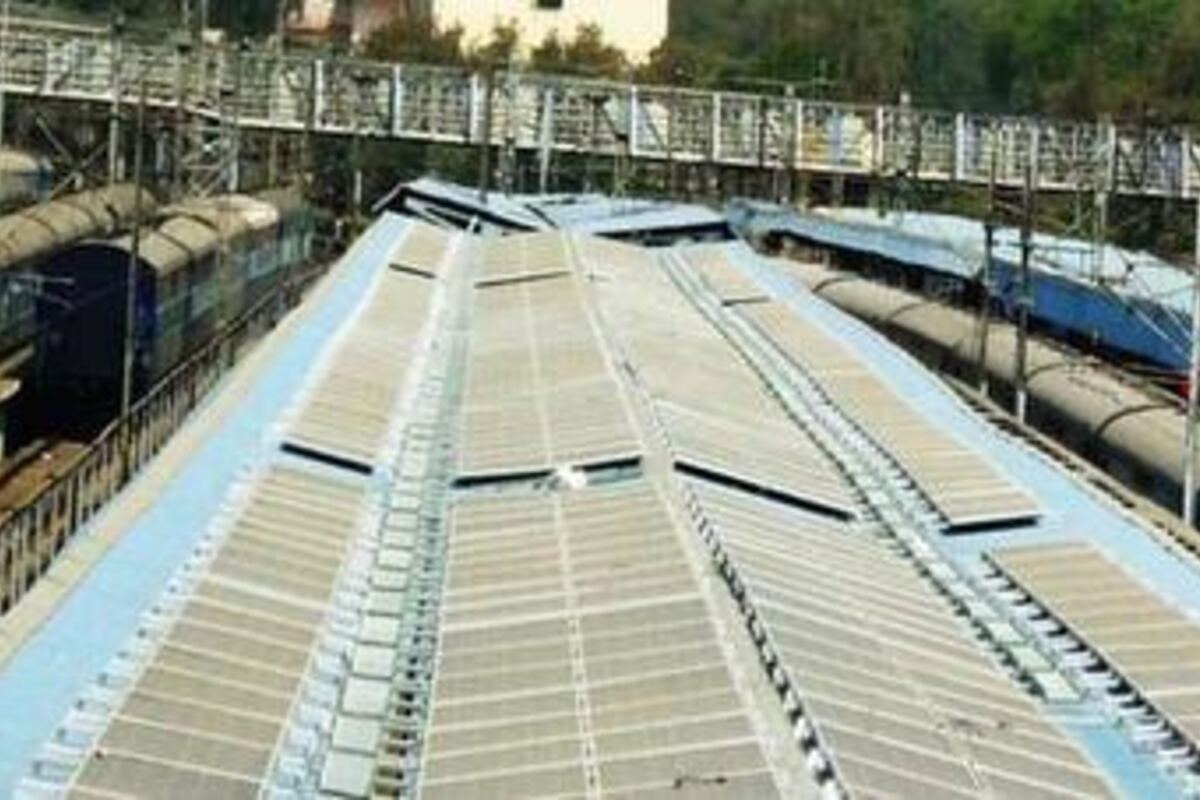
This is the most common debate when discussing aluminium vs steel solar structure cost. While steel is the heavy-duty champion of the Indian market, aluminium is gaining ground in coastal areas and high-end residential projects in Gurgaon.
Comparative Analysis: Aluminium vs Steel
| Feature | Hot-Dip Galvanized (HDG) Steel | Anodized Aluminium |
|---|---|---|
| Cost per kW | Lower (Economic) | Higher (Premium) |
| Durability | High (Heavy & Sturdy) | High (Corrosion Resistant) |
| Weight | Heavy (Needs more RCC work) | Lightweight (Easy on roof) |
| Corrosion Resistance | Excellent (if 80+ micron) | Superior (Best for coasts) |
| Maintenance | Low | Zero |
| Installation Speed | Moderate | Fast |
For most inland cities like Noida or Faridabad, HDG Steel with a minimum of 80-micron coating is the gold standard. It provides the necessary weight to resist uplift during storms. However, if you are installing on a pre-fabricated tin shed, aluminium rails are mandatory to prevent galvanic corrosion between different metals.
Cost Breakdown: Residential vs Commercial Structures
A homeowner in Greater Kailash with a ₹6,000 monthly bill opted for a 5kW system. Because they wanted to use the roof for a small terrace garden, they requested a 9-foot high-raised structure.
- Standard Structure Cost: ₹35,000 (included in basic package)
- High-Raised Add-on: ₹25,000 (extra steel, labor, and bracing)
- Total Structure Investment: ₹60,000
- Cost per kW for Structure: ₹12,000
While the upfront cost was higher, the homeowner kept 100% of their floor area usable, effectively adding a new "room" to their house while the panels above generated 600 units of free electricity every month.
How to Reduce Structure Cost Without Compromising Quality
- Optimize Tilt Angle: In India, a 10-15 degree tilt is often sufficient for generation while significantly reducing wind load compared to a 30-degree tilt. Less wind load = lighter (cheaper) steel requirements.
- Choose Pre-Galvanized (GP) for Inland Areas: While Hot-Dip Galvanized (HDG) is superior, it is also more expensive. For dry climates like parts of Rajasthan or Haryana, high-grade GP steel with zinc-rich cold galvanizing on joints can be a cost-effective alternative.
- Group Installations: If you and your neighbor in Sushant Lok install together, the logistics and fabrication costs drop, allowing for better negotiations on the solar structure cost per kW India.
- Avoid Over-Engineering: A 10ft structure for a 2kW system is often overkill and unstable. Stick to standard heights unless necessary.
Talk to a solar engineer — not a salesperson
Check whether we install in your area, then get your answer on WhatsApp. No forms, no call centre.
The Importance of Quality Anchoring
Even the most expensive structure will fail if it isn't anchored properly. At Bridgeway Power, we use:
- Chemical Anchoring: Using Hilti or Fischer resins to bond the structure to the RCC.
- Concrete Pedestals: 1ft x 1ft blocks over the anchor points to ensure zero water leakage and maximum weight.
- Stainless Steel (SS304) Fasteners: To ensure the nuts and bolts never rust, even if the structure is steel.
Frequently Asked Questions
Does the solar subsidy cover the cost of a high-raised structure?
The PM Surya Ghar Yojana subsidy is a fixed amount based on the kW capacity (e.g., ₹78,000 for 3kW). It does not increase if you choose a more expensive high-raised structure. You will have to bear the additional cost for height customizations.
Which is better: Hot-Dip Galvanized or Pre-Galvanized steel?
Hot-dip galvanized (HDG) is vastly superior for the Indian climate. In HDG, the steel is dipped in molten zinc, coating it inside and out. Pre-galvanized steel is made from sheets already coated, meaning the cut edges are prone to rusting. For a 25-year investment, always insist on HDG.
Why is the aluminium vs steel solar structure cost so different?
Aluminium is naturally rust-proof and much lighter, making it ideal for roofs with weight constraints. However, it is a more expensive raw material and requires specialized "mid-clamps" and "end-clamps." Steel is cheaper and heavier, which actually helps in providing "ballast" against high winds.
Can I use a wooden or bamboo structure to save money?
Absolutely not. Solar panels are heavy (25-30kg each) and must withstand extreme weather for 25 years. Wood warps, rots, and catches fire, while bamboo degrades. Using non-approved materials will also void your panel warranty and make you ineligible for net metering.
Is the mounting structure price included in the per kW solar price?
Yes, most EPC companies like Bridgeway Power provide an "all-inclusive" price. However, this usually covers a Standard Structure (up to 4-5ft height). Customizations like monkey cages, high-raised legs, or walkway structures are usually billed as extras.
Conclusion: Don't Skimp on the Skeleton
The solar structure cost per kW India is the insurance policy for your solar panels. Saving ₹2,000 per kW by using inferior steel or poor anchoring could lead to a catastrophic failure during the first major storm.
Whether you are in Palam Vihar or Indirapuram, ensure your structure is HDG, engineered for your specific wind zone, and installed by professionals.
Ready to build a solar system that lasts? Contact Bridgeway Power for a free site survey. Our engineers will design a custom structure tailored to your roof’s unique needs.
Rooftop solar cost calculator — India or Message us for a quote!
Related: see our full guide to rooftop solar installation in India for pricing, sizing, and the end-to-end process.
FAQ
How much does a solar mounting structure add per kW?
Standard RCC flush mount: ₹5,000–6,500/kW. Elevated (7–10 ft): ₹9,000–14,000/kW extra. Tin-shed clamps: ₹3,500–4,500/kW. Ground-mount with civil: ₹7,000–9,000/kW. Wind zone and steel grade change the number more than region.
Is hot-dip galvanised (HDG) worth the extra cost?
Yes, in coastal or high-humidity areas (Mumbai, Chennai, Kochi). HDG structures last 25+ years matching panel warranty; painted MS structures rust in 5–8 years in humid zones. Delhi/NCR can use either.
What wind load does my structure need to handle?
Delhi NCR is IS-875 Wind Zone II — 39 m/s design speed. A properly engineered structure needs anchor bolts rated for the resulting uplift (typically 8–12 kN per foot for elevated designs). Ask for the wind-load calculation before payment.
Will the structure leak my roof?
Not if done right. Chemical anchoring or concrete pedestals (monkey caps) around each leg keep the RCC slab intact. Ballasted (non-penetrative) structures are the alternative for rented or waterproofed roofs.
 array on concrete block footings — Bridgeway installation](https://jdemxzlvflntfyjnjwyl.supabase.co/storage/v1/object/public/site-assets/blog/structures/ballast.jpg)
Every 1 kW of solar on your roof offsets 1.5 tonnes of CO₂ per year
That's 40 trees planted — every year, for 25 years.
A typical 5 kW home system offsets 187 tonnes of carbon over its lifetime. That's equivalent to taking 8 cars off the road.
See your impact →Get your exact solar cost — free in 30 seconds
Enter your electricity bill → see system size, govt subsidy & payback period
Get StartedFind the right system size for your home
Two inputs, instant number on this page. No phone number needed to see it.
Related Articles
Net Metering in India: How to Sell Solar Power Back to the Grid
Learn how net metering in India allows you to sell solar power back to the grid. Discover state policies, savings examples, and how to reduce your bill by 90%.
Read moreWhat Is Captive Open Access Solar (100% Equity Model)
Learn how Captive Open Access Solar (100% Equity Model) helps Indian businesses cut electricity costs by 40% using off-site solar plants. Guide on rules, savings & ROI.
Read moreSolar Installation Cost in Delhi NCR 2026: 3 kW at ₹1.32L net
Updated 2026 guide to solar costs in Delhi NCR. Learn about PM Surya Ghar subsidies, system pricing from 1kW-10kW, and how to reach zero electricity bills.
Read moreRelated guides
Delhi Electricity Rate 2026
BSES & Tata Power per-unit rates, PPAC, subsidy — sourced from DERC.
ExploreDelhi Solar Policy 2026
Free rooftop solar up to 3 kW for homes under 400 units. Eligibility & apply.
ExploreSolar Panel Price in Delhi
Live 2026 rooftop prices in Delhi after ₹1.56L subsidy. 1,200+ installs.
ExploreSolar Company in Gurgaon
Gurgaon's rooftop solar installer — 800+ systems, ₹78K PM Surya Ghar subsidy.
ExploreSolar Company in Noida
Noida & Greater Noida rooftop solar — 500+ installs, ₹1.08L stacked subsidy.
ExploreSolar Panel Price in Faridabad
Live 2026 Faridabad prices after ₹78K PM Surya Ghar subsidy. 350+ homes.
Explore