
By Vansh Dahiya · Reviewed by Arshi Chadha, Founder
Net Metering in Delhi 2026: How to Apply, Timeline & DISCOM Process
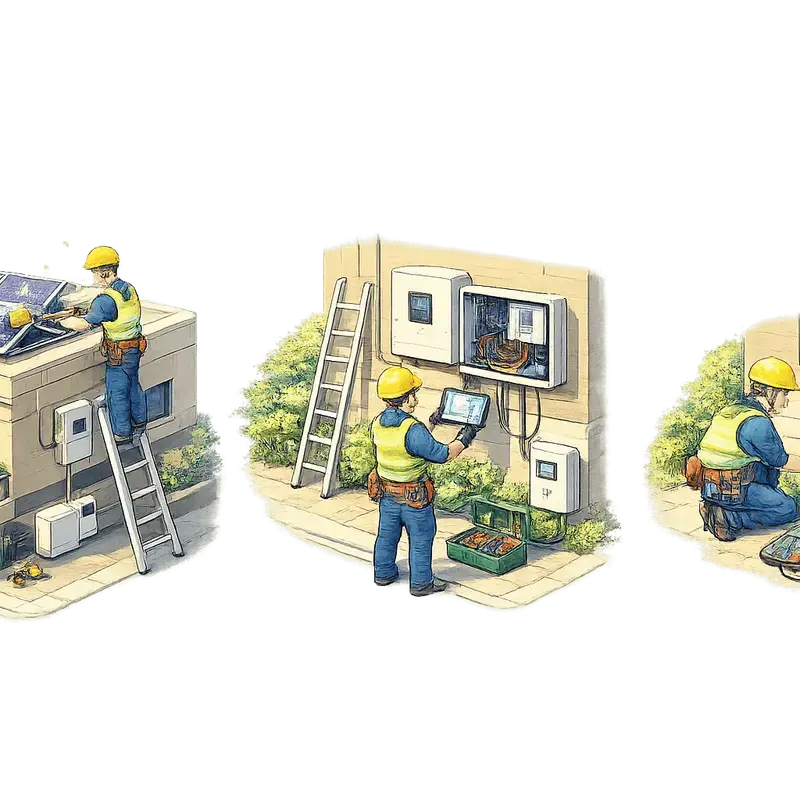
Imagine receiving an electricity bill where the "Units Consumed" section shows a negative value or a zero. For thousands of homeowners in areas like Vasant Kunj and Rohini, this isn't a dream—it is the reality of net metering Delhi.
In 2026, Delhi remains the most solar-friendly territory in India. With high power tariffs and generous state-specific incentives like the Delhi Generation-Based Incentive (GBI), understanding the net metering process is the difference between a solar system that merely "exists" and one that "pays for itself." Whether you are a resident in Dwarka or running a business in Okhla, this guide breaks down the latest 2026 regulations, application steps, and DISCOM timelines.
What is Net Metering and Why Does Delhi Lead the Way?
Net metering is a billing mechanism that credits solar energy system owners for the electricity they add to the grid. In simple terms, if your solar panels produce more electricity than you use during the day, the excess is sent back to the DISCOM (like BSES or Tata Power). At night, when your panels aren't producing, you pull electricity from the grid. At the end of the month, you only pay for the "net" electricity used.
Why Net Metering Matters in 2026
With the BSES bill increase in Delhi 2026, the cost per unit for high-consuming households can touch ₹8 to ₹10. Without net metering, any power your panels produce while you are at work is essentially wasted. With net metering, every single unit (kWh) produced by your system has a direct monetary value.
Net Metering Regulations in Delhi (2026 Update)
The Delhi Electricity Regulatory Commission (DERC) has streamlined the process to support the "Solar Policy 2024-2027." Here are the current technical limits:
| Feature | Residential Regulation | Commercial/Industrial |
|---|---|---|
| System Capacity | Up to 100% of Sanctioned Load | Up to 100% of Sanctioned Load |
| Voltage Levels | 230V (Single Phase) up to 5kW | 415V (Three Phase) up to 100kW |
| Settlement Period | April to March (Annual) | April to March (Annual) |
| Excess Power | Carried forward monthly | Carried forward monthly |
| Year-end Payment | Paid at ASH (Avg. Pooled Cost) | Paid at ASH (Avg. Pooled Cost) |
The Delhi GBI (Generation-Based Incentive)
Unique to Delhi, the state government provides an additional incentive of ₹3 per unit for residential systems up to 3kW and ₹2 per unit for systems between 3kW to 10kW. This is over and above the savings on your bill. To claim this, a functional net meter is mandatory.
How to Apply for Net Metering in Delhi: Step-by-Step
The application process for net metering Delhi has moved 100% online through the PM Surya Ghar Yojana portal for residential users and DISCOM websites for commercial users.
Step 1: Feasibility Approval
Before installing panels, you must apply for technical feasibility. The DISCOM checks if the local transformer can handle the additional solar load.
- Portal: BSES Solar or Tata Power DDL Solar.
- Timeline: 7–10 days.
Step 2: Installation by Empanelled Vendor
Once feasibility is approved, you must install the system. For residential subsidies, you must use an empanelled vendor like Bridgeway Power.
- Equipment Standard: Must follow Ministry of New & Renewable Energy (MNRE) guidelines (ALMM listed modules).
Step 3: Work Completion & Inspection
After installation, the vendor submits a "Work Completion Report." A DISCOM officer will visit your site in Pitampura or Janakpuri to verify:
- Inverter protection settings.
- Earthling and Lightning Arrester (LA) installation.
- Manual disconnect switch (Isolator) accessibility.
Step 4: Net Meter Testing & Installation
You pay the meter testing fee (usually included in your EPC package). The DISCOM replaces your old unidirectional meter with a Bi-directional Net Meter.
Step 5: Net Metering Agreement
A legal agreement is signed between the consumer and the DISCOM via an OTP-based digital process or physical signing.
Documents Required for Net Metering Delhi
Prepare these digital copies to ensure your application isn't rejected:
- Latest Electricity Bill: Ensure the name matches the applicant.
- Property Documents: Registry, General Power of Attorney (GPA), or House Tax receipt.
- ID Proof: Aadhaar Card or PAN Card.
- Site Photos: Showing the installed solar plant and the meter cabin.
- Inverter & Panel Datasheets: Provided by your installer.
Real Example: 5kW System in Saket, Delhi
Let’s look at a real-world scenario for a 3BHK home in Saket.
- Sanctioned Load: 7kW
- Solar System Size: 5kW
- Installation Cost: ₹2,75,000 (Avg. ₹55,000/kW for 5kW tier)
- Central Subsidy: ₹78,000 (Max allowed under PM Surya Ghar)
- Net Investment: ₹1,97,000
- Monthly Generation: ~600 Units (Based on 120 units/kW)
- Delhi Tariff: ₹8 per unit (for higher slabs)
- Monthly Savings: ₹4,800 (Bill reduction) + ₹1,200 (Delhi GBI @ ₹2/unit) = ₹6,000 Total
At this rate, the homeowner recovers their investment in 2.7 years. Without net metering Delhi, the excess 200 units generated during office hours would not be credited, extending the payback to nearly 5 years.
Talk to a solar engineer — not a salesperson
Enter your pincode and monthly bill. If we install in your area, an engineer answers on WhatsApp with your numbers.
Translate your bill into a system size
DISCOM Wise Timeline (Expected 2026)
One of the biggest concerns for residents in Lajpat Nagar or Indirapuram is "How long will it take?"
| Process Stage | BSES (BRPL/BYPL) | Tata Power (TPDDL) |
|---|---|---|
| Feasibility Approval | 7 Days | 5 Days |
| Site Inspection | 10–15 Days | 7–10 Days |
| Meter Testing & Install | 15 Days | 10 Days |
| Total Estimated Time | 30–45 Days | 25–35 Days |
Note: Timelines can vary based on local office workload and document accuracy.
Technical Requirements: Inverters and Meters
To qualify for net metering Delhi, your hardware must meet DERC standards:
- Inverter: Must have an "Anti-Iislanding" feature. This ensures that if the grid goes down (power cut), the solar system stops exporting power immediately to prevent electrocuting linemen working on the wires.
- Net Meter: Must be a DLMS-compliant bi-directional meter that records Import, Export, and Net units.
For those worried about power cuts, you might want to look into a Home Solar Battery System in India (2026 Guide) which combines net metering with battery backup (Hybrid).
Common Challenges and How to Avoid Them
1. Solar Load Exceeding Sanctioned Load
You cannot install a 10kW solar system if your sanctioned load is only 5kW. You must first apply for a "Load Enhancement" with your DISCOM. Failure to do this will lead to immediate rejection of the net metering application.
2. Location of the Meter
The net meter must be accessible to DISCOM staff. If your meter is locked inside a basement or a private garage in Greater Kailash, you may be asked to shift the meter cabin to the boundary wall at your own expense.
3. Roof Rights in Apartments
If you live in a builder floor in Paschim Vihar, ensure you have clearly defined roof rights. For societies, Group Net Metering (GNM) or Virtual Net Metering (VNM) are better alternatives.
Net Metering vs. Gross Metering
In Delhi, residential users always get Net Metering. However, for certain commercial categories, Gross Metering might be offered.
- Net Metering: You use what you need, export the rest. Bill = (Import - Export).
- Gross Metering: Every unit you produce is sold to the DISCOM at a fixed rate, and you pay for every unit you consume at the standard tariff. In 2026, Net Metering is almost always more profitable for homeowners.
Financing Your Net Metered System
Going solar no longer requires a massive upfront payment. Bridgeway Power partners with leading financial institutions to offer easy EMIs:
- PSU Banks: SBI PM Surya Ghar Loan, PNB Solar Rooftop Scheme, and Canara Bank Solar Loan offer rates as low as 7.5% - 9%.
- NBFCs: ECOFY Solar Financing and Aerem Solar Finance provide faster processing and paperless approvals.
Check out our Solar on EMI in India: Zero Down Payment Options for a detailed comparison.
Frequently Asked Questions
Does net metering work during a power cut?
No. Standard on-grid solar systems shut down during a power cut for safety (anti-islanding). If you need power during outages, you must install a hybrid system with a battery.
Can I apply for net metering if I have an old mechanical meter?
The DISCOM will replace your old meter with a digital bi-directional net meter as part of the application process. You cannot use an old mechanical meter for net metering.
What happens to the excess units at the end of the year?
In Delhi, the "settlement period" is April to March. If you have surplus units in March, the DISCOM will pay you for those units at the Average Pooled Power Purchase Cost (APPC), which is typically around ₹3–₹4 per unit.
Is net metering mandatory for receiving the subsidy?
Yes. To claim the PM Surya Ghar Muft Bijli Yojana subsidy, a commissioned net meter and a signed agreement with the DISCOM are mandatory requirements.
Can I transfer my net metering connection if I sell my house?
Yes, the net metering agreement is tied to the CA (Consumer Account) number. When the name on the electricity bill is changed to the new owner, the solar agreement can be transferred.
Conclusion
The net metering Delhi process in 2026 is faster and more transparent than ever. By converting your roof into a mini power plant, you aren't just saving money—you are future-proofing your home against rising energy costs. With the combined benefit of central subsidies and Delhi's unique GBI, there has never been a better time to switch.
Ready to start your solar journey? Bridgeway Power has completed 5,000+ installations across Delhi NCR with a 4.6★ rating.
Contact Bridgeway Power for a Free Site Survey & Net Metering Feasibility Report Today!
Every 1 kW of solar on your roof offsets 1.5 tonnes of CO₂ per year
That's 40 trees planted — every year, for 25 years.
A typical 5 kW home system offsets 187 tonnes of carbon over its lifetime. That's equivalent to taking 8 cars off the road.
See your impact →How much can you save with solar?
Enter your electricity bill → get system size, subsidy amount & payback period
Get StartedTranslate your bill into a system size
Related Articles
What Is Captive Open Access Solar (100% Equity Model)
Learn how Captive Open Access Solar (100% Equity Model) helps Indian businesses cut electricity costs by 40% using off-site solar plants. Guide on rules, savings & ROI.
Read moreHow Rooftop Solar Can Eliminate Your Electricity Bill
Discover how Net Metering and PM Surya Ghar subsidies can reduce your monthly electricity bill to near-zero. Learn about system sizing, costs, and real-world savings.
Read moreSolar Subsidy in Uttar Pradesh 2026: ₹1,08,000 for Noida, Ghaziabad & Greater Noida
UP's stacked solar subsidy 2026: ₹78,000 central + ₹30,000 UPNEDA state top-up = ₹1.08L. Real PVVNL net-cost math for Noida, Greater Noida, Ghaziabad & Meerut.
Read moreRelated guides
Delhi Electricity Rate 2026
BSES & Tata Power per-unit rates, PPAC, subsidy — sourced from DERC.
ExploreDelhi Solar Policy 2026
Free rooftop solar up to 3 kW for homes under 400 units. Eligibility & apply.
ExploreSolar Panel Price in Delhi
Live 2026 rooftop prices in Delhi after ₹1.56L subsidy. 1,200+ installs.
ExploreSolar Company in Gurgaon
Gurgaon's rooftop solar installer — 800+ systems, ₹78K PM Surya Ghar subsidy.
ExploreSolar Company in Noida
Noida & Greater Noida rooftop solar — 500+ installs, ₹1.08L stacked subsidy.
ExploreSolar Panel Price in Faridabad
Live 2026 Faridabad prices after ₹78K PM Surya Ghar subsidy. 350+ homes.
Explore