
By Arshi Chadha, Founder · Bridgeway Power
Best Solar System for ₹15,000 Monthly Electricity Bill
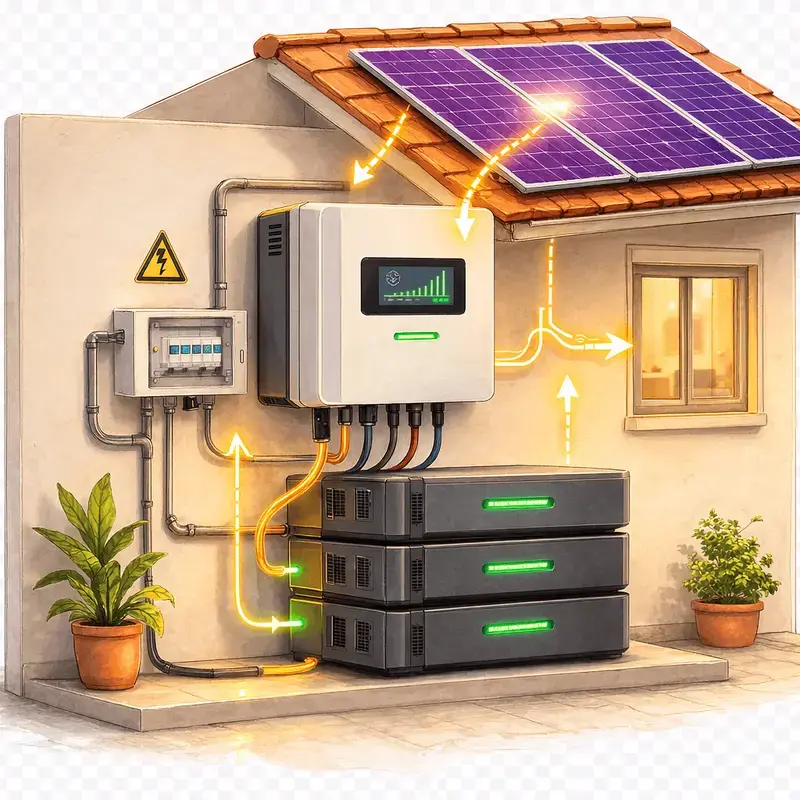
- •System Size: 8 kW to 10 kW
- •Cost After Subsidy: ₹4.5 Lakh – ₹6.5 Lakh
- •Monthly Savings: ₹12,000 – ₹15,000
- •Payback Period: 4 – 5 Years
- •Total Lifetime Savings: ₹39 Lakh+
You're checking the rate — now see how much of your bill solar erases
Are you dreading the arrival of your electricity bill every month? If you are consistently seeing a figure around ₹15,000, you are not alone. In urban India, especially across Delhi NCR, a ₹15,000 monthly bill is the "tipping point." It usually indicates a large 3BHK or 4BHK home, likely running 3–4 air conditioners simultaneously during the scorching Indian summer.
With electricity tariffs in cities like Pune reaching ₹9/unit and Delhi’s PPAC surcharges adding another 30% to the bill, staying on the grid without solar is becoming a financial liability. A ₹15,000 monthly bill translates to ₹1.8 Lakh per year. Over 25 years, assuming a conservative 5% annual tariff hike, you will pay over ₹45 Lakh to your DISCOM.
Switching to a solar system for 15000 electricity bill isn't just an environmental choice; it is a high-yield financial investment. At Bridgeway Power, with our 35+ years of experience, we have helped over 5,000+ homeowners transition from these heavy bills to near-zero balances.
Analysis: Why Your Bill is ₹15,000
A monthly bill of ₹15,000 in India typically implies a consumption of 1,200 to 1,500 units (kWh). This is far above the average household consumption and puts you in the highest tariff slabs of your state DISCOM.
Table 1: ₹15,000 Bill Consumption Breakdown
| Parameter | Details |
|---|---|
| Monthly Bill | ₹15,000 |
| Average Unit Consumption | 1,200 – 1,500 Units/Month |
| Primary Load | 3–4 ACs (1.5 Ton), Geysers, Water Pump, EV Charger |
| Tariff Slab | Highest (typically ₹7.5 – ₹9.0 per unit) |
| Recommended System Size | 8 kW to 10 kW |
In cities like Gurgaon or Noida, hitting 1,500 units is easy during May and June. When you consume at this level, you aren't just paying for the energy; you are paying heavy surcharges and taxes that scale with your usage. This makes the ROI for a solar panel for 15000 bill India significantly faster than for smaller consumers.
8kW vs 10kW: Which Solar System for 15000 Rupee Bill?
Choosing between an 8kW and a 10kW system depends on your roof space and whether you plan to add an Electric Vehicle (EV) in the near future. An 8kW system will significantly slash your bill, while a 10kW system is designed to virtually eliminate it, even during peak AC months.
Table 2: 8kW vs 10kW Solar System Comparison (2025-26)
| Feature | 8 kW Solar System | 10 kW Solar System |
|---|---|---|
| Total Project Cost (Incl. GST) | ₹5,18,364 | ₹6,29,442 |
| PM Surya Ghar Subsidy | ₹78,000 | ₹78,000 |
| Net Cost (Approx.) | ₹4.40 Lakh | ₹5.51 Lakh |
| Monthly Generation | ~960 Units | ~1,200 - 1,300 Units |
| Bill Reduction | 65% – 75% | 85% – 100% |
| Roof Area Required | 640 – 800 sq. ft. | 800 – 1,000 sq. ft. |
Note: Prices reflect 10kW solar system price in India 2026 standards.
If your goal is a high electricity bill solar solution, we generally recommend the 10kW system. Why? Because the fixed costs (net metering application, structures, and labor) are similar for both, but the extra 2kW of panels provides a safety net for those extra-hot July nights when the ACs never turn off.
Sizing for Peak Summer vs. Average Consumption
A common mistake homeowners make is sizing their solar system based on their average annual bill. If your bill is ₹15,000 in June but ₹5,000 in December, your average is ₹10,000. If you size for ₹10,000, you will still end up paying a hefty amount to the DISCOM during the summer.
The Role of Net Metering
Net Metering is your best friend. During the sunny months of February, March, and October, your 8kW or 10kW system will produce more electricity than you consume. This surplus is "banked" with the grid.
Table 3: Seasonal Consumption & Generation Analysis
| Season | Avg. Monthly Units Consumed | Solar Units Generated (10kW) | Grid Impact |
|---|---|---|---|
| Summer (AC Months) | 1,500 – 1,800 | 1,300 – 1,400 | Import from Grid (using banked units) |
| Monsoon (Cloudy) | 1,000 – 1,200 | 800 – 900 | Small Grid Bill |
| Winter (Non-AC) | 600 – 800 | 1,100 – 1,200 | Heavy Surplus Exported |
In Delhi, the Net Metering settlement date is March 31st. This means you can use the credits earned in the winter to offset your heavy AC usage in the summer.
Subsidy and ROI: The Math for a ₹15k Bill
Under the PM Surya Ghar Muft Bijli Yojana, the central government provides a flat subsidy of ₹78,000 for any residential system 3kW or larger.
Even though the subsidy is capped at 3kW, the ROI on an 8kW 10kW solar system home installation remains incredibly attractive.
- Annual Savings: ₹1.8 Lakh
- System Cost (10kW Net): ~₹5.5 Lakh
- Payback Period: ~3.1 Years
After year 3, the electricity is essentially free. Given that Tier-1 Topcon Mono PERC panels come with a 30-year performance warranty, you are looking at 27 years of pure profit.
Talk to a solar engineer — not a salesperson
Enter your pincode and monthly bill. If we install in your area, an engineer answers on WhatsApp with your numbers.
See how much of this bill solar erases
Real-World Example: 10kW Installation in Dwarka
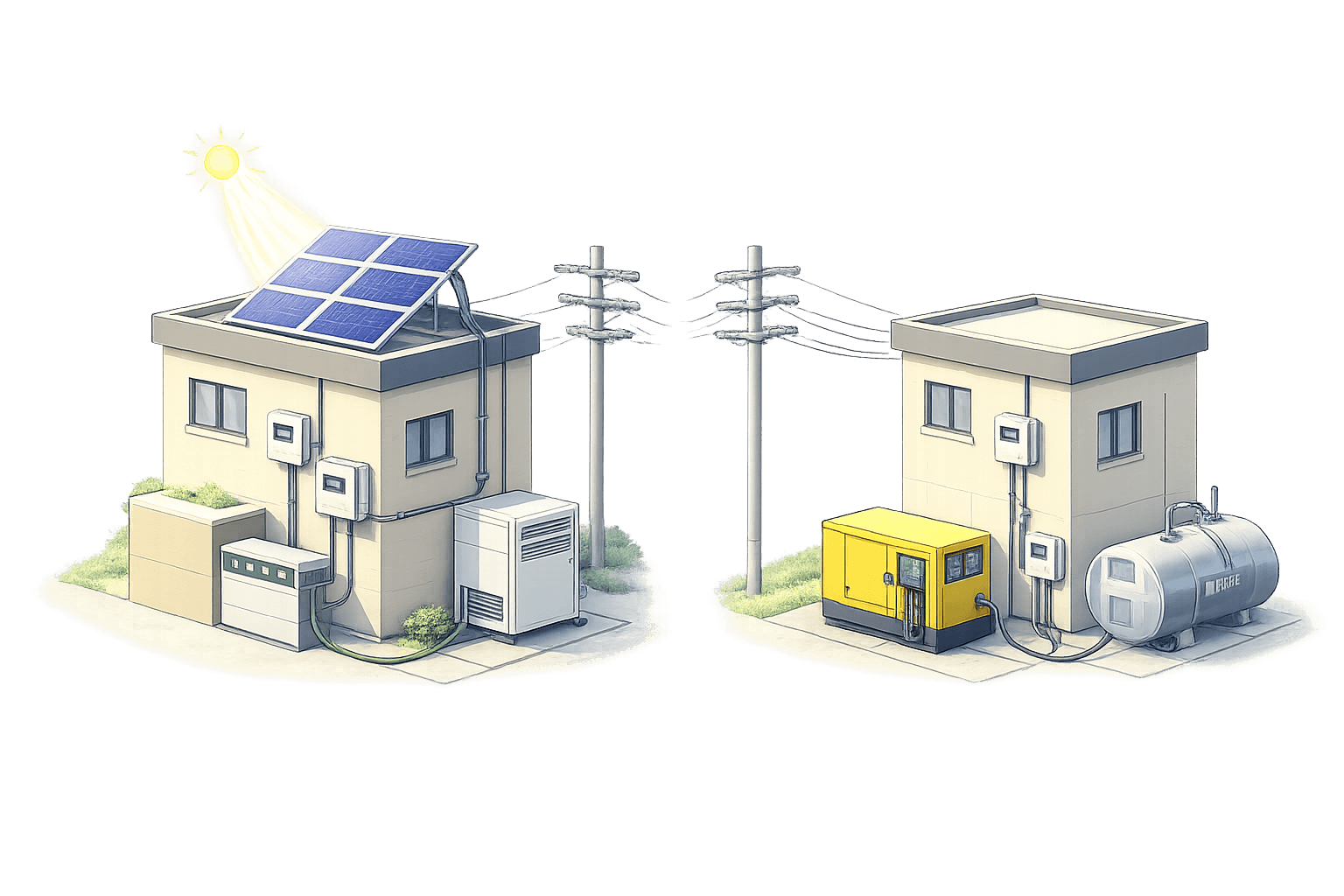
A family living in a builder floor in Dwarka was receiving a consistent ₹14,500 – ₹16,000 bill during the summer. They had 4 ACs and an older inverter system that struggled during peak cuts.
They installed a 10kW On-Grid solar system using Bridgeway Power's standard structure.
- Before Solar: Annual Bill ₹1.75 Lakh
- After Solar: Annual Bill ₹12,000 (mostly fixed charges)
- Net Annual Savings: ₹1.63 Lakh
- Payback: Achieved in less than 4 years.
Should You Consider a Hybrid System?
If your ₹15,000 bill is accompanied by frequent power cuts, a standard on-grid system might leave you in the dark. On-grid systems shut down during power failures for safety reasons.
A hybrid solar system combines the best of both worlds:
- Grid Connection: To export surplus and save on bills via net metering.
- Battery Backup: To keep your ACs or lights running during a blackout.
For a ₹15,000 bill, we recommend a 10kWh Lithium (LFP) battery bank. While this increases the upfront cost by ₹2.5–3 Lakh, it provides energy independence. As noted in our home solar battery guide, LFP batteries now last 12+ years, making them a viable long-term solution for high-load homes.
Financing Your 10kW System
You don't need ₹6 Lakh sitting in your bank to go solar. Bridgeway Power partners with several lenders to offer competitive solar on EMI options:
- SBI PM Surya Ghar Loan: Offers rates as low as 7.9% for systems up to 10kW.
- PNB Solar Rooftop Scheme: Dedicated financing for residential consumers.
- ECOFY Solar Financing and Aerem Solar Finance: Fast, tech-driven NBFC options with minimal paperwork.
All our financing partners are presented equally; your choice depends on your existing banking relationship and CIBIL score.
Why Quality Matters (The 25-Year Perspective)
A ₹15,000 monthly bill equals a ₹45 Lakh liability over 25 years. When you are trying to offset such a large expense, cheap solar systems are a trap.
- Structure: High-load systems need GI or Aluminum structures that can withstand 150km/h winds.
- Maintenance: Large systems attract more dust. A 25% loss due to soiling on a 10kW system means losing 300 units a month. Consider our Solar AMC plans to ensure your system performs at peak capacity.
FAQ
What is the best solar system for 15000 electricity bill?
For a ₹15,000 bill, a 10kW on-grid solar system is the ideal choice. It generates approximately 1,200–1,300 units per month, which offsets the high-slab consumption of a typical large Indian home. If you face frequent power cuts, a 10kW hybrid system with a battery is recommended.
How much space do I need for a 10kW solar system?
A 10kW system using modern 600Wp TOPCon panels requires roughly 800 to 1,000 square feet of shadow-free rooftop area. If you have a smaller roof, you might consider an elevated structure to keep the roof usable for other activities.
Will a 10kW solar system run my ACs?
Yes, a 10kW system provides more than enough energy to run 3–4 ACs during the day directly from solar power. At night, you will pull power from the grid, but the cost is offset by the surplus energy your system exported to the grid during the day through net metering.
What is the subsidy for a 10kW solar system in 2026?
Under the PM Surya Ghar scheme, the subsidy is capped at ₹78,000 for residential systems above 3kW. While the percentage of subsidy is lower for a 10kW system compared to a 3kW system, the absolute savings on your ₹15,000 bill make the 10kW system a better financial investment.
Can I get a loan for a 10kW solar installation?
Yes, banks like SBI, PNB, and Canara Bank offer specialized solar loans under the PM Surya Ghar scheme. Most loans cover up to 80-90% of the project cost with tenures ranging from 5 to 10 years. You can also explore NBFC options like ECOFY or Aerem for faster processing.
Conclusion
A ₹15,000 monthly electricity bill is a clear signal that your home is ready for solar. By investing in an 8kW or 10kW system, you are essentially pre-paying for 25 years of electricity at a fraction of the cost.
At Bridgeway Power, we don't just install panels; we design energy solutions that last decades. With our 1-year included insurance and professional AMC services, your investment is safe.
Ready to wipe out that ₹15,000 bill? Use our Solar Calculator to see your exact savings or contact Bridgeway Power for a free site audit today.
Every 1 kW of solar on your roof offsets 1.5 tonnes of CO₂ per year
That's 40 trees planted — every year, for 25 years.
A typical 5 kW home system offsets 187 tonnes of carbon over its lifetime. That's equivalent to taking 8 cars off the road.
See your impact →How much can you save with solar?
Enter your electricity bill → get system size, subsidy amount & payback period
Get StartedSee how much of this bill solar erases
Related Articles
What Is Captive Open Access Solar (100% Equity Model)
Learn how Captive Open Access Solar (100% Equity Model) helps Indian businesses cut electricity costs by 40% using off-site solar plants. Guide on rules, savings & ROI.
Read moreHow Rooftop Solar Can Eliminate Your Electricity Bill
Discover how Net Metering and PM Surya Ghar subsidies can reduce your monthly electricity bill to near-zero. Learn about system sizing, costs, and real-world savings.
Read moreSolar Subsidy in Uttar Pradesh 2026: ₹1,08,000 for Noida, Ghaziabad & Greater Noida
UP's stacked solar subsidy 2026: ₹78,000 central + ₹30,000 UPNEDA state top-up = ₹1.08L. Real PVVNL net-cost math for Noida, Greater Noida, Ghaziabad & Meerut.
Read moreRelated guides
Delhi Electricity Rate 2026
BSES & Tata Power per-unit rates, PPAC, subsidy — sourced from DERC.
ExploreDelhi Solar Policy 2026
Free rooftop solar up to 3 kW for homes under 400 units. Eligibility & apply.
ExploreSolar Panel Price in Delhi
Live 2026 rooftop prices in Delhi after ₹1.56L subsidy. 1,200+ installs.
ExploreSolar Company in Gurgaon
Gurgaon's rooftop solar installer — 800+ systems, ₹78K PM Surya Ghar subsidy.
ExploreSolar Company in Noida
Noida & Greater Noida rooftop solar — 500+ installs, ₹1.08L stacked subsidy.
ExploreSolar Panel Price in Faridabad
Live 2026 Faridabad prices after ₹78K PM Surya Ghar subsidy. 350+ homes.
Explore