
By Arshi Chadha, Founder · Bridgeway Power
Why Cheap Solar Systems Cost More in 3 Years
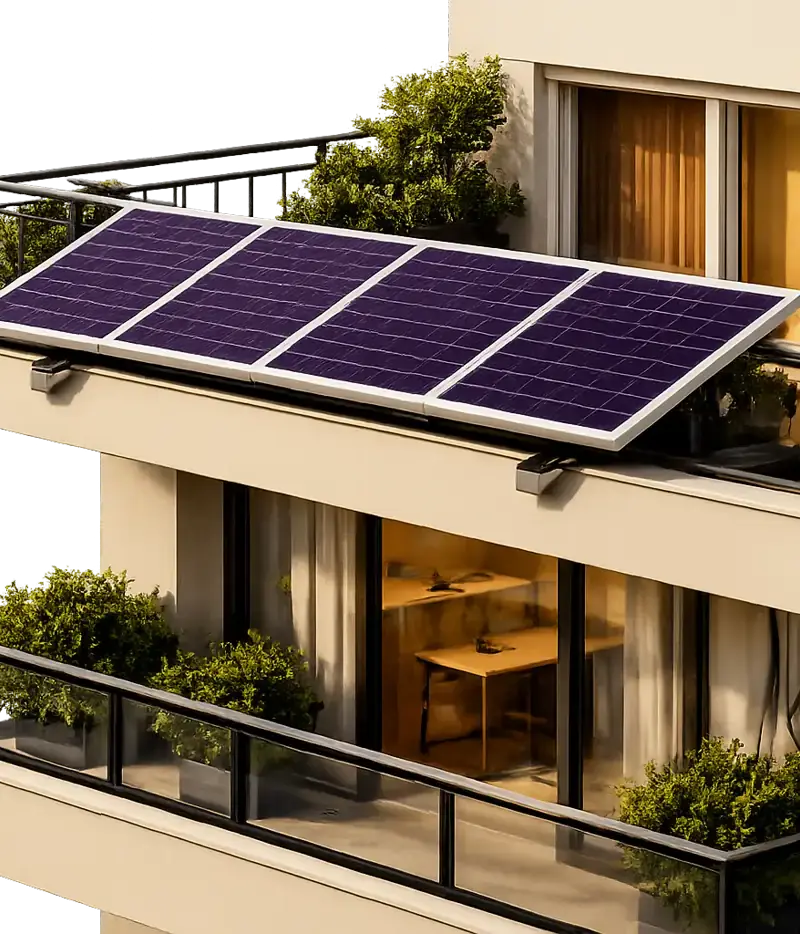
- •Primary Issue: Initial savings of 30% often lead to 40% higher maintenance costs by Year 3.
- •Generation Loss: Cheap solar system India problems include 15-20% lower output due to poor components.
- •Critical Risk: Low-quality mounting and earthing pose physical risks to your property.
- •The Math: A 'cheap' system's effective cost equals a premium system within 36 months when accounting for repairs.
It’s 2:00 PM on a sweltering July afternoon in Delhi. You check your solar monitoring app, expecting to see your 5kW system humming at peak capacity. Instead, it shows zero. You call your installer—the one who gave you that "unbeatable" deal last year—but the number is permanently switched off.
This is the reality for thousands of homeowners in India who fell for the allure of a "cheap solar system." In the race to go green and eliminate electricity bills, many buyers prioritize the lowest up-front price, unaware that a solar power plant is not a household appliance; it is a 25-year structural and electrical commitment. At Bridgeway Power, with our 35+ years of experience, we have seen exactly why the "cheapest" quote is almost always the most expensive one in the long run.
In this guide, we’ll break down why solar installation quality matters and how a low cost solar panel can end up costing you your peace of mind.
The Illusion of Savings: Budget vs. Quality Tiers
When you receive a quote for a solar system, the price isn't just a random number; it reflects the quality of every nut, bolt, and silicon cell. To understand cheap solar system India problems, we must first categorize the market.
Table 1: Residential Solar Tiers (5kW System)
| Feature | Budget System (₹2–2.5L) | Standard System (₹2.8–3.5L) | Premium System (₹3.5–4.5L) |
|---|---|---|---|
| Panel Quality | Poly-crystalline or B-grade Mono | Tier-1 Topcon Mono PERC 600Wp | Bi-facial / High-efficiency N-Type |
| Inverter | Local/Unbranded String Inverter | Tier-1 String (e.g., Sungrow, Growatt) | Microinverters (e.g., Enphase) |
| Structure | Standard GI (Low weight) | HDG (80 Micron) or Aluminium | Custom High-Elevated Structures |
| Wiring & ACDB | Minimalist / Sub-standard | Full Protection (SPD, MCB, Earthing) | Advanced Surge Protection + Monitoring |
| Warranty Support | Seller-based (Unreliable) | Manufacturer-backed + Service Partner | Full AMC Support + Performance Guarantee |
| System Outcome | High risk of failure by Year 2 | Reliable 20+ year performance | Maximum yield & safety |
The Mathematical Trap: Comparing 3-Year Effective Costs
Most people only look at the cheque they write on Day 1. However, the real cost of solar includes generation losses and maintenance. If your system is down for 15 days because a cheap DC fuse blew and the installer didn't show up, you are paying your DISCOM (like BSES Rajdhani or PVVNL) for electricity you should have produced for free.
Table 2: 3-Year Cost Reality Check (5kW System)
| Cost Component | Budget System | Standard/Quality System |
|---|---|---|
| Upfront Installation | ₹2,20,000 | ₹3,20,000 |
| Repairs & Spares (3 Yrs) | ₹40,000 (Inverter board, re-earthing) | ₹0 |
| Estimated Generation Loss | 15% (₹45,000 value loss) | 5% (₹15,000 value loss) |
| Net Cost after 3 Years | ₹3,05,000 | ₹3,35,000 |
| System Status | Degrading rapidly; Safety risk | Working at 100%; Still under warranty |
As the table shows, the "gap" between a high-quality system and a budget one disappears within just 36 months. After Year 3, the budget system begins to cost significantly more every single month.
1. Why Cheap Panels Degrade Faster
The heart of your system is the solar module. High-quality solar system quality India standards demand Tier-1 panels. A low cost solar panel quality India search might lead you to B-grade or "surplus" stock.
- Micro-cracks: Cheap panels often have invisible micro-cracks from poor manufacturing or rough handling during transit. These cracks expand with thermal stress, leading to "hotspots."
- Efficiency Drop: While peak-tier panels lose only 0.5%–0.7% efficiency per year, budget panels can lose up to 2%. Over 10 years, your 5kW system might only behave like a 4kW system.
- EVA & Backsheet Failure: Cheap backsheets turn yellow and crack under the harsh Indian sun, allowing moisture to enter and corrode the cells.
2. The Inverter: The First Component to Die
The inverter is the "brain" of the system, converting DC to AC. In the quest for solar panel cheap vs expensive comparisons, the inverter is where most corner-cutting happens.
- Component Quality: Budget inverters use lower-grade capacitors and heat sinks. In cities like Gurgaon or Noida, where summers hit 48°C, these inverters frequently overheat and trip.
- Replacement Costs: A quality string inverter should last 10–12 years. A budget one often fails in 5 years. A replacement can cost ₹20,000–₹40,000, immediately wiping out any initial savings.
- Lack of Monitoring: Cheap inverters often lack robust Wi-Fi monitoring. You won't even know your system is underperforming until your electricity bill arrives.
3. Installation Quality is Invisible but Lethal
A solar installation quality matters most when it comes to the "small" things:
- Wire Gauge: Using undersized DC cables leads to voltage drops and heat. This is a primary cause of solar fires.
- Earthing & Lightning Arrestors: Many budget installers skip proper chemical earthing. One lightning strike in a monsoon season could fry your entire inverter and potentially damage your home’s appliances.
- Mounting Structures: We have seen light-gauge GI structures bend under high wind speeds in Delhi NCR. A quality solar structure cost per kw in India should account for HDG (Hot-Dipped Galvanized) steel that resists rust for 25 years.
4. The "Subsidy Trap" and Scams
With the PM Surya Ghar Yojana, subsidies are a major draw. However, unscrupulous installers may:
- Undersize Systems: Claim they are installing 3kW but use lower-wattage panels that only total 2.6kW.
- Fake Warranties: Offer a "10-year warranty" on the inverter, but the manufacturer only provides 5 years. When it breaks in Year 6, the installer is nowhere to be found.
- Poor Documentation: Failure to assist with net metering in Delhi. Without a registered net meter, your solar panels are useless as they can't feed power back to the grid.
Talk to a solar engineer — not a salesperson
Check whether we install in your area, then get your answer on WhatsApp. No forms, no call centre.
What would solar save on YOUR bill?
Red Flags: How to Spot a "Bad Deal"
If you are evaluating quotes, look out for these warning signs. If more than two are present, walk away.
Table 3: Solar Buying Red Flags
| Red Flag | Why It’s Dangerous |
|---|---|
| Price 30%+ below market | Usually indicates B-grade panels or non-certified inverters. |
| No Brand-Name Components | "Generic" or "Imported" without a specific manufacturer name. |
| No Structural Report | Indicates the installer hasn't checked if your roof can handle the panel weight. |
| "Oral" Warranty Only | If the warranty terms aren't in a signed contract with manufacturer stamps. |
| No Local Office | "Fly-by-night" operators who travel between states for seasonal demand. |
| Lack of Net Metering Help | Professional EPCs handle the DISCOM applications. |
Real Example: The Tale of Two Neighbors in Dwarka
In 2023, two neighbors in Dwarka installed 5kW systems.
- Person A chose a local vendor for ₹2.1 Lakh.
- Person B chose Bridgeway Power for ₹3.1 Lakh.
Fast forward to 2026: Person A’s system has had three inverter repairs (costing ₹12,000) and one panel has developed a major hotspot. His generation has dropped by 20%. His effective savings are negative compared to his neighbor. Person B has had zero maintenance issues and utilized our Solar AMC for professional cleaning, keeping his generation at peak levels. Person B has already recovered 60% of his investment, while Person A is struggling to get his system to turn on.
How to Properly Evaluate a quote
- Get 3 Quotes: Compare technical specifications, not just the final total.
- Verify Brands Independently: Search for the panel and inverter brands on the MNRE ALMM list. If they aren't there, you won't get a subsidy.
- Check Real Reviews: Look for Google Reviews that are older than 12 months. Any company can look good in the first 30 days; look for long-term customer satisfaction.
- Visit a Live Site: Ask the company for a reference installation in your area (e.g., Janakpuri or Noida).
Why Bridgeway Power is Different
With 25+ MW installed and over 5,000+ satisfied customers, we don't compete on "cheapest price." We compete on Lowest Levelized Cost of Energy (LCOE). We use:
- Tier-1 Topcon Panels (600Wp+ range).
- Certified HDG Structures with wind-load testing.
- Dedicated Service Teams for AMC and cleaning.
- Financing Partners like ECOFY, SBI, and Aerem to make quality solar affordable.
Frequently Asked Questions
Why is there such a huge price difference between solar installers?
The price difference usually comes down to the quality of the mounting structure, the protection devices (SPD/MCB) used in the DC/AC boxes, and the after-sales service. Cheap installers often use thin-gauge wires and low-quality earthing, which can lead to system failure or fire hazards.
Can I get a subsidy on a cheap solar system?
Only if the components are from the ALMM (Approved List of Models and Manufacturers) and the installer is registered. Often, "excessively cheap" systems use older, unapproved stock that will be rejected by the DISCOM during the subsidy inspection.
How do I know if my solar panels are high quality?
Look for "Tier-1" classification. Check the backsheet for a serial number and QR code. You can use a mobile app to scan the QR code to verify the panel's manufacturing details and test report.
What is the most common part to fail in a solar system?
The solar inverter is usually the first component to fail, typically between 5–8 years for budget brands. High-quality inverters like those from Enphase or leading string inverter brands can last 10–15 years with proper ventilation.
Is it worth paying extra for a better structure?
Absolutely. In India, storms and high-speed winds are common. A cheap structure can vibrate, causing micro-cracks in panels, or even fly off the roof, causing massive liability and damage. Always insist on HDG (Hot-Dipped Galvanized) or high-grade Aluminium.
Conclusion: Value Over Price
Going solar is a fantastic investment for your home and the planet, but only if the system actually works. A "cheap" solar system is a liability—it's a collection of high-voltage components that require precision engineering.
Don't let a small saving today become a massive headache in 2028. Invest in quality, insist on transparency, and choose an experienced partner.
Ready to see what a high-quality solar system looks like for your home? Use our Solar Calculator to estimate your real savings or contact Bridgeway Power for a free on-site technical feasibility study. Let’s build a system that lasts for decades, not just until the next monsoon. For a personalized consultation, explore our AMC plans to ensure your existing or future system stays at peak performance. Contact us today at +91 9599557404.
Every 1 kW of solar on your roof offsets 1.5 tonnes of CO₂ per year
That's 40 trees planted — every year, for 25 years.
A typical 5 kW home system offsets 187 tonnes of carbon over its lifetime. That's equivalent to taking 8 cars off the road.
See your impact →How much can you save with solar?
Enter your electricity bill → get system size, subsidy amount & payback period
Get StartedLiked this article? Get a free solar quote
Tell us about your rooftop — we'll call with exact savings for your home.
Related Articles
Net Metering in India: How to Sell Solar Power Back to the Grid
Learn how net metering in India allows you to sell solar power back to the grid. Discover state policies, savings examples, and how to reduce your bill by 90%.
Read moreWhat Is Captive Open Access Solar (100% Equity Model)
Learn how Captive Open Access Solar (100% Equity Model) helps Indian businesses cut electricity costs by 40% using off-site solar plants. Guide on rules, savings & ROI.
Read moreSolar Installation Cost in Delhi NCR 2026: 3 kW at ₹1.32L net
Updated 2026 guide to solar costs in Delhi NCR. Learn about PM Surya Ghar subsidies, system pricing from 1kW-10kW, and how to reach zero electricity bills.
Read moreRelated guides
Delhi Electricity Rate 2026
BSES & Tata Power per-unit rates, PPAC, subsidy — sourced from DERC.
ExploreDelhi Solar Policy 2026
Free rooftop solar up to 3 kW for homes under 400 units. Eligibility & apply.
ExploreSolar Panel Price in Delhi
Live 2026 rooftop prices in Delhi after ₹1.56L subsidy. 1,200+ installs.
ExploreSolar Company in Gurgaon
Gurgaon's rooftop solar installer — 800+ systems, ₹78K PM Surya Ghar subsidy.
ExploreSolar Company in Noida
Noida & Greater Noida rooftop solar — 500+ installs, ₹1.08L stacked subsidy.
ExploreSolar Panel Price in Faridabad
Live 2026 Faridabad prices after ₹78K PM Surya Ghar subsidy. 350+ homes.
Explore