
By Kajal Rajpoot · Reviewed by Arshi Chadha, Founder
Best Structure for Solar Panels: Flat Roof vs Tilt vs Elevated (Which to Choose?)
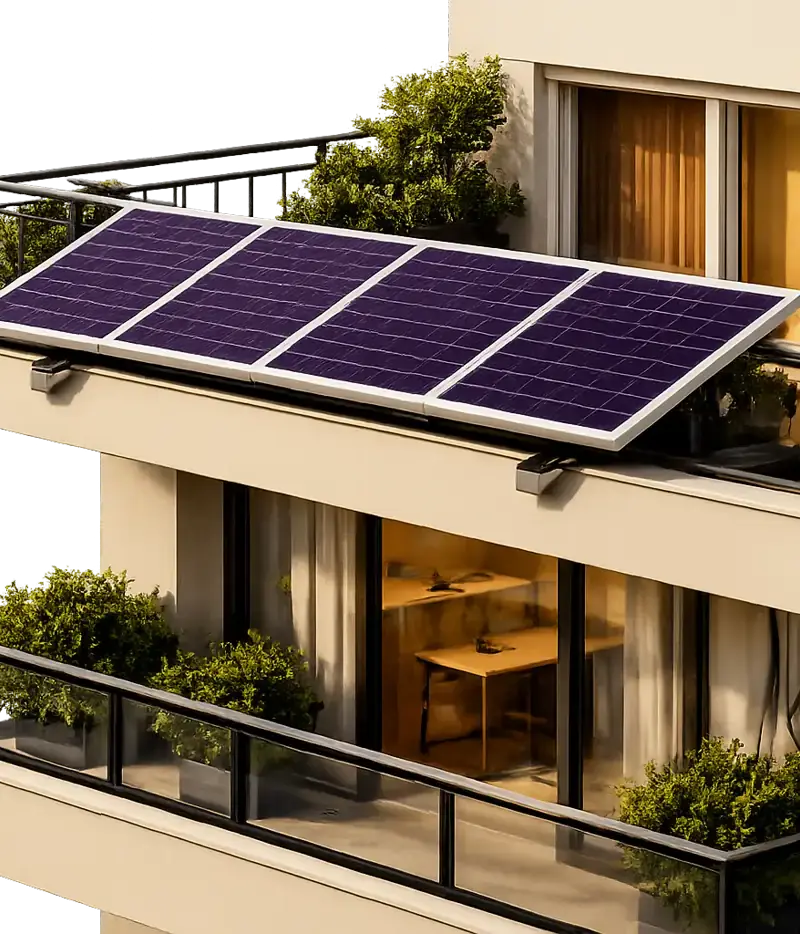
- •Average Cost: ₹67,000 per kW (Standard) | +₹10,000–15,000 for Elevated
- •Primary Options: Flat (Flush), Tilted (Fixed-tilt), and Elevated (High-rise)
- •Space Saving: Elevated structures allow 100% roof usage for walking/seating.
- •Best for NCR: Tilted structures at 10–15 degrees facing South.
When you decide to go solar in India, most of your research probably goes into choosing the best panel brands or the most efficient inverters. However, there is a "silent hero" that determines whether your panels will survive the next monsoon storm or generate the maximum possible units: the mounting structure.
In cities like Delhi, Noida, and Gurgaon, where roof space is a premium asset, choosing the best structure for solar panels isn't just about technical specs—it’s about lifestyle. Do you want to keep your roof accessible for evening tea? Or do you want the most cost-effective solution possible?
With over 35 years of experience at Bridgeway Power, we’ve seen how wrong structure choices lead to water seepage, reduced generation due to cleaning difficulties, and even panels flying off during "Andhi-Toofan" (dust storms). In this guide, we will break down the flat vs tilted solar structure debate and help you decide if an elevated solar panel structure is worth the extra investment for your home.
Understanding the "Why": Why Does Structure Matter?
Before we dive into the types, understand that the structure serves three main purposes:
- Orientation and Tilt: It holds the panels at the perfect angle to catch the most sunlight.
- Airflow: It allows air to circulate under the panels, keeping them cool (hot panels produce less electricity).
- Safety: It protects your roof’s structural integrity while ensuring the panels stay fixed during 150 km/h winds.
1. Flat Structure: When and Why to Use
In congested urban areas like Janakpuri or Rohini, the roof is often the only open space a family has. Installing a standard tilted structure takes away that space. This is where the elevated solar panel structure (also known as a high-rise structure) comes in.
Why Go Elevated?
- Zero Space Loss: The panels are mounted 7 to 10 feet above the roof level. You can still use your roof for walking, gardening, or drying clothes.
- Shadow Avoidance: If your neighbor has a taller building or there are nearby trees, elevating the panels can help them "clear" the shadow zone, ensuring maximum generation.
- Cooling: Higher elevation means significantly better airflow, which can increase panel efficiency during the scorching 45°C summers of Delhi.
Technical Considerations:
Elevated structures require heavy-duty Hot Dipped Galvanized (HDG) iron to ensure they don't vibrate or buckle. This is a specialized job—improperly designed high-rise structures are a safety hazard. We always recommend checking the ideal height of solar panels above roof guide before finalizing your design.
Structure Type Comparison: Cost, Durability, & Efficiency
To help you decide, we have compared the three most common structures used in Indian residential projects:
| Feature | Flat / Flush Mount | Tilted (Standard) | Elevated (High-Rise) |
|---|---|---|---|
| Material Cost | Low (₹) | Moderate (₹₹) | High (₹₹₹) |
| Installation Speed | Very Fast | Fast | Moderate (Requires civil work) |
| Space Utilization | Poor (Occupies floor) | Poor (Occupies floor) | Excellent (Full roof use) |
| Generation Efficiency | Moderate | Highest | High |
| Maintenance Ease | Difficult | Moderate | Easy (Walk under panels) |
| Wind Resistance | Excellent | Very Good | Good (Requires heavy bracing) |
| Avg. Cost Addition | Included in Base | Included in Base | +₹10k to ₹15k per kW |
4. Decision Framework: Which Solar Structure is Best for Your Home?
Choosing the best structure for solar panels depends on three main variables: your roof type, your budget, and how you use your home.
Step 1: Identify Your Roof Type
- RCC (Concrete) Flat Roof: You have the choice of Tilted or Elevated. If you use the roof for events or exercise, go Elevated. If it's a "dead" roof, stay with Tilted to save money.
- Tin Shed / Metal Roof: Go with Flat/Flush mounting using specialized clamps (no drilling preferred to avoid leaks).
- Brick Bat Coba / Tiled Roof: These require careful "leg" placement and waterproofing to prevent future seepage.
Step 2: Evaluate Your Neighborhood
Are there taller buildings around you? Use a shadow analysis tool (or ask Bridgeway Power for one during a site visit). If your roof gets shaded by a water tank or a neighbor's 4th floor, an elevated solar panel structure might be the only way to make solar viable for you.
Step 3: Check Your Budget
The solar structure cost per kW in India varies. While a standard 5kW system might cost around ₹67,000/kW, adding a 10-foot elevated structure could increase that by nearly ₹50,000–₹75,000 for the whole project.
Talk to a solar engineer — not a salesperson
Check whether we install in your area, then get your answer on WhatsApp. No forms, no call centre.
What would solar save on YOUR bill?
Real-Life Example: 5kW Installation in Pitampura
A homeowner in Pitampura, Delhi, had a 1200 sq. ft. roof. They were confused between a flat vs tilted solar structure.
- The Problem: They had a high BSES Rajdhani bill of ₹8,500/month and wanted a 5kW system. However, they also used the roof for their morning yoga and had a small kitchen garden.
- The Solution: We installed a 5kW system on an elevated solar panel structure (9 feet high).
- The Result:
- Generation: They average 600 units/month (worth ~₹4,800 @ ₹8/unit).
- Lifestyle: They didn't lose a single square foot of usable roof area.
- Subsidy: They still qualified for the ₹78,000 subsidy under the PM Surya Ghar Yojana.
Material Matters: Why We Use Hot Dipped Galvanized (HDG) Iron
In the humid and polluted air of Delhi NCR, cheap MS (Mild Steel) structures will rust within 2–3 years. Once the "legs" of your solar system rust, the entire multi-lakh investment is at risk.
At Bridgeway Power, we prioritize durability:
- HDG Iron: Coated with zinc to prevent rust for 25+ years.
- Wind Loading: Designed to withstand speeds of up to 150 km/h, essential for the dust storms common in Gurgaon and Noida.
- Non-Invasive Leg Foundations: We use chemical anchoring or specialized pedestals to ensure we never puncture your roof’s waterproofing layer.
Financing Your Solar Structure
Whether you choose a standard tilted mount or a high-end elevated structure, the total cost can be financed. Bridgeway Power partners with top lenders to make your transition seamless:
- PSU Banks: Explore the SBI PM Surya Ghar Loan or the PNB Solar Rooftop Scheme.
- NBFCs: For faster processing, consider ECOFY Solar Financing or Aerem Solar Finance.
- Other Partners: We also facilitate solar loans through Canara Bank Solar Loan.
All these partners offer competitive rates, often starting at 7% (for PSU tenure) to 10-12% (for NBFCs), helping you turn your electricity bill into an EMI.
Frequently Asked Questions
Is an elevated structure safe during high winds?
Yes, provided it is designed by a qualified engineer. An elevated solar panel structure acts like a giant sail. To make it safe, the structure must have cross-bracing and be securely anchored into the building's columns or RC slab using high-strength bolts and chemical grouting.
Does a tilted structure always generate more than a flat one?
In India, yes. Because we are in the Northern Hemisphere, a South-facing tilt between 10–15 degrees allows the panels to receive more direct sunlight throughout the year, especially in winter. A completely flat panel would lose about 5-8% of its annual generation potential.
Can I change my structure type later?
It is very difficult and expensive to do so. Changing from a tilted to an elevated structure requires dismantling all panels, rewiring, and building a completely new base. It is always best to plan your solar structure during home construction or before the initial installation.
How much extra does an elevated structure cost per kW?
On average, an elevated structure adds ₹10,000 to ₹15,000 per kW to your total project cost. This covers the extra steel, specialized labor, and the civil work required for stronger foundations.
Does the government subsidy cover elevated structures?
The PM Surya Ghar subsidy is a fixed amount based on the kW capacity (e.g., ₹78,000 for 3kW+). It does not increase if you choose a more expensive structure. You will have to bear the additional cost of elevation yourself.
Conclusion: Making the Right Choice
The best structure for solar panels is the one that fits your lifestyle without compromising on safety.
- If you want the fastest ROI and don't use your roof, go for a Tilted GI structure.
- If your roof is your sanctuary and you want to keep it open, the elevated solar panel structure is well worth the extra investment.
With 5,000+ successful installations across Delhi NCR, Bridgeway Power specializes in custom-engineered structures that stand the test of time. Don't let a "cheap" structure ruin a 25-year investment.
Ready to see which structure fits your roof? Calculate your savings here or contact Bridgeway Power today for a Free Site Survey and Shadow Analysis. Our experts will visit your home in Delhi, Gurgaon, or Noida to design the perfect layout for your needs.
Flat versus elevated is the common fork, but there are seven rooftop solar structure types worth knowing before you sign.
Every 1 kW of solar on your roof offsets 1.5 tonnes of CO₂ per year
That's 40 trees planted — every year, for 25 years.
A typical 5 kW home system offsets 187 tonnes of carbon over its lifetime. That's equivalent to taking 8 cars off the road.
See your impact →How much can you save with solar?
Enter your electricity bill → get system size, subsidy amount & payback period
Get StartedLiked this article? Get a free solar quote
Tell us about your rooftop — we'll call with exact savings for your home.
Related Articles
Net Metering in India: How to Sell Solar Power Back to the Grid
Learn how net metering in India allows you to sell solar power back to the grid. Discover state policies, savings examples, and how to reduce your bill by 90%.
Read moreWhat Is Captive Open Access Solar (100% Equity Model)
Learn how Captive Open Access Solar (100% Equity Model) helps Indian businesses cut electricity costs by 40% using off-site solar plants. Guide on rules, savings & ROI.
Read moreSolar Installation Cost in Delhi NCR 2026: 3 kW at ₹1.32L net
Updated 2026 guide to solar costs in Delhi NCR. Learn about PM Surya Ghar subsidies, system pricing from 1kW-10kW, and how to reach zero electricity bills.
Read moreRelated guides
Delhi Electricity Rate 2026
BSES & Tata Power per-unit rates, PPAC, subsidy — sourced from DERC.
ExploreDelhi Solar Policy 2026
Free rooftop solar up to 3 kW for homes under 400 units. Eligibility & apply.
ExploreSolar Panel Price in Delhi
Live 2026 rooftop prices in Delhi after ₹1.56L subsidy. 1,200+ installs.
ExploreSolar Company in Gurgaon
Gurgaon's rooftop solar installer — 800+ systems, ₹78K PM Surya Ghar subsidy.
ExploreSolar Company in Noida
Noida & Greater Noida rooftop solar — 500+ installs, ₹1.08L stacked subsidy.
ExploreSolar Panel Price in Faridabad
Live 2026 Faridabad prices after ₹78K PM Surya Ghar subsidy. 350+ homes.
Explore