
By Vansh Dahiya · Reviewed by Arshi Chadha, Founder
Solar + EV Charging at Home: Cost, Setup & How Much Solar You Need
- •System size for EV charging: 5 kW to 10 kW (Typical)
- •Cost after subsidy (3kW): ₹1.32 lakh (Delhi/UP)
- •Monthly fuel savings: ₹3,000–₹8,000 (EV vs Petrol)
- •Payback period: 3–5 years (Faster with EV integration)
Introduction
Imagine waking up every morning to a "full tank" and a ₹0 fuel bill. For years, Indian car owners have been at the mercy of fluctuating petrol prices and the rising costs of city commutes. In 2026, the dream of total energy independence is finally a reality for homeowners in Delhi NCR and beyond. By combining solar EV charging home India technology with high-efficiency rooftop panels, you aren’t just switching fuels—you are becoming your own power utility.
With the PM Surya Ghar Muft Bijli Yojana, the Indian government has made it incredibly affordable to transition. Whether you live in Dwarka, Noida Extension, or Sushant Lok, the combination of a solar-powered home and an electric vehicle (EV) is the ultimate hedge against inflation. This guide breaks down exactly how to size your system, what it costs, and how to set up your home for the solar-EV era.
The Math: Why Solar + EV is the Perfect Marriage
Electric vehicles are significantly cheaper to run than petrol or diesel cars. However, charging an EV from the grid can push your household into the highest electricity tariff slabs. In Delhi, once you cross 800 units, you pay ₹8/unit. In Haryana, the top slab is ₹7.1/unit.
When you install solar EV charging home India solutions, you effectively "lock in" your fuel price for the next 25-30 years at nearly zero.
Energy Consumption Comparison
| Vehicle Type | Monthly Run | Efficiency | Monthly Units Needed | Est. Monthly Cost (Grid) |
|---|---|---|---|---|
| Petrol Car | 1,500 km | 15 km/L | N/A | ₹10,000 (Fuel) |
| EV (Grid) | 1,500 km | 7 km/unit | 215 Units | ₹1,720 (@₹8/unit) |
| EV (Solar) | 1,500 km | 7 km/unit | 215 Units | ₹0 |
By using rooftop solar to eliminate your electricity bill, you turn a monthly liability into a lifetime asset.
How Much Solar Do You Need for an EV?
The most common question we get at Bridgeway Power is: "Will my 3kW system charge my Nexon EV?"
The answer depends on your daily driving. A 1kW solar system in Delhi NCR generates an average of 120 units per month (roughly 4 units per day). If your EV needs 15 units for a full daily charge, you need roughly 4kW of solar just for the car, plus additional capacity for your home appliances.
Sizing Guide for Solar EV Charging
| Monthly EV Running | Units Required (EV) | Total Solar Needed (Home + EV) | Recommended System |
|---|---|---|---|
| 500 km | ~75 Units | 350 - 450 Units | 3 kW - 4 kW |
| 1,200 km | ~175 Units | 500 - 650 Units | 5 kW - 6 kW |
| 2,500 km | ~360 Units | 700 - 900 Units | 8 kW - 10 kW |
Note: Based on [avg_yield_per_kw] of 120 units/month.
Setup Options: On-Grid, Hybrid, and Smart Chargers
Setting up solar EV charging home India doesn't require a special "solar charger," but choosing the right system architecture is vital.
1. On-Grid Solar (Most Common)
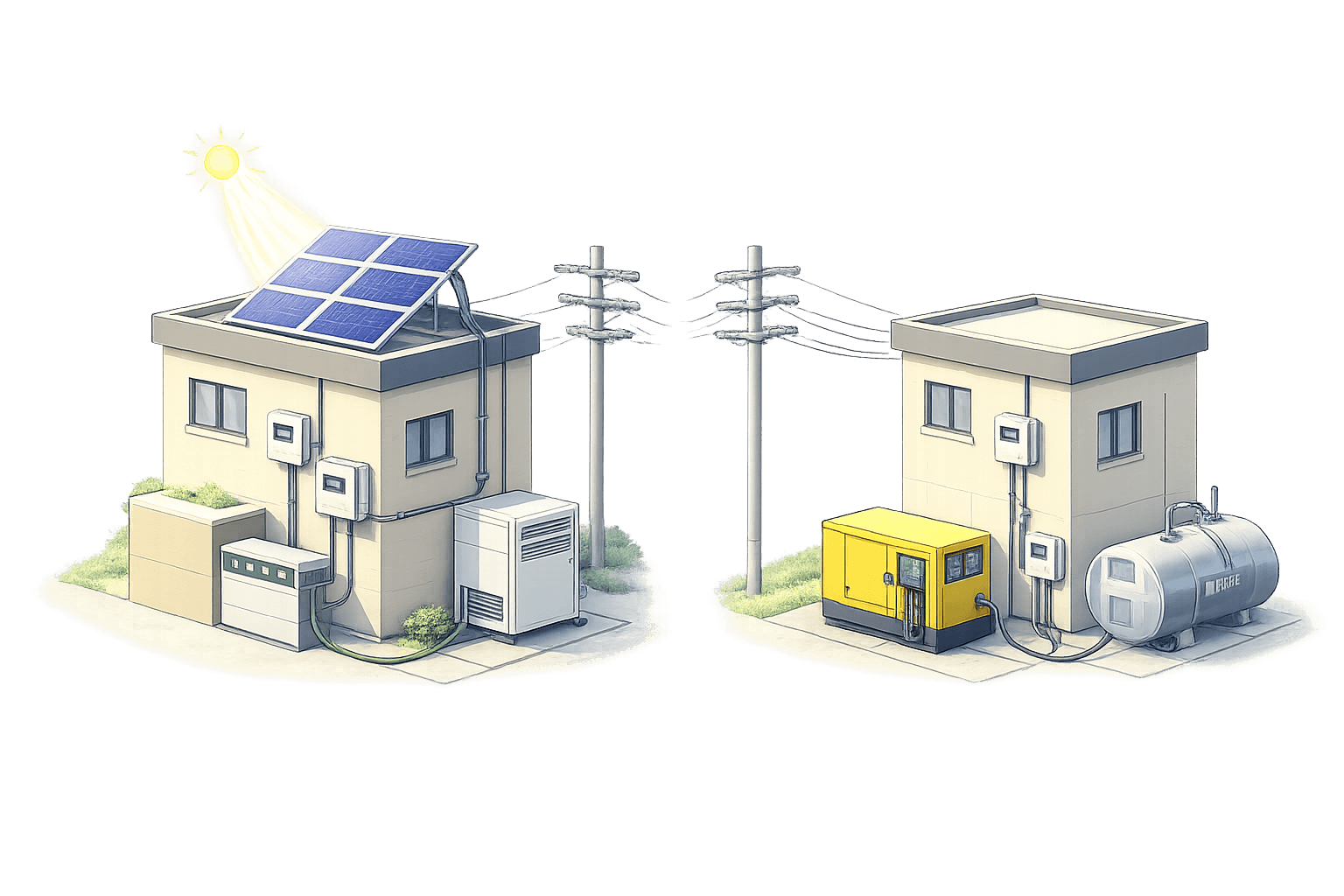
Most urban homes in Delhi and Gurgaon use an On-Grid system. Your solar panels feed power to the grid via a net meter. When you charge your EV at night, you use the "credits" you earned during the day.
- Pro: Cheapest installation cost.
- Con: Doesn't work during power cuts.
- Learn more about On-Grid vs Off-Grid.
2. Hybrid Solar (The Smart Choice)
If you face frequent power cuts, a hybrid system with a battery bank is ideal. It allows you to store solar energy during the day and use it to charge your EV at night, even if the grid is down.
- Battery Tech: We recommend LFP (Lithium Ferro Phosphate) for safety and 6,000+ cycle life.
3. Smart EV Chargers
For the best ROI, use a "Smart Charger" that can communicate with your solar inverter. These chargers can be set to "Solar Only" mode, ensuring your car only charges when there is excess solar power available, preventing any grid draw.
Cost of Installation and Subsidies (2025-2026)
A massive advantage for Indian homeowners is the stacked subsidy. In Delhi, you can get both Central (PM Surya Ghar) and State subsidies.
Residential Solar Cost Table (Post-Subsidy)
| System Size | Total Cost (incl. GST) | Central Subsidy | State Subsidy (Delhi/UP) | Net Cost to You |
|---|---|---|---|---|
| 3 kW | ₹2,40,000 | ₹78,000 | ₹30,000 | ₹1,32,000 |
| 5 kW | ₹3,43,035 | ₹78,000 | ₹30,000 | ₹2,35,035 |
| 10 kW | ₹6,29,442 | ₹78,000 | ₹30,000 | ₹5,21,442 |
Data based on [system_price_table] and [central_subsidy] rates as of 2026.
Talk to a solar engineer — not a salesperson
Check whether we install in your area, then get your answer on WhatsApp. No forms, no call centre.
What would solar save on YOUR bill?
Financing Your Green Transition
If the upfront cost is a concern, Bridgeway Power partners with several lenders to offer solar on EMI.
- PSU Banks: SBI Solar Loan for PM Surya Ghar and PNB Solar Rooftop Scheme offer rates as low as 5.75% for systems up to 3kW.
- NBFCs: Partners like ECOFY Solar Financing and Aerem Solar Finance provide faster processing and flexible tenures.
All our financing partners are presented neutrally; we help you choose the one that fits your CIBIL score and tenure preferences.
Case Study: A 5kW Setup in Gurgaon
The Client: A family in Sector 14, Gurgaon with a monthly electricity bill of ₹8,000 and a newly purchased Tata Tiago EV. Daily Drive: 60 km (approx. 1,800 km/month). The Solution: Installed a 5kW system using Topcon Mono PERC panels (which are more efficient than older tech). The Result:
- Units Generated: ~600 units/month.
- Units Consumed (Home): 400 units.
- Units Consumed (EV): 250 units.
- Net Bill: Near zero (with occasional carry-forward credits via DHBVN net metering).
- Payback: The system will pay for itself in 3.2 years due to the avoided petrol costs and reduced electricity bills.
Safety and Structural Maintenance
When adding solar for an EV, you are increasing your "energy density" at home. This requires professional handling.
- Roof Weight: Many people worry about the weight of panels. Actually, a solar panel weighs about 22-28kg. As we've detailed in our guide on how much a solar system weighs on your roof, it is often less than the load of a standard 1000L water tank.
- Maintenance: To keep generation high, panels must be cleaned. In dusty cities like Delhi, dirty panels can lose 25% output. Bridgeway’s AMC plans ensure your system performs at its peak.
- Inverter Health: Your inverter is the "brain" of your solar EV charging home India setup. We use Tier-1 string inverters with 10-year warranties to ensure reliability.
Step-by-Step Installation Process
Ready to go solar? Here is what to expect:
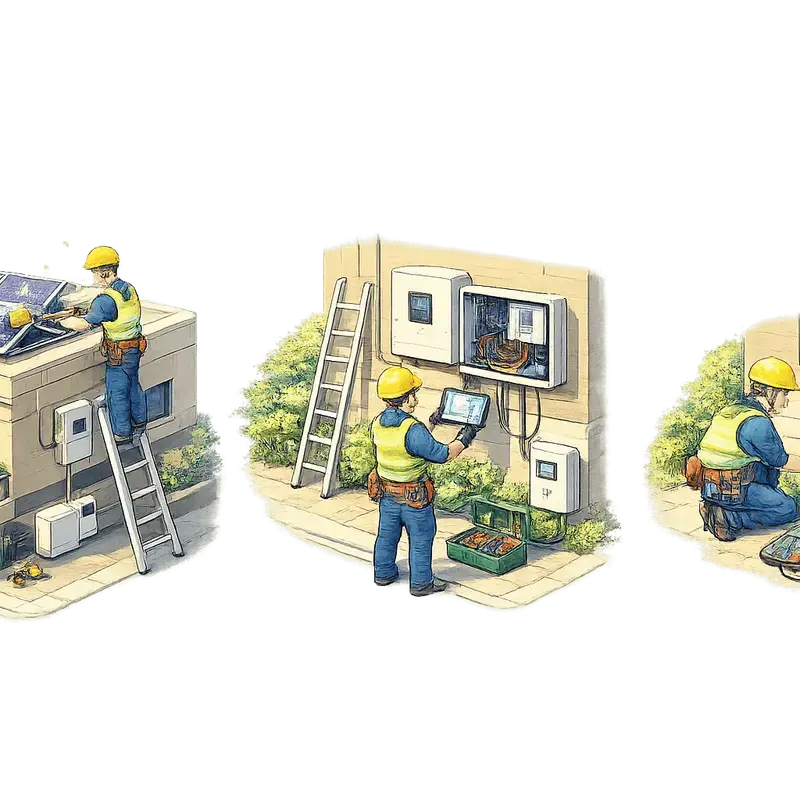
- Site Audit: Our engineers check your roof and electrical load.
- Design: We create a 3D layout to ensure zero shadow on your panels.
- DISCOM Application: We handle the net-metering paperwork with BSES, TPDDL, or DHBVN.
- Installation: Done in 2-3 days by our [30+ member team].
- Subsidy Claim: We assist in uploading photos to the National Portal for your ₹78,000 cashback.
FAQ
Can I charge my EV at night if I have solar?
Yes. On an on-grid system, you export solar power to the grid during the day and "withdraw" it at night for your EV. The net meter balances this out. If you have a hybrid system with a battery, you can use the stored solar energy directly.
Do I need a special "solar EV charger"?
No, a standard AC slow charger provided with your car works perfectly. However, "Smart Chargers" are better because they can prioritize using solar energy over grid energy, maximizing your solar ROI.
How many solar panels are needed for one EV?
Typically, 4 to 6 high-efficiency TOPCon Mono PERC panels (approx. 2-3kW) are enough to power an EV for an average city commute of 50km/day. You should adds this to your home's load to calculate the total system size.
Does charging an EV affect my solar warranty?
Not at all. Your solar system and EV are two separate entities connected via your home's electrical panel. As long as your solar installation process follows MNRE standards, all warranties remain valid.
Is solar EV charging at home safe for the car battery?
Yes, in fact, it is often safer. Home charging is "Slow Charging" (AC), which is much healthier for lithium battery longevity compared to frequent use of "DC Fast Chargers" found on highways.
Conclusion
The combination of solar EV charging home India is no longer just for early adopters—it is a financial necessity for the modern Indian household. With petrol prices rising and the cost of solar reaching record lows in 2026, the ROI has never been better.
At Bridgeway Power, we bring 35+ years of electrical expertise and a track record of [5,000+ installations] to your doorstep. Don't let your roof go to waste while your car drains your bank account.
Ready to see how many panels fit on your roof? Get a free solar consultation today and start your journey toward ₹0 bills. High-performance TOPCon panels and expert installation are just a click away.
Every 1 kW of solar on your roof offsets 1.5 tonnes of CO₂ per year
That's 40 trees planted — every year, for 25 years.
A typical 5 kW home system offsets 187 tonnes of carbon over its lifetime. That's equivalent to taking 8 cars off the road.
See your impact →How much can you save with solar?
Enter your electricity bill → get system size, subsidy amount & payback period
Get StartedLiked this article? Get a free solar quote
Tell us about your rooftop — we'll call with exact savings for your home.
Related Articles
Net Metering in India: How to Sell Solar Power Back to the Grid
Learn how net metering in India allows you to sell solar power back to the grid. Discover state policies, savings examples, and how to reduce your bill by 90%.
Read moreWhat Is Captive Open Access Solar (100% Equity Model)
Learn how Captive Open Access Solar (100% Equity Model) helps Indian businesses cut electricity costs by 40% using off-site solar plants. Guide on rules, savings & ROI.
Read moreSolar Installation Cost in Delhi NCR 2026: 3 kW at ₹1.32L net
Updated 2026 guide to solar costs in Delhi NCR. Learn about PM Surya Ghar subsidies, system pricing from 1kW-10kW, and how to reach zero electricity bills.
Read moreRelated guides
Delhi Electricity Rate 2026
BSES & Tata Power per-unit rates, PPAC, subsidy — sourced from DERC.
ExploreDelhi Solar Policy 2026
Free rooftop solar up to 3 kW for homes under 400 units. Eligibility & apply.
ExploreSolar Panel Price in Delhi
Live 2026 rooftop prices in Delhi after ₹1.56L subsidy. 1,200+ installs.
ExploreSolar Company in Gurgaon
Gurgaon's rooftop solar installer — 800+ systems, ₹78K PM Surya Ghar subsidy.
ExploreSolar Company in Noida
Noida & Greater Noida rooftop solar — 500+ installs, ₹1.08L stacked subsidy.
ExploreSolar Panel Price in Faridabad
Live 2026 Faridabad prices after ₹78K PM Surya Ghar subsidy. 350+ homes.
Explore