
By Vansh Dahiya · Reviewed by Arshi Chadha, Founder
Accelerated Depreciation Solar Benefits for 2026
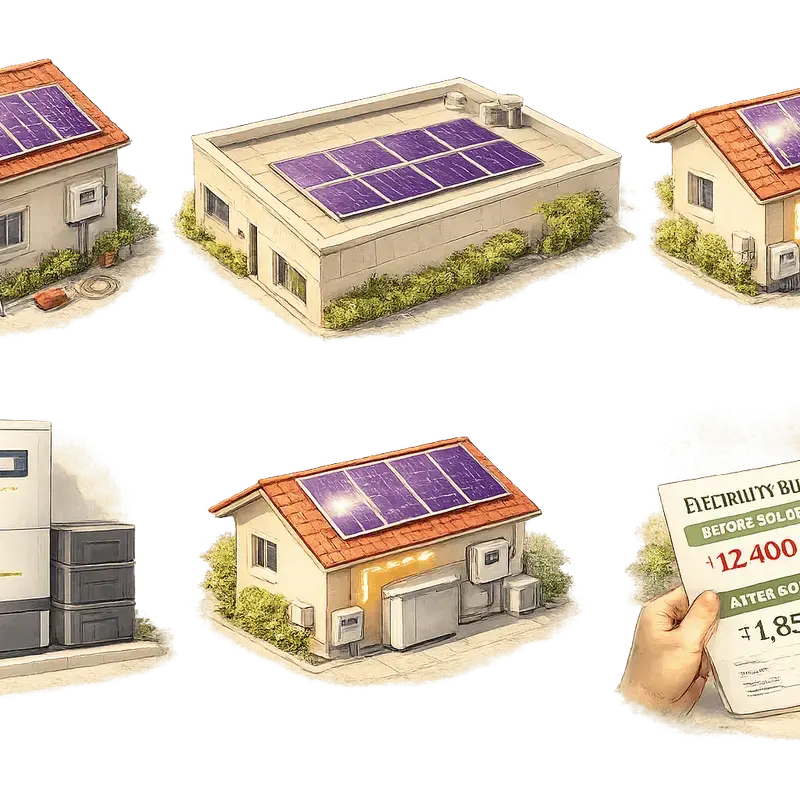
- •Accelerated Depreciation Rate: 40% per annum (Section 32)
- •Additional Depreciation: 20% (for manufacturing units)
- •Total First-Year Write-off: Up to 60% of project cost
- •ROI Impact: Reduces payback period by 12–18 months
- •Eligibility: Commercial, Industrial, and Institutional entities
If you’re running a business in India, the government isn't just asking you to go green; they’re effectively paying for nearly a third of your solar plant through tax breaks. While homeowners chase the PM Surya Ghar Yojana for subsidies, smart CFOs and business owners focus on accelerated depreciation solar 2026 benefits.
At Bridgeway Power, we’ve seen hundreds of commercial projects where the tax savings in the first 12 months actually exceeded the entire first year’s electricity savings. Under the current Income Tax Act, solar energy equipment qualifies for a 40% depreciation rate. When you factor in the 20% additional depreciation available to manufacturers, you can write off 60% of your investment in Year 1. This isn't just "accounting magic"—it’s a massive cash-flow injection that fundamentally changes the roi commercial solar india math.
Current Rates for Accelerated Depreciation on Solar Assets
The income tax act section 32 solar provisions are clear. Solar power generating systems are classified under the "Plant and Machinery" block but enjoy a higher rate than the standard 15% applied to most industrial equipment.
For the financial year 2025-26 and 2026-27, the rates are:
- Standard Accelerated Depreciation: 40% on a Written Down Value (WDV) basis.
- Additional Depreciation: 20% (Available only in the first year for companies engaged in the manufacture or production of any article or thing).
The "180 Days" Rule: This is where most businesses trip up. To claim the full 40%, your solar plant must be "put to use" for at least 180 days in the financial year (i.e., commissioned before October 4th). If you commission it on October 5th or later, you only get half the depreciation (20%) in the first year, with the balance carrying over. This is why we see a massive rush for solar in Delhi and NCR every September.
How to Calculate Tax Savings in the First Year
Let’s look at the actual solar tax saving india calculation. Suppose your business installs a 100kWp rooftop system. At current MSME solar plant costs, let's assume a project cost of ₹45 Lakhs (excluding GST, as you’ll likely claim GST Input Tax Credit).
If you are in the 30% tax bracket (plus surcharges/cess, effectively ~31.2%):
- Project Cost: ₹45,00,000
- Depreciation (40%): ₹18,00,000
- Tax Saving: 31.2% of ₹18,00,000 = ₹5,61,600
In your very first tax filing after installation, you've reduced your tax liability by over ₹5.6 Lakhs. If you’re a manufacturer eligible for an additional 20% depreciation, that saving jumps to ₹8,42,400. You haven't even accounted for the ₹8–10 Lakhs in electricity bill savings yet.
Tax Saving Projection: 100kW System (5-Year Outlook)
This table assumes a ₹45 Lakh investment, 40% WDV depreciation, and a 31.2% effective tax rate.
| Year | Opening WDV (₹) | Depreciation Amount (₹) | Tax Saving (31.2%) (₹) | Remaining Value (₹) |
|---|---|---|---|---|
| Year 1 | 45,00,000 | 18,00,000 | 5,61,600 | 27,00,000 |
| Year 2 | 27,00,000 | 10,80,000 | 3,36,960 | 16,20,000 |
| Year 3 | 16,20,000 | 6,48,000 | 2,02,176 | 9,72,000 |
| Year 4 | 9,72,000 | 3,88,800 | 1,21,305 | 5,83,200 |
| Year 5 | 5,83,200 | 2,33,280 | 72,783 | 3,49,920 |
| Total | 41,50,080 | 12,94,824 |
Note: Manufacturers can add 20% (₹9L) to Year 1 depreciation, increasing the total tax shield.
Impact on Project Payback Period for Commercial Sites
In the commercial sector, we don't talk about "saving the planet" as the primary driver; we talk about IRR (Internal Rate of Return). Without tax benefits, a typical commercial solar system in Gurgaon or Noida pays for itself in 3.5 to 4 years.
With accelerated depreciation solar 2026 benefits:
- Cash Payback: Often reached within 2.5 to 3 years.
- Net Cost: The effective cost of the system drops by ~30% due to tax recoveries.
- Zero-Cost Energy: For the remaining 22 years of the panel lifespan, your electricity is essentially free.
If your commercial electricity bill is too high, solar becomes a dual-engine recovery tool: it slashes your Opex (bills) and optimizes your Tax (Depreciation).
Talk to a solar engineer — not a salesperson
Enter your pincode and monthly bill. If we install in your area, an engineer answers on WhatsApp with your numbers.
What would solar save on YOUR bill?
Solar Depreciation & Tax Benefit Calculator
Based on Section 32 — 40% WDV + 20% additional depreciation (Year 1)
Filing Requirements Under the Income Tax Act
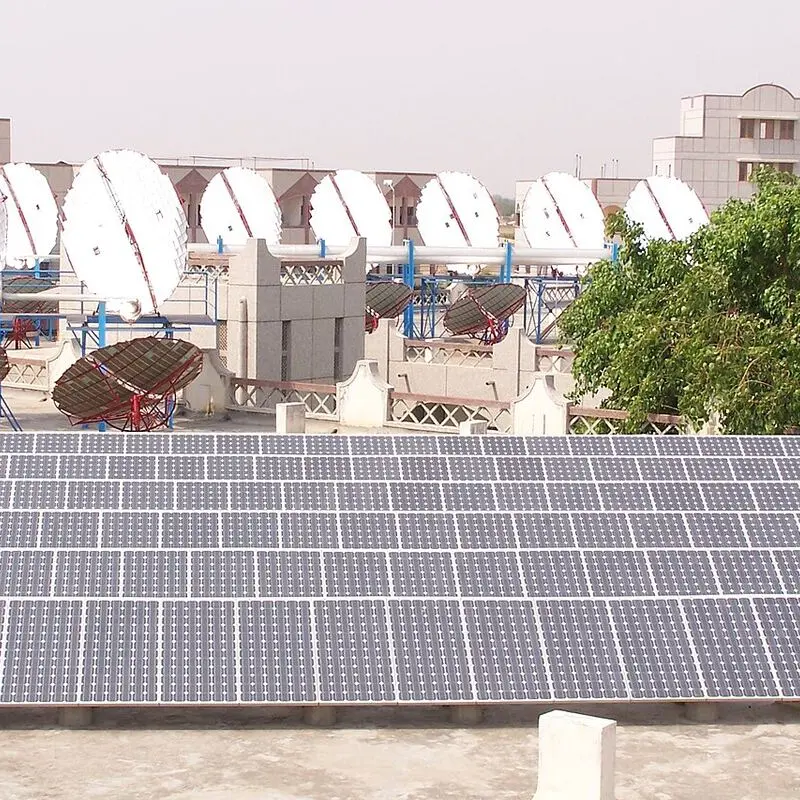
To claim these benefits, you don't need a special "solar certificate" from the Ministry, but you do need proper documentation from your EPC partner.
- Tax Invoice: Must clearly bifurcate the "Solar Power Generating System" from other civil works, as the 40% rate applies specifically to the solar assets.
- Commissioning Report: A document from the DISCOM (like BSES or DHBVN) or a certified engineer proving the date the system was "put to use."
- Audit Trail: Ensure the asset is added to your Fixed Asset Register under the correct block of assets.
We often tell our clients in Noida Extension and Sushant Lok that while we handle the net metering and installation, their CA must be involved from day one to ensure the "Put to Use" date aligns with their tax planning goals.
Real Example: A Pharma Unit in Faridabad
A manufacturing unit in NIT Faridabad with a monthly bill of ₹1.5 Lakhs installed a 150kW system.
- Total Investment: ₹65 Lakhs.
- Year 1 Depreciation (40% + 20% Additional): ₹39 Lakhs.
- Year 1 Tax Saving: ~₹12.16 Lakhs.
- Year 1 Electricity Saving: ~₹16 Lakhs.
- Total Year 1 Recovery: ₹28.16 Lakhs (43% of investment recovered in 12 months).
The owner used SIDBI 4E financing to fund the project. The tax savings alone covered nearly 80% of their EMI for the first year. This is the gold standard of roi commercial solar india.
From our installs
We recently completed a 40kW installation for a cold storage facility in Raj Nagar Extension, Ghaziabad. The client was initially hesitant about the capital outlay. However, once their auditor calculated that they would save ₹6.8 Lakhs in income tax by March 31st, the decision was instant.
- Observed Result: 180 units/day average generation.
- Caveat: High dust levels in the area meant they had to invest in a dedicated cleaning kit to maintain the 40% depreciation "value"—if the system doesn't generate, the ROI math fails regardless of tax breaks.
FAQ
Can individuals claim accelerated depreciation on home solar?
No, accelerated depreciation is only available to business entities, sole proprietorships, or professionals filing under business income. For residential systems, you should look at the central subsidy instead.
What happens if I buy solar on EMI or a loan?
You can still claim the full depreciation even if the system is financed. In fact, you get a double benefit: you claim 40% depreciation on the asset value AND you can deduct the interest paid on the solar loan as a business expense.
Is GST included in the depreciation calculation?
Generally, no. Since most businesses claim GST Input Tax Credit (ITC) on the 8.9% or 13.8% GST paid on solar, the GST component is not capitalized. You calculate depreciation on the base taxable value of the invoice.
Does accelerated depreciation apply to solar batteries?
Yes, if the battery is part of a hybrid solar system, it is typically treated as part of the solar power generating equipment block at the 40% rate. However, standalone UPS batteries may fall under a different block; always verify with your auditor.
Can I claim 40% depreciation every year?
No, the 40% is calculated on the Written Down Value (WDV). This means in Year 1 you claim 40% of the original cost. In Year 2, you claim 40% of the remaining 60% value, and so on. The absolute deduction amount decreases each year.
The 40% rate is a policy lever to encourage decarbonization. With corporate tax rates in India being highly competitive, leveraging solar tax benefits is the most effective way to turn a mandatory utility expense into a high-yielding tax shield. If you're planning a project for the 2026 fiscal year, start your site survey now to ensure you meet the 180-day "put to use" deadline.
Get a free quote for your commercial site.
Reviewed by: Gurubaksh Singh, Senior Solar Advisor, Bridgeway Power
Every 1 kW of solar on your roof offsets 1.5 tonnes of CO₂ per year
That's 40 trees planted — every year, for 25 years.
A typical 5 kW home system offsets 187 tonnes of carbon over its lifetime. That's equivalent to taking 8 cars off the road.
See your impact →How much can you save with solar?
Enter your electricity bill → get system size, subsidy amount & payback period
Get StartedLiked this article? Get a free solar quote
Tell us about your rooftop — we'll call with exact savings for your home.
Related Articles
What Is Captive Open Access Solar (100% Equity Model)
Learn how Captive Open Access Solar (100% Equity Model) helps Indian businesses cut electricity costs by 40% using off-site solar plants. Guide on rules, savings & ROI.
Read moreHow Rooftop Solar Can Eliminate Your Electricity Bill
Discover how Net Metering and PM Surya Ghar subsidies can reduce your monthly electricity bill to near-zero. Learn about system sizing, costs, and real-world savings.
Read moreSolar Subsidy in Uttar Pradesh 2026: ₹1,08,000 for Noida, Ghaziabad & Greater Noida
UP's stacked solar subsidy 2026: ₹78,000 central + ₹30,000 UPNEDA state top-up = ₹1.08L. Real PVVNL net-cost math for Noida, Greater Noida, Ghaziabad & Meerut.
Read moreRelated guides
Delhi Electricity Rate 2026
BSES & Tata Power per-unit rates, PPAC, subsidy — sourced from DERC.
ExploreDelhi Solar Policy 2026
Free rooftop solar up to 3 kW for homes under 400 units. Eligibility & apply.
ExploreSolar Panel Price in Delhi
Live 2026 rooftop prices in Delhi after ₹1.56L subsidy. 1,200+ installs.
ExploreSolar Company in Gurgaon
Gurgaon's rooftop solar installer — 800+ systems, ₹78K PM Surya Ghar subsidy.
ExploreSolar Company in Noida
Noida & Greater Noida rooftop solar — 500+ installs, ₹1.08L stacked subsidy.
ExploreSolar Panel Price in Faridabad
Live 2026 Faridabad prices after ₹78K PM Surya Ghar subsidy. 350+ homes.
Explore