
By Kajal Rajpoot · Reviewed by Arshi Chadha, Founder
Commercial Electricity Rate in Delhi 2026: Why It's So High (And the Fix)
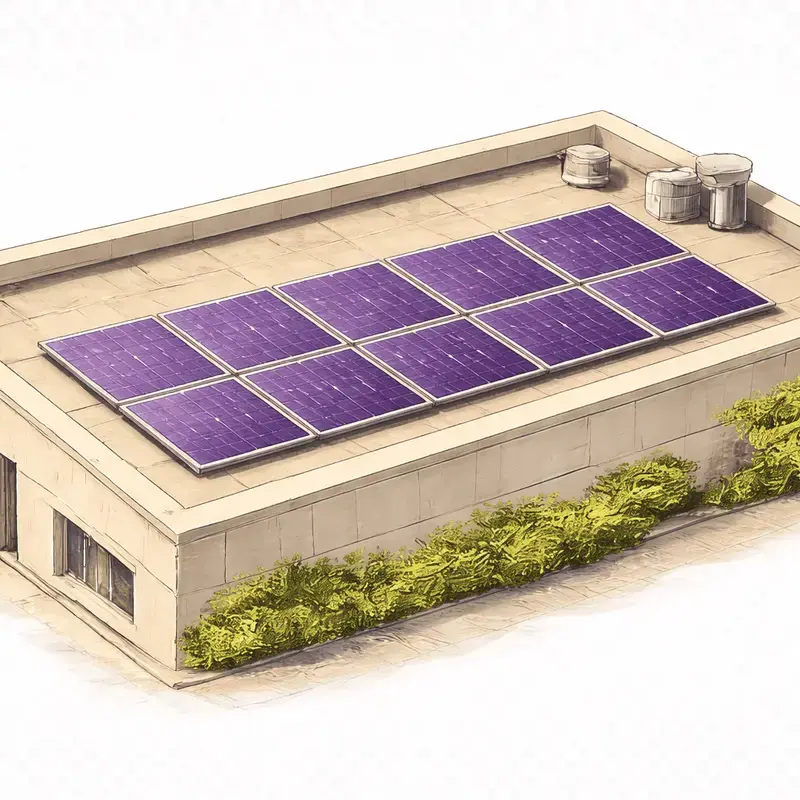
You're checking the rate — now see how much of your bill solar erases
Is your electricity bill too high in Delhi for your commercial establishment? You aren’t alone. Small office owners in Okhla, showroom managers in South Extension, and factory owners in Mayapuri are all asking the same question: “Why is my bill increasing even when my production stays the same?”
In 2026, Delhi’s commercial electricity landscape has become a complex web of energy charges, peak demand penalties, and shifting surcharges. For many businesses, the electricity bill is now the second-highest overhead after rent or salaries. But here is the good news: most Delhi businesses are overpaying not because they use too much power, but because they don't understand the "anatomy" of their bill.
At Bridgeway Power, with 35+ years of experience and over 5,000+ installations, we have seen that a simple bill audit frequently uncovers thousands of rupees in avoidable charges. This guide will dismantle your bill piece by piece and show you how to fight back against the Delhi electricity bill increase in 2026.
Step 1: Understand Your Bill Anatomy — Why It Is So High
Most Delhi business owners look only at the "Total Amount Due." However, your bill is a composite of four distinct layers. If you want to know why is my electricity bill so high in Delhi, you must look at the percentages.
Table 1: Delhi Commercial Bill Anatomy
| Component | Percentage of Total Bill | What It Covers |
|---|---|---|
| Energy Charge | ~60% | The actual units (kWh) consumed. |
| Fixed/Demand Charge | ~15% | Charges for the 'capacity' reserved for you by the DISCOM. |
| Surcharges (PPAC/Pension) | ~20% | Regulatory assets, pension funds, and fuel adjustment costs. |
| Taxes & Duties | ~5% | Municipal taxes and state electricity duties. |
As you can see, nearly 40% of your bill has nothing to do with how many lights or machines you keep running. It is dictated by how you are categorized and how you manage your peak load.
The 4 Main "Bill Inflators" Draining Your Revenue
Before jumping to solar, you must plug the leaks in your current system. We’ve identified four common reasons for a high electricity bill for Delhi businesses.
Table 2: Common Commercial Bill Inflators
| Inflator | Impact | Why It Happens |
|---|---|---|
| Wrong Tariff Category | High | Using a 'Non-Domestic' rate for a space that qualifies for a lower slab. |
| Excessive Demand Charges | High | Your "Peak Load" is significantly higher than your average consumption. |
| Power Factor Penalty | Medium | Poorly maintained motors or lack of capacitor banks. |
| Unoptimized Schedule | Medium | Running heavy machinery during peak hours (1 PM - 5 PM). |
1. The "Wrong Category" Trap
We recently encountered a coaching center in Janakpuri that was being billed under a high-intensity commercial category instead of the educational/institutional slab. By simply petitioning BSES Rajdhani with the correct documentation, they saved 12% on their monthly bill without changing a single bulb. Always verify your category on the top right of your bill.
2. Demand Charges: The Silent Killer
In Delhi, you pay for the "Sanctioned Load." If your sanctioned load is 50kW, but you only ever hit a 10kW peak, you are still paying fixed charges for that 50kW capacity. Conversely, if you exceed your sanctioned load even for 30 minutes, you face heavy penalties.
- Fact: A 100 kW peak demand can cost between ₹25,000–₹35,000 per month in fixed charges alone, regardless of actual energy use.
3. Power Factor (PF) Penalty
If your Power Factor falls below 0.9, your DISCOM (BSES or TPDDL) applies a penalty surcharge. Most businesses don't even have a meter that displays PF, or they haven't maintained their APFC (Automatic Power Factor Correction) panels in years. This is essentially "wasted" money that adds 3-5% to your bill.
Strategies to Reduce Your Commercial Electricity Bill in Delhi
Now that we know why the bill is high, how do we fix it? We recommend a tiered approach.
Table 3: Reduction Strategies & Expected Savings
| Strategy | Implementation Cost | Potential Savings |
|---|---|---|
| Tariff Audit | Low/Free | 5–10% |
| Power Factor Correction | Medium | 3–5% |
| Load Shifting/Management | Low | 5–8% |
| Community Solar / Rooftop Solar | High (or Zero via Financing) | 30–40% |
Strategy #1: Tariff Audit
A professional audit examines your historical data. Are you being billed for PPAC Surcharges correctly? Is your meter calibrated? Even a 1% error in a large commercial bill can mean lakhs of rupees over a decade.
Strategy #2: Load Shifting
Delhi’s DERC is increasingly moving toward "Time of Day" (ToD) metering. This means electricity is more expensive during peak afternoon hours and cheaper at night. If you can move heavy processes (like water pumping or heavy EV charging) to off-peak hours, your reduce commercial electricity bill Delhi mission is already halfway there.
Strategy #3: Community Solar (The 60% Solution)
After you have optimized your PF and fixed charges, you are still left with the Energy Charge—the 60% chunk of your bill. For many businesses in congested areas like Lajpat Nagar or Chandni Chowk, putting panels on the roof isn't an option due to shading or limited space.
This is where Community Solar in India changes everything. Through Virtual Net Metering (VNM), you can invest in a solar plant located elsewhere and have the credits adjusted against your Delhi commercial bill.
- No Rooftop Needed: Perfect for rented offices or showrooms.
- Scalable: You can start small and offset more of your bill as you grow.
- High ROI: Since commercial tariffs are high (₹8+), the savings per unit of solar are significantly higher than residential.
Talk to a solar engineer — not a salesperson
Check whether we install in your area, then get your answer on WhatsApp. No forms, no call centre.
See how much of this bill solar erases
Real-World Example: A Delhi Showroom’s Success
Let’s look at a 3,000 sq. ft. clothing showroom in South City Gurgaon (which follows similar commercial billing patterns to Delhi).
- Initial Monthly Bill: ₹1,15,000
- Energy Units: 11,000 kWh
- Fixed Charges: ₹12,000
- Surcharges/Taxes: ₹18,000
- The Problem: High afternoon AC usage creating a peak demand spike and high energy charges.
- The Solution:
- Installed a 20kW Solar System (Rooftop + Community Solar hybrid).
- Optimized AC start-up times to avoid a simultaneous peak.
- Corrected the Power Factor via a new capacitor bank.
- New Monthly Bill: ₹72,000
- Monthly Savings: ₹43,000
- Annual Savings: ₹5.16 Lakh
- Payback Period: ~3.2 years.
By addressing the electricity bill too high Delhi commercial issue holistically, this business owner effectively gave themselves a ₹5 lakh annual "tax-free" raise.
Financing Your Shift to Lower Bills
We understand that commercial solar is a significant investment. However, in 2026, the financing landscape for MSMEs in India has never been better. You don't need to deplete your working capital to lower your bills.
Several of our partners offer specialized loans for solar. You can explore options like:
- Aerem Solar Finance
- Canara Bank Solar Loan
- ECOFY Solar Financing
- PNB Solar Rooftop Scheme
- SBI PM Surya Ghar Loan
Each post-links above provides details on interest rates and eligibility. For most businesses, the monthly EMI of a solar loan is actually less than the amount they save on their electricity bill, making the project "cash-flow positive" from month one.
Why the "Delhi Electricity Bill Increase in 2026" is a Warning Sign
Electricity prices in urban centers like Delhi historically rise by 3–5% annually. However, with the rising costs of coal and the infrastructure upgrades required for EVs, those jumps are becoming more frequent.
Waiting to fix your high bill is a cost in itself. Every month you delay is another month of "lost savings" that you can never recover. With Bridgeway Power’s solar calculator, you can estimate exactly how much you are losing to the grid each month.
Frequently Asked Questions
Why is my commercial bill so much higher than my residential bill in Delhi?
Commercial tariffs are "cross-subsidized" in India. This means businesses pay a higher rate (₹8–10/unit) to keep residential and agricultural rates lower (₹3–5/unit). Additionally, commercial bills include higher fixed charges based on sanctioned load, which residential bills often don't emphasize as much.
Does community solar work for rented commercial properties?
Yes! Since Virtual Net Metering allows the solar plant to be in a different location, you don't need to own the roof of your office or shop. The credits are applied to your DISCOM account number, regardless of where the electricity is physically consumed.
What is the PPAC surcharge on my Delhi bill?
PPAC stands for Power Purchase Adjustment Cost. It is a surcharge added by DISCOMs to recover the fluctuating cost of fuel (coal/gas) used to generate power. In 2025-26, this has been a major reason for the Delhi electricity bill increase, often adding 20-30% to the base energy charge.
Can I reduce my fixed/demand charges?
Yes, but it requires a "Load Audit." If your actual peak usage is consistently lower than your sanctioned load, you can apply for a "Load Reduction" with your DISCOM. This will immediately lower your monthly fixed charges. Conversely, if you are over-shooting your load, increasing your sanctioned load officially is cheaper than paying the monthly "over-drawal" penalties.
How do I know if my Power Factor is bad?
Check your bill for a "KVARH" or "PF" reading. If the Power Factor (PF) is below 0.95, you are likely losing money. A reading of 1.0 is ideal. If you see a penalty charge labeled "PF Surcharge," you should immediately install or repair your capacitor banks.
Conclusion: Take Control of Your Overheads
If your electricity bill is too high for your Delhi commercial establishment, don't just treat it as an inevitable cost of doing business. In the competitive market of 2026, energy efficiency is a competitive advantage.
A free bill audit from Bridgeway Power takes only 10 minutes. Our experts will look at your historical consumption, demand patterns, and tariff category to show you exactly where your money is leaking. From Group Net Metering for multiple branches to rooftop installations for warehouses, we have the experience to bring your bills down to earth.
Stop overpaying the DISCOM. Contact Bridgeway Power today for a free commercial bill audit and see how much your business could be saving with solar.
Every 1 kW of solar on your roof offsets 1.5 tonnes of CO₂ per year
That's 40 trees planted — every year, for 25 years.
A typical 5 kW home system offsets 187 tonnes of carbon over its lifetime. That's equivalent to taking 8 cars off the road.
See your impact →How much can you save with solar?
Enter your electricity bill → get system size, subsidy amount & payback period
Get StartedGo solar without owning a rooftop
Community Solar gives commercial & institutional consumers the same savings — zero capex, zero roof needed.
Or get a free solar quote
Tell us about your rooftop — we'll call with exact savings for your home.
Related Articles
Lock In a Fixed Electricity Rate for Your School — Before Delhi Tariffs Rise Again
Lock in your school's electricity rate before Delhi tariffs hit ₹16/unit. Learn how Community Solar offers zero-capex savings of ₹10L+ annually.
Read moreWhat Delhi's Solar Policy Means for Apartment Owners and Non-Rooftop Residents
Discover how Delhi's 2026 solar policy enables apartment owners to save 40% on bills using Virtual Net Metering. No roof access or RWA NOC required.
Read moreVirtual Net Metering (VNM) in India: How It Enables Community Solar for Homeowners
Learn how Virtual Net Metering (VNM) enables community solar in India. Discover how DERC and RERC policies allow flat owners to share solar credits without individual rooftops.
Read moreRelated guides
Delhi Electricity Rate 2026
BSES & Tata Power per-unit rates, PPAC, subsidy — sourced from DERC.
ExploreDelhi Solar Policy 2026
Free rooftop solar up to 3 kW for homes under 400 units. Eligibility & apply.
ExploreSolar Panel Price in Delhi
Live 2026 rooftop prices in Delhi after ₹1.56L subsidy. 1,200+ installs.
ExploreSolar Company in Gurgaon
Gurgaon's rooftop solar installer — 800+ systems, ₹78K PM Surya Ghar subsidy.
ExploreSolar Company in Noida
Noida & Greater Noida rooftop solar — 500+ installs, ₹1.08L stacked subsidy.
ExploreSolar Panel Price in Faridabad
Live 2026 Faridabad prices after ₹78K PM Surya Ghar subsidy. 350+ homes.
Explore