
By Arshi Chadha, Founder · Bridgeway Power
PM Surya Ghar Yojana 2026: Complete Guide to Rooftop Solar Subsidies in India
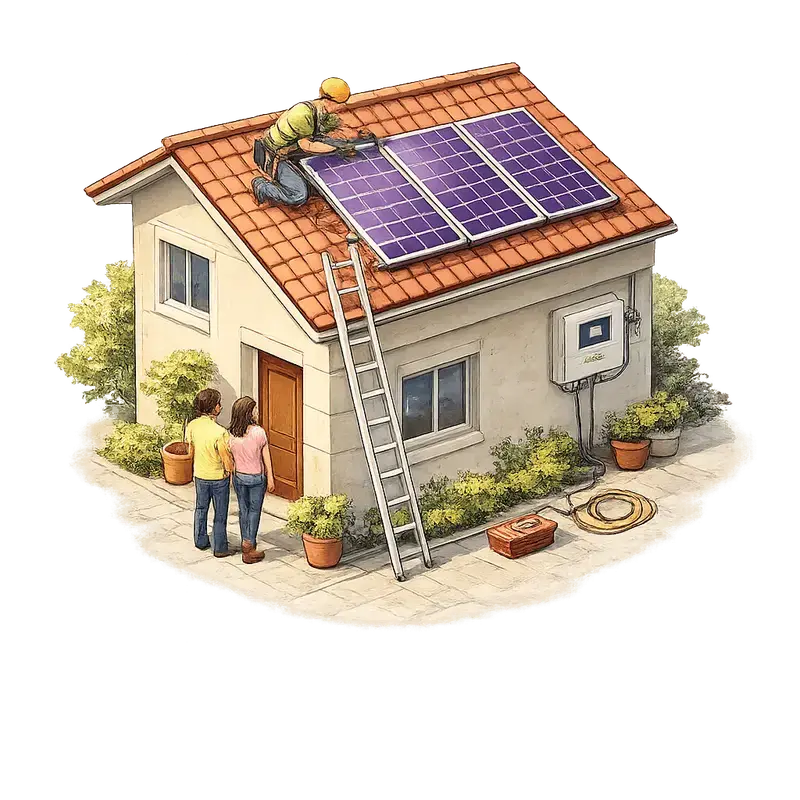
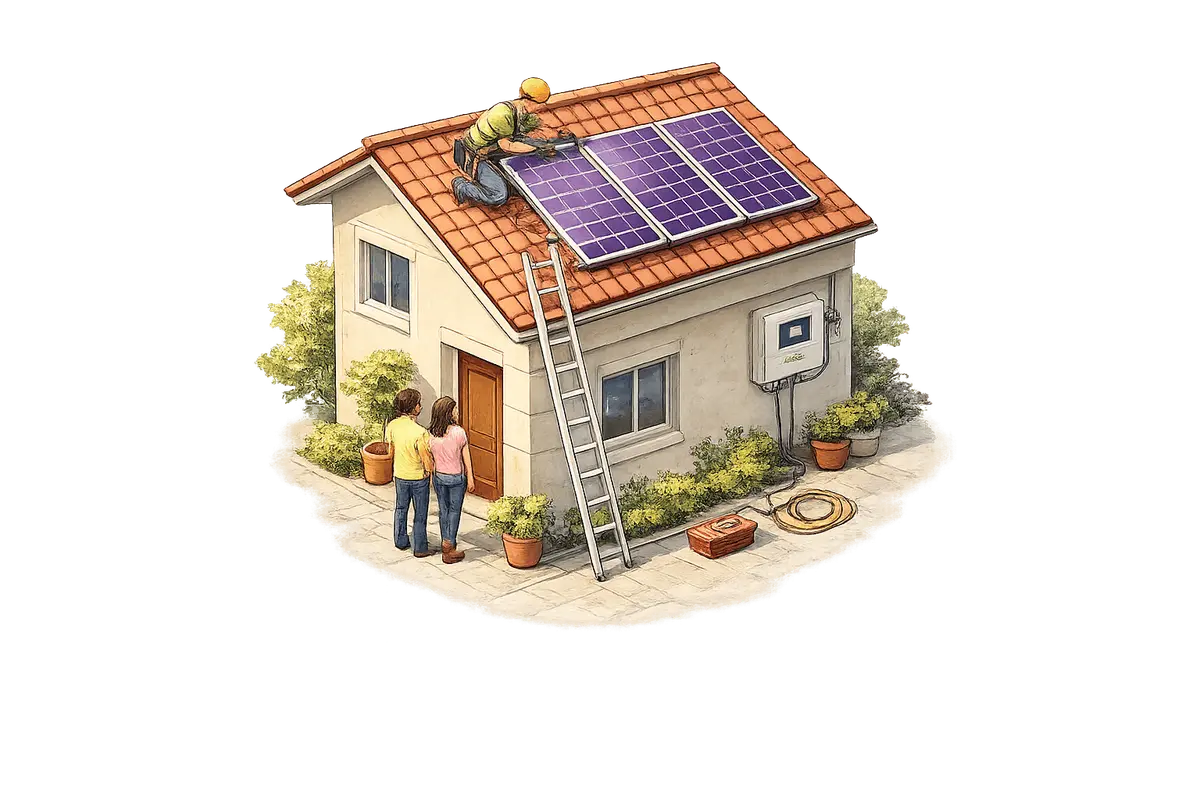
PM Surya Ghar Muft Bijli Yojana: The Complete 2026 Guide
PM Surya Ghar Muft Bijli Yojana is the Government of India's flagship rooftop solar subsidy scheme, launched in February 2024 by the Ministry of New and Renewable Energy (MNRE). It is the single largest residential solar incentive India has ever run, with a target of bringing rooftop solar to 1 crore households by FY 2026-27 and a sanctioned outlay of ₹75,021 crore.
If you are a homeowner thinking about solar, this is the scheme that makes the math work. A 3 kW system that used to cost ₹2.1 lakh out of pocket now costs under ₹1.3 lakh after the central subsidy alone — and in Delhi or Uttar Pradesh, less than ₹1 lakh after stacking the state component.
This guide walks through exactly how much you get, who qualifies, how to apply, what the timelines really look like, and the common mistakes that delay payouts.
How Much Subsidy Do You Actually Get?
The central subsidy is flat per kW, capped at 3 kW. It does not scale linearly — the per-kW rate drops after the first 2 kW.
| System Size | Central Subsidy | What it covers |
|---|---|---|
| 1 kW | ₹30,000 | ~22-25% of system cost |
| 2 kW | ₹60,000 | ~28-32% of system cost |
| 3 kW or more | ₹78,000 (max) | ~32-37% of system cost |
The math is straightforward: ₹30,000 for the first kW + ₹30,000 for the second kW + ₹18,000 for the third kW = ₹78,000. Anything above 3 kW receives no additional central subsidy, though larger systems still qualify for net-metering benefits.
Why the ₹78,000 cap matters
The cap is intentional. The scheme is designed around the "300 free units per month" promise — a 3 kW system in Delhi/NCR generates roughly 360-420 units per month, which is enough to zero out the bill for most middle-income households. The government's logic: subsidise the system size that eliminates the bill, not the system size that turns your roof into a power plant.
Stacking State Subsidies On Top
The central subsidy is not the only money on the table. Several states offer their own component, and the two stack.
Delhi (residential)
- ₹10,000 per kW, capped at ₹30,000 (i.e., 3 kW)
- Plus a Generation-Based Incentive (GBI) of ₹3/kWh for the first 3 kW, paid for the first three years
- Total stacked subsidy for a 3 kW Delhi household: ₹78,000 (central) + ₹30,000 (state) = ₹1,08,000 — roughly half the system cost
Uttar Pradesh (residential)
- ₹30,000 flat for systems up to 3 kW
- Total stacked for UP 3 kW household: ₹78,000 + ₹30,000 = ₹1,08,000
Haryana, Rajasthan, and most other states
No active state component as of 2026 — you receive the central ₹78,000 only. This is why Delhi and UP installations are running 30-40% ahead of neighbouring NCR states on a per-capita basis.
RWAs and group housing
Resident Welfare Associations get a separate slab: ₹18,000 per kW for common-area systems, with no per-kW cap. A society installing a 50 kW system on its tower roof for lifts and common lighting receives ₹9 lakh — large enough to make the project cash-flow positive from year one.
Who Is Eligible?
Eligibility is deliberately broad. The scheme covers:
- Indian citizens owning a residential property with a rooftop suitable for solar (no specific area minimum, but ~100 sq ft per kW is the practical floor)
- A valid domestic electricity connection in the applicant's name
- No prior central subsidy received for any other solar installation on the same property
- The vendor must be DISCOM-empanelled in the applicant's state (and ideally MNRE-listed)
What disqualifies you
- Commercial or industrial connections — covered under different schemes (Captive, OPEX, KUSUM for agriculture)
- Rented homes where the landlord refuses to sign — the subsidy goes to the connection holder
- Properties with pending DISCOM dues
- Systems installed before the subsidy application is approved (this is the single most common reason for rejection — never let an installer start work before your application is sanctioned)
The Application Process, Step by Step
The portal is pmsuryaghar.gov.in. The process has been simplified twice since launch and now takes 4-8 weeks end-to-end if nothing goes wrong.
Step 1 — Register on the portal (Day 0)
Enter your state, DISCOM, consumer number (from your electricity bill), and mobile number. The portal auto-pulls your sanctioned load and connection details from the DISCOM database.
Step 2 — Submit application (Day 0-2)
Choose your desired system size (1-3 kW for max subsidy, up to 10 kW with reduced subsidy). Upload your latest electricity bill and a photo of the rooftop. No vendor selection at this stage.
Step 3 — Feasibility approval (Day 2-15)
The DISCOM verifies that your roof is suitable and your sanctioned load can accommodate the system. This is a paper exercise — no site visit yet. You receive an SMS/email when approved.
Step 4 — Pick a vendor and sign contract (Day 15-20)
Only after feasibility approval. The portal lists empanelled vendors in your area with star ratings. This is the critical decision — see the next section on choosing well.
Step 5 — Installation (Day 20-50)
The vendor completes installation, typically in 2-4 days for a 3 kW residential system. Quality vendors do load calculation, structure design, panel mounting, inverter wiring, earthing, and DISCOM paperwork in one visit.
Talk to a solar engineer — not a salesperson
Check whether we install in your area, then get your answer on WhatsApp. No forms, no call centre.
See your exact subsidy after state stacking
Step 6 — Net meter installation by DISCOM (Day 50-70)
The DISCOM sends a meter technician to swap your regular meter for a bi-directional net meter. This is the slowest step — most delays happen here, especially in BSES Rajdhani, BSES Yamuna, and Tata Power Delhi territories where backlogs run 3-6 weeks.
Step 7 — Commissioning and subsidy disbursement (Day 70-90)
Once the net meter is live and tested, the DISCOM issues a commissioning certificate. The portal credits the subsidy directly to your bank account, typically within 30 days of commissioning.
Realistic end-to-end timeline: 8-12 weeks from application to subsidy in account. Anyone promising "subsidy in 30 days" is either selling you a substandard system or has not factored in DISCOM net-meter queues.
Loan Financing Under the Scheme
The scheme is paired with a collateral-free loan of up to ₹2 lakh at 7% interest for residential rooftop solar, available through 12 PSU banks (SBI, Canara, PNB, Union Bank, Bank of Baroda, and others). Key terms:
- No processing fee for systems ≤ 3 kW
- Tenure up to 10 years
- EMI for a ₹1.3 lakh loan over 5 years: roughly ₹2,580/month — which is typically less than the electricity bill the system replaces
NBFC offers (Ecofy, Credit Fair, etc.) are available at 9.5-13% with faster approval but higher cost. PSU bank route is slower (3-4 weeks) but materially cheaper if you intend to finance.
What the Scheme Does Not Cover
A few important exclusions buyers routinely miss:
- Battery storage is not subsidised under PM Surya Ghar. If you want backup power, that's a separate ₹70,000-₹1,20,000 spend on a 5-10 kWh battery, out of pocket
- Off-grid systems are explicitly excluded — you must be grid-connected with net metering
- Replacing an existing solar system on the same connection does not qualify for a second subsidy
- Premium components (microinverters, optimisers, tier-1 mono PERC panels) are allowed but the subsidy is calculated on a standard benchmark cost, not your actual spend
Choosing a Vendor — The Decision That Matters Most
The portal lists hundreds of empanelled vendors. Most of the warranty claims, generation shortfalls, and post-installation grief in this scheme come from picking the cheapest one. A few non-negotiables:
- Insist on Tier-1 monocrystalline panels (Waaree, Vikram, Adani, Goldi, Tata) — not "imported" no-name brands. The 25-year warranty only means anything if the manufacturer is still in business in year 20.
- String inverter from a known brand (Sungrow, Growatt, Solis, SolarEdge) with 5-year standard warranty and an extension option
- Galvanised iron mounting structure with at least 80 microns of zinc coating — anything less rusts in Delhi's monsoon within 6-8 years
- Written generation guarantee — a serious vendor commits to a minimum kWh/year output and credits you if the system underperforms
- AMC plan offered separately — installation companies that disappear after commissioning are the biggest reason 5-year-old systems sit at 60% of original output
Bridgeway Power has installed over 10,000 systems across Delhi NCR, UP, Haryana, and Rajasthan since 1989, and handles the full PM Surya Ghar paperwork end-to-end including the DISCOM follow-ups that delay most installations. We do not subcontract installation, and every system ships with a 5-year comprehensive AMC.
The Bottom Line
PM Surya Ghar Muft Bijli Yojana is the most generous residential solar subsidy India has ever offered. For a Delhi or UP household, the central + state stack covers roughly half the system cost, and the system pays back the remaining cost in 3-4 years. After that, you get free electricity for 20+ years on equipment that came with a 25-year performance warranty.
The two things that decide whether you actually realise these numbers:
- Apply before installing — never let a vendor talk you into "we'll handle the subsidy after"
- Pick a vendor on quality, not price — the difference between a ₹1.4 lakh system and a ₹1.1 lakh system is usually the difference between 25 years of generation and 8 years of generation
Get a free site assessment from Bridgeway Power or WhatsApp our solar advisor for a same-day estimate including your eligible subsidy stack.
How to Apply for PM Surya Ghar Subsidy
-
Register on the National Portal — Visit pmsuryaghar.gov.in and click "Apply for Rooftop Solar". Enter your state, DISCOM name, and consumer number from your latest electricity bill.
-
Verify your consumer details — The portal pulls your sanctioned load and average bill from the DISCOM database. Confirm these match your bill before proceeding.
-
Apply for feasibility approval — Submit your application. DISCOM reviews load capacity and sanctions feasibility within 15 days (Delhi: BSES Rajdhani, BSES Yamuna, Tata Power-DDL).
-
Pick an empanelled vendor and install — Choose from the MNRE empanelled vendor list on the portal. Sign the contract; installation typically completes in 30–45 days for a 3 kW system.
-
Submit installation details and request net meter — After commissioning, upload plant photos and inverter serial numbers. DISCOM installs the bidirectional net meter within 30 days.
-
Receive subsidy in your bank account — Once the net meter is installed and inspection report is uploaded, the central subsidy (₹78,000 for 3 kW) hits your bank account within 30 days of final inspection.
For the rupee figures alone, jump to the PM Surya Ghar subsidy amount breakdown by system size.
FAQ
How much subsidy do I get under PM Surya Ghar for a 3 kW system?
A 3 kW residential rooftop solar system qualifies for the maximum central subsidy of ₹78,000 under PM Surya Ghar Muft Bijli Yojana. Delhi residents stack an additional ₹30,000 state subsidy, taking the total to ₹1.08 lakh.
Who is eligible for PM Surya Ghar Yojana?
Any Indian homeowner with a valid electricity connection and a rooftop they own is eligible. The scheme is residential-only — commercial, industrial, and rental properties do not qualify for the central subsidy.
How long does the PM Surya Ghar subsidy process take end-to-end?
From application to subsidy disbursal typically takes 90–120 days: ~15 days for feasibility approval, 30–45 days for installation, 30 days for net meter, and 30 days for subsidy payout.
Can I install solar myself or do I have to use an empanelled vendor?
To claim the PM Surya Ghar subsidy, you must use an MNRE empanelled vendor listed on the national portal. Self-installations and unlisted vendors are not eligible for the central subsidy.
What documents do I need to apply for PM Surya Ghar?
Latest electricity bill, Aadhaar card, bank account details (for subsidy disbursal), and proof of property ownership (sale deed or property tax receipt). All uploads happen through the national portal.
What happens if my DISCOM rejects the application?
Most rejections are for incorrect consumer number, mismatched name, or insufficient sanctioned load. You can resubmit after correcting the issue. If sanctioned load is too low, you must apply for load enhancement with your DISCOM first.
Every 1 kW of solar on your roof offsets 1.5 tonnes of CO₂ per year
That's 40 trees planted — every year, for 25 years.
A typical 5 kW home system offsets 187 tonnes of carbon over its lifetime. That's equivalent to taking 8 cars off the road.
See your impact →Get your exact solar cost — free in 30 seconds
Enter your electricity bill → see system size, govt subsidy & payback period
Get StartedLiked this article? Get a free solar quote
Tell us about your rooftop — we'll call with exact savings for your home.
Related Articles
Net Metering in India: How to Sell Solar Power Back to the Grid
Learn how net metering in India allows you to sell solar power back to the grid. Discover state policies, savings examples, and how to reduce your bill by 90%.
Read moreWhat Is Captive Open Access Solar (100% Equity Model)
Learn how Captive Open Access Solar (100% Equity Model) helps Indian businesses cut electricity costs by 40% using off-site solar plants. Guide on rules, savings & ROI.
Read moreSolar Installation Cost in Delhi NCR 2026: 3 kW at ₹1.32L net
Updated 2026 guide to solar costs in Delhi NCR. Learn about PM Surya Ghar subsidies, system pricing from 1kW-10kW, and how to reach zero electricity bills.
Read moreRelated guides
Delhi Electricity Rate 2026
BSES & Tata Power per-unit rates, PPAC, subsidy — sourced from DERC.
ExploreDelhi Solar Policy 2026
Free rooftop solar up to 3 kW for homes under 400 units. Eligibility & apply.
ExploreSolar Panel Price in Delhi
Live 2026 rooftop prices in Delhi after ₹1.56L subsidy. 1,200+ installs.
ExploreSolar Company in Gurgaon
Gurgaon's rooftop solar installer — 800+ systems, ₹78K PM Surya Ghar subsidy.
ExploreSolar Company in Noida
Noida & Greater Noida rooftop solar — 500+ installs, ₹1.08L stacked subsidy.
ExploreSolar Panel Price in Faridabad
Live 2026 Faridabad prices after ₹78K PM Surya Ghar subsidy. 350+ homes.
Explore