
By Arshi Chadha, Founder · Bridgeway Power
1kW Solar System Price in India 2026
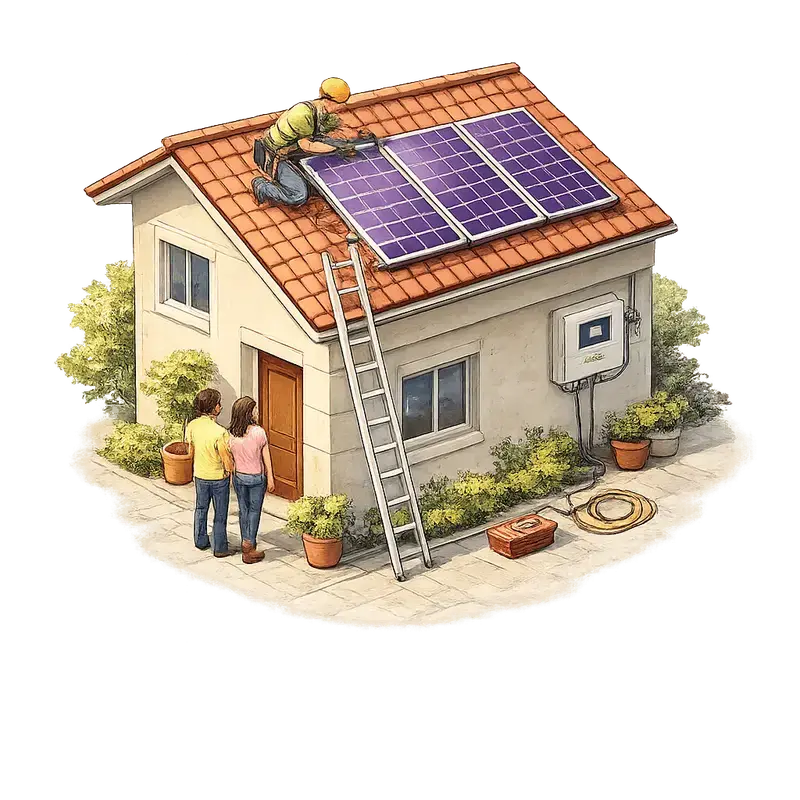
Quick answer
A 1 kW rooftop solar system in India costs roughly Rs.55,000 to 65,000 before subsidy in 2026. The PM Surya Ghar central subsidy for 1 kW is Rs.30,000, bringing the net cost to about Rs.25,000 to 35,000; Delhi homes get up to Rs.26,000 more from the state top-up. One kW generates 3.5 to 4.5 units a day in Delhi NCR — enough for fans, lights and a fridge, but not air conditioning.
| Item | Figure |
|---|---|
| Price before subsidy | Rs.55,000 - 65,000 |
| Central subsidy (1 kW) | Rs.30,000 |
| Delhi state top-up | Rs.26,000 |
| Generation (Delhi NCR) | 3.5 - 4.5 units/day |
The 1kW solar system price in India in 2026 is ₹45,000–₹60,000 before subsidy, and ₹15,000–₹30,000 after the ₹30,000 PM Surya Ghar subsidy. A 1kW system generates about 120 units per month in Delhi NCR — enough to run fans, lights, a fridge, and a TV — and pays for itself in 1.5 to 2.5 years.
Are you tired of seeing your electricity bill creep up every summer, even when you aren't running several air conditioners? Perhaps you live in a cozy 1BHK or a single-floor home in Delhi NCR and want to dip your toes into renewable energy without breaking the bank.
For many Indian households, the journey toward energy independence starts with a single step—or in this case, a single kilowatt. The 1kW solar system price India has become a hot topic in 2026, especially with the government's aggressive push through the PM Surya Ghar Muft Bijli Yojana. But the question remains: Can such a small system truly make a difference, or should you aim higher? At Bridgeway Power, with over 35 years of experience and 5,000+ successful installations, we’ve seen how even the smallest solar system for home use can transform a family's finances.
Understanding the 1kW Solar System Price India 2026
When looking at the 1kW solar system cost, it is important to realize that you aren't just buying "panels." You are investing in a miniature power plant. A 1kW system typically consists of 2 high-efficiency Topcon Mono PERC panels (around 580-600Wp each), a solar inverter, a mounting structure, and the necessary wiring.
For 2026, while the 1kW solar panel price India 2026 has stabilized due to increased domestic manufacturing, the overhead costs of installation (labor, transport, and mounting) remain a significant portion of the total.
1kW Solar System Cost Breakdown (2026 Estimates)
| Component | Estimated Cost (₹) |
|---|---|
| Solar Panels (Mono PERC/Topcon) | ₹18,000 – ₹22,000 |
| Solar Inverter (Off-grid/On-grid) | ₹8,000 – ₹15,000 |
| Mounting Structure (GI/Aluminium) | ₹5,000 – ₹8,000 |
| Wiring & Installation Material | ₹8,000 – ₹12,000 |
| Total Estimated Price (Pre-Subsidy) | ₹45,000 – ₹60,000 |
Note: Prices include GST. Final pricing depends on the brand of inverter and the complexity of your roof structure.
What Can a 1kW System Actually Run?
Many homeowners make the mistake of thinking a 1kW system is "too small." While it’s true that you won't be running a 1.5-ton AC on this setup, it is more than sufficient for the foundational needs of a small Indian household.
On average, a 1kW system in the Delhi NCR region generates about 120 units per month. To put that in perspective, that is roughly 4 units a day. If your monthly consumption is around 300-400 units, a 1kW system covers approximately 25-35% of your bill.
1kW Daily Solar Generation Table
| Season | Avg. Daily Generation | Appliances Covered |
|---|---|---|
| Summer | 4.0 – 5.0 Units/Day | 4 Fans, 5 LED Lights, 1 TV, 1 Fridge (24/7) |
| Winter | 3.0 – 4.0 Units/Day | 4 Fans, 5 LED Lights, 1 LED TV, 1 Laptop |
| Monsoon | 1.5 – 3.0 Units/Day | Critical Lights & Fridge |
The Impact of PM Surya Ghar Subsidy
The game-changer for the 1kW solar system price India is the PM Surya Ghar Yojana. Under this central government scheme, residential consumers are eligible for a fixed subsidy of ₹30,000 for a 1kW system.
If you are an Indian homeowner, this means:
- Gross Cost: ₹55,000 (Average)
- Central Subsidy: -₹30,000
- Effective Out-of-Pocket Cost: ₹25,000
In states like Uttar Pradesh, you might even get an additional state subsidy of ₹30,000, potentially making the system nearly free! To understand exactly how these numbers apply to your specific home, we recommend checking our Solar Calculator.
1kW vs. Higher Capacity Systems: Which is Right for You?
Is the smallest solar system for home the best choice? Usually, 1kW is recommended for households with a monthly electricity bill under ₹2,000. If your bill is higher, you might find the ROI is much better on a 3kW system due to the "step-up" subsidy structure.
Comparison Table: 1kW vs 2kW vs 3kW
| Feature | 1kW System | 2kW System | 3kW System |
|---|---|---|---|
| Total Cost (Pre-Subsidy) | ₹55,000 | ₹1,10,000 | ₹1,65,000 |
| PM Surya Ghar Subsidy | ₹30,000 | ₹60,000 | ₹78,000 |
| Net Cost (Approx) | ₹25,000 | ₹50,000 | ₹87,000 |
| Monthly Generation | 120 Units | 240 Units | 360 Units |
| Bill Coverage | 25-35% | 50-70% | 80-100% (Small Home) |
| Best For | Starter / Small Homes | Medium 2BHK | 3BHK with AC |
If you are debating between these sizes, our guide on 3kW vs 5kW solar systems provides a deeper dive into the math of larger installations.
Talk to a solar engineer — not a salesperson
Enter your pincode and monthly bill. If we install in your area, an engineer answers on WhatsApp with your numbers.
What would solar save on YOUR bill?
Real-Life Example: A Small Home in Rohini, Delhi
Let’s look at a real-world scenario. Mr. Sharma owns a small independent floor in Rohini. His monthly electricity bill was consistently around ₹1,800. After learning about the 1kW solar panel for home India options, he decided to install a basic 1kW on-grid system.
- System Size: 1kW (2 x 580Wp Panels)
- Total Investment: ₹52,000
- Subsidy Received: ₹30,000 (via PM Surya Ghar)
- Net Investment: ₹22,000
- Monthly Generation: 125 units (avg)
- Monthly Savings: ₹125 x 7 (Delhi tariff) = ₹875/month
At this rate, Mr. Sharma recovered his entire investment in just 25 months (approx. 2 years). After that, he enjoys free electricity for the next 23+ years. This is why many consider it the most bankable investment in India today.
Who Should Choose a 1kW System?
While 1kW is a fantastic entry point, it isn't for everyone. Here is where it fits best:
- Small Families: If you live in a 1BHK or a studio apartment with minimal heavy appliances.
- Budget Conscious: If you want to start your solar journey but have a limited initial budget.
- Low Sanctioned Load: If your DISCOM sanctioned load is only 1kW or 2kW, you might be restricted from installing a larger system without a load upgrade.
- Builder Floors: Many builder floors in Delhi have limited roof space. A 1kW system occupies only about 60–80 sq. ft. of space.
The Modular Upgrade Path
One of the best things about solar is that it is modular. At Bridgeway Power, we often advise clients to start with a high-quality 1kW "base." Ensure your inverter can handle a bit more load, and you can add 1 or 2 more panels a year later as your budget allows. This "Smart Start" approach prevents you from taking large loans while still reducing your BSES or TPDDL bills.
Financing Your 1kW System
Even with a low net cost of ₹25,000, many Indian families prefer monthly installments. Bridgeway Power partners with several banks and NBFCs to make this accessible. You can explore solar loans from:
- Aerem Solar Finance
- Canara Bank Solar Loan
- ECOFY Solar Financing
- PNB Solar Rooftop Scheme
- SBI PM Surya Ghar Loan
Choosing between these? Check our detailed comparison of Solar EMI options in India.
Limitations of a 1kW System
We believe in full transparency. A 1kW system has two major limitations:
- No AC Support: You cannot run an Air Conditioner on a 1kW system. The starting surge of an AC will exceed the system's capacity.
- Net Metering Rules: In some states, net metering is only offered for systems above 1kW or 2kW. However, in Delhi, net metering is generally available for residential consumers even at lower capacities.
Frequently Asked Questions
Can I run a 1.5 ton AC on 1kW solar?
No. A 1.5 ton AC requires at least 1.5kW to 2kW of steady power and a much higher surge current. To run an AC comfortably with other home loads, we recommend a minimum of a 3kW or 5kW solar system.
How much roof space do I need for 1kW?
A modern 1kW system uses high-efficiency panels (580Wp+), meaning you only need 2 panels. Each panel is roughly 24 sq. ft., so about 50–60 sq. ft. of clear, shadow-free space is enough. For a bigger picture, see how much solar fits on a 1000 sq ft roof.
Is the subsidy for 1kW really ₹30,000?
Yes, under the PM Surya Ghar Muft Bijli Yojana, the central subsidy for residential rooftop solar is fixed at ₹30,000 per kW for the first 2 kW.
Does 1kW work during a power cut?
If you install an On-Grid system, it will shut down during a power cut for safety (anti-islanding). If you need power during outages, you will need a Hybrid or Off-Grid system with a battery, which increases the 1kW solar system price India.
What is the lifespan of the panels?
Quality panels like Topcon Mono PERC come with a 25-year performance warranty. The inverter usually has a 5-10 year warranty. Read more in our Lifespan and Warranty Guide.
Conclusion: Is it Worth It?
In 2026, the 1kW solar system price India makes it one of the most accessible home improvements you can buy. With a net cost of around ₹20,000–₹25,000 after subsidy, it pays for itself in less than two years. While it won't power your entire lifestyle if you use multiple ACs, it is the perfect solution for medium-to-small homes looking to eliminate their basic electricity costs forever.
At Bridgeway Power, we specialize in making solar simple. Whether you want the smallest solar system for home or a massive commercial setup, we bring 35+ years of engineering excellence to your roof.
Ready to see if your roof is solar-ready? Book a Free Site Survey with Bridgeway Power today!",excerpt:
Most families outgrow 1 kW within a year — compare it against the 5kW solar system price before you commit.
Every 1 kW of solar on your roof offsets 1.5 tonnes of CO₂ per year
That's 40 trees planted — every year, for 25 years.
A typical 5 kW home system offsets 187 tonnes of carbon over its lifetime. That's equivalent to taking 8 cars off the road.
See your impact →How much can you save with solar?
Enter your electricity bill → get system size, subsidy amount & payback period
Get StartedLiked this article? Get a free solar quote
Tell us about your rooftop — we'll call with exact savings for your home.
Related Articles
What Is Captive Open Access Solar (100% Equity Model)
Learn how Captive Open Access Solar (100% Equity Model) helps Indian businesses cut electricity costs by 40% using off-site solar plants. Guide on rules, savings & ROI.
Read moreHow Rooftop Solar Can Eliminate Your Electricity Bill
Discover how Net Metering and PM Surya Ghar subsidies can reduce your monthly electricity bill to near-zero. Learn about system sizing, costs, and real-world savings.
Read moreSolar Subsidy in Uttar Pradesh 2026: ₹1,08,000 for Noida, Ghaziabad & Greater Noida
UP's stacked solar subsidy 2026: ₹78,000 central + ₹30,000 UPNEDA state top-up = ₹1.08L. Real PVVNL net-cost math for Noida, Greater Noida, Ghaziabad & Meerut.
Read moreRelated guides
2 kW Solar Price in Delhi
2 kW system price in Delhi after PM Surya Ghar + state subsidy.
Explore2 kW Solar Price in Faridabad
2 kW system price in Faridabad after PM Surya Ghar + state subsidy.
Explore2 kW Solar Price in Ghaziabad
2 kW system price in Ghaziabad after PM Surya Ghar + state subsidy.
Explore2 kW Solar Price in Gurgaon
2 kW system price in Gurgaon after PM Surya Ghar + state subsidy.
Explore2 kW Solar Price in Noida
2 kW system price in Noida after PM Surya Ghar + state subsidy.
ExploreRooftop Solar for Homes
Sizes, pricing & subsidy for every home rooftop in India.
Explore