
By Mahendra Singh · Reviewed by Arshi Chadha, Founder
Open Access Solar for Hospitals: Uptime, Dual-Source & Regulatory Exemptions
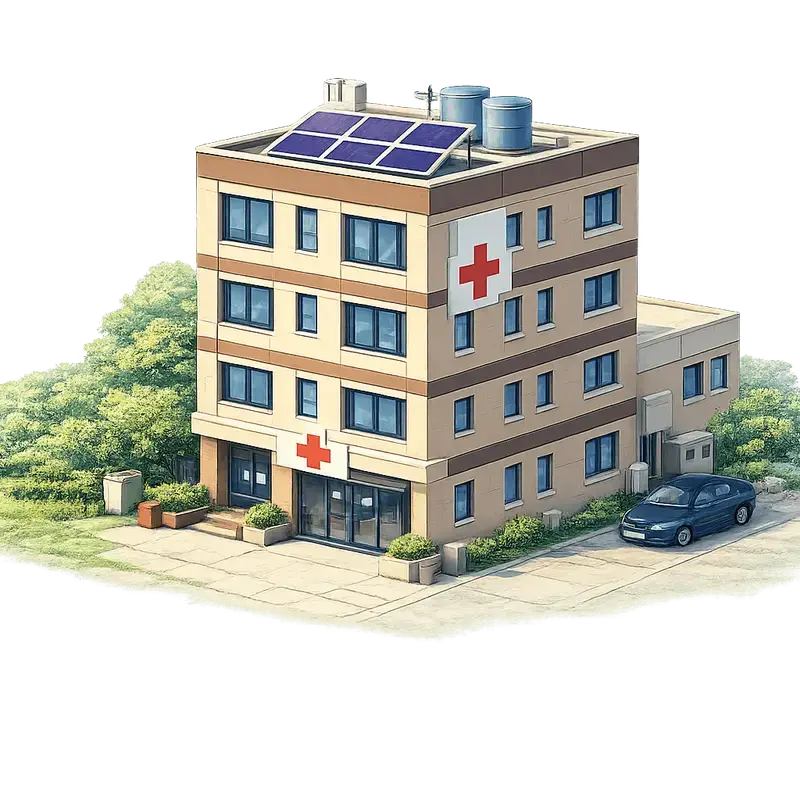
- •Ideal Load: Hospitals with monthly bills >₹5 Lakhs
- •Savings: 30–40% reduction in per-unit landed cost
- •Model: Group Captive (₹0–1.2/unit savings) or Third-Party PPA
- •Uptime: 100% grid-parity with banking facilities
- •Exemptions: Priority processing for essential services under DERC/HERC
Hospitals in Delhi NCR are currently paying between ₹8 to ₹10 per unit for electricity. When you add the recent Delhi PPAC surcharge updates which hit 35-40% in some months, the "fixed" cost of keeping a facility running becomes a volatile liability. For a 100-bed hospital, electricity isn't just a utility; it’s a top-three Opex line item alongside salaries and consumables.
Open access solar for hospitals is the only way to bypass these high DISCOM tariffs without needing to cover your entire roof in panels. In my 35 years of engineering power systems at Bridgeway, I’ve seen hospitals struggle with rooftop space—between HVAC chillers, water tanks, and helipads, there’s rarely enough room for a MW-scale plant. Open Access solves this by letting you buy solar power from a massive off-site park.
Why Rooftop Solar Isn't Enough for Healthcare
Most hospital administrators start by asking for rooftop solar. We love rooftop projects—we’ve done over 5,000+ installations—but the math for a hospital rarely squares up. A typical multispeciality hospital needs 500kW to 2MW of capacity. Even with high-efficiency TOPCon Mono PERC panels, you’d need nearly 50,000 to 1,00,000 sq. ft. of clear roof space.
If you don't have that space, you have two choices: continue paying ₹9/unit to the DISCOM, or switch to open access solar for hospitals.
Comparison: Rooftop vs. Open Access for Hospitals
| Feature | Rooftop Solar (Capex) | Open Access (Group Captive) |
|---|---|---|
| Space Required | 100 sq. ft. per kW (On-site) | Zero On-site Space |
| Capacity Limit | Limited by Roof Area | Up to 100% of Sanctioned Load |
| Investment | High Upfront Cost | Low (Equity-based) or Zero (PPA) |
| Landed Cost | ~₹2.5 - ₹3.5/unit (Levelized) | ~₹4.5 - ₹5.5/unit |
| Maintenance | Hospital's Responsibility | Developer's Responsibility |
The "Dual-Source" Advantage: Uptime is Non-Negotiable
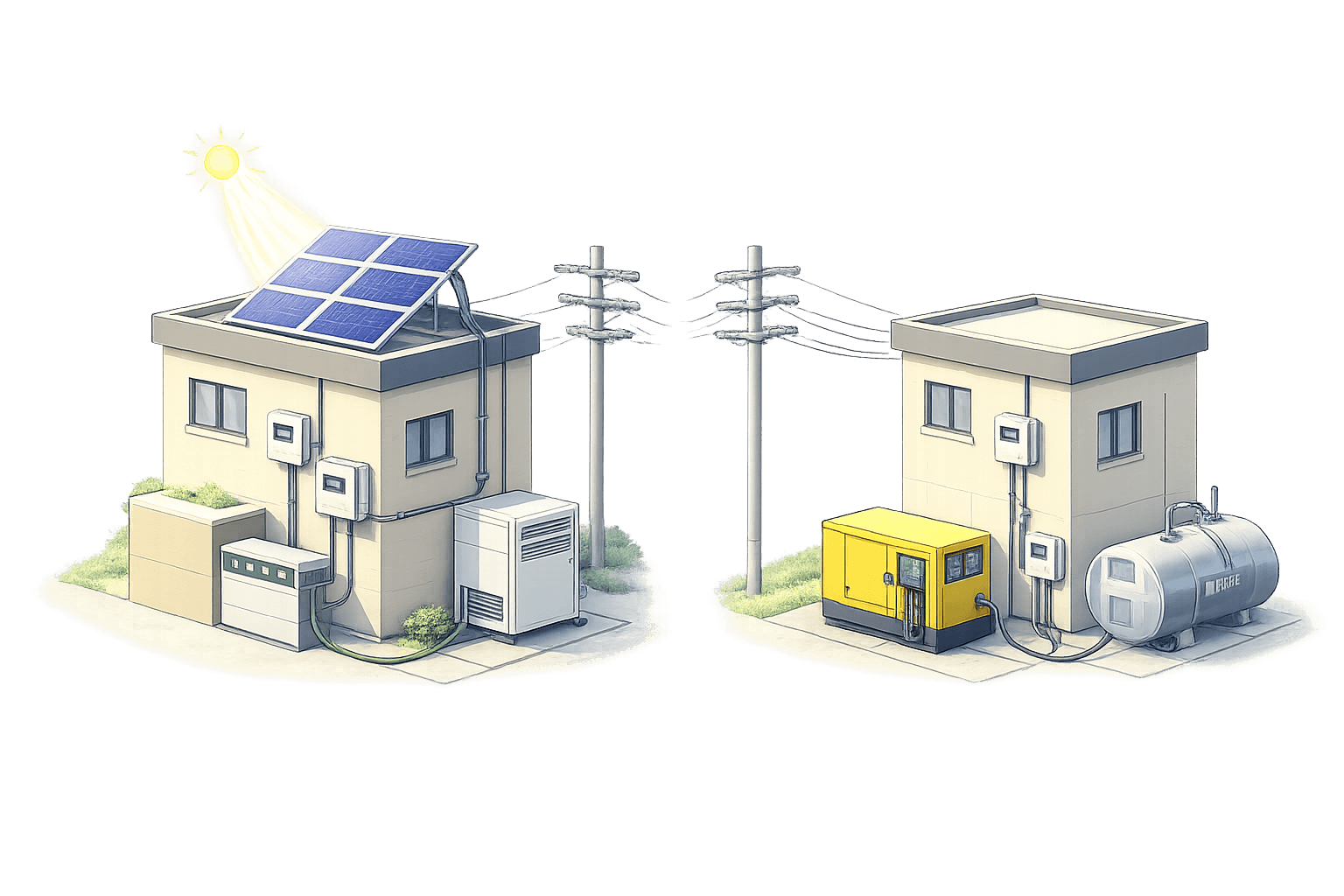
In healthcare, a power failure isn't an inconvenience; it’s a life-critical event. This is why we advocate for a "Dual-Source" model. Under Open Access, you don't disconnect from the grid. You remain connected to BSES Rajdhani or DHBVN Gurgaon.
The solar power is "wheeled" through the existing lines. If the solar plant in Rajasthan or rural UP stops generating due to weather, the grid automatically picks up the slack. You get the financial benefit of solar with the reliability of the utility grid.
The Real Cost of Diesel vs. Solar
Hospitals often rely on heavy DG sets. The diesel cost per unit in 2026 sits at roughly ₹25/kWh when you factor in fuel, oil, and maintenance. By shifting your base load to solar via open access, you save enough to offset the entire cost of your emergency DG backup within 18 months.
Understanding the Group Captive Model (The 26/51 Rule)
The most popular route for hospitals in India is the Group Captive model. It sounds complex, but it’s a regulatory shortcut to avoid heavy taxes.
- Equity (26%): The hospital (or a group of hospitals) takes a 26% equity stake in the solar special purpose vehicle (SPV).
- Consumption (51%): The equity holders must consume at least 51% of the power generated.
By doing this, you qualify for an exemption from the Cross-Subsidy Surcharge (CSS) and Additional Surcharge. In states like Haryana and Uttar Pradesh, this exemption alone can save you ₹1.50 to ₹2.50 per unit.
Landed Cost Breakdown for C&I Solar (2026)
| Component | Grid Cost (₹/unit) | Open Access (₹/unit) |
|---|---|---|
| Base Tariff | ₹8.50 | ₹3.80 (Solar PPA) |
| Wheeling/Transmission | Included | ₹0.80 |
| Banking Charges | N/A | ₹0.40 |
| Taxes/Duty | ₹0.45 | ₹0.20 |
| Total Landed Cost | ₹8.95 | ₹5.20 |
| Note: Typical figures for a 1MW load in Delhi NCR. |
Regulatory Exemptions for Hospitals
Hospitals are often categorized under "Essential Services." This gives them leverage during the net metering or open access application process.
In Delhi, the Delhi Solar Energy Policy 2023 amendment specifically encourages institutional adoption. While commercial buildings might face "Banking" restrictions (where the DISCOM doesn't let you store excess power for night use), hospitals can often negotiate better banking terms because their load is constant (24/7) rather than just daytime-peaked like an office.
- Green Energy Open Access (GEOA) Rules: Any hospital with a sanctioned load of 100kW or more can now apply for Green Open Access. Previously, the limit was 1MW. This opens the door for smaller nursing homes to benefit from open access solar for hospitals.
Talk to a solar engineer — not a salesperson
Check whether we install in your area, then get your answer on WhatsApp. No forms, no call centre.
What would solar save on YOUR bill?
Real Example: 500kW Load in Noida
A multi-specialty hospital in Noida Sector 62 had a monthly electricity bill of ₹12 Lakhs. Their roof was packed with AHUs and a cafeteria, leaving room for only a 50kW plant—barely enough to light the parking lot.
We moved them to a Group Captive Open Access model for 450kW.
- Before: Landed cost of ₹9.20/unit.
- After: Landed cost of ₹5.80/unit (including wheeling and banking).
- Monthly Savings: ~₹3.6 Lakhs.
- Annual Savings: ₹43 Lakhs.
- Investment: The hospital only invested in the 26% equity share (roughly ₹35 Lakhs), which they recovered in less than 10 months through bill savings.
How to Start the Transition
Don't jump into a contract without an energy audit. Hospitals have unique load profiles—ICUs and OT blocks cannot have voltage fluctuations.
- Check your Sanctioned Load: If it's above 100kW, you're eligible.
- Review your Solar Calculator results: See how much you could offset.
- Audit your Billing: Look for the "Contract Demand" and "Peak Load" sections on your BSES or PVVNL Noida bill.
If you’re worried about the complexity, remember that Bridgeway has been doing this for 35+ years. We handle the DISCOM permissions, the SLDC (State Load Despatch Centre) coordination, and the technical synchronization.
FAQ
Does open access solar for hospitals require a new electricity line?
No, the power is delivered through your existing DISCOM transmission lines. The only change is in the billing and the installation of a Special Energy Meter (SEM) that tracks solar inflow versus grid inflow.
What happens to hospital power during the night?
Since solar only generates during the day, you use a mechanism called "Banking." Excess units generated during the day are adjusted against your night-time consumption. Alternatively, you remain on the grid and pay the standard utility rate for night units, while the daytime solar units drastically reduce your overall average cost.
Can a hospital with a 150kW load get Open Access?
Yes. Under the new Green Energy Open Access rules (2022/2023), the eligibility threshold was lowered from 1,000kW (1MW) to 100kW. This makes open access solar for hospitals viable for even mid-sized nursing homes.
Is the equity investment in Group Captive refundable?
Usually, no. The equity makes you a "part-owner" of the solar plant, which is the legal requirement to waive the Cross-Subsidy Surcharge. However, the savings you generate usually cover that equity investment within the first 12 months.
How does Open Access handle power cuts?
Open Access is a financial and supply arrangement, not a physical battery backup. During a grid outage, your hospital will still rely on its UPS and DG sets. For physical backup, you would need an on-site Hybrid Solar System.
For a detailed feasibility report and to see which developers have available capacity in the NCR grid, you can get a free quote from our commercial team. We’ll look at your last three months of bills and tell you exactly how many lakhs you’re leaving on the table.
End of guide. Contact Bridgeway Power for a site survey.
Every 1 kW of solar on your roof offsets 1.5 tonnes of CO₂ per year
That's 40 trees planted — every year, for 25 years.
A typical 5 kW home system offsets 187 tonnes of carbon over its lifetime. That's equivalent to taking 8 cars off the road.
See your impact →How much can you save with solar?
Enter your electricity bill → get system size, subsidy amount & payback period
Get StartedGo solar without owning a rooftop
Community Solar gives commercial & institutional consumers the same savings — zero capex, zero roof needed.
Or get a free solar quote
Tell us about your rooftop — we'll call with exact savings for your home.
Related Articles
Net Metering in India: How to Sell Solar Power Back to the Grid
Learn how net metering in India allows you to sell solar power back to the grid. Discover state policies, savings examples, and how to reduce your bill by 90%.
Read moreWhat Is Captive Open Access Solar (100% Equity Model)
Learn how Captive Open Access Solar (100% Equity Model) helps Indian businesses cut electricity costs by 40% using off-site solar plants. Guide on rules, savings & ROI.
Read moreSolar Installation Cost in Delhi NCR 2026: 3 kW at ₹1.32L net
Updated 2026 guide to solar costs in Delhi NCR. Learn about PM Surya Ghar subsidies, system pricing from 1kW-10kW, and how to reach zero electricity bills.
Read moreRelated guides
Delhi Electricity Rate 2026
BSES & Tata Power per-unit rates, PPAC, subsidy — sourced from DERC.
ExploreDelhi Solar Policy 2026
Free rooftop solar up to 3 kW for homes under 400 units. Eligibility & apply.
ExploreSolar Panel Price in Delhi
Live 2026 rooftop prices in Delhi after ₹1.56L subsidy. 1,200+ installs.
ExploreSolar Company in Gurgaon
Gurgaon's rooftop solar installer — 800+ systems, ₹78K PM Surya Ghar subsidy.
ExploreSolar Company in Noida
Noida & Greater Noida rooftop solar — 500+ installs, ₹1.08L stacked subsidy.
ExploreSolar Panel Price in Faridabad
Live 2026 Faridabad prices after ₹78K PM Surya Ghar subsidy. 350+ homes.
Explore