
By Mahendra Singh · Reviewed by Arshi Chadha, Founder
No Rooftop? 5 Ways to Use Solar Power Without Installing Panels
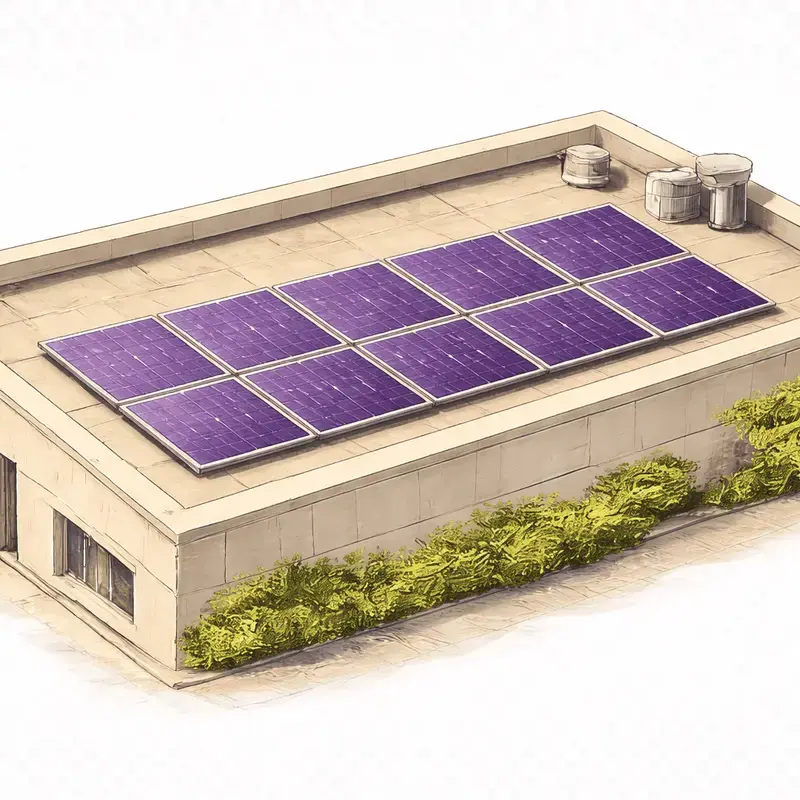
- •Primary Challenge: High-rise apartments or rented homes with no roof access.
- •Best Solution: Community Solar and Virtual Net Metering (VNM).
- •Cost Range: ₹0 (Green Tariffs) to ₹1.5 Lakhs (Community Solar Shares).
- •Savings Potential: 10% to 90% reduction in electricity bills.
- •Payback Period: 3–5 years for shared investments.
The dream of "going solar" in India often hits a concrete wall—literally. For millions of residents in cities like Mumbai, Bangalore, and Delhi, the lack of private roof space is the primary barrier to renewable energy. Whether you live in a high-rise 4BHK apartment where the roof is a common amenity, or you are a tenant in a rented villa, the traditional "rooftop solar" model simply doesn't apply to you.
However, the Indian energy landscape is evolving rapidly. With the government’s push toward a 500GW renewable energy target by 2030, new frameworks are emerging that allow you to benefit from the sun's energy without ever touching your roof. If you’ve been told you can’t have solar because you don’t "own the sky," this guide is for you. We will explore how solar without roof India is becoming a reality through innovative financial and technical models.
The Shift Beyond Rooftops: Why Now?
In the past, solar was considered an individual property investment. Today, it is shifting toward a "service" model. State electricity boards (DISCOMs) and private developers are realizing that to meet green energy mandates, they must tap into the massive urban population living in multi-story buildings.
From the PM Surya Ghar: Muft Bijli Yojana to state-specific Virtual Net Metering policies, the infrastructure is being laid out. As a consumer, you no longer need a 300 sq. ft. shadow-free area to slash your electricity bills.
1. Community Solar: Subscribing to a Shared Plant
Community solar—often called a "solar garden"—is perhaps the most revolutionary way to access solar without roof India. In this model, a large solar farm is installed in a location with abundant space (usually the outskirts of a city). You, as an urban consumer, "subscribe" to a portion of that plant.
How it Works
- A developer builds a 1MW to 5MW solar plant.
- The electricity generated is fed directly into the state grid.
- Your share of the energy produced is "credited" to your electricity bill.
- You pay a subscription fee or a one-time investment for your kilowatts (kW).
This is ideal for apartment owners in cities like Bangalore or Pune, where the building society might not allow individual panels. You essentially own a "virtual" piece of a solar farm.
The Benefits
- Zero Maintenance: You don’t have to clean panels or worry about monkeys damaging the wires.
- Portability: If you move to another house within the same DISCOM area, your solar credit usually follows you.
- Scalability: You can start by buying a 1kW share and increase it as your needs grow.
2. Virtual Net Metering (VNM) for Apartment Dwellers
Virtual Net Metering is a regulatory framework that allows a single solar plant to benefit multiple electricity connections. This is the "holy grail" for Group Housing Societies (GHS).
In a traditional setup, solar panels on a building roof can only power common area lights and elevators. With VNM, the energy generated on the common roof can be distributed among individual flats.
The Impact in India
States like Delhi and Karnataka have been pioneers in VNM policy. If your housing society installs a 100kW system, the energy can be divided: 20% for common areas and 80% split between the 50 owners. Each owner sees a "Solar Credit" on their individual BSES or BESCOM bill.
For those looking for solar without roof India solutions, VNM allows you to use the collective roof of your building to offset your private bill, even if you live on the ground floor.
3. Green Energy Tariffs: The Easiest Transition
If you want to go green today without a single rupee of upfront investment, Green Energy Tariffs are your answer. Many Indian DISCOMs (like Tata Power, MSEDCL, or AEML) now offer a "Green Power Option."
How it Works
You submit a request to your electricity provider to switch to green power. The DISCOM ensures that the electricity supplied to your home comes from renewable sources (Solar, Wind, or Hydro). In exchange, you pay a small "Green Power Requisite" or "Green Subsidy" (usually between ₹0.50 to ₹1.50 per unit) on top of your normal tariff.
While this doesn't "save" you money in the short term like owning panels does, it creates a demand for renewables and allows you to claim a "Zero Carbon" lifestyle immediately.
4. Solar Water Heaters: The Partial Solution
Sometimes, the simplest way to use solar is to stop using electricity for high-load appliances. Water heating accounts for nearly 20-30% of an average Indian household's winter electricity bill.
Even if you don't have full roof access, many residential societies allow the installation of centralized Solar Water Heaters (SWH). Alternatively, if you have a small balcony that gets 4-5 hours of direct sunlight, specialized compact solar thermal units can sometimes be installed.
By shifting your water heating to solar, you are effectively using solar without roof India for your most energy-intensive task, allowing you to downsize your required electrical load.
5. Portable Solar Power Stations (The "Gadget" Route)
For renters or digital nomads, portable solar is the way to go. These are high-capacity lithium batteries paired with foldable solar blankets.
Usage in the Indian Context
Imagine a power cut in the middle of a hot July afternoon. Instead of relying on a noisy diesel generator or a lead-acid inverter that only lasts 2 hours, you can deploy foldable panels on your balcony or terrace. These can charge a "Solar Generator" (like Jackery or EcoFlow) which can then power your laptop, fan, and even a small 5-star fridge.
Comparing Your No-Roof Solar Options
To help you decide, we have mapped out the costs and benefits of these five strategies in the context of the 2025-2026 Indian energy market.
Talk to a solar engineer — not a salesperson
Check whether we install in your area, then get your answer on WhatsApp. No forms, no call centre.
What would solar save on YOUR bill?
Table 1: No-Roof Solar Comparison Matrix
| Option | Best For | Implementation | Ownership | Local Availability |
|---|---|---|---|---|
| Community Solar | Urban Homeowners | High | Fractional | Growing (KL, KA, DL) |
| Virtual Net Metering | Apartment Societies | Medium | Collective | High in Metros |
| Green Tariffs | Renters/Businesses | Low | Monthly Subscription | Nationwide |
| Solar Water Heater | All Households | Low | Individual/Shared | Nationwide |
| Portable Solar | Renters/Campers | Zero | Individual | Online Stores |
Table 2: Estimated Costs and Savings (2025-26 Pricing)
| Option | Upfront Cost (Approx) | Monthly Savings | Payback Period |
|---|---|---|---|
| Community Solar (per kW) | ₹60,000 - ₹80,000 | ₹1,000 - ₹1,500 | 4 - 5 Years |
| Virtual Net Metering | ₹55,000 (per Share) | ₹1,200 - ₹1,800 | 3 - 4 Years |
| Green Power Tariffs | ₹0 | -₹200 (Cost increases) | N/A (Environmental) |
| Solar Water Heater | ₹25,000 - ₹40,000 | ₹600 - ₹1,000 | 2 - 3 Years |
| Portable Solar (500Wh) | ₹40,000 - ₹60,000 | ₹100 (Back-up focus) | Long (Utility based) |
Note: Savings are calculated based on an average Indian commercial/residential tariff of ₹8-10 per unit.
Real Example: Solar for a 12th Floor Flat in Mumbai
The Scenario: The Mehra family lives in a 3BHK on the 12th floor of a high-rise in Andheri, Mumbai. Their monthly electricity bill averages ₹9,500. They have no roof access and the balcony is shaded for half the day.
The Solution: Instead of panels, the Mehras invested in a 5kW share of a Community Solar farm located in rural Maharashtra.
The Result:
- Investment: ₹3.2 Lakhs.
- Monthly Generation Credit: The 5kW share generates ~600 units of electricity per month.
- Bill Impact: Their ₹9,500 bill dropped to approximately ₹3,500 (representing a ₹6,000 monthly saving).
- Outcome: They will recover their investment in roughly 4.5 years, after which they will enjoy "free" solar credit for the next 20 years, all without a single panel on their flat.
To find out how many units you could save, try our solar calculator.
The Role of Bridgeway Power
At Bridgeway Power, we understand that "solar" is not just about panels—it's about financial freedom and environmental responsibility. With over 35 years of experience in the Indian power sector, we guide residential societies and large-scale developers in setting up the infrastructure needed for solar without roof India.
Whether you are looking to advocate for Virtual Net Metering in your housing society or want to explore our community solar opportunities, we provide the technical depth and regulatory expertise to make it happen.
Frequently Asked Questions
Can I get a government subsidy for community solar?
Currently, the PM Surya Ghar subsidy is primarily focused on individual rooftop installations. However, some state policies are beginning to offer incentives for Group Housing Societies (GHS) that implement Virtual Net Metering. It is best to check your specific state's 2025 solar policy.
Is virtual net metering available in all Indian states?
No. While the Central Government promotes it, electricity is a "Concurrent List" subject in India. States like Delhi, Odisha, and Karnataka have clear VNM guidelines, while others are still in the draft stage. Contact your local DISCOM to ask about "Group Net Metering" or "Virtual Net Metering."
What happens to my community solar share if I move to another city?
If you move to a city served by a different DISCOM, you may have to sell your share back to the developer or another resident. However, if you move within the same city/DISCOM, the credit can usually be transferred to your new consumer account number.
Is portable solar powerful enough to run an AC?
Most portable solar stations available in India are designed for low-to-medium loads (laptops, lights, TVs). To run a 1.5-ton AC, you would need an industrial-grade portable station (3kWh-5kWh capacity), which is currently quite expensive compared to grid-tied solutions.
How do I convince my Housing Society to go solar?
The best way is to focus on the common area electricity bills. By showing the society board how a 10kW-20kW system can reduce the "Maintenance Charges" for every resident, you create a financial incentive that everyone can agree on.
Conclusion: Take the First Step Today
You don't need to own a roof to own your energy future. Whether you choose the zero-cost path of Green Tariffs or the high-yield investment of Community Solar, the options for solar without roof India are more accessible in 2025 than ever before.
Ready to explore? Contact Bridgeway Power today for a free consultation. We’ll help you analyze your current electricity bill and determine which "no-roof" solar strategy is the most profitable for your specific location and lifestyle. Let’s bring the power of the sun to your home, regardless of which floor you live on.
Every 1 kW of solar on your roof offsets 1.5 tonnes of CO₂ per year
That's 40 trees planted — every year, for 25 years.
A typical 5 kW home system offsets 187 tonnes of carbon over its lifetime. That's equivalent to taking 8 cars off the road.
See your impact →How much can you save with solar?
Enter your electricity bill → get system size, subsidy amount & payback period
Get StartedGo solar without owning a rooftop
Community Solar gives commercial & institutional consumers the same savings — zero capex, zero roof needed.
Or get a free solar quote
Tell us about your rooftop — we'll call with exact savings for your home.
Related Articles
Lock In a Fixed Electricity Rate for Your School — Before Delhi Tariffs Rise Again
Lock in your school's electricity rate before Delhi tariffs hit ₹16/unit. Learn how Community Solar offers zero-capex savings of ₹10L+ annually.
Read moreWhat Delhi's Solar Policy Means for Apartment Owners and Non-Rooftop Residents
Discover how Delhi's 2026 solar policy enables apartment owners to save 40% on bills using Virtual Net Metering. No roof access or RWA NOC required.
Read moreVirtual Net Metering (VNM) in India: How It Enables Community Solar for Homeowners
Learn how Virtual Net Metering (VNM) enables community solar in India. Discover how DERC and RERC policies allow flat owners to share solar credits without individual rooftops.
Read moreRelated guides
Delhi Electricity Rate 2026
BSES & Tata Power per-unit rates, PPAC, subsidy — sourced from DERC.
ExploreDelhi Solar Policy 2026
Free rooftop solar up to 3 kW for homes under 400 units. Eligibility & apply.
ExploreSolar Panel Price in Delhi
Live 2026 rooftop prices in Delhi after ₹1.56L subsidy. 1,200+ installs.
ExploreSolar Company in Gurgaon
Gurgaon's rooftop solar installer — 800+ systems, ₹78K PM Surya Ghar subsidy.
ExploreSolar Company in Noida
Noida & Greater Noida rooftop solar — 500+ installs, ₹1.08L stacked subsidy.
ExploreSolar Panel Price in Faridabad
Live 2026 Faridabad prices after ₹78K PM Surya Ghar subsidy. 350+ homes.
Explore