
By Bhawna Thakur · Reviewed by Arshi Chadha, Founder
How Many Units Does a 5 Kilowatt Solar Panel Generate?
- •Daily Generation: 20–25 units (avg)
- •Monthly Generation: 600 units (avg)
- •Roof Area Needed: 250–300 sq. ft.
- •Payback Period: 3.5–4.5 years
- •Net Cost (Delhi): ~₹2.35 Lakh (post-subsidy)
A 5kW solar system in North India typically generates between 6,800 to 7,400 units of electricity annually. If you’re looking at your monthly bill and seeing a consumption of 500 to 700 units, a 5kW plant is usually the "sweet spot" for a typical Indian household. After 35+ years in the electrical and solar industry, we’ve seen thousands of these systems through summer peaks and monsoon dips. The question isn't just about the peak capacity; it’s about what a 5 kilowatt solar panel generate electricity result looks like on a Tuesday in July versus a foggy Friday in January.
The Reality of 5kW Solar Yield per Day
In the Delhi NCR region, a well-installed 5kW system using Topcon Mono PERC panels will give you an average 5kW solar yield per day of 20 to 25 units.
I often tell customers in solar in Dwarka or solar in Gurgaon that solar isn't a flat line. On a clear, crisp March day, you might see the meter hitting 28 units. During a smoggy November afternoon or a heavy downpour in August, it might drop to 8 or 10 units. However, for your financial planning, you should use an average of 4 units per kW per day.
Monthly Generation Expectations (Delhi NCR)
Here is how those daily numbers stack up over a full year. This table represents real field data from our solar assets under management across 1,300+ sites.
| Month | Avg. Daily Units | Total Solar Units per Month | Seasonal Context |
|---|---|---|---|
| January | 16 | 496 | Low sun angle + Fog |
| February | 22 | 616 | Clear skies, cool panels |
| March | 26 | 806 | Peak Efficiency |
| April | 27 | 810 | High sun, rising heat |
| May | 25 | 775 | Extreme heat (thermal loss) |
| June | 22 | 660 | Dust + Haze |
| July | 18 | 558 | Monsoon clouds |
| August | 17 | 527 | Humidity + Rain |
| September | 21 | 630 | Post-monsoon clarity |
| October | 23 | 713 | Ideal autumn conditions |
| November | 18 | 540 | Start of winter haze |
| December | 14 | 434 | Shortest days + Fog |
| Annual Total | 21 | 7,565 | Yearly Average |
Note: Data assumes 540Wp-600Wp Mono PERC modules with south-facing orientation and zero shading.
Seasonal Variations: Why Summer Isn't Always the "Best"
Most people assume May and June are the best months because it's hot. That’s a myth. Solar panels are electronic devices; they actually hate extreme heat. When the ambient temperature hits 45°C in Delhi, the panel surface can reach 70°C, causing a drop in efficiency.
- Summer (March–May): This is your peak production window. The skies are generally clear, and the sun is high. March is often the "Goldilocks" month—bright sun but cool breezes that keep panel temperatures low.
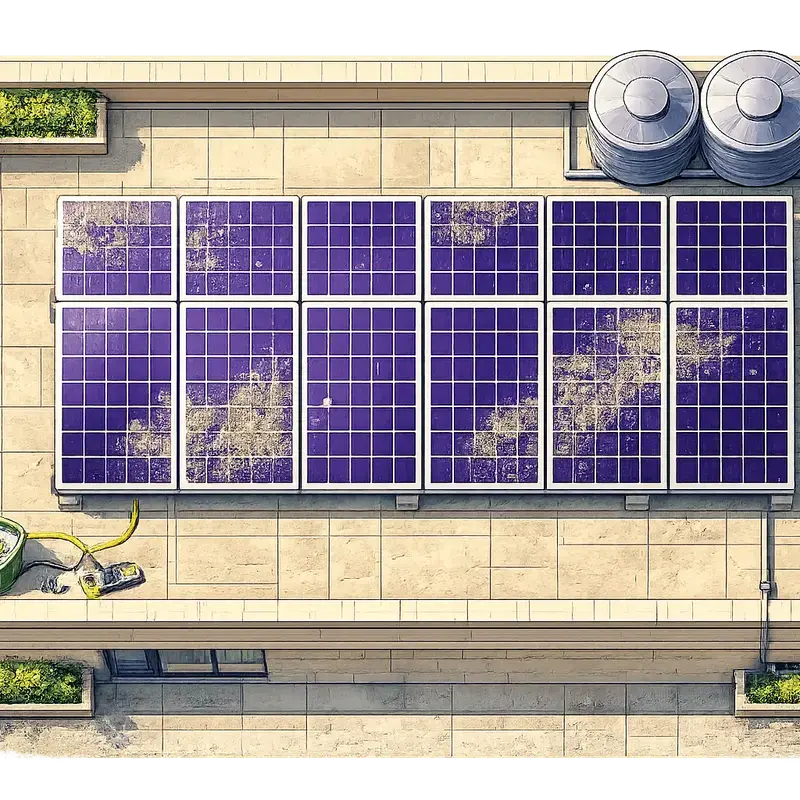
- Monsoon (July–August): Your 5 kilowatt solar panel generate electricity output will drop by 30-40% due to cloud cover. But there’s a silver lining: rain washes away the thick layer of Delhi dust. A clean panel after a rainstorm often performs better than a dusty panel in June. Check out our guide on solar panel cleaning in India to understand how much you're losing to dust.
- Winter (December–January): The sun sits lower in the sky, and the days are shorter. In areas like solar in Noida, morning fog can significantly delay the "wake up" time of your inverter.
How Much Space Does 5kW Actually Take?
If you are using modern TOPCon Mono PERC panels, which are roughly 22% efficient, you need about 50-60 square feet per kW.
For a 5kW system, you should budget for 250 to 300 square feet of clear, shadow-free roof area.
- Panel Count: Usually 9 panels (if using 550Wp-580Wp modules).
- Weight: About 250-300kg total (panels + structure). This is less than a quarter of a standard 1000L water tank. If your roof can hold a water tank, it can easily handle solar. Read more about solar panel weight on roof if you’re worried about structural integrity.
What Can You Power with 5kW?
A 5kW system doesn't "run" specific appliances; it feeds power into your home’s main distribution board. Through Net Metering, any excess you don't use is sent to the grid (BSES or DHBVN) and credited to your bill.
However, to give you a sense of scale, a 5kW solar yield per day of 22 units can comfortably cover:
- 2 Air Conditioners (1.5 ton) running for 6-8 hours during the day.
- 1 Refrigerator (running 24/7).
- 5-7 LED Fans and 10+ LED lights.
- 1 Washing Machine (daily load).
- 1 Water Pump (0.5 HP for 1 hour).
If your monthly bill is consistently around ₹6,000–₹8,000, you are likely the perfect candidate for this size. You can use our Solar Calculator to get a more precise estimate based on your specific DISCOM tariff.
Talk to a solar engineer — not a salesperson
Check whether we install in your area, then get your answer on WhatsApp. No forms, no call centre.
See exact units your roof will generate
A Real Example: The Gurgaon Bungalow
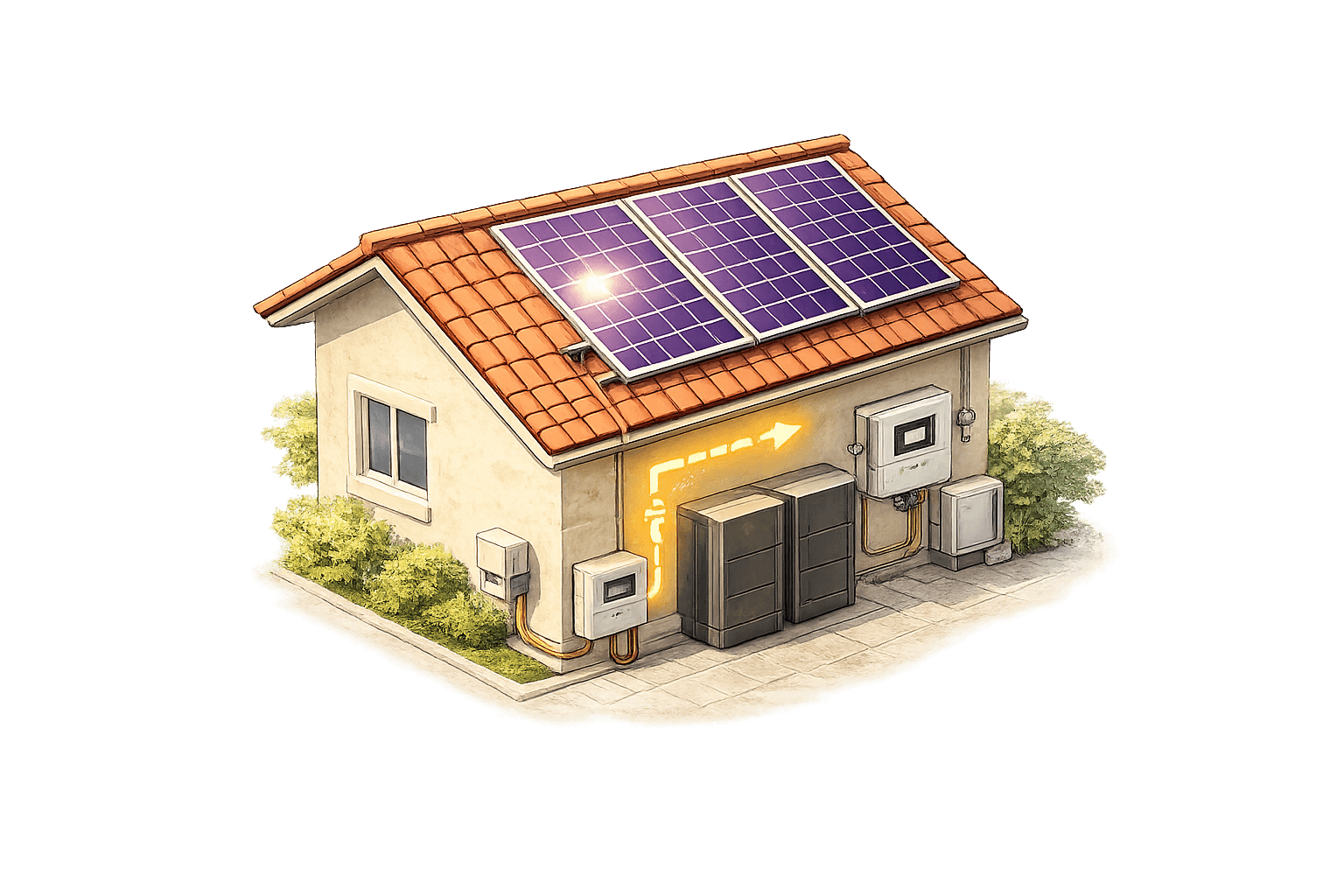
We recently completed an installation for a 3BHK home in solar in Palam Vihar. The owner had a monthly bill of ₹7,500 and a sanctioned load of 6kW.
- System Size: 5.4kW (9 panels of 600Wp).
- Total Cost: ₹3,43,035 (Inclusive of GST and standard structure).
- Central Subsidy: ₹78,000 (via PM Surya Ghar Yojana).
- Net Investment: ₹2,65,035.
- Results: In their first full month (March), they generated 780 units. Their electricity bill, which used to be ₹7,000+, dropped to just the fixed charges (approx. ₹800).
At current DHBVN net metering rates, they are on track to recover their entire investment in under 4 years.
Financials and Financing
If the upfront cost feels high, remember that solar is now a bankable asset. You can explore a Solar Loan from partners like SBI PM Surya Ghar Loan or PNB Solar Rooftop Scheme. Private options like ECOFY Solar Financing or Aerem Solar Finance offer faster processing for residential rooftop projects.
| Component | Estimated Cost (String Inverter) |
|---|---|
| Gross System Price (5kW) | ₹3,43,035 |
| PM Surya Ghar Subsidy | -₹78,000 |
| State Subsidy (e.g., UP) | -₹30,000 |
| Net Cost to Homeowner | ₹2,35,035 |
Note: State subsidies vary. Residents in solar in Delhi may also benefit from GBI (Generation Based Incentive) of ₹2-3 per unit for the first five years.
Why Choosing the Right Structure Matters
Generation isn't just about the panels. If your panels are flat on the roof to save space, you lose 10-15% of your annual generation 5kW solar potential. We always recommend a tilted structure (around 12-15 degrees for North India) facing South.
If you have a rooftop garden or want to use the space for walking, we can install an elevated structure. While this adds to the structure cost per kW, it ensures you don't lose the utility of your roof while maximizing your solar units per month.
FAQ
How many units does a 5kW solar system produce per month?
On average, a 5kW solar system produces 600 units per month in India. This varies by season, with peaks of 750-800 units in the spring and dips to 450-500 units during peak monsoon or heavy winter fog.
Can I run a 2-ton AC on a 5kW solar system?
Yes, a 5kW system generates enough power to run a 2-ton AC during sunny hours. However, since most residential systems are "On-Grid," the AC actually draws power from the whole house supply (Solar + Grid mix), and the solar generation simply offsets the total units consumed.
What is the subsidy for a 5kW solar system in 2026?
Under the PM Surya Ghar Muft Bijli Yojana, the central subsidy is capped at ₹78,000 for any system 3kW or larger. Some states, like Uttar Pradesh, offer an additional state subsidy of ₹30,000, bringing total benefits to ₹1,08,000.
How much roof area is needed for 5kW solar panels?
You need approximately 250 to 300 square feet of shadow-free space. Using high-efficiency 600Wp panels can reduce this area slightly, as you only need 9 panels to reach the capacity.
Will a 5kW solar system work during a power cut?
A standard On-Grid 5kW system will shut down during a power cut for safety reasons (Anti-Islanding). If you need power during outages, you must install a Hybrid Solar System with a lithium battery bank.
Ready to see how much you can save? Get a free quote today and let our engineers design a system optimized for your roof's specific shading and orientation.
Every 1 kW of solar on your roof offsets 1.5 tonnes of CO₂ per year
That's 40 trees planted — every year, for 25 years.
A typical 5 kW home system offsets 187 tonnes of carbon over its lifetime. That's equivalent to taking 8 cars off the road.
See your impact →How much can you save with solar?
Enter your electricity bill → get system size, subsidy amount & payback period
Get StartedSee exact units your roof will generate
Related Articles
Net Metering in India: How to Sell Solar Power Back to the Grid
Learn how net metering in India allows you to sell solar power back to the grid. Discover state policies, savings examples, and how to reduce your bill by 90%.
Read moreWhat Is Captive Open Access Solar (100% Equity Model)
Learn how Captive Open Access Solar (100% Equity Model) helps Indian businesses cut electricity costs by 40% using off-site solar plants. Guide on rules, savings & ROI.
Read moreSolar Installation Cost in Delhi NCR 2026: 3 kW at ₹1.32L net
Updated 2026 guide to solar costs in Delhi NCR. Learn about PM Surya Ghar subsidies, system pricing from 1kW-10kW, and how to reach zero electricity bills.
Read moreRelated guides
Delhi Electricity Rate 2026
BSES & Tata Power per-unit rates, PPAC, subsidy — sourced from DERC.
ExploreDelhi Solar Policy 2026
Free rooftop solar up to 3 kW for homes under 400 units. Eligibility & apply.
ExploreSolar Panel Price in Delhi
Live 2026 rooftop prices in Delhi after ₹1.56L subsidy. 1,200+ installs.
ExploreSolar Company in Gurgaon
Gurgaon's rooftop solar installer — 800+ systems, ₹78K PM Surya Ghar subsidy.
ExploreSolar Company in Noida
Noida & Greater Noida rooftop solar — 500+ installs, ₹1.08L stacked subsidy.
ExploreSolar Panel Price in Faridabad
Live 2026 Faridabad prices after ₹78K PM Surya Ghar subsidy. 350+ homes.
Explore