
By Vansh Dahiya · Reviewed by Arshi Chadha, Founder
5kW Solar System Performance: Daily Unit Generation Guide
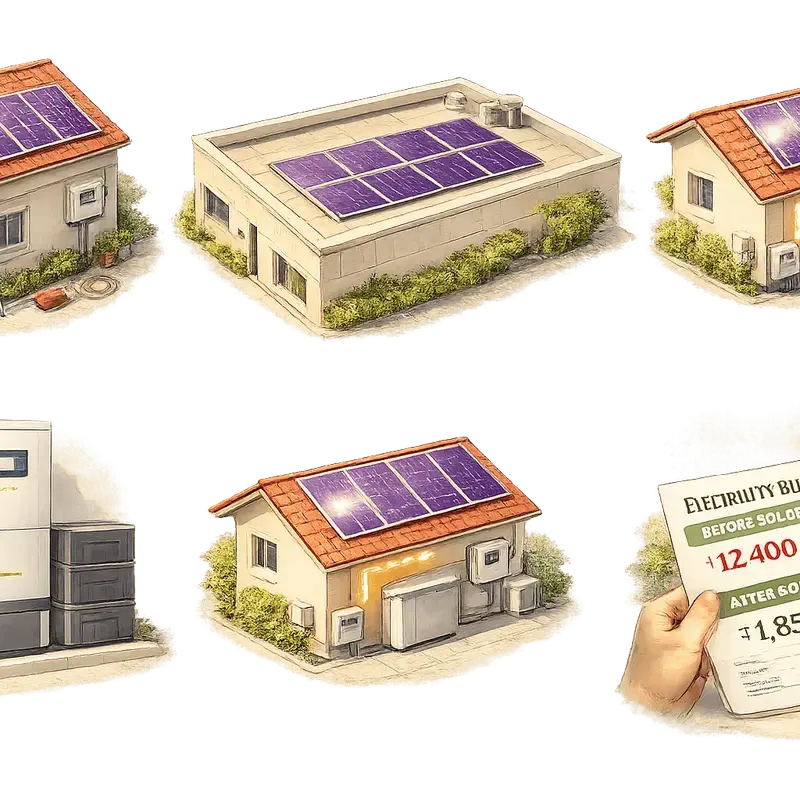
- •System size: 5 kW Rooftop Solar
- •Daily Generation: 20–22.5 Units (Average)
- •Monthly Savings: ₹4,500 – ₹6,000 (at ₹7.5–₹9/unit)
- •Roof Area Needed: 250–350 sq. ft.
- •Payback Period: 3.5 – 4.5 Years
A 5kW solar system in Delhi NCR generates between 600 and 675 units of electricity every month on average. When customers ask me, "5 kw solar panel produces how many units?", I tell them to look at the annual average rather than a single sunny afternoon. In our 35+ years of experience at Bridgeway Power, having installed over 25 MW of solar, we’ve seen that while a 5kW plant can peak at 28 units on a clear March day, it might drop to 12 units during a smoggy December morning in Delhi.
If you’re spending more than ₹5,000 a month on electricity, a 5kW system is usually your "sweet spot." It’s large enough to offset two 1.5-ton split ACs running during the day and small enough to fit on the roof of a standard 3BHK bungalow or builder floor.
5kw Solar System Unit Per Day: The Reality Check
Most marketing brochures claim a 5kW system generates 25 units a day. In the real world, specifically across solar in Delhi and Gurgaon, the number is closer to 4 to 4.5 units per kW. This means a 5kw solar system unit per day typically averages out to 20–22.5 units.
Why the discrepancy? Solar panels are tested under Standard Test Conditions (STC)—perfect light, perfect temperature. Your roof isn't a laboratory. We account for "soiling losses"—the dust and smog that settle on your panels. In NCR, dirty panels lose 25% power if not cleaned weekly.
Seasonal Yield Variations in Delhi NCR
Here is how the numbers shift throughout the year. We’ve pulled this data from our fleet of 1,300+ sites under AMC plans.
| Season | Avg. Daily Generation (Units) | Monthly Total (Units) | Sunlight Quality |
|---|---|---|---|
| Peak Summer (April–June) | 24 – 27 | 720 – 810 | High Intensity, Long Days |
| Monsoon (July–August) | 14 – 18 | 420 – 540 | Diffused Light, Overcast |
| Post-Monsoon (Sept–Oct) | 21 – 24 | 630 – 720 | Clean Air, Moderate Heat |
| Winter (Nov–Jan) | 12 – 16 | 360 – 480 | Short Days, Fog/Smog |
| Spring (Feb–March) | 25 – 28 | 750 – 840 | Highest Efficiency (Cool & Sunny) |
Notice that March often outperforms June. This is because solar panels are electronic devices; they hate extreme heat. When a panel temperature hits 60°C on a Delhi rooftop in June, its efficiency drops. The crisp, cool sunlight of March is actually the "Goldilocks" zone for solar production.
How Much Space Do You Actually Need?
One of the first things we check during a site survey is the shadow-free area. To install a 5kW system, you need roughly 250 to 350 square feet.
If you use modern Topcon Mono PERC panels (which we use at Bridgeway, typically in the 580Wp–620Wp range), you’ll need about 8 to 9 panels. Each panel is roughly 24-26 sq. ft. However, you can't just carpet the roof. We leave walking space between rows for cleaning. If you have a cluttered roof with water tanks and vents, you might need to look at an elevated structure to clear those obstacles.
Don't worry about the weight, though. A 5kW system weighs about 300-350kg total (panels + structure). As I explain in our guide on solar panel weight on roof, that’s less than a third of the weight of a full 1,000L Sintex water tank.
Why 5kW is the ROI King for Indian Homes
When you ask how 5kw solar panel generates how many units per day, you’re really asking about the savings. In North India, residential electricity tariffs are tiered.
If you live in Noida, your PVVNL bill likely hits the ₹7/unit slab quickly. In Delhi, BSES rates for consumption above 800 units hit ₹8/unit. By generating ~650 units a month, a 5kW system wipes out the most expensive "top-tier" units from your bill.
Real Example: A 3BHK in Gurgaon
A family in South City Gurgaon had a monthly bill of ₹8,500 (approx. 1,000 units).
- We installed a 5kW system using a Solar Calculator to verify the sizing.
- The system produced ~630 units monthly average.
- Their bill dropped from ₹8,500 to roughly ₹2,200 (including fixed charges and taxes).
- Annual Savings: ~₹75,000.
- Payback: With the current cost of solar, they will break even in just under 4 years.
Enhancing Yield: The Bifacial Advantage
If you want to maximize how many units a 5kv solar panel generates, we often recommend Bifacial panels for specific roofs. Unlike traditional panels, Bifacial modules have glass on both sides. They capture direct sunlight from the front and reflected light (albedo) from the roof surface on the back.
On a white-painted roof or a light-colored terrace, Bifacial panels can increase your daily yield by 10–15%. This means your 5kw solar panel how many units per day could jump from 22 units to nearly 25 units. It’s a small premium in cost that pays for itself through higher generation over 25 years.
Talk to a solar engineer — not a salesperson
Check whether we install in your area, then get your answer on WhatsApp. No forms, no call centre.
What would solar save on YOUR bill?
The Impact of Net Metering
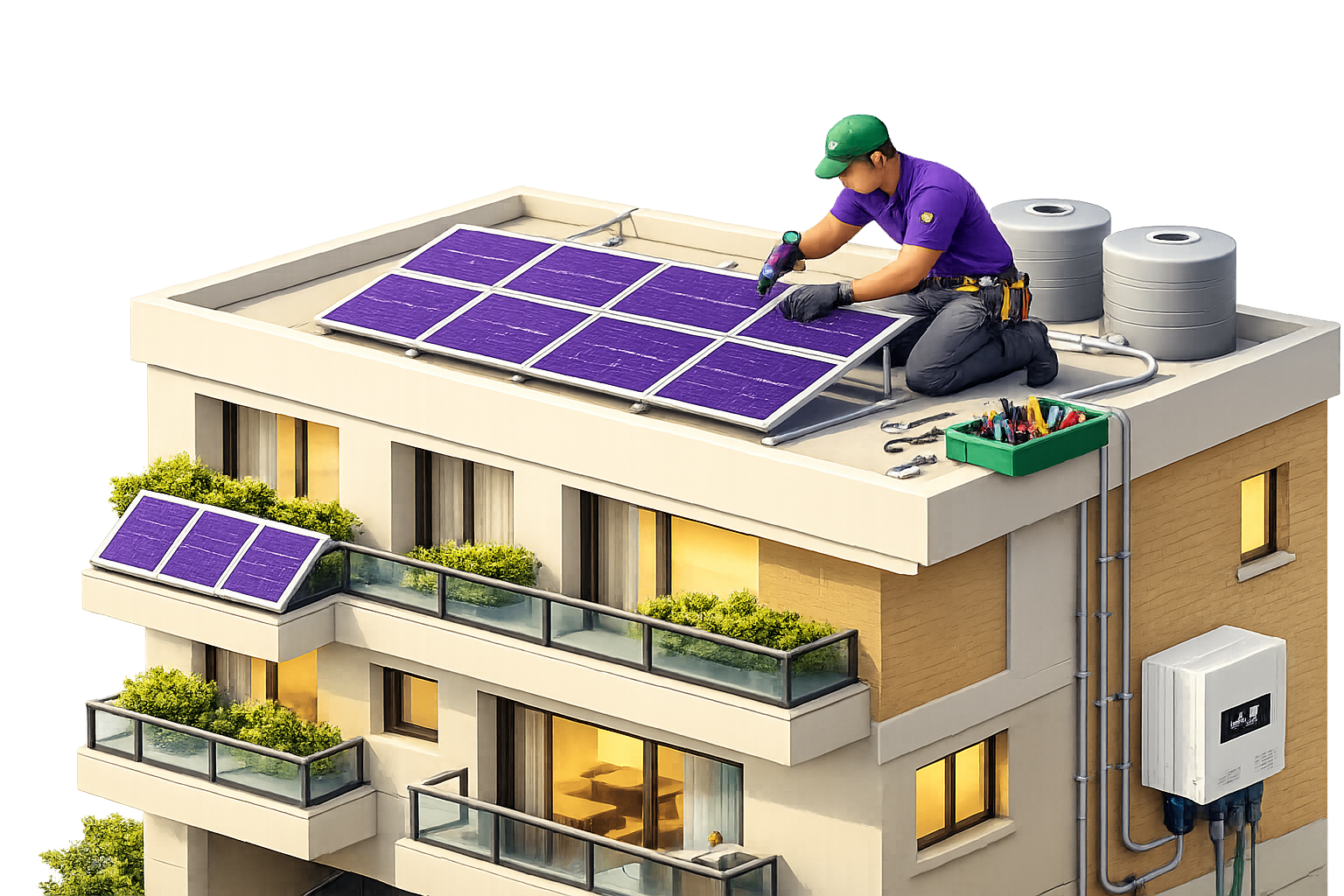
Generating power is only half the battle. You need to "store" the value of those units. In Delhi and Haryana, we use net metering.
During the day, when your 5kW system is pumping out 20 units and you're at the office, that power flows back to the grid. Your meter literally runs backward. At night, you take those units back. If you generate 600 units and consume 800, you only pay the DISCOM for the 200-unit difference. This is why a 5kW system is far more effective than a smaller 1kW system for families with high daytime export potential.
Maintenance: The "Hidden" Variable
I’ve seen 5kW systems that were supposed to produce 22 units a day struggle to hit 12. The culprit? Usually a combination of dust and a failing string inverter.
We’ve observed in our 35-year history that the inverter failure window usually starts between Year 4 and 7. Basic issues like MCB tripping or loose DC connectors can halt production entirely. If you aren't monitoring your generation daily, you might lose weeks of savings without realizing it. This is why we include 2 professional cleanings in Year 1 and offer long-term AMC options to keep that daily unit count high.
If you’re ready to see how a 5kW system fits your specific roof, get a free quote and we’ll perform a shadow-analysis for you.
FAQ
How many units does a 5kW solar system produce per month in India?
On average, a 5kW system produces 600 to 675 units per month. This varies by season; you might see 750+ units in March and April, but this could drop to 400–450 units during peak monsoon or heavy winter fog in North India.
Can a 5kW solar system run a 1.5-ton AC?
Yes, a 5kW system can easily run two 1.5-ton inverter ACs during sunny hours. Since a 1.5-ton AC consumes about 1.5–1.8 units per hour, the 20–25 units generated daily by a 5kW system are more than enough to cover daytime AC usage for a typical home.
How much subsidy do I get for a 5kW solar system?
Under the PM Surya Ghar Yojana, the central subsidy is capped at ₹78,000 for any system 3kW or larger. If you are in Delhi, you can get an additional state subsidy, though the "zero-cost" top-up scheme is generally reserved for systems up to 3kW.
How much roof area is needed for 5kW solar panels?
You need approximately 250 to 350 square feet of shadow-free rooftop area. If you use high-efficiency 600Wp panels, you only need about 8 or 9 panels, but you must account for the 5%–10% extra space required for maintenance walkways and row spacing.
What is the 5kW solar system price in India with subsidy?
A 5kW system typically costs between ₹3.4L to ₹3.8L depending on the choice of inverter (String vs Micro-inverter) and structure. After the ₹78,000 central subsidy, your net investment would be approximately ₹2.6L to ₹3L.
Does a 5kW solar system work during power cuts?
Standard on-grid systems shut down during power cuts for safety (Anti-Islanding). If you need power during outages, you must install a hybrid solar system with a lithium battery bank, which allows the system to switch to battery mode when the grid goes down.
Summary Table: 5kW Generation Expectations
| Parameter | Performance Data |
|---|---|
| 5kw solar panel generates how much electricity (Daily) | 20 – 25 Units |
| Annual Generation | 7,200 – 7,800 Units |
| AC Loads Supported | 2-3 ACs (Inverter Type) |
| Cleaning Frequency | Once every 10–14 days |
| Typical Payback | 48 months |
Don't settle for "rough estimates" when you can get a precision design based on your actual roof dimensions and electricity bill history. A 5kW system is a 25-year asset; make sure the daily unit generation you're promised is backed by real-world field data.
One final piece of advice: always check your sanctioned load with your DISCOM (like DHBVN in Gurgaon) before finalizing a 5kW plant. If your sanctioned load is 3kW, you'll need to apply for a load increase to 5kW before the net meter can be installed. This is a standard step we handle for our clients.
Every 1 kW of solar on your roof offsets 1.5 tonnes of CO₂ per year
That's 40 trees planted — every year, for 25 years.
A typical 5 kW home system offsets 187 tonnes of carbon over its lifetime. That's equivalent to taking 8 cars off the road.
See your impact →How much can you save with solar?
Enter your electricity bill → get system size, subsidy amount & payback period
Get StartedLiked this article? Get a free solar quote
Tell us about your rooftop — we'll call with exact savings for your home.
Related Articles
What Is Captive Open Access Solar (100% Equity Model)
Learn how Captive Open Access Solar (100% Equity Model) helps Indian businesses cut electricity costs by 40% using off-site solar plants. Guide on rules, savings & ROI.
Read moreHow Rooftop Solar Can Eliminate Your Electricity Bill
Discover how Net Metering and PM Surya Ghar subsidies can reduce your monthly electricity bill to near-zero. Learn about system sizing, costs, and real-world savings.
Read moreSolar Subsidy in Uttar Pradesh 2026: ₹1,08,000 for Noida, Ghaziabad & Greater Noida
UP's stacked solar subsidy 2026: ₹78,000 central + ₹30,000 UPNEDA state top-up = ₹1.08L. Real PVVNL net-cost math for Noida, Greater Noida, Ghaziabad & Meerut.
Read moreRelated guides
Delhi Electricity Rate 2026
BSES & Tata Power per-unit rates, PPAC, subsidy — sourced from DERC.
ExploreDelhi Solar Policy 2026
Free rooftop solar up to 3 kW for homes under 400 units. Eligibility & apply.
ExploreSolar Panel Price in Delhi
Live 2026 rooftop prices in Delhi after ₹1.56L subsidy. 1,200+ installs.
ExploreSolar Company in Gurgaon
Gurgaon's rooftop solar installer — 800+ systems, ₹78K PM Surya Ghar subsidy.
ExploreSolar Company in Noida
Noida & Greater Noida rooftop solar — 500+ installs, ₹1.08L stacked subsidy.
ExploreSolar Panel Price in Faridabad
Live 2026 Faridabad prices after ₹78K PM Surya Ghar subsidy. 350+ homes.
Explore