
By Sandeep Maurya · Reviewed by Arshi Chadha, Founder
Solar for Builder Floors in Delhi: Guide for Independent Floor Owners
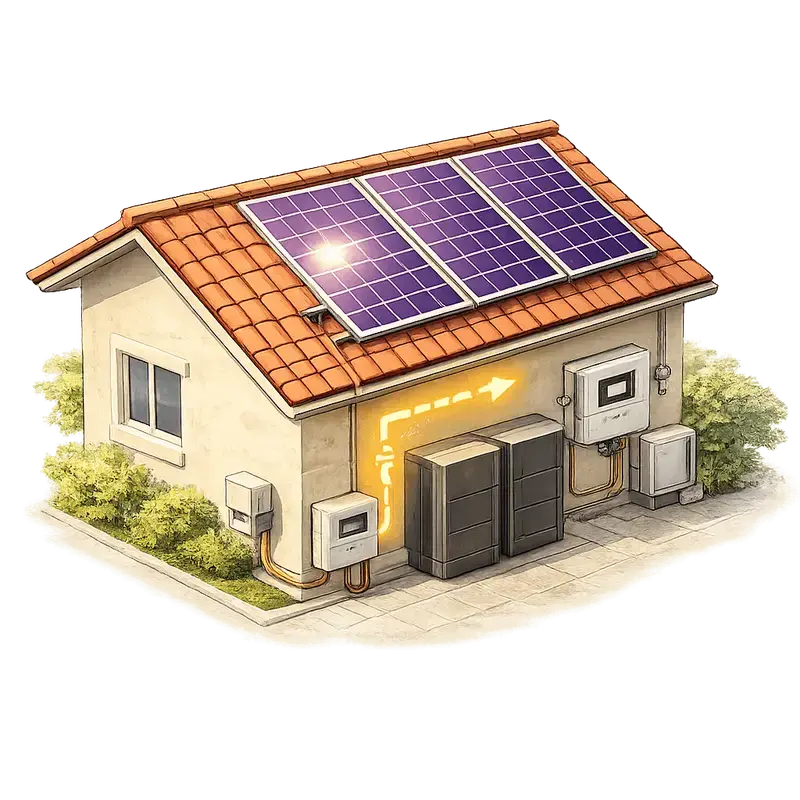
- •Primary Challenge: Independent terrace rights and rooftop area sharing.
- •Typical System Size: 3kW to 5kW per individual floor.
- •Avg. Cost (Net of Subsidy): ₹1.6 Lakh to ₹2.1 Lakh per unit.
- •Monthly Bill Reduction: 80% to 95% for average families.
- •Primary Scheme: PM [Surya Ghar](/blog/pm-surya-ghar-yojana-2026-guide) Muft Bijli Yojana (up to ₹78,000 subsidy).
The architectural landscape of Delhi has undergone a massive transformation over the last two decades. From sprawling bungalows to the now-ubiquitous "builder floors," the way Delhiites live has changed. However, as independent floor owners in areas like Greater Kailash, Lajpat Nagar, Rohini, or Dwarka deal with peaking summer temperatures and rising DISCOM tariffs (BRPL, BYPL, or TPDDL), one question remains constant: Can I install solar on my builder floor?
Installing solar for builder floors in Delhi is not as straightforward as a standalone villa, but it is entirely possible and financially lucrative. With the PM Surya Ghar Muft Bijli Yojana providing massive subsidies and the Delhi Solar Policy 2024 encouraging rooftop adoption, there has never been a better time to transition. This guide will walk you through the legal, technical, and financial aspects of going solar as a builder floor owner.
1. Navigating Terrace Ownership and Sharing Agreements
The biggest hurdle for solar for builder floors in Delhi is not the technology—it is the rooftop real estate. In most Delhi builder floors, the roof is either owned by the top floor owner or is shared among all residents as per the title deed.
Before you invest in a solar plant, you must identify your terrace rights. If the title deed explicitly grants you "exclusive roof rights," the process is simple. However, if the terrace is common, you need a "No Objection Certificate" (NOC) from other floor owners.
Table 1: Terrace Sharing Arrangements for 2-4 Floor Buildings
| Building Configuration | Typical Roof Rights | Solar Strategy |
|---|---|---|
| Ground + 3 Floors | Top floor owns 100% roof | Top floor user installs individually; others need an agreement. |
| Ground + 4 Floors | Stilt parking + Common roof | All floor owners share space proportionally (e.g., 25% each). |
| Independent Floors (Old) | Shared common area | High-shadow area management; requires formal NOC. |
| New Builder Floors | Mentioned in Registry | Install on the specific plot area earmarked for your floor. |
To avoid future disputes, it is highly recommended to sign a "Terrace Sharing Agreement." This document should outline the specific square footage allocated to each floor owner for solar panels, ensuring that no one blocks the sunlight of a neighbor’s array.
2. Separate Meters and Individual Net Metering
One of the most common misconceptions is that a builder floor building needs one massive solar system. In reality, modern solar technology allows for Individual Net Metering.
In Delhi, each floor typically has its own BSES or Tata Power connection. You can install an independent 3kW or 5kW system on the roof and connect it directly to your specific meter. Each owner receives their own "Net Meter," which tracks the units exported to the grid and the units consumed.
The Technical Setup
- The Panels: Installed on the roof (using high-rise structures if space is limited).
- The Inverter: Placed inside your floor or in a shared electrical shaft.
- The Meter: Your existing meter is replaced with a bi-directional Net Meter by the DISCOM.
This individual setup is the cleanest way to manage solar for builder floors in Delhi because it keeps billing completely separate, avoiding any financial friction with neighbors.
3. Cost Splitting and Investment Models
If the residents of a builder floor decide to go solar together, they can often save on "BOS" (Balance of System) costs, such as shared structure fabrication or bulk purchasing of panels.
Table 2: Cost Splitting Models Between Floor Owners
| Model | Investment | Maintenance | Best For |
|---|---|---|---|
| Individual Ownership | 100% by the specific floor owner. | Responsibility of the owner. | Buildings with clear roof partitions. |
| Shared Infrastructure | Split cost of the "High-Rise" structure. | Shared cleaning/upkeep. | Small roofs where panels must be elevated. |
| Joint Venture | Total cost split equally (e.g., 4 ways). | Annual Maintenance Contract (AMC) shared. | Close-knit families or common-meter areas. |
Pro Tip: Use the Solar Calculator to determine how many panels your specific floor needs based on your monthly unit consumption.
4. Group Net Metering: The New Delhi Frontier
The Delhi Solar Policy has introduced a revolutionary concept: Group Net Metering (GNM). This is particularly beneficial for builder floor owners who might not have enough space directly above them.
Under GNM, solar energy generated at one location (the rooftop) can be adjusted against multiple electricity connections (the different floors) belonging to the same consumer or different consumers within the same DISCOM area.
This means if the ground floor owner doesn't have roof rights, but the top floor owner is willing to "rent" out space or share the generation, the DISCOM can virtually credit the solar units generated on the roof to the ground floor’s bill. While still in its refinement stages for residential sectors, it offers a glimpse into a future where "Virtual Solar" solves the space constraints of South Delhi and North Delhi neighborhoods.
5. Understanding Net Metering Options
Choosing the right type of metering is crucial for your ROI. In Delhi, you have two primary options for builder floors.
Table 3: Individual vs Shared Meter Net Metering Options
| Feature | Individual Net Metering | Shared/Group Net Metering |
|---|---|---|
| Billing | Units deducted from your own floor's bill. | Units distributed among multiple floors. |
| Complexity | Low; Treated like a standard home. | Moderate; Requires internal agreements. |
| Subsidy | Each owner can claim up to ₹78k individually. | Subsidy is often capped per connection. |
| Ideal Scenario | You have clear roof rights/permission. | You want to power common areas (lift, stairs) + apartments. |
Talk to a solar engineer — not a salesperson
Check whether we install in your area, then get your answer on WhatsApp. No forms, no call centre.
What would solar save on YOUR bill?
6. Legal Considerations for Terrace Rights
In Delhi, the "Right to the Sky" is a frequent point of litigation. When installing solar for builder floors in Delhi, keep these legal pointers in mind:
- Registry Check: Always check your sale deed. If it says "with roof rights," you are the sole owner. If it is silent, the roof is generally considered common.
- Structural Stability: Builder floors in Delhi are often built to maximum FAR (Floor Area Ratio). Ensure the roof can handle the dead weight of the solar structure (approx. 15-20kg per sq. meter).
- Shadow Rights: No neighbor should ideally install a structure that casts a shadow on your existing solar panels. While there are no strict "shadow laws" in India yet, it is a standard clause in most Resident Welfare Association (RWA) guidelines.
7. Real Example: 4-Floor Builder Floor in South Delhi (Panchsheel Park)
Let’s look at a real-world application from a Bridgeway Power installation in 2024.
The Scenario: A 4-story builder floor. The 2nd and 3rd-floor owners wanted solar. The 4th-floor owner had exclusive roof rights but was willing to cooperate in exchange for a portion of the maintenance cost being covered.
The Solution:
- System Size: Two separate 5kW systems (Total 10kW).
- Structure: We designed a "High-Rise Super Structure" (10 feet high). This allowed the 4th-floor owner to still use the terrace for walks and parties while the panels sat above, providing shade.
- Costing: Each owner invested approx. ₹2.8 Lakh (Before subsidy). After the PM Surya Ghar subsidy of ₹78,000, the net cost was ~₹2.02 Lakh each.
- Results:
- Average monthly bill before: ₹9,500.
- Average monthly bill after: ₹800 (mostly fixed charges).
- Total Annual Savings: ~₹1,00,000 per floor.
- Payback Period: Approximately 2.2 years.
8. Why Choose Bridgeway Power for Your Builder Floor?
With 35+ years of experience in the Indian power sector, Bridgeway Power understands the unique challenges of Delhi’s urban density.
- Customized High-Rise Structures: We specialize in mounting panels without sacrificing your terrace space.
- End-to-End Liasoning: We handle the BSES/Tata Power net metering paperwork, which can be cumbersome for builder floor residents.
- Subsidy Assistance: We ensure your application for the ₹78,000 central subsidy is processed smoothly.
Frequently Asked Questions
Can I install solar if I don't own the top floor?
Yes, provided you have an agreement or NOC from the owner who has the roof rights. In many Delhi builder floors, the terrace is common, meaning you have a proportional right to the space.
How much space do I need for a 3kW system?
A 3kW system typically requires about 250-300 square feet of shadow-free area. On a standard 200 sq. yard builder floor, there is usually enough space to accommodate solar for at least two floors comfortably.
What if my neighbor's water tank casts a shadow?
Shadow analysis is part of the Bridgeway Power site survey. We use 3D modeling to place panels in the "sweet spot" or use micro-inverters/optimizers to ensure that a shadow on one panel doesn't affect the entire system's performance.
Is the PM Surya Ghar subsidy available for builder floors?
Absolutely. As long as you have an independent electricity meter and a residential connection, you are eligible for a subsidy of ₹30,000 per kW for the first 2kW, and ₹18,000 for the 3rd kW, totaling ₹78,000 for a 3kW or larger system.
Do I need permission from the RWA?
While DISCOMs don't always mandate RWA permission, it is a good practice to inform them. Most Delhi RWAs are now proactive in supporting green energy as it increases the property value of the entire building.
Conclusion
Installing solar for builder floors in Delhi is a smart financial move that turns an underutilized rooftop into a revenue-generating asset. While the legalities of roof rights can seem daunting, the technical solutions—like high-rise structures and individual net metering—make it a seamless transition.
Don't let your high electricity bills persist through another Delhi summer. Contact Bridgeway Power today for a free site audit and shadow analysis of your builder floor. Let’s make your home energy-independent.
Every 1 kW of solar on your roof offsets 1.5 tonnes of CO₂ per year
That's 40 trees planted — every year, for 25 years.
A typical 5 kW home system offsets 187 tonnes of carbon over its lifetime. That's equivalent to taking 8 cars off the road.
See your impact →Get your exact solar cost — free in 30 seconds
Enter your electricity bill → see system size, govt subsidy & payback period
Get StartedLiked this article? Get a free solar quote
Tell us about your rooftop — we'll call with exact savings for your home.
Related Articles
Net Metering in India: How to Sell Solar Power Back to the Grid
Learn how net metering in India allows you to sell solar power back to the grid. Discover state policies, savings examples, and how to reduce your bill by 90%.
Read moreWhat Is Captive Open Access Solar (100% Equity Model)
Learn how Captive Open Access Solar (100% Equity Model) helps Indian businesses cut electricity costs by 40% using off-site solar plants. Guide on rules, savings & ROI.
Read moreSolar Installation Cost in Delhi NCR 2026: 3 kW at ₹1.32L net
Updated 2026 guide to solar costs in Delhi NCR. Learn about PM Surya Ghar subsidies, system pricing from 1kW-10kW, and how to reach zero electricity bills.
Read moreRelated guides
Delhi Electricity Rate 2026
BSES & Tata Power per-unit rates, PPAC, subsidy — sourced from DERC.
ExploreDelhi Solar Policy 2026
Free rooftop solar up to 3 kW for homes under 400 units. Eligibility & apply.
ExploreSolar Panel Price in Delhi
Live 2026 rooftop prices in Delhi after ₹1.56L subsidy. 1,200+ installs.
ExploreSolar Company in Gurgaon
Gurgaon's rooftop solar installer — 800+ systems, ₹78K PM Surya Ghar subsidy.
ExploreSolar Company in Noida
Noida & Greater Noida rooftop solar — 500+ installs, ₹1.08L stacked subsidy.
ExploreSolar Panel Price in Faridabad
Live 2026 Faridabad prices after ₹78K PM Surya Ghar subsidy. 350+ homes.
Explore