
By Vansh Dahiya · Reviewed by Arshi Chadha, Founder
Solar Subsidy in Delhi 2026: How to Apply Step by Step
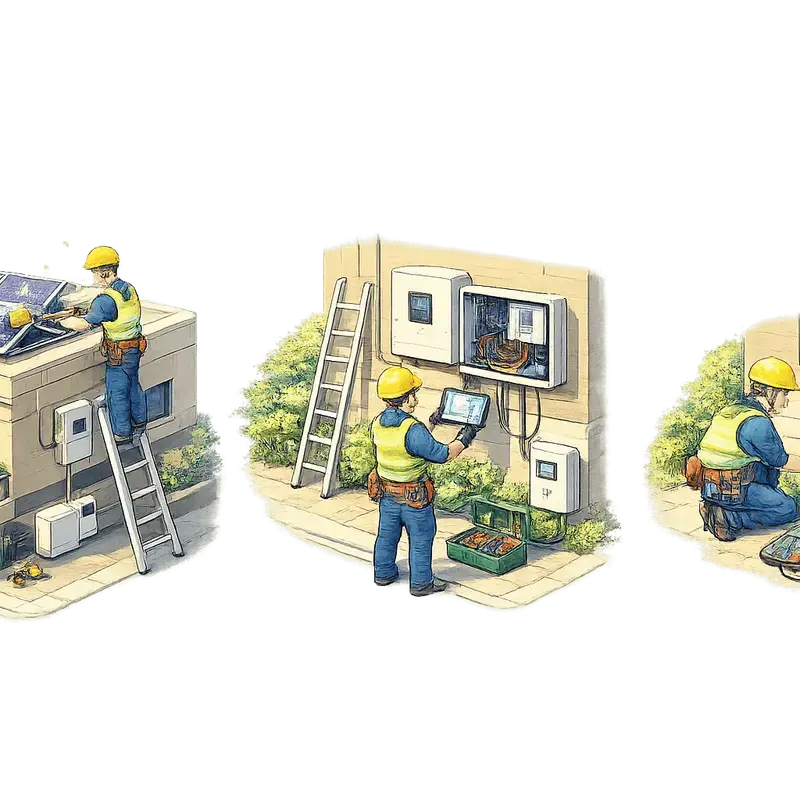
Delhi subsidy paperwork? Start with your roof.
Get a rooftop quote with your subsidy eligibility and application steps — for a home in Delhi, not a national estimate.
Imagine waking up in the middle of a scorching Delhi June. The AC has been running all night, the geyser is on for a quick shower, and you know the dreaded BSES or TPDDL bill is going to be a five-figure nightmare. For thousands of homeowners in areas like Rohini and Janakpuri, this was the reality until they discovered the power of the sun.
In 2026, the solar subsidy Delhi 2026 landscape has become more streamlined than ever, thanks to the massive push by the Ministry of New & Renewable Energy through the PM Surya Ghar Muft Bijli Yojana. If you are looking to slash your electricity bills to zero and get a significant chunk of your investment back from the government, this is your definitive guide.
At Bridgeway Power, with 35+ years of experience and 5,000+ installations, we’ve realized that while the subsidy is lucrative, the "how-to" can be confusing. This post breaks down the Delhi solar panel subsidy process so you can claim your share without the headache.
Understanding Solar Subsidy in Delhi 2026
Delhi residents are in a unique position. While some states offer complex layered subsidies, Delhi effectively integrates the PM Surya Ghar Delhi application directly through its major DISCOMs.
Currently, Delhi residents receive the Central Financial Assistance (CFA) provided by the central government. On top of the central CFA, Delhi now pays a state top-up of ₹26,000 per kW (capped at ₹78,000) under the amended Delhi Solar Energy Policy 2023 — filed separately on solar.delhi.gov.in — if you are a consumer of BSES Rajdhani, BSES Yamuna, or Tata Power DDL (TPDDL). Homes averaging up to 400 units/month may even qualify for the zero-upfront tendered route.
Delhi Solar Subsidy Amounts (PM Surya Ghar Rates)
The subsidy is fixed based on the capacity of the solar plant you install. Unlike previous years where it was a percentage of the cost, it is now a fixed amount per kW, making it transparent for the consumer.
| System Capacity | Central Subsidy (CFA) Amount | Ideal for... |
|---|---|---|
| 1 kW | ₹30,000 | Small 1BHK / Basic lights & fans |
| 2 kW | ₹60,000 | 2BHK / 1 Ton AC (Limited use) |
| 3 kW to 10 kW | ₹78,000 (Capped) | 3BHK+ / Multiple ACs / Full Home Backup |
Note: For systems above 3kW, the subsidy is capped at ₹78,000. Even if you install a 10kW system, the maximum financial benefit from the government remains 78k.
Step-by-Step: Rooftop Solar Subsidy Delhi How to Apply
The journey from a hot roof to a subsidized solar power plant involves six critical stages. While the government has digitized the process, knowing the "Delhi-specific" nuances is key.
The Application Roadmap
| Stage | Process Step | Action Owner | Key Detail |
|---|---|---|---|
| 1 | Registration | Consumer | Sign up on the PM Surya Ghar National Portal |
| 2 | Feasibility Approval | DISCOM (BSES/TPDDL) | DISCOM checks if your local transformer can take the load |
| 3 | Installation | Registered Vendor | System must be installed by an MNRE-empanelled vendor |
| 4 | Inspection & Net Meter | DISCOM | New meter installed to track "Export" vs "Import" |
| 5 | PCR Upload | Vendor/Consumer | Project Completion Report & photos uploaded to portal |
| 6 | Disbursement | Government | Money goes directly to your bank account via DBT |
Stage 1: Portal Registration
You will need your Consumer Account (CA) Number from your electricity bill. Ensure the name on the portal matches the name on the electricity bill exactly. Discrepancies here are the #1 cause of initial rejection.
Stage 2: DISCOM Feasibility
In densely populated areas like Lajpat Nagar or Palam, the local grid capacity might be limited. Your DISCOM will review your application to ensure the "Solar Penetration" in your area hasn't hit its limit. This usually takes 7-15 days.
Stage 3: Installation (The Veto Power of ALMM)
To claim the solar subsidy Delhi 2026, you must use solar modules that are on the Approved List of Models and Manufacturers (ALMM). If you install non-ALMM (usually imported/unbranded) panels, your subsidy claim will be rejected instantly.
Net Metering in India remains the backbone of this system. It allows you to "bank" units with the grid during the day and use them at night.
Documents Required for Delhi Solar Subsidy
Don't start the process until you have these documents scanned and ready (PDF or JPEG format).
- Latest Electricity Bill: Must be in the name of the applicant.
- Aadhaar Card: For identity verification.
- Bank Passbook/Cancelled Cheque: This is where the ₹78,000 will be deposited.
- Geo-tagged Roof Photos: Showing a clear, shadow-free area.
- NOC (No Objection Certificate): Mandatory if you live in a CGHS (Cooperative Group Housing Society) or if the roof is shared.
- DISCOM Feasibility Report: Generated during the application process.
Reality Check: Timeline and Common Hurdles
While the PM Surya Ghar Delhi application portal suggests a swift 30-day turnaround, the reality on the ground in Delhi NCR is different. Between the time you click "Apply" and the time the money hits your bank, expect a window of 60 to 120 days.
Why the delay?
- Meter Shortage: Sometimes DISCOMs run low on "Net Meters," leading to a 2-3 week wait.
- Inspection Backlog: During peak seasons (March to July), the volume of applications in Delhi spikes, slowing down the physical inspection by DISCOM junior engineers.
- Document Mismatch: If your bank account name is "Rahul Kumar" but your electricity bill says "Rahul Kr," the automated system might flag it.
Common Rejection Reasons
- Shared Rooftops: If you live on a builder floor in Dwarka, ensure you have the rights to the roof or a written NOC from other floor owners.
- Load Mismatch: If your sanctioned load is 2kW but you apply for a 5kW solar system, you must first apply for a Load Enhancement with your DISCOM.
- Incomplete Photos: Photos must show the structure is permanently fixed and the earthing/lightning arrester is visible.
Real Example: A 5kW Success Story in Pitampura
Let’s look at Mr. Khanna, who lives in a 3BHK independent floor in Pitampura.
- Monthly Bill: ₹9,500 (avg units 1,100/mo)
- System Installed: 5kW On-Grid Solar System
- Total Project Cost: ₹2,75,000 (approx. @ ₹55,000/kW)
- Subsidy Received: ₹78,000
- Net Cost: ₹1,97,000
- Monthly Savings: ~600 units generated per month. At Delhi's upper slab of ₹8/unit, that’s ₹4,800/month saved directly.
- Payback: Roughly 3.5 years.
For someone like Mr. Khanna, using our Solar Calculator helped him decide between a 3kW vs 5kW solar system.
Talk to a solar engineer — not a salesperson
Enter your pincode and monthly bill. If we install in your area, an engineer answers on WhatsApp with your numbers.
See your exact subsidy after state stacking
Pro Tips for a Smoother Application
- Apply Through Your Installer: This is the most important advice. At Bridgeway Power, we don't just bolt panels to your roof; we handle the entire portal bureaucracy. We know the BSES and Tata Power officers and understand how to navigate the documentation.
- Check Your Sanctioned Load: Look at your bill. If your "Sanctioned Load" is lower than the solar capacity you want, apply for an upgrade before starting the solar application.
- Structure Quality: Delhi gets high-speed winds during summers (and-hi's). Ensure your solar structure is galvanized and height-optimized. See our guide on the ideal height of solar panels.
Financing Your Delhi Solar Project
Even with the solar subsidy Delhi 2026, the upfront cost can be an obstacle. Thankfully, several banks offer dedicated solar loans under the PM Surya Ghar scheme with interest rates as low as 7% (collateral-free for residential).
Bridgeway Power partners with several institutions to offer flexible EMI options:
- Aerem Solar Finance
- Canara Bank Solar Loan
- ECOFY Solar Financing
- PNB Solar Rooftop Scheme
- SBI PM Surya Ghar Loan
Frequently Asked Questions
Is there a BREDA solar subsidy Delhi?
No, BREDA (Bihar Renewable Energy Development Agency) operates in Bihar. In Delhi, rooftop solar is managed by the respective DISCOMs (BSES/TPDDL) under the national MNRE guidelines and the PM Surya Ghar scheme.
Can I apply for the subsidy if I live in an apartment?
Yes, but you usually need the society's permission or a dedicated roof area. For apartment residents without roof access, you might explore Virtual Net Metering or Balcony Solar, though traditional subsidies apply mostly to rooftop installations.
How do I check my application status on the PM Surya Ghar portal?
Log in to the National Portal with your registered mobile number. The dashboard will show the status: "Feasibility Approved," "Installation Pending," or "Subsidy Disbursed."
What happens if the installer isn't registered on the portal?
If your vendor is not an empanelled vendor, you will not receive any subsidy. Always verify the vendor's name on the portal's "Registered Vendors" list before paying a token amount. Bridgeway Power is a fully empanelled EPC provider in Delhi NCR.
Does the solar subsidy cover battery systems (Hybrid)?
The central subsidy (CFA) is currently only for the solar portion of the grid-connected system. While you can install a home solar battery system, the subsidy calculation is based on the solar PV capacity, not the battery storage KWh.
Will I get the subsidy if I move my old panels to a new house?
No. The subsidy is a one-time benefit provided for new solar installations. If you already have a system and want to expand it, you can sometimes apply for a subsidy on the additional capacity, depending on current MNRE circulars. Read more about getting subsidy again.
Final Thoughts: Go Solar with Confidence
The solar subsidy Delhi 2026 is the most aggressive financial incentive for homeowners in the history of Indian renewable energy. With ₹1,56,000 in stacked subsidy and the ability to eliminate your electricity bill, the question isn't "Should I go solar?" but "Why haven't I yet?"
At Bridgeway Power, we take the complexity out of the process. From helping you choose the right 3kW system to managing your paperwork with BSES or Tata Power, we ensure your transition to clean energy is seamless.
Ready to claim your ₹1,56,000 stacked subsidy? Book a Free Roof Survey and Consultation with Bridgeway Power Today! Our experts will assess your roof in Delhi, Gurgaon, or Noida and provide a custom savings report.
Delhi GBI (Generation-Based Incentive) — separate from subsidy
Delhi pays a Generation-Based Incentive in addition to capital subsidy, disbursed by IPGCL/DERC based on units generated:
- Residential systems up to 3 kW: ₹3/unit generated
- Residential 3–10 kW: ₹2/unit generated
- RWA/group housing: no GBI (society plants get ₹29,000/kW capital subsidy instead — ₹18,000 central + ₹11,000 Delhi)
- Commercial: ₹1/unit generated
GBI is paid quarterly for 5 years against generation-meter readings. A 3 kW system generating 4,300 units/year at ₹3/unit adds ₹12,900/year × 5 years = ₹64,500 on top of the ₹1,56,000 capital subsidy.
FAQ
What is the total solar subsidy in Delhi in 2026?
A Delhi household installing a 3 kW (or larger) residential rooftop system gets a stacked ₹1,56,000 — ₹78,000 from PM Surya Ghar central plus ₹78,000 from the Delhi state top-up (second amendment to the Delhi Solar Energy Policy 2023, effective 2 September 2026). GBI on generation is paid separately.
How is the ₹1,56,000 split between central and state?
Central: ₹30,000 for 1 kW, ₹60,000 for 2 kW, ₹78,000 for 3 kW and above. Delhi state: ₹26,000/kW capped at 3 kW (so ₹78,000 max). No range, no up-to — these are fixed slab amounts.
Who qualifies for the Delhi stacked subsidy?
Any Delhi resident with a BRPL, BYPL, TPDDL, or NDMC connection in their own name and rooftop rights (owned home or written RWA/landlord NOC) can claim both components on a single PM Surya Ghar application plus the Delhi state portal filing.
When does the ₹1,56,000 land in my bank account?
After installation, net-meter commissioning, and discom inspection, subsidy is credited via DBT typically within 30–45 days of the commissioning report being uploaded to pmsuryaghar.gov.in.
Every 1 kW of solar on your roof offsets 1.5 tonnes of CO₂ per year
That's 40 trees planted — every year, for 25 years.
A typical 5 kW home system offsets 187 tonnes of carbon over its lifetime. That's equivalent to taking 8 cars off the road.
See your impact →How much can you save with solar?
Enter your electricity bill → get system size, subsidy amount & payback period
Get StartedSee your exact subsidy after state stacking
Related Articles
What Is Captive Open Access Solar (100% Equity Model)
Learn how Captive Open Access Solar (100% Equity Model) helps Indian businesses cut electricity costs by 40% using off-site solar plants. Guide on rules, savings & ROI.
Read moreHow Rooftop Solar Can Eliminate Your Electricity Bill
Discover how Net Metering and PM Surya Ghar subsidies can reduce your monthly electricity bill to near-zero. Learn about system sizing, costs, and real-world savings.
Read moreSolar Subsidy in Uttar Pradesh 2026: ₹1,08,000 for Noida, Ghaziabad & Greater Noida
UP's stacked solar subsidy 2026: ₹78,000 central + ₹30,000 UPNEDA state top-up = ₹1.08L. Real PVVNL net-cost math for Noida, Greater Noida, Ghaziabad & Meerut.
Read moreRelated guides
Delhi Electricity Rate 2026
BSES & Tata Power per-unit rates, PPAC, subsidy — sourced from DERC.
ExploreDelhi Solar Policy 2026
Free rooftop solar up to 3 kW for homes under 400 units. Eligibility & apply.
ExploreSolar Panel Price in Delhi
Live 2026 rooftop prices in Delhi after ₹1.56L subsidy. 1,200+ installs.
ExploreSolar Company in Gurgaon
Gurgaon's rooftop solar installer — 800+ systems, ₹78K PM Surya Ghar subsidy.
ExploreSolar Company in Noida
Noida & Greater Noida rooftop solar — 500+ installs, ₹1.08L stacked subsidy.
ExploreSolar Panel Price in Faridabad
Live 2026 Faridabad prices after ₹78K PM Surya Ghar subsidy. 350+ homes.
Explore