
By Mahendra Singh · Reviewed by Arshi Chadha, Founder
Virtual Net Metering in India: How Apartments and Societies Can Go Solar
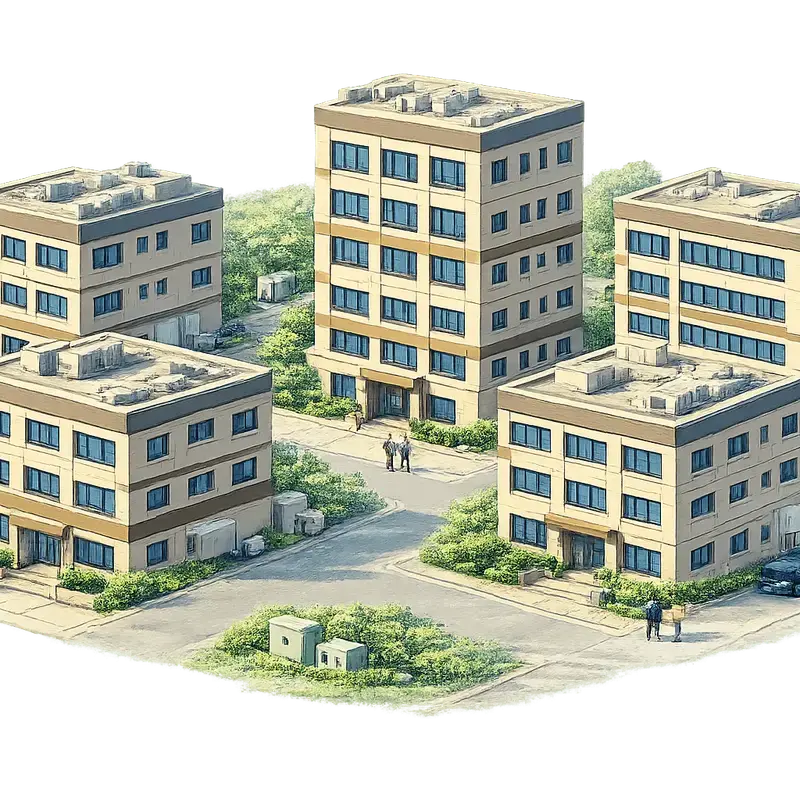
- •Focus: Community-based solar for multi-story buildings and societies.
- •VNM Capacity: Typically 1kW to 2MW depending on state policy.
- •Primary Benefit: Share generation from a single rooftop across multiple electricity connections.
- •Payback Period: 4–5 years for most Residential Welfare Associations (RWAs).
Virtual Net Metering in India: How Apartments and Societies Can Go Solar
Imagine living on the 4th floor of a 10-story apartment complex in South Delhi or Noida. You want to install solar panels to slash your ₹8,000 monthly electricity bill, but there’s a problem: you don’t own the roof. The rooftop is a common area, and even if you had permission, there isn't enough space for 100 different families to install 100 different systems.
For years, this was the "Solar Gap" in India. While independent homeowners were reaping the rewards of the PM Surya Ghar Muft Bijli Yojana, apartment dwellers remained shackled to rising DISCOM tariffs.
Enter Virtual Net Metering (VNM) in India. This regulatory breakthrough is changing the game for urban India, allowing high-rise residents to participate in the solar revolution without needing individual rooftop ownership. In this comprehensive guide, we’ll explore how virtual net metering India apartments can help you achieve zero electricity bills.
1. What is VNM vs. GNM? Understanding the Difference
Before diving into the technicalities, it is essential to distinguish between the two primary "group" solar models in India: Virtual Net Metering (VNM) and Group Net Metering (GNM).
Virtual Net Metering (VNM)
Virtual Net Metering allows a group of consumers (like apartment flat owners) to collectively own a solar project. The energy generated by this single solar plant is "virtually" credited to the individual electricity bills of the participants based on their share of investment.
- Who it’s for: Residential societies, apartments, and low-income consumer groups.
- Key Feature: The solar panels don't even have to be on your building in some states; they just need to be within the same DISCOM boundary.
Group Net Metering (GNM)
Group Net Metering is slightly different. It allows an entity (like a hospital, school, or business) with multiple electricity connections across different buildings to use solar power generated at one location to offset bills at another.
- Who it’s for: Entities with multiple rooftops/connections (e.g., Delhi Metro, Government schools, or large factories).
- Key Feature: One consumer, multiple meters.
For more details on commercial applications, read our guide on Group Net Metering (GNM) in India.
2. State-wise VNM Policies: Where Can You Go Solar?
Not every state in India has implemented VNM yet. Delhi and Odisha were early adopters, while others are slowly catching up to meet the Ministry of New and Renewable Energy (MNRE) targets.
Table 1: State-wise VNM Policy Comparison (2025-2026)
| State | VNM Status | Eligible Consumers | Key Rules |
|---|---|---|---|
| Delhi | Active | Residential (Societies), Hospitals, Schools | Allows 100% of sanctioned load to be installed. |
| Uttar Pradesh | Active | Residential & Government | Focus on RWAs and multi-story apartments. |
| Haryana | Restricted | Mostly Government/Institutions | Residential VNM is under evaluation for 2026. |
| Maharashtra | Under Trial | Housing Societies | Heavy focus on common area lighting offset. |
| Odisha | Active | Residential & Govt | Allows credit sharing across the DISCOM region. |
In Delhi, the Delhi Solar Policy 2024-2027 is particularly aggressive, offering Generation Based Incentives (GBI) even for VNM projects. This makes it the most lucrative market for virtual net metering India apartments.
3. How Apartments and RWAs Benefit from VNM
The transition to solar for an apartment complex offers three distinct layers of savings:
A. Offsetting Common Area Assets
Every apartment society spends a massive amount on "Common Area Maintenance" (CAM). This includes electricity for:
- Lifts/Elevators
- Water pumps
- Street lights and basement parking lights
- Clubhouses and gyms
By installing a large solar plant on the clubhouse or terrace roof, the RWA can bring CAM charges down to near zero.
B. Individual Flat Credits
Through VNM, the remaining solar power can be distributed to individual flats. If a resident owns a 2% share in the society solar plant, 2% of the monthly units generated are deducted from their personal DISCOM bill. This is the core appeal of virtual net metering India apartments.
C. Reduced Maintenance Costs
Since common area electricity is a recurring expense, solar helps stabilize the society’s budget. It shields residents from the frequent tariff hikes implemented by DISCOMs like TPDDL or BSES.
4. Cost and Savings for a 50kW Society Installation
Many RWAs ask: "What is the scale of investment?" Let’s look at a typical 50kW system, which is ideal for a mid-sized society with 40-60 flats.
Table 2: 50kW Society Solar Installation (VNM Model)
| Item | Details |
|---|---|
| Total System Cost (approx.) | ₹27,50,000 (at ₹55,000/kW) |
| Central Subsidy (CFA) | ₹78,000 (Max cap for residential) |
| State Subsidy (e.g., UP/Delhi) | ₹30,000 |
| Estimated Net Investment | ₹26,42,000 |
| Avg. Monthly Generation | 6,000 Units (kWh) |
| Monthly Savings (@ ₹8/unit) | ₹48,000 |
| Annual Savings | ₹5,76,000 |
| Estimated Payback Period | 4.6 Years |
Note: Subsidy for RWAs is usually capped per kW or per project. Under PM Surya Ghar, RWAs can get ₹18,000 per kW for common lighting, capped at 500kW total. Check our subsidy guide for updated caps.
Talk to a solar engineer — not a salesperson
Check whether we install in your area, then get your answer on WhatsApp. No forms, no call centre.
Translate your bill into a system size
5. Step-by-Step VNM Setup for Your Society
Setting up virtual net metering India apartments requires more coordination than a standard home installation. Here is the Bridgeway Power roadmap:
- RWA Resolution: The society must pass a formal resolution in the General Body Meeting (GBM) to install solar.
- Feasibility Study: A solar expert from Bridgeway Power visits the site to assess roof health, shadow-free area (100 sq ft per kW), and electrical infrastructure.
- DISCOM Application: An application for VNM is submitted to the local DISCOM (e.g., BSES, PVVNL, or DHBVN).
- Participant Mapping: A list of CA numbers (Consumer Account numbers) of participating residents is submitted. This tells the DISCOM who gets how much credit.
- Installation: High-efficiency Mono-PERC or Bifacial panels are installed.
- Bi-directional Metering: A net meter is installed at the solar plant, and virtual accounting is activated by the DISCOM.
To understand the equipment involved, read about 3kW vs 5kW system components.
6. Real Example: A Delhi Society Success Story
Location: Mayur Vihar, Delhi Setup: 60kW Rooftop Solar under VNM Scenario: A cooperative group housing society (CGHS) had a monthly common area bill of ₹75,000.
The society installed a 60kW system.
- Generation: Roughly 7,200 units per month.
- Allocation: 4,000 units were used for lifts and water pumps. The remaining 3,200 units were distributed among 32 participating flats (100 units each).
- Result: The RWA's common area bill dropped to the fixed-charge minimum, and the participating residents saw a ₹800 reduction in their individual monthly bills.
With the current electricity tariff in Delhi at ₹8/unit, this society is saving over ₹8.5 Lakhs annually. You can see similar results using our Solar Calculator.
7. Subsidy Amounts for Community Solar
Under the PM Surya Ghar Muft Bijli Yojana, community solar has specific financial tailwinds. While individual homes get up to ₹78,000, RWAs and Group Housing Societies (GHS) are incentivized for common area lighting.
- Central Subsidy: ₹18,000 per kW for common area installations.
- Delhi State Benefit: ₹30,000 state subsidy plus GBI of ₹2.00 per unit generated (for RWAs).
- Uttar Pradesh: ₹30,000 flat state subsidy for the project.
This ensures that the "Initial Friction" of cost is minimized for residents. Many societies now opt for "Solar Loans" where the EMI is paid out of the electricity savings themselves.
Frequently Asked Questions
Can I get solar if I don't have rooftop rights?
Yes! Through virtual net metering India apartments, you can invest in a share of the society's solar plant. The electricity generated is virtually credited to your bill, even if the panels are on a different building's roof within the society.
How is the solar credit shared among residents?
The RWA decides the ratio. It can be based on the amount of investment each resident makes or distributed equally. This mapping is submitted to the DISCOM, which automates the credit on the monthly bills.
What happens if the solar plant produces more power than we use?
The excess units are carried forward to the next billing cycle. At the end of the financial year (usually March), many DISCOMs pay out the surplus at a pre-determined "Average Power Purchase Cost" (APPC) rate. Learn more about Net Metering in India here.
Is maintenance a headache for societies?
Not with an Annual Maintenance Contract (AMC). For large society plants, regular cleaning is vital. Dirty panels can lose 20-30% of their efficiency in polluted cities like Delhi or Ghaziabad. We highly recommend checking out our Solar Panel Cleaning Guide.
Do we need a battery for VNM?
No. VNM systems are typically "On-Grid." They use the DISCOM's grid as a "battery." However, if your society faces frequent power cuts, a Hybrid Solar System with a battery bank for the lift/elevators is a smart upgrade.
Conclusion: Take the First Step with Bridgeway Power
Virtual Net Metering is the ultimate solution for the urban Indian resident. It turns a shared liability (the empty roof) into a shared asset (a green power plant).
At Bridgeway Power, we have 35+ years of experience navigating the complex regulations of Indian DISCOMs. Whether you are in Delhi, Noida, Gurgaon, or Lucknow, we can help your RWA transition to solar with a seamless, end-to-end installation and subsidy application process.
Ready to bring solar to your society? Schedule a Free Site Audit with Bridgeway Power Today! or use our Solar Calculator to estimate your savings.
Found this guide helpful? Share it with your RWA WhatsApp group to start the conversation on going solar!
Learn how to eliminate your electricity bill entirely | See the future of solar in India
Every 1 kW of solar on your roof offsets 1.5 tonnes of CO₂ per year
That's 40 trees planted — every year, for 25 years.
A typical 5 kW home system offsets 187 tonnes of carbon over its lifetime. That's equivalent to taking 8 cars off the road.
See your impact →How much can you save with solar?
Enter your electricity bill → get system size, subsidy amount & payback period
Get StartedGo solar without owning a rooftop
Community Solar gives commercial & institutional consumers the same savings — zero capex, zero roof needed.
Or get a free solar quote
Tell us about your rooftop — we'll call with exact savings for your home.
Related Articles
Lock In a Fixed Electricity Rate for Your School — Before Delhi Tariffs Rise Again
Lock in your school's electricity rate before Delhi tariffs hit ₹16/unit. Learn how Community Solar offers zero-capex savings of ₹10L+ annually.
Read moreWhat Delhi's Solar Policy Means for Apartment Owners and Non-Rooftop Residents
Discover how Delhi's 2026 solar policy enables apartment owners to save 40% on bills using Virtual Net Metering. No roof access or RWA NOC required.
Read moreVirtual Net Metering (VNM) in India: How It Enables Community Solar for Homeowners
Learn how Virtual Net Metering (VNM) enables community solar in India. Discover how DERC and RERC policies allow flat owners to share solar credits without individual rooftops.
Read moreRelated guides
Delhi Electricity Rate 2026
BSES & Tata Power per-unit rates, PPAC, subsidy — sourced from DERC.
ExploreDelhi Solar Policy 2026
Free rooftop solar up to 3 kW for homes under 400 units. Eligibility & apply.
ExploreSolar Panel Price in Delhi
Live 2026 rooftop prices in Delhi after ₹1.56L subsidy. 1,200+ installs.
ExploreSolar Company in Gurgaon
Gurgaon's rooftop solar installer — 800+ systems, ₹78K PM Surya Ghar subsidy.
ExploreSolar Company in Noida
Noida & Greater Noida rooftop solar — 500+ installs, ₹1.08L stacked subsidy.
ExploreSolar Panel Price in Faridabad
Live 2026 Faridabad prices after ₹78K PM Surya Ghar subsidy. 350+ homes.
Explore