
By Mahendra Singh · Reviewed by Arshi Chadha, Founder
How Many Units of Electricity Does a Solar Panel Produce?
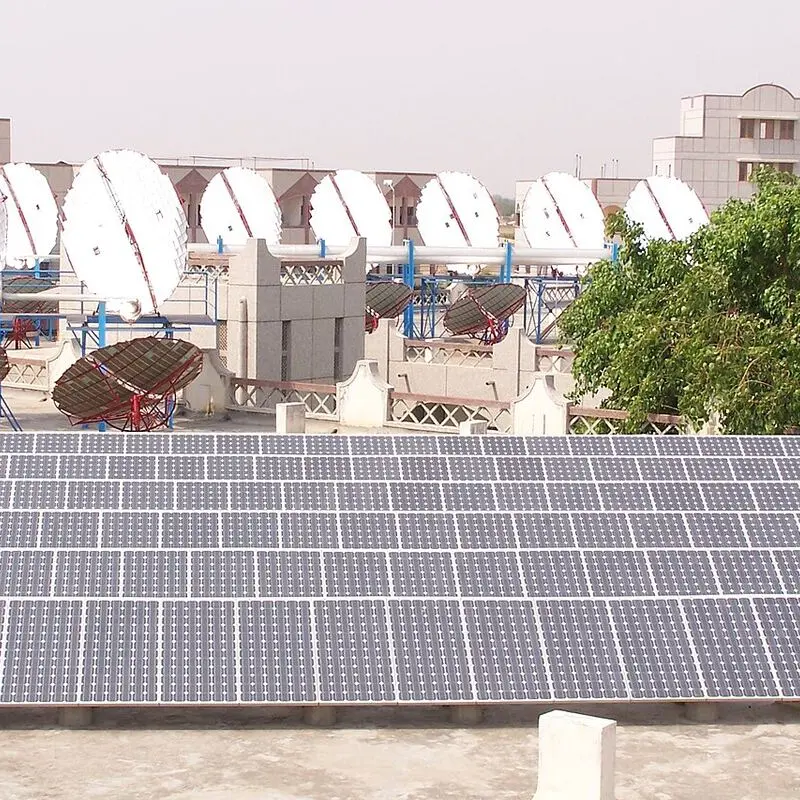
- •Daily Solar Generation per kW: 3.5 to 4.5 units (kWh)
- •Monthly Yield (5kW System): ~600 units (kWh)
- •Payback Period: 3 to 4 years (Delhi NCR)
- •Efficiency Loss: Up to 25% due to dust/soiling without maintenance
If you’re asking "solar panel kitna bijli banata hai", you aren't looking for a physics lesson on photons. You want to know if that glass on your roof will actually zero out your ₹8,000 monthly bill. In Delhi NCR, a 1kW solar system produces between 3.5 and 4.5 units of electricity per day on average. Across 35+ years of installing solar in Delhi and surrounding areas, we’ve seen these numbers hold steady, provided you don't let a layer of Yamuna-bank dust settle on your panels for a month.
The Reality of Solar Unit Production in North India
The most common question I get during a site survey is exactly that: "How many units?" While manufacturers claim high numbers in lab conditions, the ground reality in North India is governed by "Peak Sun Hours."
In the Delhi NCR cluster, we typically get about 4 to 5 peak sun hours a day. This doesn't mean the sun only shines for 4 hours; it means the intensity of the light is equivalent to full-strength noon sun for that duration. Consequently, your daily solar generation per kw fluctuates. On a clear June day, a 5kW system might pump out 25 units. In the middle of a foggy January in Gurugram, it might struggle to hit 8 units.
Generation Table: 1kW to 10kW Capacity
Here is the breakdown of what you can realistically expect from your rooftop plant before accounting for heavy shading or extreme dust.
| System Size | Avg. Daily Units | Avg. Monthly Units | Avg. Annual Units |
|---|---|---|---|
| 1 kW | 4 | 120 | 1,440 |
| 2 kW | 8 | 240 | 2,880 |
| 3 kW | 12 | 360 | 4,320 |
| 4 kW | 16 | 480 | 5,760 |
| 5 kW | 20 | 600 | 7,200 |
| 6 kW | 24 | 720 | 8,640 |
| 7 kW | 28 | 840 | 10,080 |
| 8 kW | 32 | 960 | 11,520 |
| 10 kW | 40 | 1,200 | 14,400 |
Note: These figures assume a south-facing, shadow-free installation using Tier-1 Topcon Mono PERC panels.
Solar Panel Kitna Bijli Banata Hai: The Factors That Steal Your Units
If your system isn't hitting these numbers, it’s rarely a "faulty panel." In my experience, 90% of underperformance comes down to three things:
1. The "Delhi Dust" Factor
Data from the Ministry of New & Renewable Energy and our own field observations show that panel soiling loss can hit 25% in cities like Faridabad or Noida. If you don't clean your panels for three weeks, you are essentially throwing away 1 unit for every 4 your system makes. This is why we include two professional cleanings in the first year and strongly recommend a Solar AMC for high-capacity plants.
2. Tilt Angle and Orientation
For residential rooftop solar in North India, the "sweet spot" for tilt is roughly 25 to 30 degrees, facing South. If your installer tilts them at 10 degrees just to save on mounting structure cost, you’ll lose significant yield during the winter months when the sun is lower in the sky.
3. Shadow-Free Area
A common mistake is ignoring the "chimney shadow" or the neighbour's water tank. Even if a small corner of one panel is shaded, most string inverters will drop the performance of the entire string. If your roof is "busy" with obstacles, you should look into microinverters which allow each panel to work independently.
Real Example: A 5kW System in Rohini
Last year, we installed a 5kW system for a homeowner in Rohini who was tired of ₹8,500 monthly bills from TPDDL.
- System Size: 5kW (DCR Panels for subsidy)
- Observed Generation: In May, the system peaked at 24 units/day. In August (monsoon), it averaged 14 units/day.
- Monthly Average: 610 units.
- Financial Impact: At a Delhi tariff of roughly ₹8/unit (for higher slabs), he saved nearly ₹4,800 monthly on energy charges alone. With the PM Surya Ghar Yojana subsidy, his net investment was recovered in under 3.5 years.
You can run your own numbers using our Solar Calculator to see how many panels fit your specific roof.
Talk to a solar engineer — not a salesperson
Enter your pincode and monthly bill. If we install in your area, an engineer answers on WhatsApp with your numbers.
See exact units your roof will generate
Solar Panel Efficiency in India: Why the Percentage Matters (and Why It Doesn't)

You’ll see panels marketed with 22% efficiency. This reflects how much sunlight hitting the cell is converted to electricity. While higher efficiency is great for small roofs (you need fewer panels to get to 5kW), it doesn't mean a 22% efficient panel produces more "units per kW" than a 20% one. A 5kW system is a 5kW system. The higher efficiency just means it occupies less square footage on your roof.
Typical 5kW Plant Expectation (Month-by-Month)
| Season | Avg. Monthly Units | Weather Context |
|---|---|---|
| Summer (Mar-June) | 650 - 750 | Long days, high heat (slight efficiency drop due to temp) |
| Monsoon (July-Sept) | 400 - 500 | High cloud cover, rain washes away dust (bonus!) |
| Winter (Nov-Jan) | 350 - 450 | Smog and shorter days reduce output |
| Spring (Feb) | 550 - 600 | Cool weather + clear skies = Peak Efficiency |
From our installs
We recently audited a 10kW system on a builder floor in Sushant Lok, Gurugram. The owner complained that his solar unit production per month had dropped from 1,200 units to 900. Our technician found that a new floor constructed next door was casting a shadow from 3:00 PM onwards. The result: We re-mapped the strings to isolate the shaded panels. The caveat: No matter how good the panels are, if your neighbour builds higher, your generation will take a hit. Always negotiate "air rights" or plan for an elevated structure if you suspect nearby construction.
FAQ
How many units does a 1kW solar panel produce in 1 hour?
A 1kW system doesn't produce a fixed amount per hour; it depends on the sun's position. At peak noon (12 PM - 1 PM), a 1kW system can produce nearly 0.9 to 1 full unit (kWh). In the early morning or late evening, it might only produce 0.1 units per hour.
Does 5kW solar produce 5 units an hour?
No. While the "rated capacity" is 5kW, real-world losses (inverter heat, cable resistance, and dust) mean a 5kW system usually peaks at about 4.2 to 4.5 kWh of instantaneous power during the brightest part of the day.
How much electricity does a solar panel produce on a cloudy day?
On a fully overcast day in Delhi, generation can drop by 60% to 70%. However, solar panels still produce power from "diffused" light. It’s a myth that they go to zero; even in heavy monsoon rain, a system will usually produce enough to keep the inverter "awake."
Is 3kW enough for a 3BHK home?
A 3kW system produces about 360 units a month. If your usage is mostly lights, fans, and a fridge, it's plenty. But if you run two 1.5-ton ACs during the day, you’ll likely need a 5kW system to actually see a near-zero bill. Use a solar calculator to match your specific appliances.
How many units will my 5kW system produce in a year?
In the North Indian climate, you can expect between 7,000 and 7,500 units annually. This accounts for the high-production summer months and the low-production foggy winters.
The most important takeaway is this: the number of units isn't just about the panels; it's about the maintenance. A cheap, uncleaned system will always underperform a well-engineered one. If you're ready to see exactly how much your roof can generate, Get a free quote and we’ll send a surveyor to do a 3D shadow analysis.
Reviewed by: Gurubaksh Singh, Senior Solar Advisor, Bridgeway Power
Every 1 kW of solar on your roof offsets 1.5 tonnes of CO₂ per year
That's 40 trees planted — every year, for 25 years.
A typical 5 kW home system offsets 187 tonnes of carbon over its lifetime. That's equivalent to taking 8 cars off the road.
See your impact →How much can you save with solar?
Enter your electricity bill → get system size, subsidy amount & payback period
Get StartedSee exact units your roof will generate
Related Articles
Steps if Your Solar Subsidy is Not Credited to Account
Is your solar subsidy stuck? Learn why bank account credits fail, how to check PFMS status, and the 4 steps to get your PM Surya Ghar funds released.
Read moreWhat Is Captive Open Access Solar (100% Equity Model)
Learn how Captive Open Access Solar (100% Equity Model) helps Indian businesses cut electricity costs by 40% using off-site solar plants. Guide on rules, savings & ROI.
Read moreHow Rooftop Solar Can Eliminate Your Electricity Bill
Discover how Net Metering and PM Surya Ghar subsidies can reduce your monthly electricity bill to near-zero. Learn about system sizing, costs, and real-world savings.
Read moreRelated guides
Delhi Electricity Rate 2026
BSES & Tata Power per-unit rates, PPAC, subsidy — sourced from DERC.
ExploreDelhi Solar Policy 2026
Free rooftop solar up to 3 kW for homes under 400 units. Eligibility & apply.
ExploreSolar Panel Price in Delhi
Live 2026 rooftop prices in Delhi after ₹1.56L subsidy. 1,200+ installs.
ExploreSolar Company in Gurgaon
Gurgaon's rooftop solar installer — 800+ systems, ₹78K PM Surya Ghar subsidy.
ExploreSolar Company in Noida
Noida & Greater Noida rooftop solar — 500+ installs, ₹1.08L stacked subsidy.
ExploreSolar Panel Price in Faridabad
Live 2026 Faridabad prices after ₹78K PM Surya Ghar subsidy. 350+ homes.
Explore