
By Sandeep Maurya · Reviewed by Arshi Chadha, Founder
PM Surya Ghar 3kW System Price and Subsidy Guide
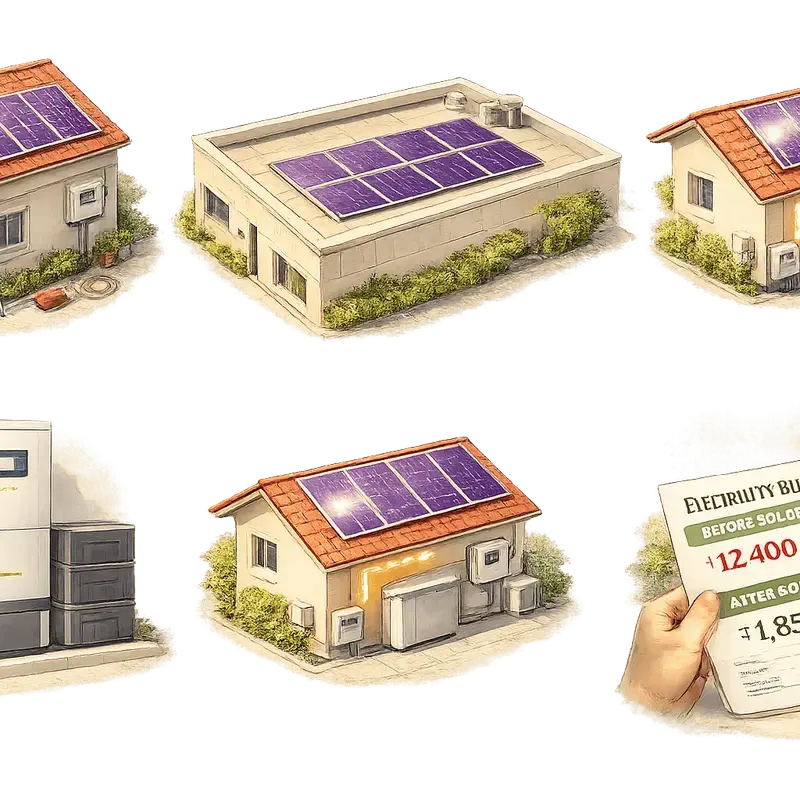
The pm surya ghar yojana 3kw price isn't just a number; it's the specific sweet spot where the Government of India maximizes its financial support for your home. Under the new PM Surya Ghar Muft Bijli Yojana, a 3kW system qualifies for the absolute maximum central subsidy of ₹78,000. If you’re in Delhi, we stack another ₹30,000 from the state on top of that, bringing your out-of-pocket expense down to roughly ₹1.32 Lakh.
At Bridgeway Power, we’ve spent 35+ years watching Indian electricity bills climb. We’ve installed over 25 MW of solar, and I can tell you plainly: if your monthly bill is between ₹3,000 and ₹4,500, the 3kW configuration is the most efficient investment you can make in 2026.
The PM Surya Ghar Yojana Subsidy Chart (2026)
The first thing you need to understand is that the subsidy isn't a flat rate. The Ministry of New & Renewable Energy (MNRE) designed this to favor smaller residential setups. Here is how the numbers break down for 2026.
PM Surya Ghar Subsidy Structure (1kW to 10kW)
| System Capacity | Central Subsidy (CFA) | State Subsidy (Delhi Example) | Total Benefit |
|---|---|---|---|
| 1 kW | ₹30,000 | ₹10,000 | ₹40,000 |
| 2 kW | ₹60,000 | ₹20,000 | ₹80,000 |
| 3 kW | ₹78,000 | ₹30,000 | ₹1,08,000 |
| 4 kW - 10 kW | ₹78,000 (Capped) | ₹30,000 (Capped) | ₹1,08,000 |
Note: The pm surya ghar yojana subsidy chart confirms that the central subsidy caps at 3kW. While you can install a 10kW system, the government won't pay you more than ₹78,000 in central funds. This is why 3kW is often called the "ROI King."
Detailed Cost Breakdown: PM Surya Ghar Yojana 3kW Price
When we quote a 3kW system, we aren't just selling panels. You’re buying a mini-power plant that has to survive 25 years of Indian monsoons and heatwaves. For a standard 3kW on-grid installation in 2026, here is where your money goes.
| Item | Specification | Approx. Cost (Incl. 8.9% GST) |
|---|---|---|
| Solar Modules | 5 units of 600Wp TOPCon Mono PERC | ₹95,000 |
| Solar Inverter | 3kW String Inverter (10-year warranty) | ₹35,000 |
| Mounting Structure | Hot-dip Galvanized (GI) High-Rise | ₹25,000 |
| Balance of System | DC/AC Cables, Earthing, LA, DCDB/ACDB | ₹30,000 |
| Installation & Net Metering | Documentation, Labor, DISCOM Liaison | ₹25,000 |
| Add-ons | Insurance (1-yr) + 2 Cleanings | Included by Bridgeway |
| Total Gross Price | ₹2,40,000 |
After applying the combined subsidy of ₹1,08,000 for a solar installation in Delhi, your net effective price is ₹1,32,000.
If you're looking at pm surya ghar muft bijli yojana haryana, the net cost will be slightly higher (around ₹1,62,000) because Haryana currently does not offer a state-level cash top-up like Delhi does. However, with the DHBVN net metering process, the savings remain massive. You can use our Solar Calculator to see the exact payback period for your specific city.
Step-by-Step Portal Registration and Vendor Selection
Don't let the government portal intimidate you. I've seen customers get stuck because they uploaded a blurry electricity bill or chose a vendor based solely on the lowest price—only for that vendor to vanish six months later.
- Registration: Visit the official portal. You’ll need your DISCOM consumer number (found on your bill from BSES or Tata Power) and a mobile number linked to your Aadhaar.
- Feasibility Approval: The DISCOM will check if your local transformer can handle more solar. In crowded areas like Janakpuri or Palam, this is a critical step.
- Vendor Selection: You must choose a "Registered Vendor." Bridgeway Power is an empanelled vendor. When you pick a vendor, look beyond the price. Ask about their workmanship warranty and how they handle pigeon proofing.
- Installation & Inspection: Once the system is up, the vendor submits a "Work Completion Report." The DISCOM then visits to install the Net Meter.
- Subsidy Claim: After the net meter is live, you submit your bank details (cancelled cheque) on the portal.
Talk to a solar engineer — not a salesperson
Enter your pincode and monthly bill. If we install in your area, an engineer answers on WhatsApp with your numbers.
See your exact subsidy after state stacking
The Real Timeline: When Does the Money Hit Your Account?
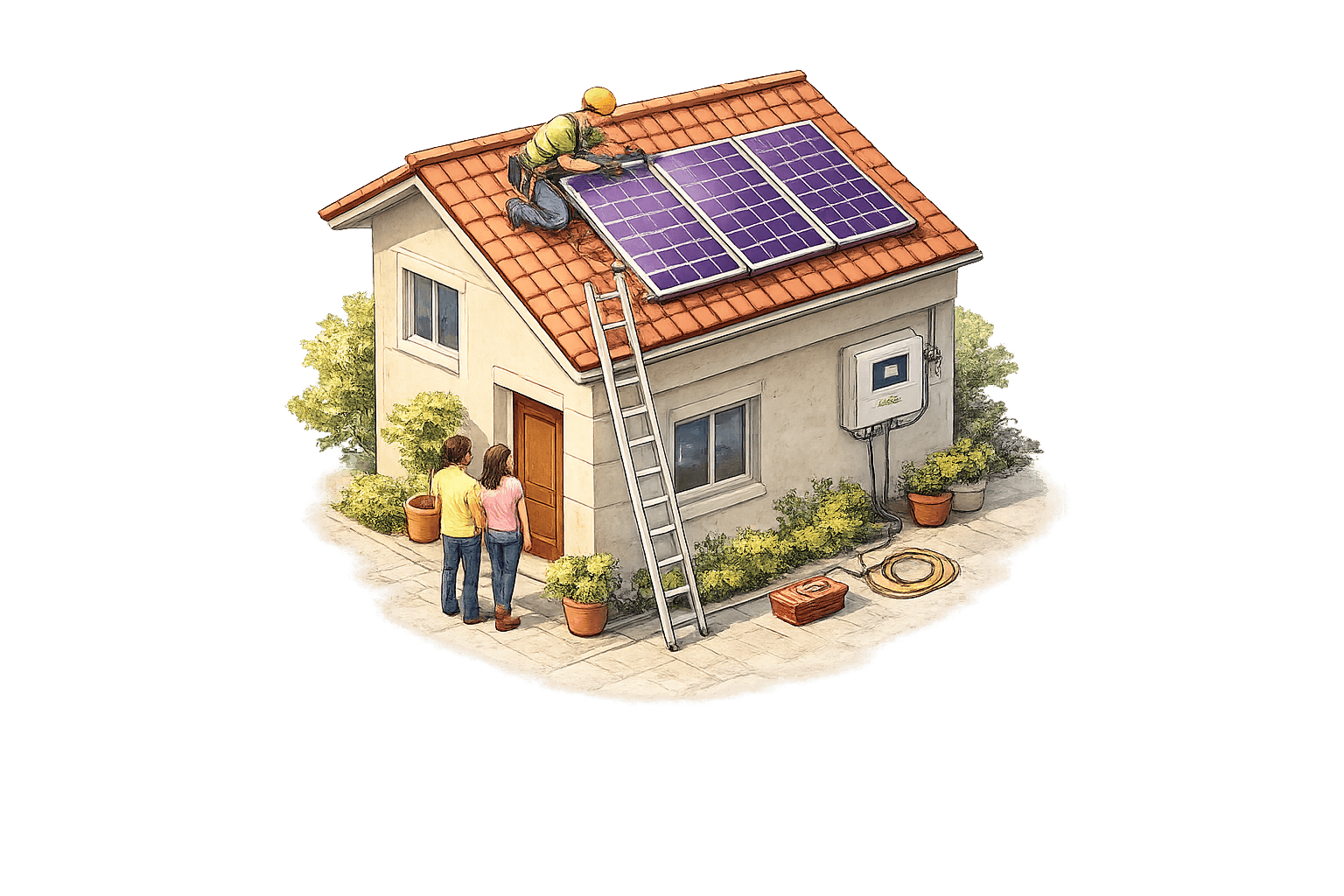
We get this question daily. "When do I get my ₹78,000 back?"
In 2026, the process has become significantly faster. Once the net meter is installed and the final inspection report is uploaded to the national portal, the central subsidy typically reaches your bank account within 30 to 45 days. The Delhi state subsidy (GBI) follows a different track, often credited quarterly based on the actual units your system generates.
Real Example: 3kW in Rohini, Delhi
Mr. Sharma lives in a builder floor in Rohini. His average monthly bill was ₹4,200. We installed a 3kW system using 600Wp TOPCon panels.
- Gross Investment: ₹2,40,000
- Total Subsidy Received: ₹1,08,000
- Net Investment: ₹1,32,000
- Monthly Generation: ~360 units
- Monthly Bill Reduction: ~₹3,400 (including fixed charge offsets)
- Payback: He will recover his investment in just 3.2 years.
For homeowners in Gurgaon, you can check specific solar panel prices in Gurgaon to see how the local DHBVN rules affect your ROI.
Financing Your 3kW System
If you don't want to pay ₹1.32 Lakh upfront, the government has mandated low-interest loans from major banks. These are usually capped at Repo Rate + 0.5% for systems up to 3kW.
We also work with private partners like ECOFY and Aerem for faster, paperless approvals. Get a free quote from us, and we can help you compare these options.
FAQ
How much space is needed for a 3kW solar system?
A 3kW system using modern 600Wp panels requires approximately 200 to 250 square feet of shadow-free rooftop area. If you have a smaller roof, we can use elevated structures to keep your roof space usable for walking or sitting.
Can I run a 1.5-ton AC on a 3kW solar system?
Yes, a 3kW system generates enough power during the day to offset the consumption of one 1.5-ton inverter AC along with standard lights and fans. However, since this is an on-grid system, the solar power goes to the grid, and you get a credit. You don't "run" the AC directly off the panels; the grid manages the load.
What is the maintenance cost for a 3kW system?
Maintenance is minimal but essential. You should clean the panels every 15 days to avoid 25% generation loss due to Delhi's dust. We include two professional cleanings in the first year, and after that, many customers opt for a Solar AMC to ensure the inverter and wiring stay healthy.
Is the PM Surya Ghar Yojana available for apartments?
Yes, but it requires RWA approval for common roof usage. For residents in Dwarka, we often implement Virtual Net Metering where the solar energy generated on the society roof is credited to individual apartment bills.
What happens if I move houses after installing solar?
Solar systems are modular. We can dismantle the panels and structure and reinstall them at your new location. However, you will need to apply for a new net metering connection at the new address, and the original subsidy cannot be claimed a second time.
If you’re ready to stop renting your electricity and start owning it, a 3kW system is the most logical starting point. It maximizes the government’s contribution and minimizes your payback time. Book a site survey with our engineers to see if your roof is ready.
Every 1 kW of solar on your roof offsets 1.5 tonnes of CO₂ per year
That's 40 trees planted — every year, for 25 years.
A typical 5 kW home system offsets 187 tonnes of carbon over its lifetime. That's equivalent to taking 8 cars off the road.
See your impact →How much can you save with solar?
Enter your electricity bill → get system size, subsidy amount & payback period
Get StartedSee your exact subsidy after state stacking
Related Articles
What Is Captive Open Access Solar (100% Equity Model)
Learn how Captive Open Access Solar (100% Equity Model) helps Indian businesses cut electricity costs by 40% using off-site solar plants. Guide on rules, savings & ROI.
Read moreHow Rooftop Solar Can Eliminate Your Electricity Bill
Discover how Net Metering and PM Surya Ghar subsidies can reduce your monthly electricity bill to near-zero. Learn about system sizing, costs, and real-world savings.
Read moreSolar Subsidy in Uttar Pradesh 2026: ₹1,08,000 for Noida, Ghaziabad & Greater Noida
UP's stacked solar subsidy 2026: ₹78,000 central + ₹30,000 UPNEDA state top-up = ₹1.08L. Real PVVNL net-cost math for Noida, Greater Noida, Ghaziabad & Meerut.
Read moreRelated guides
Delhi Electricity Rate 2026
BSES & Tata Power per-unit rates, PPAC, subsidy — sourced from DERC.
ExploreDelhi Solar Policy 2026
Free rooftop solar up to 3 kW for homes under 400 units. Eligibility & apply.
ExploreSolar Panel Price in Delhi
Live 2026 rooftop prices in Delhi after ₹1.56L subsidy. 1,200+ installs.
ExploreSolar Company in Gurgaon
Gurgaon's rooftop solar installer — 800+ systems, ₹78K PM Surya Ghar subsidy.
ExploreSolar Company in Noida
Noida & Greater Noida rooftop solar — 500+ installs, ₹1.08L stacked subsidy.
ExploreSolar Panel Price in Faridabad
Live 2026 Faridabad prices after ₹78K PM Surya Ghar subsidy. 350+ homes.
Explore