
By Vansh Dahiya · Reviewed by Arshi Chadha, Founder
Solar Panels Don't Fail. Systems Do. Here's Why.
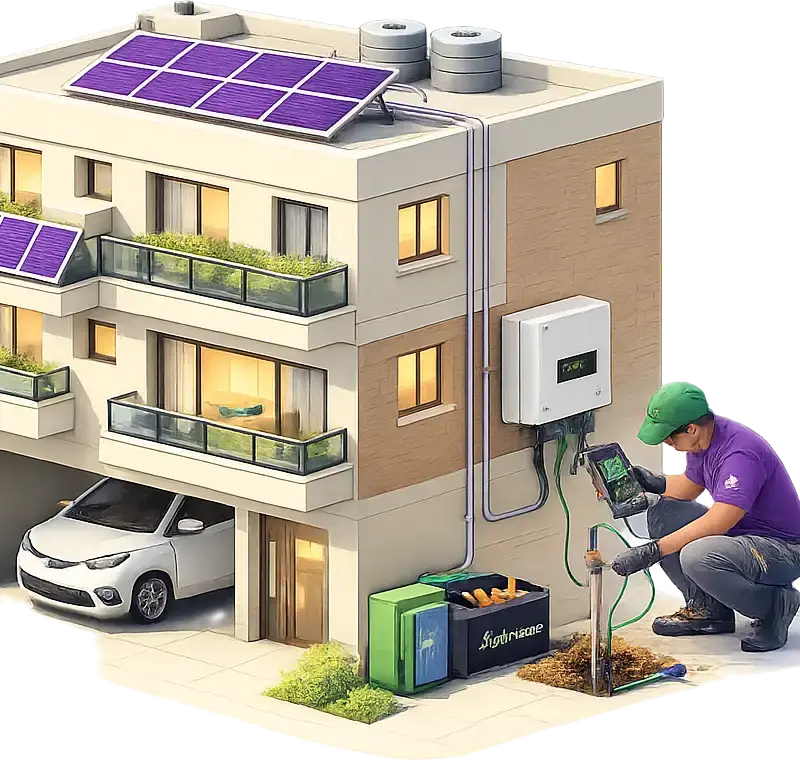
- •Solar Panel Reliability: 98% survival rate over 25 years.
- •Primary Failure Point: Inverters (8-12% failure rate within 10 years).
- •Common Culprits: Dust, loose wiring, and heat (causing 15-20% of issues).
- •Maintenance Tip: Weekly inverter checks can prevent 80% of energy losses.
- •Solution: Professional [AMC Plans](/amc) keep systems running for decades.
You finally did it. You invested ₹3.5 Lakh into a 5kW rooftop system. For the first six months, you watched with pride as your BSES bill dropped to almost zero. Then, one Tuesday afternoon in the middle of a scorching June, you notice your generation has plummeted. Your first thought? "The panels are defective. I knew I shouldn't have trusted this brand."
In our 35 years at Bridgeway Power, having installed 25+ MW of solar across India, we have seen this scenario thousands of times. Here is the hard truth: Solar panels almost never fail. They are the "rock stars" of the renewable world—silent, sturdy, and incredibly durable.
When a rooftop plant stops producing power, it is rarely the panels. It is the system. A solar plant is an ecosystem of electronics, metal, and glass. If the brain (inverter) overheats or the veins (wiring) fray, the heart (panels) can’t do its job. Understanding solar panel failure India requires looking beyond the glass and silicon.
The Myth of Solar Panel Failure
When homeowners talk about "solar panel failure," they are usually describing a symptom, not the disease. Actual solar modules have no moving parts. They are essentially sandwiches of silicon cells protected by tempered glass and an aluminum frame.
According to global data and our internal field reports from over 5,000+ installations, the module failure rate is incredibly low. Most Tier-1 panels come with a 25-year performance warranty because manufacturers know they will last.
Breakdown of Solar System Component Reliability
| Component | Failure Rate / Issue Frequency | Typical Lifespan | Common Problems |
|---|---|---|---|
| Solar Panels | ~2% over 25 years | 25–30 Years | Micro-cracks, PID, Snail trails |
| Solar Inverter | 8–12% within 10 years | 10–12 Years | Overheating, Capacitor fail, Grid sync errors |
| Wiring & Connectors | 15–20% of all service calls | 15–20 Years | Rattled loose, Rat bites, MC4 arcing |
| Mounting Structure | Context dependent | 25+ Years | Rusting (Coastal), Loose bolts, Grouting leaks |
As the table shows, if you are experiencing solar system problems India homeowners often face, the panels are the least likely culprit. Let's dive into what actually goes wrong.
Why Inverters Are the Real "Weak Link"
If the panels are the heart, the inverter is the brain. It converts DC power from the roof into the AC power your home uses. It is also the most hardworking part of the system, dealing with high voltage, heat, and grid fluctuations every second.
The solar system failure reasons India faces are often tied to our climate. High ambient temperatures in cities like Delhi or Jaipur mean inverters frequently run hot. When an inverter hits its thermal limit, it "derates" (reduces output) or shuts down entirely to protect itself.
Common Inverter Failure Points
| Failure Mode | Root Cause | Impact |
|---|---|---|
| Fan Failure | Dust accumulation / Bearing wear | Overheating and total shutdown |
| Capacitor Degradation | High heat and voltage ripples | Reduced efficiency / Inverter "death" |
| Grid Fault Errors | Unstable local grid / Voltage surges | System refuses to export power |
| Display Malfunction | UV exposure / Moisture ingress | Blind operation (can't see stats) |
Most modern string inverters have a design life of about 10–12 years. If you are halfway through your panel warranty, you should expect to service or replace your inverter at least once. This is why choosing a brand with a strong service network in India—like the ones we feature in our Best Solar EPC Companies in Delhi guide—is critical.
Wiring and Workmanship: The Hidden Killers
Around 15-20% of all solar panel not generating complaints are actually due to "Balance of System" (BOS) failures. In the Indian context, this usually boils down to three things:
- Poor Crimping: If the MC4 connectors (the plugs that join panels) aren’t crimped with professional tools, they develop high resistance. This creates heat, which can lead to "arcing" and even small fires.
- UV Damage: If an installer uses cheap, non-solar rated DC cables, the insulation will crack under the Indian sun within 3 years.
- Monkeys and Rodents: Particularly in areas like South Delhi or Old Gurgaon, monkeys are a real threat. They don't just sit on panels; they pull at dangling wires. If wires aren't neatly tucked into conduits, they will eventually be disconnected.
Solar panel installation in India is a craft. A "cheap" installer saves money by skipping conduits or using inferior connectors, which costs you more in the long run.
Diagnostic Guide: What to Do When Generation Drops
Before you call a technician, use this guide to identify where the "solar system failure" is happening.
| Symptom | Probable Cause | First Step |
|---|---|---|
| Zero Output | Inverter or Grid issue | Check if the Inverter display is ON. Check MCB. |
| Low Output (30-50% less) | Shading, Dust, or String fail | Check for new trees/buildings or Heavy Dust |
| Intermittent Generation | Loose connections / Grid sync | Monitor if it happens only at peak heat (Overheating) |
| Error Code on Screen | Internal component fault | Note the code and check the manual or Troubleshooting Guide |
Talk to a solar engineer — not a salesperson
Check whether we install in your area, then get your answer on WhatsApp. No forms, no call centre.
What would solar save on YOUR bill?
Real Example: The Case of the "Dead" 10kW System
A client in Noida Extension called us recently. Their 10kW system, installed by a local contractor who had since gone out of business, was producing only 10 units a day—about 25% of what it should. The homeowner was convinced the panels had "expired" in just four years.
Our Audit Found:
- The Panels: Perfectly fine, just buried under 2mm of construction dust and bird droppings.
- The Inverter: One of the two internal cooling fans had seized due to dust. The inverter was hitting 85°C by 11 AM and shutting down.
- The Result: After a professional AMC cleaning and a ₹4,000 fan replacement, the system was back to 45 units/day.
The "failure" wasn't the panels—it was a lack of maintenance. This is why we tell our customers: Solar is low maintenance, but it is not NO maintenance.
Why DIY Diagnosis Often Fails
Many homeowners try to fix why solar stops working by themselves. While checking an MCB is fine, opening a DC Distribution Box (DCDB) can be dangerous. DC voltage from solar panels can go up to 1000V, which is far more lethal than the AC current in your wall sockets because it doesn't "let go."
Furthermore, issues like "Induced Potential Degradation" (PID) or micro-cracks aren't visible to the naked eye. They require thermal imaging cameras or I-V curve tracers to detect. If your system is underperforming, it’s worth getting a Solar Audit.
The Importance of the Installer Over the Brand
In the Indian market, people obsess over "Which is the best panel? Waaree, Adani, or Tata?" While brand matters, the installer's service commitment matters more.
A Tier-1 panel installed with poor earthing or a mismatched inverter will fail. Conversely, a mid-tier panel installed with precision, proper mounting structure height, and a scheduled AMC plan will outperform the "premium" system every time.
At Bridgeway Power, we focus on the system-level health. We don't just bolt panels to your roof; we ensure the DC-side protection, the AC-side surge arrestors, and the monitoring apps are all synced for a 25-year journey.
Frequently Asked Questions
Why has my solar generation decreased suddenly?
Sudden drops are usually due to three things: a tripped MCB, localized shading (like a new water tank or neighbor's construction), or extreme dust buildup. Check your inverter for an error code first. If there's no code, it's likely an external factor like shading or bird droppings.
How do I know if my solar panels are actually broken?
It is very rare for a panel to "break" without physical impact (like a Cricket ball or hailstorm). If you see a shattered glass surface, it needs replacement. If the glass is intact but output is zero, the problem is almost certainly in the inverter or the wiring connections.
Is my solar inverter supposed to get very hot?
Inverters generate heat during the DC-to-AC conversion. It is normal for the heatsinks to be warm (45-55°C). However, if you cannot touch the inverter for more than a second, or if it smells of burnt plastic, it is overheating. Ensure it is installed in a shaded, well-ventilated area.
Does the government subsidy cover repairs or failures?
The PM Surya Ghar Yojana provides a capital subsidy for the initial installation. It does not cover ongoing maintenance or component replacement after the warranty period. However, most installers provide a 5-year workmanship warranty and a 5-10 year inverter warranty as part of the scheme.
How often should I check my solar system?
We recommend a "Weekly Glance" policy. Check your inverter display or monitoring app once a week to ensure the "Status" light is green. For deep cleaning and electrical health checks, a professional AMC visit every 3-4 months is ideal for Indian conditions.
Conclusion: Protect Your Investment
"Solar panels don't fail. Systems do." This mantra should be the foundation of your solar journey. When you invest in solar, you aren't just buying hardware; you are buying a 25-year power plant.
Don't wait for your generation to hit zero before paying attention. Most solar panel failure India stories are actually stories of neglected maintenance. Whether you are in Dwarka or Gurgaon, the dust and heat are your system's biggest enemies.
Ready to ensure your system never fails? Bridgeway Power offers comprehensive AMC plans and system audits to keep your "rock star" panels performing at their peak.
Contact Bridgeway Power for a Free System Health Check today.",excerpt:
Every 1 kW of solar on your roof offsets 1.5 tonnes of CO₂ per year
That's 40 trees planted — every year, for 25 years.
A typical 5 kW home system offsets 187 tonnes of carbon over its lifetime. That's equivalent to taking 8 cars off the road.
See your impact →Protect your existing solar system
Annual maintenance plans — panel cleaning, remote monitoring & emergency support
Get StartedLiked this article? Get a free solar quote
Tell us about your rooftop — we'll call with exact savings for your home.
Related Articles
Annual Solar Maintenance Cost in India: DIY vs AMC vs One-Time Service
Learn the real annual solar maintenance cost in India for 2026. Compare DIY, one-time service, and AMC plans to maximize your rooftop solar savings.
Read moreHow to Correctly Read Your Solar Net Meter Display
Master how to read solar net meter displays (Secure/Genus), understand Export vs. Import codes, and verify your DISCOM bill accuracy in Delhi NCR.
Read moreNPCL Solar Net Metering in Greater Noida: Process & Documents
Learn the exact NPCL solar net metering process in Greater Noida. Get the document checklist, application steps, and timeline for rooftop solar approval in 2026.
Read moreRelated guides
Delhi Electricity Rate 2026
BSES & Tata Power per-unit rates, PPAC, subsidy — sourced from DERC.
ExploreDelhi Solar Policy 2026
Free rooftop solar up to 3 kW for homes under 400 units. Eligibility & apply.
ExploreSolar Panel Price in Delhi
Live 2026 rooftop prices in Delhi after ₹1.56L subsidy. 1,200+ installs.
ExploreSolar Company in Gurgaon
Gurgaon's rooftop solar installer — 800+ systems, ₹78K PM Surya Ghar subsidy.
ExploreSolar Company in Noida
Noida & Greater Noida rooftop solar — 500+ installs, ₹1.08L stacked subsidy.
ExploreSolar Panel Price in Faridabad
Live 2026 Faridabad prices after ₹78K PM Surya Ghar subsidy. 350+ homes.
Explore