
By Kajal Rajpoot · Reviewed by Arshi Chadha, Founder
Choosing the Best Solar Mounting Structure for Your Roof
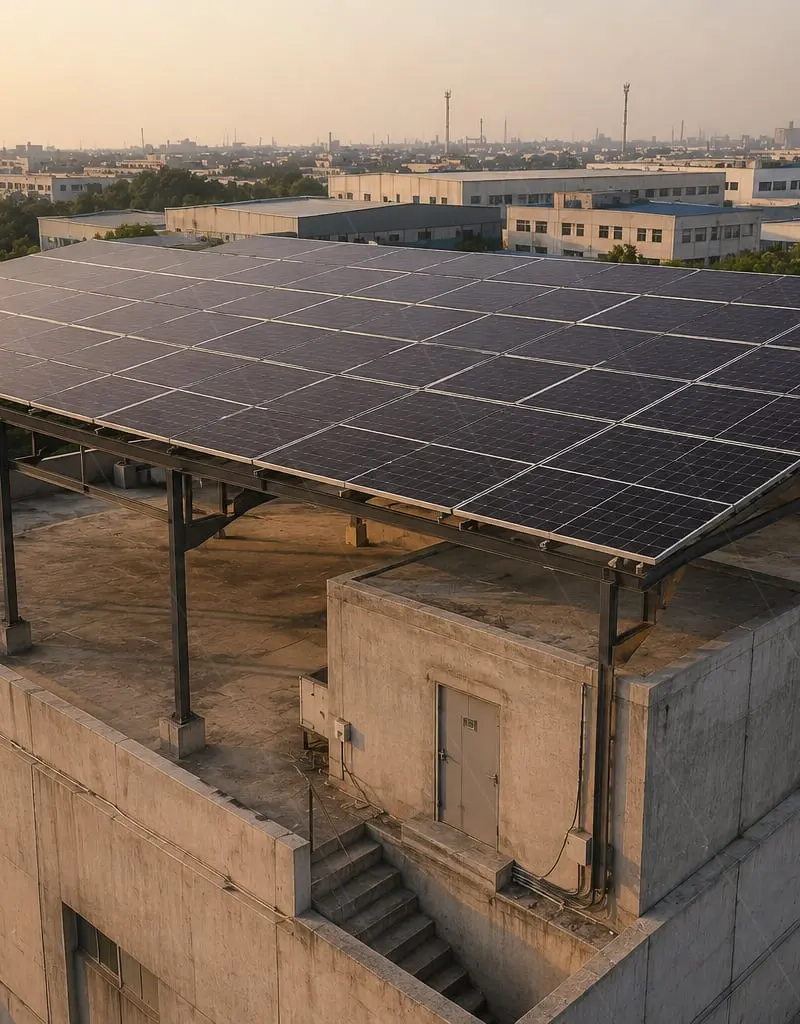
- •Standard structure cost: ₹1,500–₹3,000 per kW
- •Elevated structure cost: ₹10,000–₹15,000 per kW
- •Materials: HDG (High durability), Aluminum (Lightweight), Pre-Galvanized (Budget)
- •Lifespan: Must match the 25-year panel life to avoid system collapse.
- •Safety: Critical for NCR's 150+ kmph wind gusts during storm seasons.
A solar panel is basically a 25-kg sail bolted to your roof. In a Delhi-NCR storm, a 5kW system generates enough lift to rip itself off the terrace if the solar rooftop structure isn't engineered for wind loads exceeding 150 kmph. We’ve spent 35+ years installing these systems, and I’ve seen enough "budget" structures twisted like pretzels after a single May thunderstorm to tell you one thing: your panels will last 25 years, but only if the steel holding them doesn't rust away in seven.
When you’re choosing the right solar inverter, you're looking at efficiency. But when you choose your solar mounting structure, you’re looking at insurance. If the structure fails, the panels break, and your warranty won't cover "improper installation."
The Material War: HDG vs. Pre-Galvanized vs. Aluminum
We get asked every day: "Why is your quote ₹5,000 higher than the other guy?" Usually, it's because the other guy is using Pre-Galvanized (GP) steel. To the untrained eye, GP and Hot Dip Galvanized (HDG) look similar. But in the chemistry of corrosion, they are worlds apart.
Comparison of Solar Mounting Materials
| Feature | Pre-Galvanized (GP) | Hot Dip Galvanized (HDG) | Aluminum (Anodized) |
|---|---|---|---|
| Coating Thickness | 20–40 Microns | 80–120 Microns | N/A (Oxide Layer) |
| Rust Resistance | Low (Edges rust first) | High (Self-healing) | Excellent (Rust-proof) |
| Weight | Heavy | Heavy | Very Light |
| Cost | Low (Baseline) | Mid (+₹1.5k–3k/kW) | High (+₹1k–2k/kW) |
| Typical Use | Low-budget residential | Industrial & Tier-1 Resi | Balcony & Marine areas |
| Life Expectancy | 5–10 years | 25+ years | 25+ years |
If you live in Noida or Ghaziabad, the air pollution and humidity are brutal on metal. GP steel is galvanized at the mill before it's cut and drilled. Every hole the installer drills on your roof becomes a site for rust to start. HDG is dipped into molten zinc after all fabrication is done. Every nook and cranny is sealed. We exclusively recommend HDG or Aluminum for any long-term rooftop solar project.
Elevated Structures: Reclaiming Your Roof Space
In cities like Gurgaon and Delhi, roof space is premium real estate. You want solar, but you also want to sit on your terrace or keep your kitchen garden. This is where solar structure design becomes a lifestyle choice.
1. Flush Mounts (Standard)
These sit about 1-2 feet off the roof. They are the cheapest solar structure price option (roughly ₹1,500/kW adder). They are great for pitched tin sheds or roofs where you don't care about walking under the panels. The downside? You lose that roof area for anything else.
2. Elevated Structures (Pergola Style)
We build these 8 to 10 feet high. It essentially creates a "solar roof" over your terrace. You can put chairs under it, host a BBQ, or just walk around freely.
- Cost: Adds roughly ₹15,000 per kW to the project.
- Complexity: Requires structural stability certificates and often, heavier foundations (dead weights or chemical anchoring).
- Pro Tip: If you're building an elevated structure, check the Solar Structure Cost per kW in India guide to see how the pricing scales with height.
High-Rise Challenges in Gurgaon and Noida
Installing solar on the 20th floor of a high-rise in Gurgaon is a different beast than a 2-story house in Faridabad. The wind speed at 200 feet is significantly higher than at ground level.
A rooftop solar panel mounting structure for a high-rise needs:
- Wind Load Certification: We design for 150-180 kmph. This isn't just a number; it dictates the thickness of the C-channels and the number of anchor points.
- No Piercing Policy: Many RWAs in Dwarka or Janakpuri won't let you drill into the roof slab because of waterproofing concerns. In these cases, we use Dead Weights—massive concrete blocks that hold the structure down via gravity rather than bolts.
- Vibration Damping: Large structures can hum or vibrate in high winds, which can be felt by the residents on the top floor. Proper bracing is non-negotiable.
Use our Solar Calculator to see how much capacity you can fit and how the structure type impacts your ROI.
Talk to a solar engineer — not a salesperson
Enter your pincode and monthly bill. If we install in your area, an engineer answers on WhatsApp with your numbers.
What would solar save on YOUR bill?
Why Structure Quality Dictates the 25-Year Life
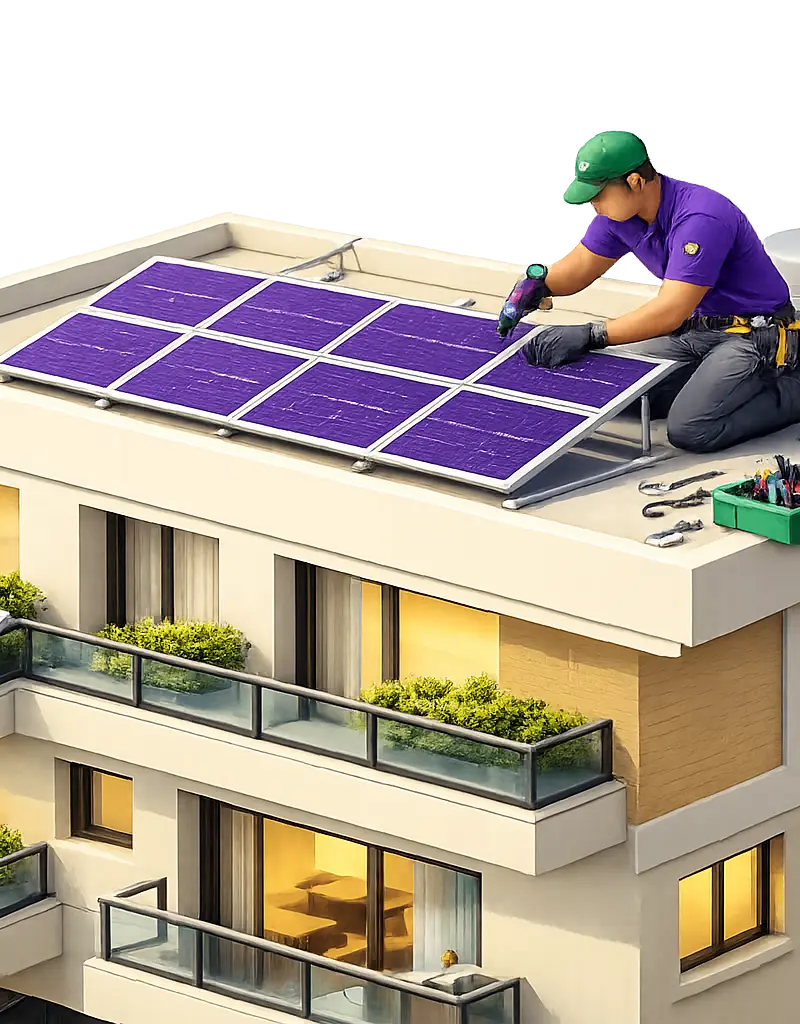
I’ve seen clients spend lakhs on Tier-1 Topcon Mono PERC panels only to save ₹20,000 by using a flimsy solar mounting structure. It’s a tragedy.
If the structure sags even a few centimeters over time, it puts "micro-stresses" on the solar cells. You won't see it from the ground, but inside the panel, the silicon is cracking. This leads to hot spots and a massive drop in generation. We’ve documented cases where poor structures caused a 20% loss in power within just 3 years. For more on this, read about 12 Types of Losses in Solar PV Systems.
Real Example: The "Wind Tunnel" Bungalow in Palam Vihar
A client in Palam Vihar, Gurgaon had a 10kW system installed by a local contractor using basic MS (Mild Steel) painted structures. During the 2024 pre-monsoon squalls, the central leg of the structure buckled. The panels didn't fly off, but the entire array tilted 15 degrees.
The resulting micro-cracks in the panels meant that even after we repaired the structure, the system never produced more than 35 units a day (it should have been doing 45-50). They saved ₹30,000 on the structure and lost ₹2 Lakhs in panel value. When we stepped in, we replaced the setup with an HDG solar structure material designed for 160 kmph, using chemical anchors that don't compromise the roof's waterproofing.
Design Considerations You Can't Ignore
When planning your solar structure design, keep these three field-tested rules in mind:
- The 5-Degree Rule: In North India, you want a tilt of roughly 25-30 degrees for maximum annual yield. But, higher tilt means more wind resistance. Sometimes we drop to 15-20 degrees to reduce wind load on tall structures without sacrificing too much power.
- Access for Cleaning: If you can't reach the middle panels with a mop, they will stay dirty. A dirty panel in Delhi can lose 25% output. We design "walking paths" into the array. Check out our Solar Panel Cleaning Guide to see why this matters.
- Weight Matters: A standard system weighs about 15-20 kg/sqm. Your roof is rated for 150 kg/sqm (per IS 875). You are safe, but don't let anyone tell you that you need massive I-beams for a residential house—you'll just be wasting money and stressing the slab. Read How Much Does a Solar System Actually Weigh? for the full breakdown.
If you're unsure which path to take, Get a free quote from our team. We don't just send a salesperson; we send a surveyor who actually checks your roof's slab strength.
FAQ
Is Aluminum better than Galvanized Steel for solar structures?
Aluminum is better for corrosion resistance and is much lighter, making it ideal for balcony solar or older roofs with weight limits. However, Hot Dip Galvanized (HDG) steel is significantly stronger and cheaper for large, elevated structures where high wind loads are a concern. For most Indian rooftops, HDG is the "gold standard" for durability versus cost.
Can I install solar panels without drilling into my roof?
Yes, you can use "Ballasted" or "Dead Weight" structures. Instead of bolting the solar rooftop structure into the slab, we use heavy concrete blocks to hold it down. This is common in high-end apartments in Noida or Gurgaon where homeowners are worried about damaging the waterproofing layer.
How high can an elevated solar structure go?
Technically, we can go up to 10-12 feet (Pergola style), but anything above 8 feet requires much thicker steel and cross-bracing to prevent swaying. You should also check local building bylaws, although most Delhi-NCR DISCOMs like BSES don't have specific height restrictions as long as it's a temporary-style structure.
Does a solar structure require maintenance?
If it's HDG or Aluminum, practically zero. If it’s painted MS or low-quality Pre-Galvanized steel, you’ll need to check for rust spots every year and touch them up with zinc spray. Neglecting a rusting structure can lead to a total system failure within a decade.
What is the typical cost of an elevated solar structure in India?
A standard "Standard Flush" structure is usually included in the base cost of your solar system. If you want an "Elevated Structure" to keep your roof usable, expect to pay an additional ₹10,000 to ₹15,000 per kW, depending on the height and the wind speed it needs to withstand.
A solar plant is a 25-year commitment. Don't let the cheapest piece of metal be the reason your investment fails. If your installer won't give you a wind-load certificate or specify the micron-level of the galvanization, walk away. Your roof deserves better.
Get a free quote from Bridgeway Power today, and let's design a structure that stays standing long after the storms pass.
Every 1 kW of solar on your roof offsets 1.5 tonnes of CO₂ per year
That's 40 trees planted — every year, for 25 years.
A typical 5 kW home system offsets 187 tonnes of carbon over its lifetime. That's equivalent to taking 8 cars off the road.
See your impact →How much can you save with solar?
Enter your electricity bill → get system size, subsidy amount & payback period
Get StartedLiked this article? Get a free solar quote
Tell us about your rooftop — we'll call with exact savings for your home.
Related Articles
What Is Captive Open Access Solar (100% Equity Model)
Learn how Captive Open Access Solar (100% Equity Model) helps Indian businesses cut electricity costs by 40% using off-site solar plants. Guide on rules, savings & ROI.
Read moreHow Rooftop Solar Can Eliminate Your Electricity Bill
Discover how Net Metering and PM Surya Ghar subsidies can reduce your monthly electricity bill to near-zero. Learn about system sizing, costs, and real-world savings.
Read moreSolar Subsidy in Uttar Pradesh 2026: ₹1,08,000 for Noida, Ghaziabad & Greater Noida
UP's stacked solar subsidy 2026: ₹78,000 central + ₹30,000 UPNEDA state top-up = ₹1.08L. Real PVVNL net-cost math for Noida, Greater Noida, Ghaziabad & Meerut.
Read moreRelated guides
Delhi Electricity Rate 2026
BSES & Tata Power per-unit rates, PPAC, subsidy — sourced from DERC.
ExploreDelhi Solar Policy 2026
Free rooftop solar up to 3 kW for homes under 400 units. Eligibility & apply.
ExploreSolar Panel Price in Delhi
Live 2026 rooftop prices in Delhi after ₹1.56L subsidy. 1,200+ installs.
ExploreSolar Company in Gurgaon
Gurgaon's rooftop solar installer — 800+ systems, ₹78K PM Surya Ghar subsidy.
ExploreSolar Company in Noida
Noida & Greater Noida rooftop solar — 500+ installs, ₹1.08L stacked subsidy.
ExploreSolar Panel Price in Faridabad
Live 2026 Faridabad prices after ₹78K PM Surya Ghar subsidy. 350+ homes.
Explore