
By Vansh Dahiya · Reviewed by Arshi Chadha, Founder
Haryana Solar Subsidy: PM Surya Ghar Benefits in NCR
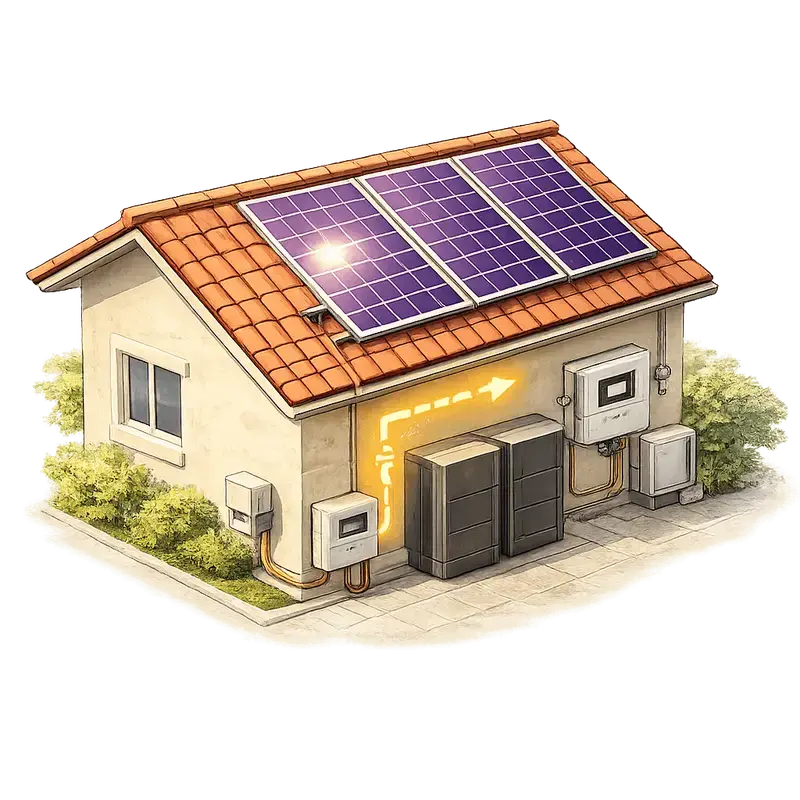
- •System size: 3 kW to 10 kW (Most common for homes)
- •Cost after subsidy (3kW): ₹1,62,000 (Approx. for Haryana)
- •Subsidy Amount: Up to ₹78,000 (Central Govt)
- •Monthly Savings: ₹2,500 – ₹4,500 (For a 5kW system)
- •Payback Period: 3.5 – 4.5 years
Haryana’s residential electricity rates for the top slab recently touched ₹7.1 per unit. If you’re living in a villa in Gurgaon or a bungalow in Faridabad, your summer bills are likely crossing ₹10,000 easily. The solar panel subsidy in haryana for home owners has become the single most effective tool to hedge against these rising tariffs. Under the PM Surya Ghar Yojana, the financial math for going solar has shifted from "maybe someday" to "why haven't we done this yet?"
We’ve spent 35+ years installing systems across North India, and I can tell you: Haryana homeowners often get confused because, unlike Delhi, the state doesn't offer an additional cash top-up. However, the streamlined DHBVN net metering process makes it one of the most reliable states for solar ROI.
The PM Surya Ghar Subsidy Structure in Haryana
Under the national pm solar yojana haryana residents receive a direct benefit transfer (DBT) into their bank accounts after the system is commissioned. The amount is fixed based on the capacity you install, not the price you pay. This is a crucial distinction. Whether you buy the most expensive TOPCon modules or a budget-friendly option, the subsidy remains the same.
Subsidy Slab Structure for Haryana Residents
| System Capacity | Central Subsidy (PM Surya Ghar) | State Subsidy (HAREDA) | Total Subsidy Benefit |
|---|---|---|---|
| 1 kW | ₹30,000 | ₹0 | ₹30,000 |
| 2 kW | ₹60,000 | ₹0 | ₹60,000 |
| 3 kW to 10 kW | ₹78,000 (Capped) | ₹0 | ₹78,000 |
Note: While the haryana solar scheme historically had state-level incentives, currently, all residential benefits are routed through the central PM Surya Ghar portal. Haryana state solar subsidy is effectively the central component of ₹78,000 for systems 3kW and above.
Real Costs: What You Actually Pay in 2025-2026
When customers ask about the 3kw solar panel price in haryana, they usually want the "net" number. Based on our current system price table, here is how the math works for the two most popular configurations in the NCR region.
The 3kW Home Setup
For a typical 2BHK or small 3BHK, a 3kW system is the sweet spot.
- Gross Cost (Installed): ₹2,40,000 (Including GST and standard structure)
- Subsidy: ₹78,000
- Net Out-of-Pocket: ₹1,62,000
- Monthly Generation: ~360 units
The 5kW Luxury Setup
If you run two 1.5-ton ACs during the day, you need a 5kW plant.
- Gross Cost (Installed): ₹3,43,035
- Subsidy: ₹78,000
- Net Out-of-Pocket: ₹2,65,035
- Monthly Generation: ~600 units
To see exactly how these sizes impact your specific bill, use our Solar Calculator. It factors in the latest dhbvn solar scheme rules to give you a precise payback month.
Step-by-Step Guide: Applying for the Subsidy
The process is now 100% digital. You don't need to chase HAREDA officials in Panchkula. Here is the operational workflow we follow for our clients:
- Registration: Visit the PM Surya Ghar portal and register using your consumer account number (found on your DHBVN/UHBVN bill) and mobile number.
- Feasibility Approval: Submit your application for technical feasibility. The DISCOM (like DHBVN in Gurgaon) will check if your local transformer can handle the load. This usually takes 7-10 days.
- Vendor Selection: Choose a registered vendor like Bridgeway Power. Warning: If you install via a non-registered vendor, you will NOT get the subsidy.
- Installation: We install the system using DCR (Domestic Content Requirement) modules. This is mandatory for the subsidy.
- Net Metering & Inspection: Once installed, we apply for the net meter. A DISCOM official visits for inspection.
- Subsidy Claim: After the commissioning certificate is generated on the portal, you upload a cancelled cheque. The money typically hits your account within 30–45 days of the final inspection.
The Role of HAREDA and DISCOMs
While the solar panel scheme in haryana is nationally branded, the execution is local.
- HAREDA (Haryana Renewable Energy Development Agency): They act as the nodal agency for policy.
- DHBVN (Dakshin Haryana Bijli Vitran Nigam): If you are in Gurgaon, Faridabad, or Hisar, this is your utility. They handle the net meter installation and the "banking" of your units.
- UHBVN (Uttar Haryana Bijli Vitran Nigam): They cover the northern districts like Ambala and Panipat.
In Haryana, we currently enjoy an annual settlement cycle. Any excess units you generate in the sunny months of March to May are carried forward to offset your heavy AC usage in June and July. On March 31st every year, if you still have surplus units, the DISCOM pays you at the Average Power Purchase Cost (APPC) rate.
Talk to a solar engineer — not a salesperson
Check whether we install in your area, then get your answer on WhatsApp. No forms, no call centre.
See your exact subsidy after state stacking
Real Example: A 5kW Installation in Sector 57, Gurgaon

A homeowner in Gurgaon with a monthly bill of ₹8,500 was tired of the 15% annual hikes in surcharges. We installed a 5kW system using Topcon Mono PERC panels.
- Sanctioned Load: 7kW
- System Size: 5kWp
- Daily Generation: 22-25 units (avg)
- Bill Reduction: From ₹8,500 to roughly ₹1,200 (fixed charges + minimal consumption)
- Financing: They used a SBI PM Surya Ghar Loan at a ~7% interest rate. With the subsidy arriving in 40 days, they used that lump sum to prepay a portion of the loan, bringing their EMI lower than their previous electricity bill.
Required Documentation for Homeowners
Don't let paperwork stall your project. You need these ready:
- Electricity Bill: Must be in the name of the person applying for the subsidy.
- Property Tax Receipt/Ownership Proof: To prove the roof is yours.
- Bank Details: A cancelled cheque where the name matches the electricity bill.
- Site Photos: We take these during the solar installation process.
If you are an apartment owner in a builder floor, check our guide on solar for builder floors in Delhi NCR to understand how to manage shared roof rights.
Why 2026 is the Year to Switch
The haryana solar scheme is currently at its peak funding level. As more people join the grid, the government traditionally tapers down the subsidy amounts. Furthermore, with Delhi's new solar policy creating a massive surge in demand for panels, prices for Tier-1 components are stabilizing, but labor costs in the NCR are rising.
If you are worried about the weight of these panels, read our breakdown on how much solar panels weigh. A standard 5kW system weighs less than a full 1000L water tank, so your roof is perfectly safe.
We recommend avoiding "too good to be true" quotes. We’ve seen hundreds of cheap solar systems fail within 3 years because the installer used sub-standard earthing or non-galvanized structures that rusted in the first monsoon.
FAQ
How much subsidy do I get for a 3kW system in Haryana?
You receive a total of ₹78,000 as a direct benefit transfer. This is the maximum cap for residential systems under the PM Surya Ghar Muft Bijli Yojana. Even if you install a 10kW system, the residential subsidy remains capped at ₹78,000.
Can I apply for the subsidy if my bill is in my father's name?
Yes, but the application must be submitted in your father's name. The name on the electricity bill, the PM Surya Ghar portal account, and the bank account for the subsidy disbursement must all match exactly to avoid rejection.
How long does it take for the subsidy to reach my bank account?
In Haryana, once the net meter is installed and the commissioning certificate is uploaded to the portal, it typically takes 30 to 60 days for the funds to be cleared by the Ministry of New & Renewable Energy (MNRE).
Is the subsidy available for hybrid solar systems with batteries?
The subsidy is calculated based on the solar PV capacity (kWp) installed. While you can install a hybrid system, the subsidy will only apply to the solar components. The cost of batteries is not subsidized by the government.
Does DHBVN require a load increase for solar installation?
Your solar system capacity cannot exceed your sanctioned load. If you want a 5kW solar system but your sanctioned load is only 3kW, you must first apply for a load increase with DHBVN. We assist our clients with this technical filing during the feasibility stage.
For a precise site assessment and to understand which mounting structure fits your roof, you can get a free quote from our engineering team. We've handled over 5,000+ installations and know exactly how to navigate the Haryana DISCOM hurdles.
Every 1 kW of solar on your roof offsets 1.5 tonnes of CO₂ per year
That's 40 trees planted — every year, for 25 years.
A typical 5 kW home system offsets 187 tonnes of carbon over its lifetime. That's equivalent to taking 8 cars off the road.
See your impact →How much can you save with solar?
Enter your electricity bill → get system size, subsidy amount & payback period
Get StartedSee your exact subsidy after state stacking
Related Articles
What Is Captive Open Access Solar (100% Equity Model)
Learn how Captive Open Access Solar (100% Equity Model) helps Indian businesses cut electricity costs by 40% using off-site solar plants. Guide on rules, savings & ROI.
Read moreHow Rooftop Solar Can Eliminate Your Electricity Bill
Discover how Net Metering and PM Surya Ghar subsidies can reduce your monthly electricity bill to near-zero. Learn about system sizing, costs, and real-world savings.
Read moreSolar Subsidy in Uttar Pradesh 2026: ₹1,08,000 for Noida, Ghaziabad & Greater Noida
UP's stacked solar subsidy 2026: ₹78,000 central + ₹30,000 UPNEDA state top-up = ₹1.08L. Real PVVNL net-cost math for Noida, Greater Noida, Ghaziabad & Meerut.
Read moreRelated guides
Delhi Electricity Rate 2026
BSES & Tata Power per-unit rates, PPAC, subsidy — sourced from DERC.
ExploreDelhi Solar Policy 2026
Free rooftop solar up to 3 kW for homes under 400 units. Eligibility & apply.
ExploreSolar Panel Price in Delhi
Live 2026 rooftop prices in Delhi after ₹1.56L subsidy. 1,200+ installs.
ExploreSolar Company in Gurgaon
Gurgaon's rooftop solar installer — 800+ systems, ₹78K PM Surya Ghar subsidy.
ExploreSolar Company in Noida
Noida & Greater Noida rooftop solar — 500+ installs, ₹1.08L stacked subsidy.
ExploreSolar Panel Price in Faridabad
Live 2026 Faridabad prices after ₹78K PM Surya Ghar subsidy. 350+ homes.
Explore