
By Vansh Dahiya · Reviewed by Arshi Chadha, Founder
DHBVN Solar Subsidy and Net Metering Guide for Haryana
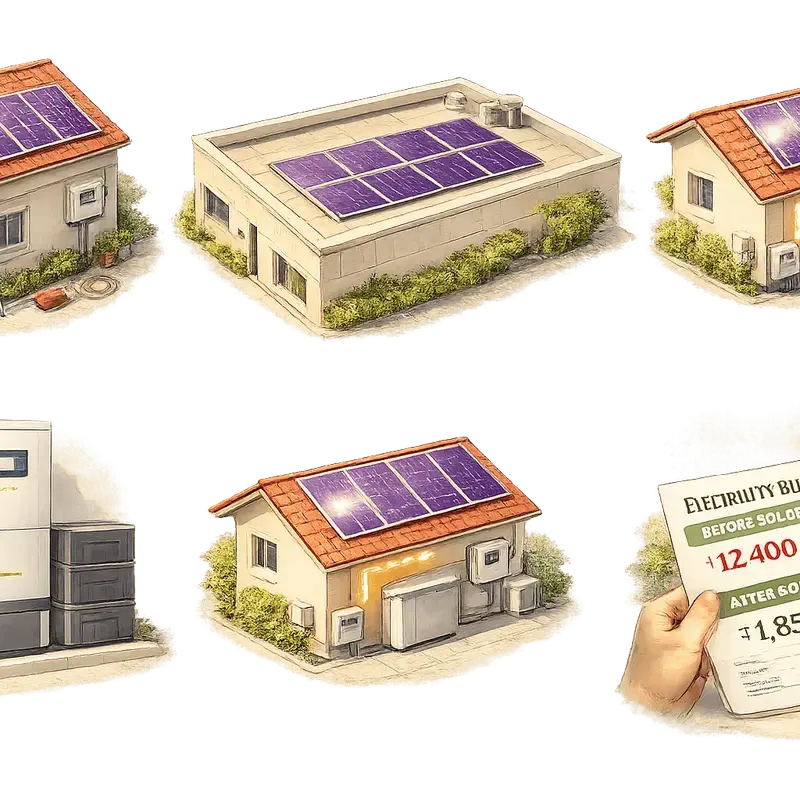
- •Primary Scheme: [PM Surya Ghar Muft Bijli Yojana](https://pmsuryaghar.gov.in)
- •Max Central Subsidy: ₹78,000 (for systems ≥ 3 kW)
- •State Subsidy (Haryana): ₹0 (Current policy focus is on central incentives)
- •Avg. Monthly Savings (5kW): ₹4,500 – ₹5,500
- •Payback Period: 3.5 – 4.5 years
- •Approval Authority: Dakshin Haryana Bijli Vitran Nigam (DHBVN)
If you are a homeowner in Gurgaon, Faridabad, or Hisar, you’ve likely watched your electricity bills climb steadily as the Haryana heat intensifies. With the launch of the PM Surya Ghar Yojana, the push for residential solar has never been stronger. However, navigating the dhbvn solar subsidy landscape and the net metering application process can feel like a maze of paperwork and technical jargon.
At Bridgeway Power, with our 35+ years of experience, we have helped thousands of residents in the NCR region transition to clean energy. This guide breaks down everything you need to know about the DHBVN solar scheme, from the latest subsidy amounts to the step-by-step net metering flow, ensuring you maximize your ROI.
The Role of DHBVN in Your Solar Journey
Dakshin Haryana Bijli Vitran Nigam (DHBVN) is the nodal DISCOM responsible for power distribution in South Haryana. While the Ministry of New & Renewable Energy (MNRE) defines the national subsidy framework, DHBVN controls the "Gatekeeping" process for your solar plant.
Why DHBVN Matters:
- Feasibility Approval: Before you install a single panel, DHBVN must verify if your local transformer can handle the additional solar load.
- Net Metering: This is the mechanism where DHBVN "adjusts" the units you export to the grid against the units you consume. Without their approval, you cannot technically benefit from a grid-tied system.
- Subsidy Disbursement: While the central subsidy is processed through the national portal, the technical clearance from DHBVN is a mandatory prerequisite for the funds to be released.
Whether you are looking for solar in Gurgaon or solar in Faridabad, understanding these local DISCOM rules is the difference between a system that pays for itself and one that remains a decorative rooftop fixture.
DHBVN Solar Subsidy Slabs 2025-2026
Under the current dhbvn solar scheme, the subsidy is direct-to-consumer (DBT). Unlike previous years where the haryana solar portal managed state-specific funds, today the financial incentive is streamlined under the PM Surya Ghar initiative.
| System Capacity | Central Subsidy (PM Surya Ghar) | State Subsidy (Haryana) | Total Benefit |
|---|---|---|---|
| 1 kW | ₹30,000 | ₹0 | ₹30,000 |
| 2 kW | ₹60,000 | ₹0 | ₹60,000 |
| 3 kW & Above | ₹78,000 | ₹0 | ₹78,000 |
Note: The uhbvn solar subsidy (for North Haryana) follows the exact same central structure as DHBVN.
Impact of Solar on DHBVN Electricity Bills
Haryana's electricity tariffs are tiered. The more you consume, the higher the rate you pay per unit. This makes solar exceptionally lucrative for high-usage households. A 5kW system in Gurgaon typically generates about 600 units per month (based on an avg_yield_per_kw of 120 units).
Savings Comparison: DHBVN Domestic Consumption Slabs
The table below illustrates how solar offsets your bill based on the current HERC tariff orders.
| Monthly Consumption (Units) | Avg. Bill without Solar (₹) | System Size Recommended | Potential Bill with Solar (₹) | Monthly Savings |
|---|---|---|---|---|
| 300 Units | ₹1,700 | 2 kW | ₹150 (Fixed Charges) | ~₹1,550 |
| 600 Units | ₹4,200 | 5 kW | ₹300 (Fixed Charges) | ~₹3,900 |
| 1000 Units | ₹7,800 | 8 kW | ₹500 (Fixed Charges) | ~₹7,300 |
| 1500+ Units | ₹11,500+ | 12 kW+ | ₹800+ (Fixed Charges) | ~₹10,700 |
Calculations assume the top-slab tariff of ₹7.1/unit for consumption above 800 units in Haryana.
To get a precise estimate for your specific roof, use our Solar Calculator.
Step-by-Step Application Flow for Gurgaon & Faridabad
If you are residing in areas like Sushant Lok or NIT Faridabad, here is the roadmap for your installation:
1. Registration on the National Portal
Visit the haryana solar portal (synced with PM Surya Ghar) and register using your DHBVN consumer number and mobile number. Select your DISCOM as "Dakshin Haryana Bijli Vitran Nigam".
2. Technical Feasibility (TFR)
Once you apply, a DHBVN junior engineer (JE) will visit your site or perform a remote audit to check the transformer capacity. In Haryana, solar capacity is generally allowed up to 100% of your sanctioned load. If you need a larger system, you must first apply for a load enhancement.
3. Selection of Vendor
You must choose an MNRE-empanelled vendor. Bridgeway Power is an authorized partner, ensuring your installation meets the strict safety standards required for subsidy approval.
4. Installation & Documentation
The system is installed using Tier-1 components (like TOPCon panels). The following documents are then uploaded to the portal:
- Work Completion Report
- Solar System Photos
- Inverter & Panel Serial Numbers
- Safety Certificate (for systems >10kW or as per latest DHBVN circulars)
5. Net Metering & Inspection
DHBVN will provide a bidirectional "Net Meter". After installation and inspection, the meter is sealed. From this moment, your "Green Units" start offsetting your bill.
6. Subsidy Claim
Once the net meter is installed and the DISCOM approves the final commissioning report on the portal, the subsidy is credited to your bank account within 30 days.
Real-Life Example: 5kW System in Gurgaon

A family in South City Gurgaon with a monthly bill of ₹8,000 (approx 1,100 units) decided to install a 5kW system.
- Total Project Cost: ₹3,43,035 (Including GST)
- Central Subsidy: ₹78,000
- Net Investment: ₹2,65,035
- Generation: ~600 units/month
- Bill Reduction: Their bill dropped from ₹8,000 to approximately ₹3,800 per month (due to offsetting the highest-priced units).
- Payback: Roughly 5 years.
For bungalows with higher loads, we often recommend high-efficiency setups. Read our case study on a 10 kWp Enphase system in Gurgaon for more details.
Talk to a solar engineer — not a salesperson
Enter your pincode and monthly bill. If we install in your area, an engineer answers on WhatsApp with your numbers.
See your exact subsidy after state stacking
Documentation Required for DHBVN
To ensure a smooth feasibility report, keep these documents ready:
- Latest DHBVN Bill: Showing a sanctioned load that matches your intended solar capacity.
- Property Proof: Conveyance deed or latest property tax receipt.
- Identity Proof: Aadhaar card of the electricity bill holder.
- Photograph: A clear photo of the rooftop where panels will be installed.
Financing Your Solar Dreams
If the upfront cost is a concern, there are excellent Solar on EMI options available. Bridgeway Power partners with several leading institutions to offer competitive rates:
- SBI PM Surya Ghar Loan
- PNB Solar Rooftop Scheme
- ECOFY Solar Financing
- Aerem Solar Finance
- Canara Bank Solar Loan
All these partners offer specialized rooftop solar products. We recommend checking with multiple lenders to see which fit your profile best.
Why Choose Bridgeway Power for Solar in Haryana?
With our 35+ years of electrical lineage and over 5,000+ installations, we understand the nuances of the Haryana grid. We don't just sell panels; we provide a lifetime of service. Our systems come with:
- 10-year manufacturer warranty on string inverters.
- 5-year workmanship warranty from Bridgeway.
- 2 professional cleanings in the first year to combat NCR dust.
Whether you are in Delhi or the heart of Haryana, we ensure your transition to solar is seamless.
Get a free quote today and let our experts handle the DHBVN paperwork for you.
DHBVN consumers claim the same central grant; the solar panel subsidy in Haryana guide walks through the full application.
FAQ
What is the maximum subsidy I can get under DHBVN?
Under the PM Surya Ghar Muft Bijli Yojana, the maximum central subsidy is capped at ₹78,000 for any residential system that is 3 kW or larger. Haryana currently does not offer an additional state-level cash subsidy on top of this central amount.
Can I install a solar system larger than my sanctioned load?
No, DHBVN rules dictate that your solar plant capacity cannot exceed your sanctioned load. If you wish to install a 5kW system but your sanctioned load is only 3kW, you must apply for a load enhancement via the DHBVN portal before proceeding with the solar application.
How long does the net metering process take in Gurgaon?
Typically, the entire process from feasibility approval to net meter installation takes between 30 to 45 days. This timeline depends on the speed of the JE inspection and the availability of meters at the local DHBVN subdivision office.
Does DHBVN allow solar for builder floors?
Yes, residents of builder floors in areas like Gurgaon and Faridabad can install solar. If you have roof rights, you can apply for a dedicated net meter. If the roof is shared, a No Objection Certificate (NOC) from other residents or the RWA may be required. Read more in our guide for builder floors.
What happens to the extra electricity my solar panels produce?
Through net metering, any surplus electricity generated during the day is exported to the DHBVN grid. These units are credited to your account and adjusted against your nighttime or cloudy day consumption. At the end of the financial year (March 31st), any remaining surplus is usually settled by the DISCOM at a pre-defined APPC rate.
Conclusion
Transitioning to solar under the dhbvn solar subsidy framework is one of the smartest financial decisions a Haryana homeowner can make in 2026. With rising temperatures and electricity rates, a rooftop power plant offers a hedge against inflation while contributing to a greener planet.
Don't let the paperwork deter you. From site survey to subsidy credit, Bridgeway Power handles every step of the haryana solar portal and DHBVN process. Contact us for a free rooftop audit and start your journey toward zero electricity bills today.
Every 1 kW of solar on your roof offsets 1.5 tonnes of CO₂ per year
That's 40 trees planted — every year, for 25 years.
A typical 5 kW home system offsets 187 tonnes of carbon over its lifetime. That's equivalent to taking 8 cars off the road.
See your impact →How much can you save with solar?
Enter your electricity bill → get system size, subsidy amount & payback period
Get StartedSee your exact subsidy after state stacking
Related Articles
What Is Captive Open Access Solar (100% Equity Model)
Learn how Captive Open Access Solar (100% Equity Model) helps Indian businesses cut electricity costs by 40% using off-site solar plants. Guide on rules, savings & ROI.
Read moreHow Rooftop Solar Can Eliminate Your Electricity Bill
Discover how Net Metering and PM Surya Ghar subsidies can reduce your monthly electricity bill to near-zero. Learn about system sizing, costs, and real-world savings.
Read moreSolar Subsidy in Uttar Pradesh 2026: ₹1,08,000 for Noida, Ghaziabad & Greater Noida
UP's stacked solar subsidy 2026: ₹78,000 central + ₹30,000 UPNEDA state top-up = ₹1.08L. Real PVVNL net-cost math for Noida, Greater Noida, Ghaziabad & Meerut.
Read moreRelated guides
Delhi Electricity Rate 2026
BSES & Tata Power per-unit rates, PPAC, subsidy — sourced from DERC.
ExploreDelhi Solar Policy 2026
Free rooftop solar up to 3 kW for homes under 400 units. Eligibility & apply.
ExploreSolar Panel Price in Delhi
Live 2026 rooftop prices in Delhi after ₹1.56L subsidy. 1,200+ installs.
ExploreSolar Company in Gurgaon
Gurgaon's rooftop solar installer — 800+ systems, ₹78K PM Surya Ghar subsidy.
ExploreSolar Company in Noida
Noida & Greater Noida rooftop solar — 500+ installs, ₹1.08L stacked subsidy.
ExploreSolar Panel Price in Faridabad
Live 2026 Faridabad prices after ₹78K PM Surya Ghar subsidy. 350+ homes.
Explore