
By Arshi Chadha, Founder · Bridgeway Power
What Delhi's Solar Policy Means for Apartment Owners and Non-Rooftop Residents
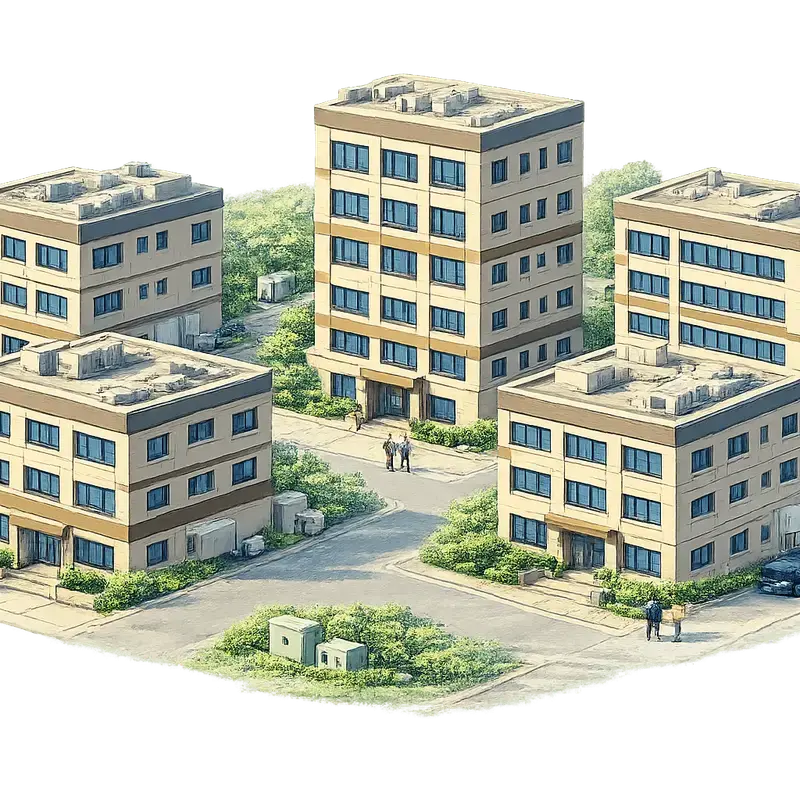
Living in a high-rise apartment in Dwarka or a builder floor in Janakpuri comes with many perks, but until recently, rooftop solar wasn't one of them. For years, thousands of Delhi residents watched their neighbors in independent houses slash their electricity bills to zero while they were stuck paying high DISCOM tariffs.
The struggle is relatable: you want to go solar to fight rising prices and help the environment, but you don't own the terrace. Even if you have access, getting a No Objection Certificate (NOC) from a Residents' Welfare Association (RWA) can feel like a full-time job. However, the Delhi solar policy apartment owners have been waiting for has finally arrived in its most evolved form.
Thanks to recent push from the Delhi Electricity Regulatory Commission (DERC), the landscape has shifted from "You need a roof" to "You need a bill." This guide breaks down exactly how the 2024-2026 policy updates allow flat owners and non-rooftop residents to benefit from solar without moving a single brick on their terrace.
The Evolution of Delhi’s Solar Policy
Delhi has always been a pioneer in urban solar regulations. However, the early rules were designed for bungalows and factories. For a city where more than 60% of the population lives in apartments or multi-story builder floors, the old "Net Metering" model was insufficient.
DERC Solar Policy Timeline
The following table highlights the regulatory journey that has finally made solar accessible to every Delhiite.
| Year | Policy Milestone | Impact on Apartment Owners |
|---|---|---|
| 2019 | Original Net Metering Rules | Only allowed for those with exclusive roof rights. Minimal impact on flats. |
| 2024 | Group Net Metering Amendment | Allowed RWAs to install one large system and share credits across common areas. |
| 2026 | Virtual Net Metering (VNM) Expansion | Permits individual residents to "subscribe" to off-site solar plants and get credits on their own bills. |
Why Traditional Rooftop Solar Fails Apartment Owners
The primary SEO keyword, Delhi solar policy apartment owners, often leads people to look into rooftop installations. But in reality, the "rooftop" part is the biggest hurdle.
1. The RWA Roadblock
Even though DERC solar rules apartments technically permit group net metering, getting 50 or 100 families to agree on a capital expenditure (Capex) project is nearly impossible. RWA politics, concerns over roof leakage, and "shadow rights" often block 90% of solar proposals before they even reach the DISCOM.
2. Structural Limitations
Many older apartments in North and West Delhi aren't designed to take the load of massive solar structures. While we've discussed how much a solar system actually weighs, RWAs remain cautious.
3. Shared Space Disputes
If an apartment has 12 flats and only enough roof space for 4 systems, who gets the priority? These disputes make solar policy for flats Delhi a complex social issue rather than just a technical one.
Understanding Your Options: Rooftop vs. Virtual
If you live in a flat, you no longer have to fight for the roof. There are three distinct ways to go solar in Delhi today.
Eligibility Matrix for Delhi Residents
| Feature | Rooftop Solar | Group Net Metering | Community Solar (VNM) |
|---|---|---|---|
| Roof Access | Must own exclusive rights | Shared (RWA managed) | None Needed |
| RWA NOC | Mandatory | Mandatory | Not Required |
| Installation Site | Your own roof | Society common roof | Off-site (Solar Park) |
| Bill Recovery | Direct to your meter | Shared amongst members | Direct to your bill |
| Best For | Independent floors | Large Societies/RWAs | Individual Flat Owners |
Virtual Net Metering: The Game Changer
This is the core of the non-rooftop solar Delhi policy. Virtual Net Metering (VNM) allows a solar power plant to be located anywhere in Delhi—say, on a large warehouse in Bawana—and the electricity it generates is credited to your home bill in Saket or Rohini.
How it works:
- A developer (like Bridgeway Power) builds a large-scale solar plant.
- An apartment owner "subscribes" to a portion of that plant (e.g., 5kW).
- The solar plant feeds energy into the Delhi grid.
- BSES Rajdhani or TPDDL calculates the units generated by "your" portion.
- These units are deducted from your monthly electricity bill.
This model is the foundation of Community Solar, which is the most practical solution for anyone living in a builder floor in Delhi.
Apartment Owner Options Comparison
How do you choose between these models? Use this comparison to see which fits your lifestyle and financial goals.
| Criteria | Group Net Metering | Community Solar (Subscription) | Community Solar (Asset Purchase) |
|---|---|---|---|
| Capex Required | High (Shared by Society) | Zero / Low Entry Fee | Moderate |
| Roof Needed | Yes | No | No |
| RWA Approval | 100% Required | Zero | Zero |
| Monthly Savings | 50-80% | 15-25% | 30-40% |
| Contract Flex | Tied to property | Portable within Delhi | Portable within Delhi |
Talk to a solar engineer — not a salesperson
Enter your pincode and monthly bill. If we install in your area, an engineer answers on WhatsApp with your numbers.
See your exact subsidy after state stacking
Why the Delhi Government is Pushing This
Delhi's 2026 solar target is a massive 4.5 GW. To hit this, the government realizes it cannot rely solely on the limited roof space of bungalows. The non-rooftop solar Delhi policy is a strategic move to unlock the "locked" potential of millions of apartment dwellers.
By enabling Virtual Net Metering (VNM), the state is making solar a service rather than a construction project. This allows for:
- Faster Adoption: No waiting for RWA meetings or structural audits.
- Better Efficiency: Large-scale off-site plants are maintained better than small residential ones.
- Equitable Access: Even a tenant or someone living in a shaded ground-floor flat can now "go solar."
Real Example: A 3BHK Flat in Dwarka
Consider Mr. Sharma, who lives in a multi-story apartment in Dwarka Sector 10.
- The Problem: Monthly bill of ₹8,500 (approx. 1,000 units). No roof rights. RWA refused permission for individual panels.
- The Solution: He joined a Community Solar plan for 7kW of virtual capacity.
- The Result: His BSES electricity bill now shows a "VNM Credit" line.
- Old Bill: ₹8,500
- Solar Credit: ~800 units (worth ₹5,600 approx)
- New Bill: ₹2,900 + Subscription Fee.
- Net Annual Savings: ~₹32,000 without ever touching his roof.
Financial Incentives and the "Delhi GBI"
While the PM Surya Ghar Yojana provides massive subsidies for rooftop systems, community solar participants in Delhi benefit from the Generation-Based Incentive (GBI).
Under the current Delhi policy, residents can earn ₹2–3 per unit generated for the first five years. This is automatically credited to the bill, making the effective cost of electricity even lower than the standard grid tariff. You can learn more about Delhi GBI here.
Strategic Advice for Flat Owners in 2025-2026
If you pay more than ₹3,000 per month on your electricity bill, you are essentially "losing" money every month you don't switch to a solar model.
- Check your bill: Look at your average unit consumption over 12 months.
- Assess your roof: If you have clear title and RWA support, go for Rooftop Solar.
- Go Virtual if blocked: If you live in an apartment where the roof is a "no-go" zone, Community Solar is your only DERC-compliant path to savings.
- Don't wait for "better" policy: The current framework allows for immediate enrollment. With Delhi's per-unit rates rising due to PPAC surcharges, the earlier you lock in solar rates, the more you save.
Frequently Asked Questions
Does Delhi solar policy allow solar for tenants?
Yes! Through Virtual Net Metering and Community Solar, tenants can subscribe to solar credits. Since the credits are linked to the electricity connection (CA Number) and not the property deed, you can enjoy solar savings as long as you pay the bill.
What are the DERC solar rules for apartments regarding net metering?
DERC allows two main types for apartments: Group Net Metering (for common areas or shared RWA systems) and Virtual Net Metering (for individual owners to get credits from off-site plants). Both require a bidirectional meter provided by your DISCOM (BSES/TPDDL).
I don't have a roof. Can I still get the PM Surya Ghar subsidy?
The central subsidy of up to ₹78,000 is currently designed for physical rooftop installations. However, apartment residents can save significantly through the Delhi state GBI and the lower "solar-tariff" models offered by community solar providers, which often offset the lack of a direct subsidy.
Is an RWA NOC required for Virtual Net Metering?
No. This is the biggest advantage of Delhi’s current policy for apartment owners. Because the solar plant is not on your building's roof, the RWA has no legal standing to block your subscription to an off-site solar project.
How do I see my solar credits on my BSES or TPDDL bill?
Once your VNM registration is complete, your monthly bill will have a separate section for "Solar Generation" or "Adjusted Units." These units are deducted from your total consumption before the final amount is calculated.
Conclusion: The Bottom Line for Delhi Residents
The Delhi solar policy apartment owners is no longer just a document—it’s a functional reality. Whether you live in a posh flat in Vasant Kunj or a bustling society in Rohini, the lack of a rooftop is no longer a barrier to clean energy.
With 35+ years of experience and over 5,000 installations, Bridgeway Power is at the forefront of this transition. If you're tired of high summer bills and RWA restrictions, it's time to explore the virtual route.
Ready to see how much you can save without using your roof? Try our Solar Calculator or book a free consultation with our Delhi experts.",excerpt:
Every 1 kW of solar on your roof offsets 1.5 tonnes of CO₂ per year
That's 40 trees planted — every year, for 25 years.
A typical 5 kW home system offsets 187 tonnes of carbon over its lifetime. That's equivalent to taking 8 cars off the road.
See your impact →How much can you save with solar?
Enter your electricity bill → get system size, subsidy amount & payback period
Get StartedSee your exact subsidy after state stacking
Related Articles
Lock In a Fixed Electricity Rate for Your School — Before Delhi Tariffs Rise Again
Lock in your school's electricity rate before Delhi tariffs hit ₹16/unit. Learn how Community Solar offers zero-capex savings of ₹10L+ annually.
Read moreVirtual Net Metering (VNM) in India: How It Enables Community Solar for Homeowners
Learn how Virtual Net Metering (VNM) enables community solar in India. Discover how DERC and RERC policies allow flat owners to share solar credits without individual rooftops.
Read moreHow to Reduce Commercial Electricity Bill in Delhi NCR (2026): Solar, Open Access & More
Learn how to reduce commercial electricity bill Delhi with rooftop solar, community solar, and open access. Discover tax benefits and 2026 pricing.
Read moreRelated guides
Delhi Electricity Rate 2026
BSES & Tata Power per-unit rates, PPAC, subsidy — sourced from DERC.
ExploreDelhi Solar Policy 2026
Free rooftop solar up to 3 kW for homes under 400 units. Eligibility & apply.
ExploreSolar Panel Price in Delhi
Live 2026 rooftop prices in Delhi after ₹1.56L subsidy. 1,200+ installs.
ExploreSolar Company in Gurgaon
Gurgaon's rooftop solar installer — 800+ systems, ₹78K PM Surya Ghar subsidy.
ExploreSolar Company in Noida
Noida & Greater Noida rooftop solar — 500+ installs, ₹1.08L stacked subsidy.
ExploreSolar Panel Price in Faridabad
Live 2026 Faridabad prices after ₹78K PM Surya Ghar subsidy. 350+ homes.
Explore