
By Kajal Rajpoot · Reviewed by Arshi Chadha, Founder
Solar Subsidy in Uttar Pradesh 2026: ₹1,08,000 for Noida, Ghaziabad & Greater Noida
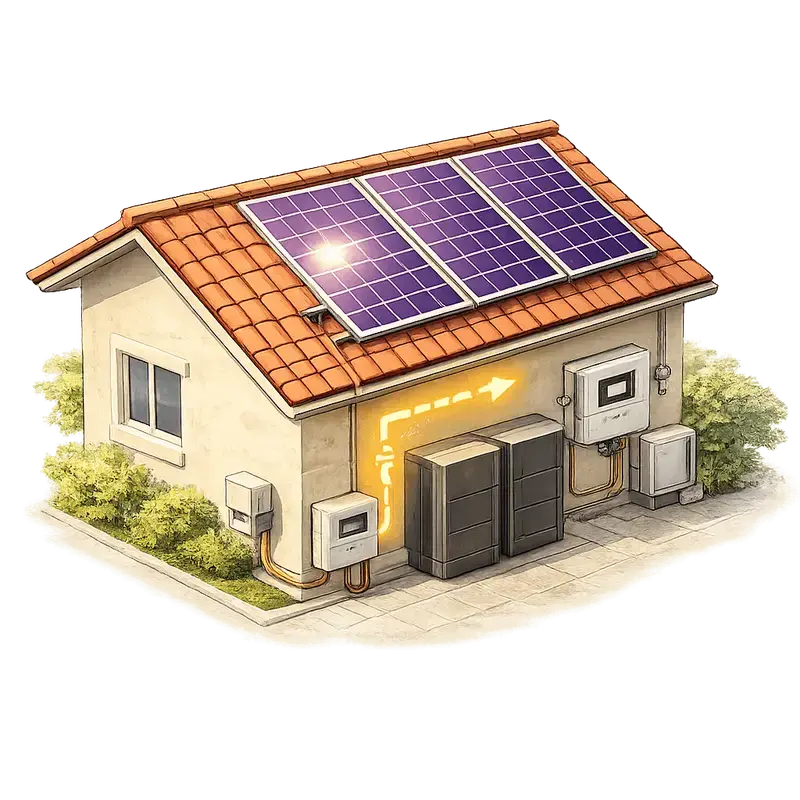
- •Primary Scheme: PM Surya Ghar Muft Bijli Yojana + UP State Top-Up
- •Stacked Subsidy: ₹78,000 (central) + ₹30,000 (UP) = ₹1,08,000 on a 3 kW system
- •Monthly Savings: ₹3,000 – ₹10,000 across PVVNL territory
- •Payback Period: 3 – 4 years for residential
- •Applicable DISCOMs: PVVNL (West UP — Noida, Ghaziabad, Greater Noida, Meerut), UPPCL, DVVNL
Uttar Pradesh runs the same ₹1,08,000 stacked solar subsidy as Delhi — central ₹78,000 plus state ₹30,000 — but almost no one in Noida or Ghaziabad gets the full amount because installers file only the central form. This guide is the actual 2026 math for the western-UP belt where Bridgeway Power operates.
If you live in Noida, Greater Noida, Ghaziabad, Meerut, or anywhere under PVVNL, the UP state government adds ₹30,000 on top of PM Surya Ghar — but only if your installer files both applications. We file both.
The PM Surya Ghar + UP Stack
1. Central Subsidy (PM Surya Ghar — DBT)
| System Capacity | Central Subsidy |
|---|---|
| 1 kW | ₹30,000 |
| 2 kW | ₹60,000 |
| 3 kW and above | ₹78,000 (capped) |
Source: pmsuryaghar.gov.in.
2. UP State Top-Up
The UP government adds ₹15,000 per kW for residential consumers, capped at ₹30,000 (i.e. fully claimed at 2 kW and above). This is filed on the UPNEDA portal after central subsidy DBT lands.
Unlike Delhi, UP does not have a Generation-Based Incentive. Anyone promising you a per-unit "UP GBI" is either confusing it with Delhi or quoting an expired pilot. Don't sign that quote.
The Real Net-Cost Example: 3 kW in Noida (PVVNL)
| Line item | Amount |
|---|---|
| Gross system cost (3 kW × ₹67,000/kW) | ₹2,01,000 |
| Less: PM Surya Ghar central subsidy | – ₹78,000 |
| Less: UP state top-up | – ₹30,000 |
| Net cost out of pocket | ₹93,000 |
At Noida's PVVNL residential tariff of ₹6.50–₹7.00 per unit and average generation of ~360 units/month, a 3 kW system saves roughly ₹2,500–₹2,800 a month — payback in under 3.5 years.
DISCOM-Specific Net Metering in UP
UP runs three major DISCOMs. Knowing yours matters because the application portals and processing times are different:
- PVVNL (Paschimanchal Vidyut Vitran Nigam Limited) — Covers Noida, Greater Noida, Ghaziabad, Meerut, Muzaffarnagar, Saharanpur, Bulandshahr, Hapur. Net meter installation typically 20–30 working days post-feasibility. This is the DISCOM for almost the entire UP-NCR service belt.
- UPPCL (Lucknow region) — Lucknow, Sitapur, Hardoi, Unnao. Slower than PVVNL — 30–45 days.
- DVVNL (Dakshinanchal) — Agra, Mathura, Aligarh. Net metering active but installation timelines vary by sub-division.
Bridgeway Power files PVVNL and UPPCL applications directly. CEIG approval (mandatory above 10 kW) is included in our scope.
City-by-City: What You Actually Pay
Solar Subsidy Noida
PVVNL territory. Stacked subsidy: ₹1,08,000. Most common system size is 3–5 kW for a 3 BHK. Net cost of a 5 kW system after subsidy works out to about ₹2,25,000 — covering bills of ₹4,500–₹6,000/month. See our detailed Noida cost & subsidy guide.
Solar Subsidy Greater Noida
Same PVVNL stack as Noida. Larger plot sizes mean 5–8 kW is more common in sectors like Pari Chowk, Alpha, and Beta. The ₹30,000 state top-up still caps at 2 kW, so the marginal stacking benefit drops above 3 kW — but tariff savings compensate.
Solar Subsidy Ghaziabad
PVVNL again. Indirapuram, Vaishali, Raj Nagar Extension, and Crossings Republik are the highest-installation pockets. ₹1,08,000 applies the same way; biggest practical issue here is shadow from adjacent towers — high-raised structures are usually needed.
Solar Subsidy Meerut & Muzaffarnagar
PVVNL. Lower tariff slabs than NCR (₹5.5–₹6/unit average) mean payback stretches to ~4 years, but the upfront subsidy stack is identical.
Solar Subsidy Lucknow
UPPCL. Stack is the same ₹1,08,000, but processing is slower and CEIG inspection for systems above 10 kW takes longer than in NCR.
Why Western UP is the Best Solar Geography in North India
- Tariff progression: PVVNL slabs cross ₹7/unit by 300 units. Every 3 BHK with an AC sits in that slab.
- Roof availability: Unlike Delhi flats, NCR's Noida/Greater Noida row houses and Ghaziabad independent floors have unobstructed rooftops.
- Net metering depth: PVVNL is one of the faster DISCOMs nationally at approving 1–10 kW systems.
- Service density: With our 35-year operational footprint across NCR, O&M response in PVVNL territory is same-day.
Talk to a solar engineer — not a salesperson
Enter your pincode and monthly bill. If we install in your area, an engineer answers on WhatsApp with your numbers.
See your exact subsidy after state stacking
Documents Required
For PM Surya Ghar UP plus the UPNEDA state top-up:
- Aadhaar card
- Latest PVVNL/UPPCL/DVVNL electricity bill (within 3 months)
- Cancelled cheque or bank passbook for DBT
- Passport-size photograph
- Rooftop photographs (3–4 angles)
- Property ownership proof (registry, allotment letter, or bill in your name)
- Builder NOC for floors in apartment complexes (where shared roof)
Mistakes that Cost UP Homeowners Money
1. Filing only the central form
Half the solar installers in Noida quote you a "₹78,000 subsidy" and stop there. The ₹30,000 UP top-up is a separate UPNEDA filing. If your installer doesn't mention it, you're losing ₹30,000.
2. Over-sizing the system
The state top-up caps at 2 kW (₹30,000). Going from 3 kW to 5 kW gives you no extra state subsidy — only proportionally more central subsidy up to the ₹78,000 ceiling, which is already hit at 3 kW. Plan size by bill (units consumed) not by subsidy.
3. Choosing a non-empanelled vendor
Only UPNEDA-empanelled vendors can file the state subsidy on your behalf. Bridgeway Power is empanelled across PVVNL and UPPCL.
Frequently Asked Questions
Does UP offer a state solar subsidy in 2026?
Yes. The UP government adds ₹15,000 per kW capped at ₹30,000, on top of the central PM Surya Ghar subsidy. Combined total reaches ₹1,08,000 for a 3 kW residential system, filed via UPNEDA.
How long does the PVVNL solar subsidy process take?
End-to-end (survey to commissioning) is typically 35–45 days in PVVNL territory. Central subsidy DBT lands within 30 days of commissioning; UP state top-up takes another 45–60 days.
Can I get net metering for solar in Greater Noida?
Yes, through PVVNL. Net metering is available from 1 kW to 500 kW. Bridgeway Power files the application; typical approval is 3–4 weeks.
Is there a UP Generation-Based Incentive like Delhi GBI?
No. UP does not currently offer a per-unit generation incentive. Only Delhi runs an active residential GBI scheme. Be cautious of vendors quoting "UP GBI" — it does not exist in 2026.
Can I install solar on a builder floor in Noida or Ghaziabad?
Yes, with an NOC from other floor owners if the roof is shared. For independent floors with exclusive roof rights, no NOC is needed.
Is loan or EMI available for solar in UP?
Yes. SBI, Union Bank, and Canara Bank offer 7-year solar loans at 10–10.5% under the PM Surya Ghar tie-up. NBFCs offer faster approval at 11–13%. On a 3 kW system, EMI works out to roughly ₹1,800/month — less than the PVVNL bill it replaces.
Conclusion
The solar subsidy UP 2026 stack is identical in value to Delhi's — ₹78,000 central + ₹30,000 state = ₹1,08,000 — but it requires two separate filings, and UP-NCR specifically has the rooftop space to make 5–10 kW systems practical. Western UP is, by net economics, one of the best places in India to install rooftop solar in 2026.
Bridgeway Power is UPNEDA-empanelled and files the full stack — central DBT, UPNEDA state top-up, PVVNL/UPPCL net metering, CEIG approval — at zero processing fee for residential customers.
Want your exact Noida, Ghaziabad, or Greater Noida number? Use the Solar Calculator, or book a free rooftop survey.
FAQ
How much solar subsidy is available in Uttar Pradesh in 2026?
UP residents get the PM Surya Ghar central subsidy of ₹78,000 for 3 kW plus a state top-up of ₹15,000 per kW (capped at 2 kW), for a combined subsidy of up to ₹1,08,000 on a 3 kW system.
What is the net cost of 3 kW solar in Lucknow or Noida after subsidy?
At ~₹68,600/kW installed, a 3 kW system is ~₹2,05,800 gross. After the combined ₹1,08,000 subsidy, net cost lands near ₹97,800 for a UP homeowner.
Who administers the UP state solar subsidy?
UPNEDA (UP New and Renewable Energy Development Agency) processes the state top-up. Applications route through pmsuryaghar.gov.in, with UPNEDA doing site inspection and DBT.
How long does the UP subsidy process take end-to-end?
Application to net-meter commissioning typically takes 6–10 weeks; central DBT arrives 30–45 days after inspection, followed by the state top-up.
Every 1 kW of solar on your roof offsets 1.5 tonnes of CO₂ per year
That's 40 trees planted — every year, for 25 years.
A typical 5 kW home system offsets 187 tonnes of carbon over its lifetime. That's equivalent to taking 8 cars off the road.
See your impact →How much can you save with solar?
Enter your electricity bill → get system size, subsidy amount & payback period
Get StartedSee your exact subsidy after state stacking
Related Articles
What Is Captive Open Access Solar (100% Equity Model)
Learn how Captive Open Access Solar (100% Equity Model) helps Indian businesses cut electricity costs by 40% using off-site solar plants. Guide on rules, savings & ROI.
Read moreHow Rooftop Solar Can Eliminate Your Electricity Bill
Discover how Net Metering and PM Surya Ghar subsidies can reduce your monthly electricity bill to near-zero. Learn about system sizing, costs, and real-world savings.
Read moreउत्तर प्रदेश में Solar Subsidy 2026: Noida, Ghaziabad & Greater Noida के लिए ₹1,08,000
UP की 2026 stacked solar सब्सिडी: ₹78,000 केंद्र + ₹30,000 UPNEDA राज्य = ₹1.08L। Noida, Greater Noida, Ghaziabad & Meerut के लिए असली PVVNL गणित।
Read moreRelated guides
10 kW Solar Generation: Units per Day in Delhi NCR
40–54 units/day, 15,000/year. Net cost ₹4.42L (Noida) to ₹4.72L (DHBVN). 3.9-yr payback.
ExploreDCR vs Non-DCR Solar Panels
Non-DCR panels are cheaper — and forfeit your entire ₹78,000 subsidy.
ExploreFree 3 kW Rooftop Solar in Delhi
Under 400 units/month? Zero upfront cost — ₹1.56L subsidy plus a government gap top-up.
ExploreDelhi Solar Subsidy Above 400 Units
Over 400 units/month? You still get the full ₹1.56L subsidy on 3 kW. Net ₹84,000.
ExplorePM Surya Ghar Subsidy Amount (2026)
Exact ₹78,000 central subsidy by system size — and when it lands after commissioning.
ExploreSubsidy Stuck at the DISCOM?
The five stages of a PM Surya Ghar claim, and how to clear the one you're parked at.
Explore