
By Vansh Dahiya · Reviewed by Arshi Chadha, Founder
Solar PPA vs Capex vs OPEX: How to Pick for a 500kW Hotel
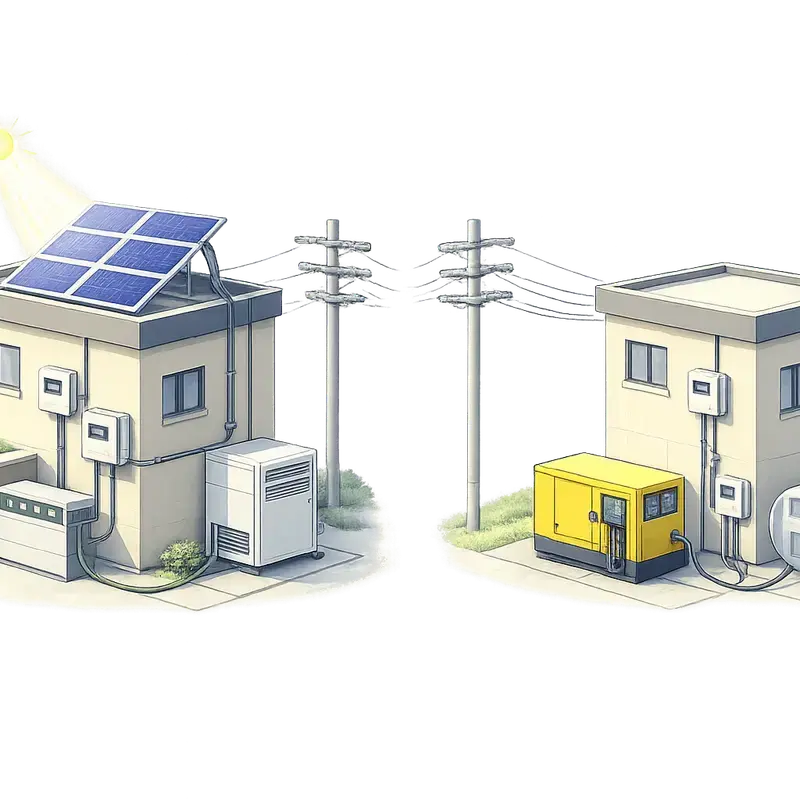
- •System size: 500 kWp
- •Investment Models: Capex, PPA (Power Purchase Agreement), and OPEX
- •Projected Annual Generation: ~7,20,000 Units (kWh)
- •Capex Payback Period: 3–4 Years for Hotels
- •PPA Savings: Immediate 30–40% reduction in electricity bills with zero investment.
If you are managing a large-scale hotel in India, your electricity bill is likely your second-highest operating expense after manpower. With commercial tariffs in cities like Delhi and Mumbai reaching ₹9–₹11 per unit, a 500kW rooftop could be the single most effective "hidden profit center" in your property.
However, once you decide to go solar, the biggest hurdle isn't the technology—it's the financing. Should you buy the system outright (Capex), lease it (OPEX/PPA), or use a low-interest debt instrument? For a 500kW project, we are talking about an investment of roughly ₹1.8–₹2.0 Crores. Making the wrong choice can lock you into a 25-year commitment that doesn't align with your cash flow.
In this guide, backed by Bridgeway Power’s 35+ years of experience and 25+ MW of installations, we break down solar ppa vs capex vs opex hotel models specifically for the Indian hospitality sector in 2026.
Understanding the Three Core Models: Capex, OPEX, and PPA
Before we dive into the math, let’s define these terms in the context of Indian regulations and commercial realities.
1. The Capex Model (Capital Expenditure)
In this model, the hotel owns the asset from day one. You pay the full solar installation cost upfront.
- Ownership: Hotel owns the modules, inverters, and structure.
- Maintenance: You (or a hired agency) are responsible for solar panel cleaning and O&M.
- ROI: This offers the highest long-term savings because there is no middleman taking a cut of your generation.
2. The OPEX/PPA Model (Operating Expenditure)
While these terms are often used interchangeably, in the Indian C&I (Commercial & Industrial) context, they usually refer to a Third-Party Owned (TPO) model.
- Ownership: A solar developer (investor) owns the system and installs it on your roof.
- PPA (Power Purchase Agreement): You sign a contract to buy the electricity generated at a fixed rate (e.g., ₹4.50/unit) for 15–25 years.
- OPEX: The developer handles all maintenance. You only pay for the energy you consume.
3. The "Finance-Capex" Model
This is essentially a Capex project funded by a loan. Many hotels prefer this because they keep the tax benefits (accelerated depreciation) while preserving cash flow. Partners like SBI PM Surya Ghar Loan and SIDBI 4E Solar Loan offer competitive rates for this.
Comparative Data: Solar PPA vs Capex vs OPEX for a 500kW Hotel (2026)
The following table compares the financial impact of these models over a 25-year project lifespan for a 500kW installation.
| Feature | Capex (Self-Funded) | Capex (Bank Loan) | Solar PPA / OPEX |
|---|---|---|---|
| Upfront Investment | ₹1.8 – ₹1.9 Cr | ₹35 – ₹40 Lakhs (Equity) | Zero (₹0) |
| Ownership | Hotel | Hotel | Developer |
| Electricity Rate | ~₹0 (Free generation) | ~₹2.5/unit (EMI cost) | ₹4.0 – ₹5.0 per kWh |
| O&M Responsibility | Hotel (Internal/AMC) | Hotel (Internal/AMC) | Developer |
| Tax Benefits (AD) | Yes (40% Dep.) | Yes (40% Dep.) | No |
| Contract Tenancy | N/A | 5–7 Year Loan | 15–25 Years |
| Long-term Savings | Exceptional (Highest) | High | Moderate (Immediate) |
Note: Pricing based on commercial solar tiers for 2026 rates.
Why Hotels Choose Capex: The ROI and Tax Play
For a profitable hotel, Capex is often the "no-brainer" choice. Here is why:
1. Accelerated Depreciation (The 40% Benefit)
Under Section 32 of the Income Tax Act, solar assets allow for 40% accelerated depreciation. For a 500kW system costing ₹1.8 Cr, you can write off ₹72 Lakhs from your taxable income in the first year alone. This significantly reduces your corporate tax liability. Learn more about solar tax benefits here.
2. Lowest Levelized Cost of Energy (LCOE)
When you own the plant, the only recurring cost is the solar AMC. Over 25 years, your average cost per unit of electricity drops below ₹2.00, compared to paying ₹9.00+ to the DISCOM.
3. Energy Security
Hotels in areas with unstable grids, such as Manesar or Bhiwadi, can integrate Capex solar with hybrid solar battery systems to reduce reliance on expensive DG sets, which cost roughly ₹25/unit.
Why Hotels Choose PPA/OPEX: The "Zero Risk" Strategy
If your capital is better spent on hotel renovations, marketing, or expanding to a new property, the PPA model is superior.
1. Zero Upfront Investment
You do not spend a single Rupee on hardware. The developer bears the entire cost of the 500kW system.
2. Performance Guarantee
In a PPA, if the system doesn't generate power, the developer doesn't get paid. This ensures that the developer uses Tier-1 components like Topcon Mono PERC panels and high-efficiency inverters to maximize yield.
3. Off-Balance Sheet
Since it’s an operational expense (like a phone bill), it doesn't show up as debt on your books, keeping your credit lines open for other hospitality business needs.
The Hybrid Finance Option: SIDBI and SBI Loans
For MSME-registered hotels, the SIDBI 4E Solar Loan is a game-changer.
- Loan Amount: ₹10 Lakhs to ₹10 Crores.
- Interest Rate: 8.5% to 10% p.a.
- Tenure: Up to 7 years.
This allows a hotel to keep the ownership and tax benefits of Capex while mirroring the low monthly outflow of a PPA.
Real Example: 500kW Rooftop Solar for a Hotel in Delhi NCR
Let's look at a hypothetical (but data-backed) case study for a premium hotel located in Saket, Delhi, served by BSES Rajdhani.
- Grid Tariff: ₹9.50/unit (including PPAC surcharge)
Talk to a solar engineer — not a salesperson
Check whether we install in your area, then get your answer on WhatsApp. No forms, no call centre.
What would solar save on YOUR bill?
Solar Depreciation & Tax Benefit Calculator
Based on Section 32 — 40% WDV + 20% additional depreciation (Year 1)
- System Size: 500 kWp
- Monthly Generation: ~60,000 Units
- Monthly Savings (Capex): ₹5,70,000
- Annual Savings: ₹68.4 Lakhs
Under Capex Model:
- Cost: ₹1.85 Crores
- Payback: ~2.7 years (including tax benefits)
Under PPA Model:
- PPA Rate: ₹4.50/unit
- Savings per Unit: ₹5.00 (Tariff - PPA Rate)
- Monthly Savings: ₹3,00,000 (Immediate, without spending ₹1.85 Cr)
Operational Challenges for Hotels Going Solar
Shadow Analysis and Roof Space
500kW requires approximately 45,000 to 50,000 sq. ft. of clear rooftop space. Hotels often have HVAC chillers, swimming pools, and "sunset bars" on the roof. Bridgeway Power uses 3D shadow mapping to ensure that shadow-casting structures don't eat into your solar panel output.
Net Metering & DISCOM Approvals
Getting a 500kW net meter can be complex. In Delhi, DERC rules allow for net metering up to the sanctioned load. For hotels with higher requirements, we often explore Group Net Metering if the hotel has multiple buildings or properties.
Maintenance and Cleaning
For hotels, aesthetics and efficiency go hand-in-hand. In dusty cities like Noida or Gurgaon, dirty panels can lose 20-30% power. We recommend automated cleaning systems for 500kW+ plants to ensure a consistent guest experience without manual labor on the roof.
Decision Matrix: Which Model Fits Your Hotel?
Use this checklist to decide:
-
Do you have excess cash and a high tax liability?
- Choose: Capex. The 40% depreciation and 3-year payback are unbeatable.
-
Is your roof leased or do you plan to sell the property within 10 years?
- Choose: PPA. The developer takes the risk, and the contract can often be transferred to the new owner.
-
Do you have a sanctioned loan limit but wanting to keep ownership?
- Choose: Loan-funded Capex (via SIDBI or Aerem Solar Finance).
-
Is your hotel's electricity consumption seasonal (e.g., a hill station resort)?
- Choose: Capex with Net Metering. You can "bank" units during the off-season and use them during peak summer.
Why Bridgeway Power for Your 500kW Hotel Project?
With 35+ years of legacy in the power sector, we understand that for a hotel, a solar plant is not just about panels—it's about reliability.
- Tier-1 Components: We only use Topcon Mono PERC 600Wp+ modules.
- Service Mastery: We manage over 25+ MW of solar assets.
- Financing Network: We are neutral partners with ECOFY, Aerem, and leading PSUs like SBI and PNB in alphabetical order.
Frequently Asked Questions
Which is better: Solar PPA or Capex for a 500kW hotel?
It depends on your financial goal. Capex offers the highest total savings and tax benefits (40% depreciation). PPA is better if you want zero upfront investment and immediate savings on your monthly bill without taking on technical risks.
Can a hotel get solar subsidy in 2026?
No, the PM Surya Ghar Yojana is for residential homes. Commercial properties like hotels do not receive direct cash subsidies but benefit from Accelerated Depreciation and GST Input Tax Credit (ITC).
What happens to the PPA after 15 years?
Typically, PPA contracts include a "buyout" or "transfer" clause. After the primary term (15-25 years), the ownership of the solar plant is usually transferred to the hotel for a nominal cost (often ₹1), or the contract is renewed at a lower rate.
Is my hotel roof strong enough for 500kW?
A 500kW system consists of ~830 panels. The weight of solar panels on the roof is about 15-20 kg per sqm, which is significantly less than the 150 kg/sqm live load capacity of standard Indian RCC roofs. We conduct a civil structural audit before every installation.
How much can I save on my hotel bill?
For a 500kW system in Delhi or Gurgaon, you can expect to generate ~7.2 Lakh units per year. At a commercial rate of ₹9/unit, this equals ₹64.8 Lakhs in annual savings.
Conclusion
The battle between solar ppa vs capex vs opex hotel models comes down to whether you want to own an asset or buy a service. For most luxury hotels in the 500kW category, the Loan-funded Capex model offers the best of both worlds: ownership benefits without the total upfront cash drain.
Ready to see how 500kW fits your roof? Use our Solar Calculator or book a free technical site audit with Bridgeway Power's experts today. Let us help you turn your rooftop into a sustainable revenue generator.
Every 1 kW of solar on your roof offsets 1.5 tonnes of CO₂ per year
That's 40 trees planted — every year, for 25 years.
A typical 5 kW home system offsets 187 tonnes of carbon over its lifetime. That's equivalent to taking 8 cars off the road.
See your impact →How much can you save with solar?
Enter your electricity bill → get system size, subsidy amount & payback period
Get StartedGo solar without owning a rooftop
Community Solar gives commercial & institutional consumers the same savings — zero capex, zero roof needed.
Or get a free solar quote
Tell us about your rooftop — we'll call with exact savings for your home.
Related Articles
What Is Captive Open Access Solar (100% Equity Model)
Learn how Captive Open Access Solar (100% Equity Model) helps Indian businesses cut electricity costs by 40% using off-site solar plants. Guide on rules, savings & ROI.
Read moreHow Rooftop Solar Can Eliminate Your Electricity Bill
Discover how Net Metering and PM Surya Ghar subsidies can reduce your monthly electricity bill to near-zero. Learn about system sizing, costs, and real-world savings.
Read moreSolar Subsidy in Uttar Pradesh 2026: ₹1,08,000 for Noida, Ghaziabad & Greater Noida
UP's stacked solar subsidy 2026: ₹78,000 central + ₹30,000 UPNEDA state top-up = ₹1.08L. Real PVVNL net-cost math for Noida, Greater Noida, Ghaziabad & Meerut.
Read moreRelated guides
Delhi Electricity Rate 2026
BSES & Tata Power per-unit rates, PPAC, subsidy — sourced from DERC.
ExploreDelhi Solar Policy 2026
Free rooftop solar up to 3 kW for homes under 400 units. Eligibility & apply.
ExploreSolar Panel Price in Delhi
Live 2026 rooftop prices in Delhi after ₹1.56L subsidy. 1,200+ installs.
ExploreSolar Company in Gurgaon
Gurgaon's rooftop solar installer — 800+ systems, ₹78K PM Surya Ghar subsidy.
ExploreSolar Company in Noida
Noida & Greater Noida rooftop solar — 500+ installs, ₹1.08L stacked subsidy.
ExploreSolar Panel Price in Faridabad
Live 2026 Faridabad prices after ₹78K PM Surya Ghar subsidy. 350+ homes.
Explore