
By Vansh Dahiya · Reviewed by Arshi Chadha, Founder
Noida Society Rooftop Solar: NPCL vs PVVNL Process Guide
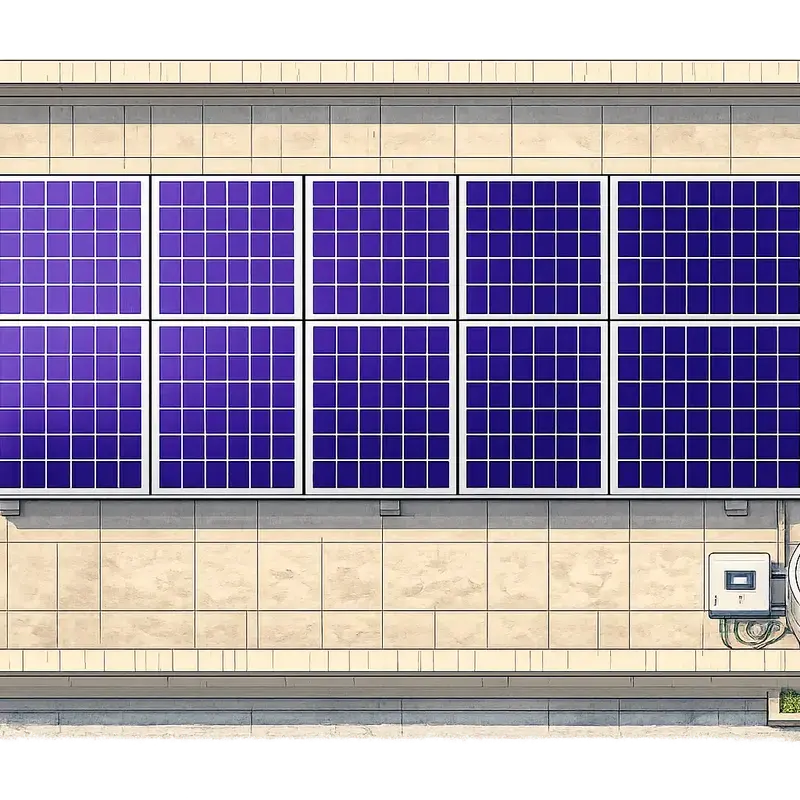
- •Eligibility: Group Housing Societies (GHS) and RWAs.
- •Central Subsidy: ₹18,000 per kW (up to 500 kW per society).
- •UP State Subsidy: ₹30,000 (Fixed for residential common area).
- •Primary Challenge: Resolving transformer capacity issues and rooftop ownership disputes.
- •Average Savings: 70–90% reduction in common area energy bills.
Noida's landscape is split by more than just sectors; it is divided by two distinct power utilities, each with its own rulebook for noida society rooftop solar npcl pvvnl installations. If you are an RWA member in Sector 15, you deal with PVVNL. If you are in Sector 150, you deal with NPCL. We have spent over 35 years navigating these DISCOM hallways, and the reality is that a society solar project in Noida often stalls not because of the tech, but because the RWA applied to the wrong portal or used the wrong metering configuration.
Whether you are looking to solarize the common area lighting, the basement ventilation, or the lifts, you need to know exactly which jurisdiction your society falls under and how that specific DISCOM handles net metering.
The Territorial Divide: NPCL vs. PVVNL
Before you even call a vendor, look at your society’s common area electricity bill.
- PVVNL (Paschim Anch विद्युत Vitran Nigam Limited): They manage "Old Noida"—Sectors 1 through 14, 15, 19, 27, and most areas up to the Greater Noida Expressway entrance. If your bill comes from the UP government utility, you are in PVVNL territory.
- NPCL (Noida Power Company Limited): This is a private utility covering Greater Noida and the high-rise hubs along the Noida-Greater Noida Expressway (Sectors 128, 137, 144, 150, etc.).
The process for solar in Noida varies significantly between these two. NPCL tends to be more digitized but stricter on technical feasibility, while PVVNL follows the standard UPNEDA guidelines.
NPCL vs PVVNL Process Comparison
| Feature | NPCL (Greater Noida / Expressway) | PVVNL (Old Noida) |
|---|---|---|
| Application Portal | NPCL Web Portal / PM Surya Ghar | UPNEDA Portal / PM Surya Ghar |
| Feasibility Report | 7–10 Days | 15–21 Days |
| Net Metering Type | Net Metering & Virtual Net Metering | Net Metering / Group Net Metering |
| Technical Audit | Strict load-bearing & earthing check | Standard DISCOM inspection |
| Subsidy Handling | Direct to RWA bank account | UPNEDA + Central (Stacked) |
| Metering Charge | Fixed based on Load | Varying based on Meter Type |
The PVVNL Solar Process for Societies
In old Noida sectors, the pvvnl solar process for societies is heavily tied to the UPNEDA framework. Most societies here are low-to-medium rise compared to Greater Noida.
- Sanctioned Load Check: The proposed solar system cannot exceed 100% of your sanctioned load. If your common area load is 50 kW, you cannot install a 60 kW plant without first applying for a load increase.
- Registration: The RWA must register on the PM Surya Ghar Yojana portal.
- Feasibility (TFR): PVVNL engineers inspect the local transformer capacity. In older sectors, we often see "Transformer Capacity Exhausted" errors. If the transformer is at 80% utilization, they may reject the application.
- Installation & PCR: Once the Solar Installation Process is complete, a Project Completion Report (PCR) is uploaded.
- Inspection: A PVVNL Junior Engineer (JE) visits to verify the DCDB, ACDB, and lightning arrestors.
For detailed steps on Noida North/East sectors, check our PVVNL Noida Solar Guide.
The NPCL Society Solar Workflow
Greater Noida societies (NPCL) are generally newer and have larger sanctioned loads. npcl society solar projects often utilize noida society solar net metering to offset massive lift and water pump consumption.
NPCL requires a specific "Solar Connection Agreement" signed by the RWA President. They are particularly picky about the quality of the Net Meter. While PVVNL often lets you source your own tested meter, NPCL usually prefers to provide the meter themselves to ensure it communicates correctly with their billing software.
A critical advantage in NPCL areas like solar in Noida Extension is the speed of technical clearance. Because their infrastructure is newer, transformer capacity is rarely an issue.
Metering Options for Multi-Tower Societies
Societies aren't like independent homes; they have complex electrical grids. Choosing the right metering is where most RWAs lose money.
1. Common Area Net Metering
This is the simplest. The solar plant is connected to the common area meter (e.g., Lifts, STP, Common Lights). The units generated are subtracted from the total consumption. This is ideal if you have one large rooftop and one main common area connection.
2. Group Net Metering (GNM)
If you have 5 towers, each with its own connection, but only one tower has a suitable roof, you use Group Net Metering. You install solar on Tower A and "export" the excess credit to the meters of Towers B, C, D, and E.
Talk to a solar engineer — not a salesperson
Enter your pincode and monthly bill. If we install in your area, an engineer answers on WhatsApp with your numbers.
What would solar save on YOUR bill?
3. Virtual Net Metering (VNM)

This is the future for Noida. Under Virtual Net Metering, the society can install a massive plant on the clubhouse roof and distribute the solar credits directly to individual residents' bills. This requires a specific DERC/UPERC-approved framework, which is currently easier to execute in Delhi than UP, but NPCL has started pilot discussions for large townships.
ROI for Noida Societies
A typical 50 kW society system in Noida costs roughly ₹25–28 Lakhs. With the central subsidy of ₹18,000/kW and the UP State Subsidy of ₹30,000, the effective cost drops significantly.
- Monthly Savings: ₹50,000 to ₹70,000 (at Noida tariff of ₹7/unit).
- Payback Period: 3.5 to 4.5 years.
- Life of Plant: 25+ years.
For societies in Greater Noida, where commercial/high-rise tariffs are higher, the payback is even faster.
From our installs
We recently completed a 45 kW project for a high-rise society rooftop in Sector 137 (NPCL territory). The society was paying nearly ₹1.2 Lakh monthly for common area utilities. After installing Topcon Mono PERC panels, their monthly bill dropped to roughly ₹35,000. Observed Result: The system generated an average of 190 units per day during the summer. Caveat: The RWA had to clear 3,000 sq. ft. of space occupied by old DG set exhaust pipes, which added ₹1.5 Lakh to the structural cost for elevated mounting.
The Structural Challenge: Wind and Height
In Noida, especially on 20-story towers, wind speed is a killer. Standard structures that work on a 2-story home in solar in Rohini will fly off a skyscraper in Sector 150. We recommend:
- Elevated GI Structures: To allow residents to still use the roof for walking.
- Wind Bracing: Essential for anything above the 10th floor.
- Weight Load: Ensure the structure weight is within the RCC roof’s live load capacity (standard is 150 kg/sqm). See our guide on Solar System Weight for details.
FAQ
Which DISCOM is better for solar in Noida?
NPCL is generally faster with approvals and has a better digital interface for tracking net-metering credits. However, PVVNL serves the majority of residential sectors and follows a very stable UPNEDA subsidy disbursement process.
How much subsidy does a Noida RWA get?
Under the PM Surya Ghar Yojana, a society (GHS/RWA) gets ₹18,000 per kW, capped at 500 kW total. Additionally, the Uttar Pradesh state government provides a fixed capital subsidy of ₹30,000 for residential common area solar plants.
Can residents share solar from the society roof?
Yes, through Virtual Net Metering (VNM), though it is technically easier to set up for common area billing first. If your society wants to credit individual bills, the RWA must pass a board resolution and apply for a specific VNM meter from NPCL or PVVNL.
Is AMC necessary for society solar?
Yes, absolutely. Because society systems are large (30kW to 100kW+), even a 10% drop in generation due to dust means a loss of ₹10,000+ per month. We recommend an Annual Maintenance Contract that includes professional cleaning twice a month to combat Noida’s high dust levels.
What is the maximum solar capacity a society can install?
You can install solar up to 100% of your sanctioned load. If the society's common area connection is for 100 kW, the solar plant can be up to 100 kW. If you need more, you must first apply for a load enhancement with your DISCOM.
If your RWA is debating between different vendors or struggling with the technical specs, we can help. Get a free quote or a site survey to determine if your rooftop can handle the wind loads of high-rise solar.
Reviewed by: Gurubaksh Singh, Senior Solar Advisor, Bridgeway Power
Every 1 kW of solar on your roof offsets 1.5 tonnes of CO₂ per year
That's 40 trees planted — every year, for 25 years.
A typical 5 kW home system offsets 187 tonnes of carbon over its lifetime. That's equivalent to taking 8 cars off the road.
See your impact →Protect your existing solar system
Annual maintenance plans — panel cleaning, remote monitoring & emergency support
Get StartedLiked this article? Get a free solar quote
Tell us about your rooftop — we'll call with exact savings for your home.
Related Articles
Annual Solar Maintenance Cost in India: DIY vs AMC vs One-Time Service
Learn the real annual solar maintenance cost in India for 2026. Compare DIY, one-time service, and AMC plans to maximize your rooftop solar savings.
Read moreHow to Correctly Read Your Solar Net Meter Display
Master how to read solar net meter displays (Secure/Genus), understand Export vs. Import codes, and verify your DISCOM bill accuracy in Delhi NCR.
Read moreNPCL Solar Net Metering in Greater Noida: Process & Documents
Learn the exact NPCL solar net metering process in Greater Noida. Get the document checklist, application steps, and timeline for rooftop solar approval in 2026.
Read moreRelated guides
Delhi Electricity Rate 2026
BSES & Tata Power per-unit rates, PPAC, subsidy — sourced from DERC.
ExploreDelhi Solar Policy 2026
Free rooftop solar up to 3 kW for homes under 400 units. Eligibility & apply.
ExploreSolar Panel Price in Delhi
Live 2026 rooftop prices in Delhi after ₹1.56L subsidy. 1,200+ installs.
ExploreSolar Company in Gurgaon
Gurgaon's rooftop solar installer — 800+ systems, ₹78K PM Surya Ghar subsidy.
ExploreSolar Company in Noida
Noida & Greater Noida rooftop solar — 500+ installs, ₹1.08L stacked subsidy.
ExploreSolar Panel Price in Faridabad
Live 2026 Faridabad prices after ₹78K PM Surya Ghar subsidy. 350+ homes.
Explore