
By Bhawna Thakur · Reviewed by Arshi Chadha, Founder
Do Solar Panels Need Cleaning? What Happens If You Don't
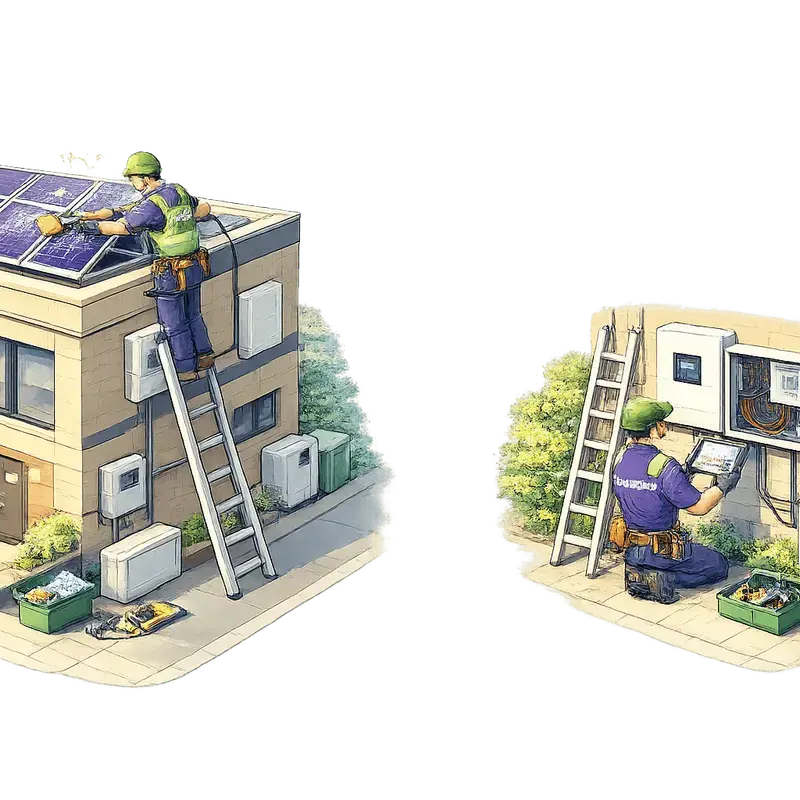
- •Primary Question: Do solar panels need cleaning? Yes, absolutely.
- •Impact of Pollution: Dirty panels lose 15–25% output in Indian cities.
- •Savings Loss: Neglecting cleaning can cost a 5kW owner ₹1,500–₹2,500 monthly.
- •Best Practice: Clean every 2 weeks in NCR; consider an [AMC Plan](/amc) for professional care.
You’ve just spent ₹3-5 lakhs on a state-of-the-art rooftop solar system. The first month, your generation is peak, and your electricity bill drops significantly. But three months later, you notice something troubling: the generation numbers on your app are dipping. The sky is clear, the sun is bright, but your 5kW system is performing like a 3.5kW one.
The culprit? It’s likely sitting right there on your roof—a thick, gray layer of urban grime. In India, where dust, vehicular pollution, and bird activity are high, the question isn't just "do solar panels need cleaning"—it’s how much money you’re losing every day you leave them dirty.
For homeowners in Delhi, Noida, and Gurgaon, solar panels are "low maintenance," but they are certainly not "zero maintenance." Ignoring the cleanliness of your modules is the fastest way to turn a high-ROI investment into an underperforming asset.
The Science of Shadows: Why Dust Destroys Dividends
Solar panels work via the photovoltaic effect: photons from sunlight hit the silicon cells, knocking electrons loose to create a flow of electricity. When a layer of dust, bird droppings, or soot covers the glass, it acts as a physical barrier. This is known as "soiling loss."
In the context of dirty solar panels output loss, even a thin film of dust that is barely visible from the ground can reduce efficiency. In heavy industrial or high-traffic areas like Faridabad or Ghaziabad, this loss is compounded by sticky particulates that don’t simply blow away with the wind.
Table 1: Output Loss from Dirty Panels
| Type of Contamination | Estimated Power Output Loss | Impact on Savings |
|---|---|---|
| Light Dust | 5–10% loss | Minor but visible dip in units |
| Heavy Dust (2-4 weeks of neglect) | 15–25% loss | Significant impact on ROI |
| Bird Droppings | 20–30% (localized loss/hotspots) | Risk of permanent cell damage |
| Algae/Moss (Common in Monsoon) | 30–50% loss | Critical failure of generation |
When you consider that the average monthly solar generation per kW in NCR is roughly 120 units, a 25% loss means you are losing 30 units per kW. For a 10kW system, that’s 300 units a month—roughly ₹2,400 gone because of a little dirt.
Solar Panel Cleaning Frequency in India: How Often is Enough?
One of the most common questions we receive at Bridgeway Power is about the solar panel cleaning frequency in India. There is no "one size fits all" answer, as it depends entirely on your micro-environment. If you live near a construction site or a main highway, your panels will need much more frequent attention than a home in a lush, green colony.
Table 2: Recommended Cleaning Frequency by Region (2026)
| Region/Environment | Recommended Frequency | Reasoning |
|---|---|---|
| Delhi NCR | Every 2–3 weeks | High PM2.5 levels and urban smog. |
| Rajasthan & Desert Areas | Weekly (more in summer) | Frequent sand and fine dust accumulation. |
| Coastal Cities (Mumbai/Chennai) | Monthly | Salt mist can create a sticky film over time. |
| South India (Bangalore/Kerala) | Every 3–4 weeks | High humidity causes dust to "bake" onto the glass. |
In North India, the pre-monsoon summer months (April to June) are the most critical. This is when dust storms are frequent, and the lack of rain means there is no natural "self-cleaning" occurring. During these months, you might see your output drop by 20–30% in just two weeks if the panels aren't hosed down.
Bird Droppings: The "Silent Killers" of Solar Cells
While dust is an overall "blanket" that reduces generation, bird droppings are much more dangerous. A single dropping creates a total shade on a specific part of a cell. Because solar cells in a panel are usually connected in series, this obstruction creates high resistance.
The energy that cannot pass through the shaded area is converted into heat, leading to hotspots. Over time, these hotspots can crack the glass or permanently burn the backsheet of the panel, voiding your warranty. This is why we emphasize that solar panels don't fail, systems do due to poor maintenance.
Cleaning Methods: From DIY to Professional AMC
Now that we've established why cleaning is necessary, let's look at how to do it. You have several options, ranging from a quick morning hose-down to hiring a professional solar panel cleaning service.
Table 3: Solar Panel Cleaning Methods & Costs
| Method | Estimated Cost (Residential) | Pros/Cons |
|---|---|---|
| Water Rinse | Free (Utility cost) | Good for light dust; doesn't remove bird droppings. |
| Soft Brush + Water | ₹200–500 (Equipment cost) | Effective for DIY, but requires roof access and safety. |
| Professional Cleaning (AMC) | ₹3,000–6,000 per year | Includes deep cleaning + electrical health check. |
| Robotic Cleaner | ₹15,000–30,000 (One-time) | Great for large flat roofs; expensive for small systems. |
The "Golden Rules" of DIY Cleaning
If you choose to clean the panels yourself, follow these safety and maintenance protocols:
- Timing is Everything: Only clean in the early morning (before 8 AM) or late evening (after 6 PM). During the day, the tempered glass can reach temperatures of 60°C. Spraying cold water on hot glass can cause a thermal shock, leading to micro-cracks.
- No Chemicals: Never use harsh detergents, soaps, or glass cleaners like Colin. These leave a residue that actually attracts more dust. Plain RO water or soft tap water is best.
- Soft Touch Only: Use a soft microfiber cloth or a specialized solar brush. Never use steel wool or abrasive sponges, as scratches on the glass will permanently reduce light transmission.
- Pressure Matters: Do not use high-pressure washers. The pressure can damage the seals or force water into the junction box. A standard garden hose is sufficient.
Talk to a solar engineer — not a salesperson
Check whether we install in your area, then get your answer on WhatsApp. No forms, no call centre.
What would solar save on YOUR bill?
Real Example: The "Dirty" Cost in Dwarka
Let’s look at a real-word scenario involving a client in Dwarka, Delhi.
Mr. Sharma had a 5kW rooftop solar system installed in January. By April, he noticed his daily generation had dropped from 22 units per day to just 16 units per day. He suspected a faulty inverter or a net metering issue.
Upon inspection by the Bridgeway Power team, we found a thick crust of dust and several dried bird droppings.
- Before Cleaning: 16 Units/Day
- Cost of Professional Cleaning: ₹1,000 (part of a diagnostic visit)
- After Cleaning: 23 Units/Day (Back to peak performance)
- The Math: He was losing 7 units a day. At an average Delhi tariff of ₹8/unit, he was losing ₹56 per day, or ₹1,680 per month.
By investing in a yearly solar panel cleaning cost of around ₹4,000 for an AMC, Mr. Sharma’s system pays back that maintenance cost in just 2.5 months of recovered generation.
Why a Solar AMC is Better Than DIY
While hosing down panels seems easy, a professional Solar AMC (Annual Maintenance Contract) offers more than just a wash. In India, many installers disappear after the sale. At Bridgeway Power, with our 35+ years of experience and 5,000+ installations, we’ve seen that the best-maintained systems last 25 years, while neglected ones struggle after 5.
A typical AMC visit includes:
- Pressure-controlled cleaning with deionized/soft water.
- Micro-crack inspection using thermal imaging (optional).
- Tightening of DC/AC connections that might have loosened due to thermal expansion.
- Checking the earthing and lightning arrestor to ensure safety during the monsoon.
- Inverter health check to clear any internal dust that could cause overheating.
Read our Solar AMC Case Study to see how regular maintenance recovered 6x the cleaning cost for a South Delhi bungalow.
The Worst Thing You Can Do: "Install and Forget"
The biggest myth in the solar industry is that panels are maintenance-free. While they have no moving parts, they are sensitive electronic devices exposed to the harshest elements—sun, rain, bird acid, and industrial smoke.
Installing solar panels and then failing to clean them is like buying a high-end car and never changing the oil. You will still get from A to B, but the engine will wear out faster, and the fuel efficiency will be terrible.
In the long run, dirty solar panels output loss doesn't just affect your monthly bill; it affects your total solar ROI. If you are looking to eliminate your electricity bill, maintenance is non-negotiable.
Frequently Asked Questions
Does rain clean solar panels automatically?
In cities like Delhi or Noida, light rain often makes things worse. It mixes with atmospheric dust to create a "muddy" film that sticks to the panels. Only a heavy, sustained downpour provides any meaningful cleaning, but even then, it won't remove bird droppings or "baked-on" pollutants.
Can I use a pressure washer to clean my panels?
No. Most manufacturers explicitly warn against high-pressure washers. The intense pressure can compromise the waterproof seals of the panel frame or push water into the junction box, leading to short circuits and voided warranties.
Why do my panels look clean but generation is still low?
High-altitude dust or a thin layer of transparent "smog" film can be deceptive. Even if they looks "decent" from the ground, a physical wipe-test often reveals a gray residue. If generation is low and panels are clean, you may have an inverter fault or shading from a new nearby construction.
Is professional solar panel cleaning worth the cost?
Yes, especially for systems 5kW and above. The generation increase typically covers the cost of the service. Furthermore, professionals check for loose wires and hotspot damage, which prevents expensive repairs or fire hazards later.
Does cleaning frequency change in the winter?
In North India, winter introduces heavy fog and smog. These pollutants are heavy and oily. While the sun is weaker, you need the panels to be as clean as possible to catch what little light is available. We recommend cleaning every 3 weeks in winter.
Conclusion: Keep Your Savings Shining
So, do solar panels need cleaning? To get the 25-year lifespan and the 4-year payback you were promised, the answer is a resounding yes. Regular cleaning ensures you aren't leaving money on the table (or rather, on the roof).
Whether you choose a DIY approach or a professional AMC plan, consistency is key. Don't wait for your generation to tank. Set a reminder on your phone or hire the experts at Bridgeway Power to handle it for you.
Ready to maximize your solar savings? Bridgeway Power offers comprehensive maintenance and cleaning services across Delhi NCR. Contact us today for a free system health check and see how much more power your roof can generate! For more details on pricing and technical specs, you can also check our updated 2026 Solar Installation Cost Guide. High-quality maintenance is the difference between a solar owner and a solar winner.
Referenced sources include the Ministry of New & Renewable Energy and internal yield data from Bridgeway’s 25+ MW of installed capacity.
Every 1 kW of solar on your roof offsets 1.5 tonnes of CO₂ per year
That's 40 trees planted — every year, for 25 years.
A typical 5 kW home system offsets 187 tonnes of carbon over its lifetime. That's equivalent to taking 8 cars off the road.
See your impact →Protect your existing solar system
Annual maintenance plans — panel cleaning, remote monitoring & emergency support
Get StartedLiked this article? Get a free solar quote
Tell us about your rooftop — we'll call with exact savings for your home.
Related Articles
Annual Solar Maintenance Cost in India: DIY vs AMC vs One-Time Service
Learn the real annual solar maintenance cost in India for 2026. Compare DIY, one-time service, and AMC plans to maximize your rooftop solar savings.
Read moreHow to Correctly Read Your Solar Net Meter Display
Master how to read solar net meter displays (Secure/Genus), understand Export vs. Import codes, and verify your DISCOM bill accuracy in Delhi NCR.
Read moreNPCL Solar Net Metering in Greater Noida: Process & Documents
Learn the exact NPCL solar net metering process in Greater Noida. Get the document checklist, application steps, and timeline for rooftop solar approval in 2026.
Read moreRelated guides
Delhi Electricity Rate 2026
BSES & Tata Power per-unit rates, PPAC, subsidy — sourced from DERC.
ExploreDelhi Solar Policy 2026
Free rooftop solar up to 3 kW for homes under 400 units. Eligibility & apply.
ExploreSolar Panel Price in Delhi
Live 2026 rooftop prices in Delhi after ₹1.56L subsidy. 1,200+ installs.
ExploreSolar Company in Gurgaon
Gurgaon's rooftop solar installer — 800+ systems, ₹78K PM Surya Ghar subsidy.
ExploreSolar Company in Noida
Noida & Greater Noida rooftop solar — 500+ installs, ₹1.08L stacked subsidy.
ExploreSolar Panel Price in Faridabad
Live 2026 Faridabad prices after ₹78K PM Surya Ghar subsidy. 350+ homes.
Explore