
By Arshi Chadha, Founder · Bridgeway Power
1kW Solar Panel Generation: Daily and Monthly Units
- •Daily Generation: 4–4.5 Units (average)
- •Monthly Generation: 120–135 Units
- •Space Required: 60–80 sq. ft.
- •Best For: 1BHK homes or reducing small bills (₹1,500–₹2,000 range)
- •Subsidy: ₹30,000 (Central) + State top-ups (if applicable)
A 1kW solar panel produces about 4 units of electricity per day in India, translating to roughly 120 units a month. I’ve spent over 35 years at Bridgeway Power looking at solar generation logs, and if there’s one thing I’ve learned, it’s that people either vastly underestimate or wildly overestimate what a single kilowatt can do.
With the PM Surya Ghar Yojana, 1kW has become the entry point for many Indian households. But before you sign that cheque, you need to know the math. A 1kW system isn't a "magic box" that deletes a ₹10,000 bill; it’s a surgical tool to slice off the top tier of your consumption.
Realistic Energy Expectations for a 1kW System
When someone asks "1 kw solar panel produces how many units," they usually want the number they can take to the bank. In the Delhi NCR region, including solar in Noida and solar in Delhi, we typically see an average yield of 120 units per month.
However, solar generation isn't a flat line. In June, when the sun is directly overhead in Gurgaon, you might see 5.5 units a day. In December, during a heavy smog layer, that might drop to 2 units.
1kW Solar Performance: Delhi NCR Case Study
| Parameter | Summer (March–June) | Monsoon (July–Sept) | Winter (Oct–Feb) |
|---|---|---|---|
| Avg. Daily Units | 4.8 – 5.2 Units | 3.5 – 4.0 Units | 3.0 – 3.8 Units |
| Monthly Yield | 145 – 155 Units | 105 – 120 Units | 90 – 115 Units |
| Peak Sun Hours | 5.5 Hours | 3.5 Hours | 4.0 Hours |
| Efficiency Impact | High (Heat loss) | Medium (Cloud cover) | Low (Dust/Smog) |
If you are using our Solar Calculator to size your system, you’ll notice that a 1kW setup is rarely recommended for a full home backup. It’s designed to offset a specific portion of your load.
What Can a 1kW System Actually Power?
We get this call every day: "Can I run my 1.5-ton AC on a 1kW solar system?" The short answer is no. A 1.5-ton 5-star inverter AC draws about 1,200 to 1,500 watts when the compressor is running hard. A 1kW solar system peaks at roughly 800-900 watts of actual AC output after inverter losses.
So, what is it good for? A 1kW system is perfect for a small 1BHK or a shop. It can comfortably handle:
- 3–4 Ceiling Fans
- 8–10 LED Bulbs
- 1 Refrigerator (250L)
- 1 Television
- Laptop chargers and small gadgets
If your goal is to run heavy loads, you should read our guide on the 5kW solar system price in India 2026.
1kW vs Larger Systems: The Subsidy Trap
The 1kw solar panel price government subsidy makes it very attractive. Under the current MNRE guidelines, you get a flat ₹30,000 subsidy for a 1kW system. If you are in Delhi, you can add the state subsidy of ₹10,000, bringing the net cost down significantly.
However, from an engineering perspective, I often advise customers against 1kW if they have the space for 3kW. Why? Because the "fixed costs" of solar—the net meter application, the structure, the wiring, and the labor—don't scale linearly.
| System Size | Gross Cost (Approx) | Central Subsidy | Net Cost (NCR) | Cost per kW (Net) |
|---|---|---|---|---|
| 1kW | ₹80,000 – ₹90,000 | ₹30,000 | ₹50,000 – ₹60,000 | ₹55,000 |
| 3kW | ₹2,40,000 | ₹78,000 | ₹1,32,000 | ₹44,000 |
As you can see, you get much better "bang for your buck" at 3kW. Plus, the PM Surya Ghar subsidy maxes out at ₹78,000 for 3kW and above. If your bill is already over ₹2,500, a 1kW system will only barely move the needle on your BSES bill.
Talk to a solar engineer — not a salesperson
Check whether we install in your area, then get your answer on WhatsApp. No forms, no call centre.
What would solar save on YOUR bill?
Space Requirements: Where Does It Fit?
A common misconception is that you need a massive roof for solar. For a 1kW setup using modern Topcon Mono PERC panels (which are roughly 580W to 620W each), you only need two panels.
Each panel is about 23-25 square feet. When you account for walking space for cleaning and the ideal height of solar panels, you need about 60 to 80 square feet of shadow-free area. This makes 1kW a viable option even for builder floors in Delhi.
The Impact of Dust and Maintenance
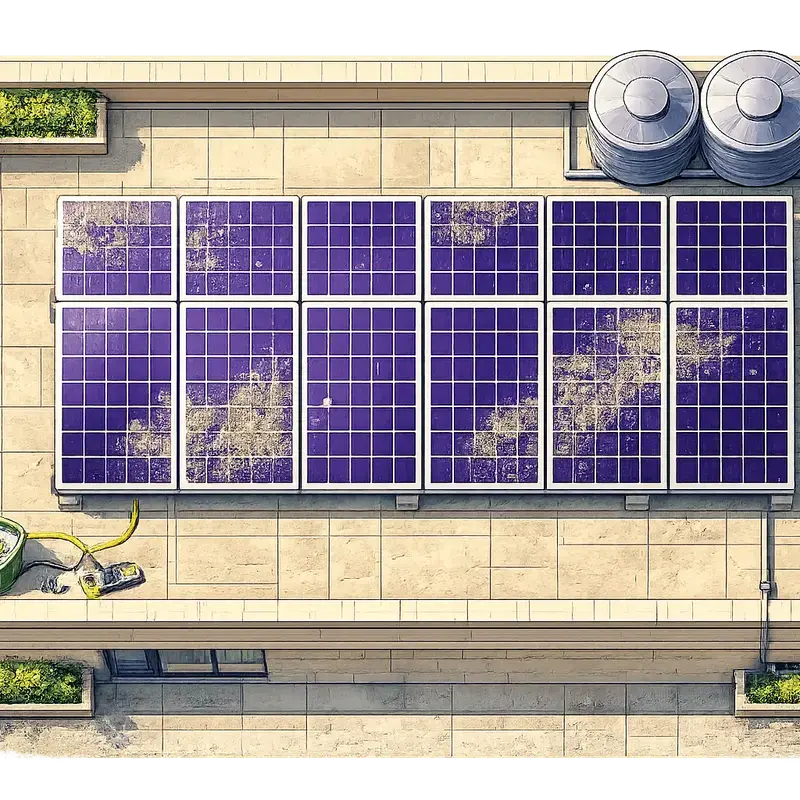
Because a 1kW system only produces about 4 units a day, every drop in efficiency hurts. In a city like Ghaziabad or Faridabad, dust is your biggest enemy.
We’ve seen cases where a layer of fine Delhi dust reduces output by 25%. On a 10kW system, losing 2.5kW is annoying; on a 1kW system, losing 250W means your fridge might start pulling from the grid instead of the sun.
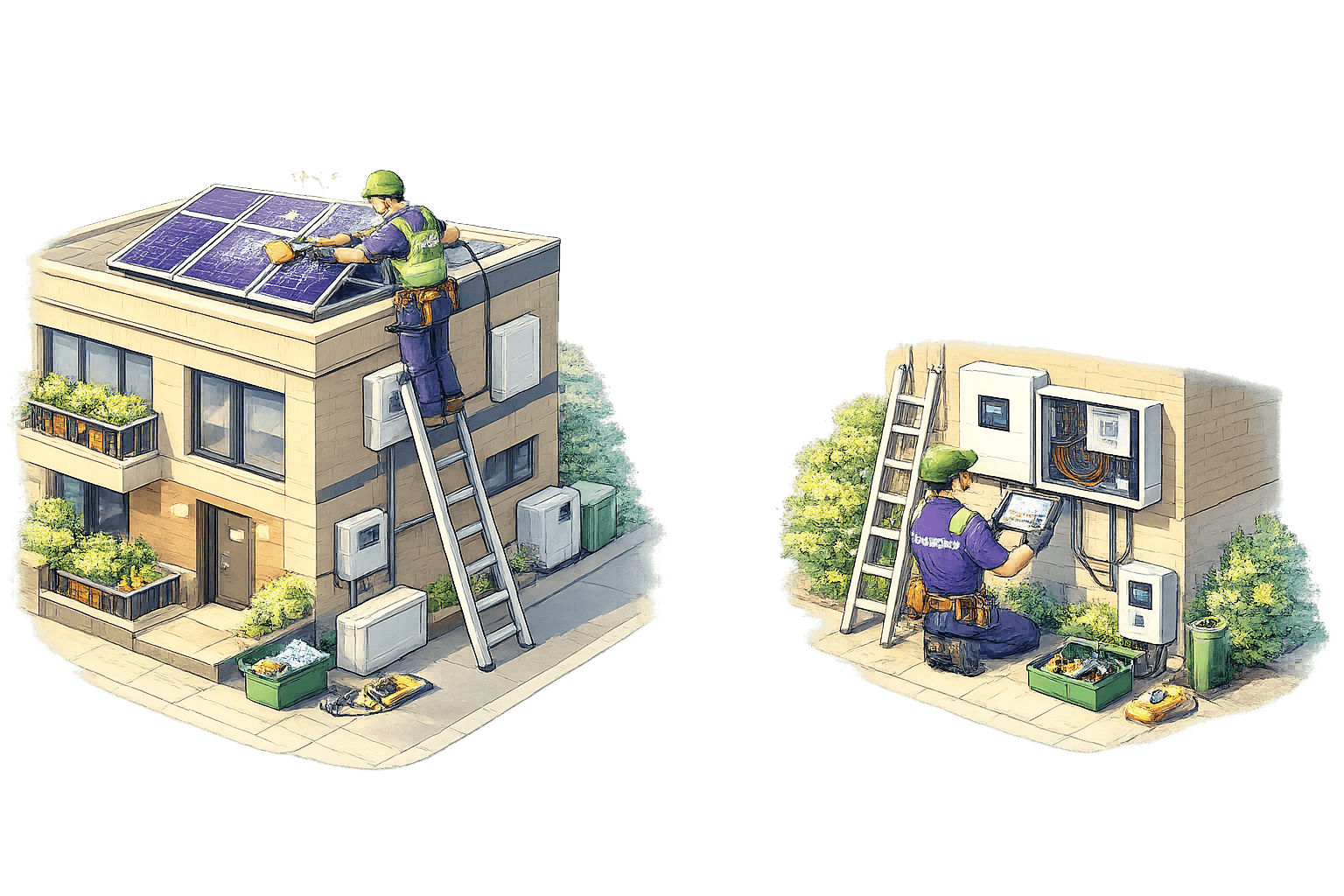
I always tell my clients: if you aren't going to clean your panels every 15 days, don't buy the cheapest panels. Buy high-efficiency ones that can handle low-light conditions better. Or better yet, look into a Solar AMC to ensure your small system actually delivers those 120 units.
Real Example: A Shop in Janakpuri
We recently installed a 1.2kW system for a small pharmacy in Janakpuri. Their monthly bill was averaging ₹2,200. They didn't have much roof space, just a small patch above their shop.
After installing 2 panels of 600Wp each and a small string inverter, their bill dropped to the minimum fixed charges—roughly ₹400-500. Their 1kw solar panel how many units per day average was 4.6 units because they had zero shadow issues. They paid about ₹55,000 net after subsidy, and their payback period is estimated at just under 3 years.
FAQ
1 kw solar panel how many units per day will I get in winter?
In North India, winter generation drops due to shorter days and smog. You can expect about 3 to 3.5 units per day between December and February. However, the colder temperature actually helps the panels operate more efficiently compared to the scorching 48°C heat of May, which partially offsets the loss of light.
1 kw solar panel produces how many units in a year?
A well-maintained 1kW system in India will produce between 1,400 and 1,500 units annually. This assumes you are using a Tier-1 inverter and keeping the panels free of dust and bird droppings, which can otherwise cause significant "hotspots" and losses.
1 kv solar panel generates how much electricity in units for an off-grid setup?
If you are using batteries (off-grid or hybrid), you will lose about 15-20% of your generated energy to charging and discharging cycles. So, while the panel produces 4 units, you might only get to "use" 3.2 units. If you're considering this, check our home solar battery guide.
Can I get the 1kw solar panel price government subsidy for a second home?
The PM Surya Ghar subsidy is generally linked to a single domestic electricity connection (CA number). If you have two separate connections in two different houses, you can apply for both. However, you cannot claim the subsidy twice for the same meter if you decide to expand the system later.
Does a 1kW system require a three-phase connection?
No. In almost all DISCOMs like BSES Rajdhani or DHBVN, a 1kW system is installed on a single-phase connection. You generally only need to switch to three-phase if your system size exceeds 5kW to 8kW, depending on local net metering rules.
For a 1kW system, the most important thing is not the brand of the panel, but the quality of the installation and the lack of shadows. A single shadow from a water tank can cut your generation by 50%. Get a free quote and let one of our engineers do a proper shadow analysis before you commit.",excerpt:
Every 1 kW of solar on your roof offsets 1.5 tonnes of CO₂ per year
That's 40 trees planted — every year, for 25 years.
A typical 5 kW home system offsets 187 tonnes of carbon over its lifetime. That's equivalent to taking 8 cars off the road.
See your impact →How much can you save with solar?
Enter your electricity bill → get system size, subsidy amount & payback period
Get StartedLiked this article? Get a free solar quote
Tell us about your rooftop — we'll call with exact savings for your home.
Related Articles
Net Metering in India: How to Sell Solar Power Back to the Grid
Learn how net metering in India allows you to sell solar power back to the grid. Discover state policies, savings examples, and how to reduce your bill by 90%.
Read moreWhat Is Captive Open Access Solar (100% Equity Model)
Learn how Captive Open Access Solar (100% Equity Model) helps Indian businesses cut electricity costs by 40% using off-site solar plants. Guide on rules, savings & ROI.
Read moreSolar Installation Cost in Delhi NCR 2026: 3 kW at ₹1.32L net
Updated 2026 guide to solar costs in Delhi NCR. Learn about PM Surya Ghar subsidies, system pricing from 1kW-10kW, and how to reach zero electricity bills.
Read moreRelated guides
Delhi Electricity Rate 2026
BSES & Tata Power per-unit rates, PPAC, subsidy — sourced from DERC.
ExploreDelhi Solar Policy 2026
Free rooftop solar up to 3 kW for homes under 400 units. Eligibility & apply.
ExploreSolar Panel Price in Delhi
Live 2026 rooftop prices in Delhi after ₹1.56L subsidy. 1,200+ installs.
ExploreSolar Company in Gurgaon
Gurgaon's rooftop solar installer — 800+ systems, ₹78K PM Surya Ghar subsidy.
ExploreSolar Company in Noida
Noida & Greater Noida rooftop solar — 500+ installs, ₹1.08L stacked subsidy.
ExploreSolar Panel Price in Faridabad
Live 2026 Faridabad prices after ₹78K PM Surya Ghar subsidy. 350+ homes.
Explore