
By Arshi Chadha, Founder · Bridgeway Power
Should I Upgrade to Lithium Battery? An Honest Cost Analysis for Indian Homes
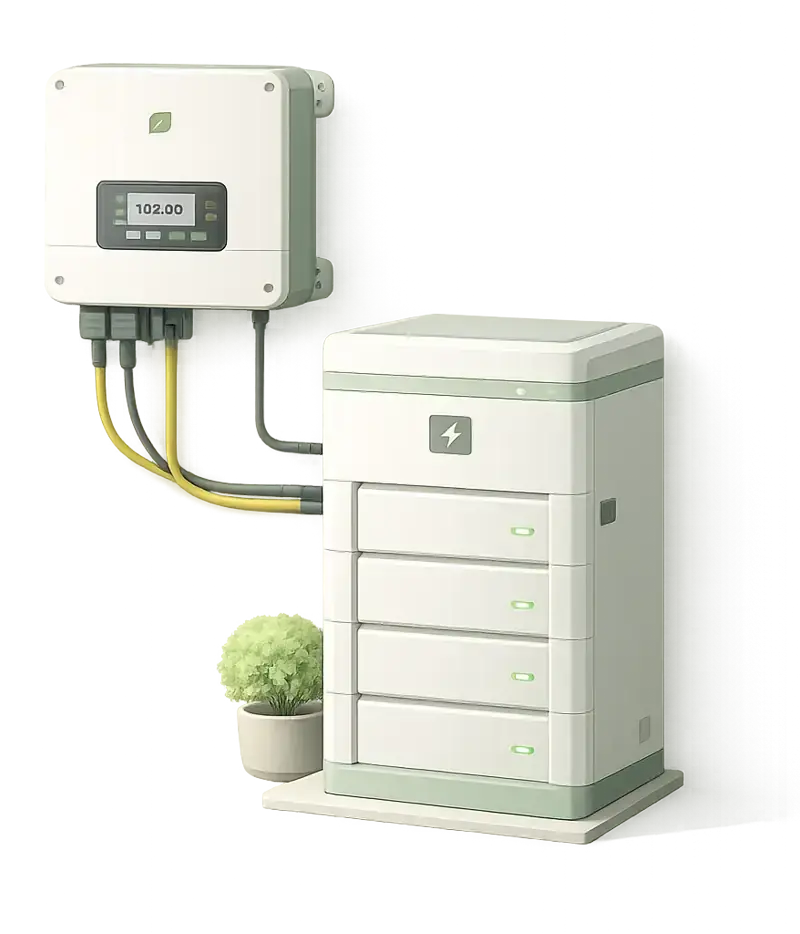
- •Lead-Acid Replacement Cost: ₹12,000 – ₹15,000 (every 3 years)
- •Lithium Upgrade Cost: ₹40,000 – ₹60,000 (lasts 10-12 years)
- •Ideal For: Homes with 2+ power cuts/day or solar seekers
- •Payback Period: 4–8 years depending on usage frequency
- •Long-term Value: Lithium offers 2–3x lower cost per cycle than Lead-acid.
You are sitting in your living room in Dwarka or Noida Extension during a typical Indian summer afternoon. Suddenly, the power goes out. You hear the familiar loud 'beep' of your inverter, but within 20 minutes, the fan slows down, the lights flicker, and the system dies. Your lead-acid battery, barely three years old, has given up again.
This is a story played out in millions of Indian households. Naturally, the first thought is: "Is it time to finally replace my inverter battery with lithium?"
With the rise of electric vehicles and the PM Surya Ghar Yojana, lithium technology is no longer a futuristic concept—it is here. But at 3x the upfront cost of a traditional battery, is a lithium battery upgrade worth it for the average Indian home?
At Bridgeway Power, with 35+ years of electrical lineage, we believe in honest engineering over marketing hype. This guide breaks down the real math, the hidden costs, and the specific scenarios where upgrading makes financial sense—and where it doesn't.
The Financial Crossroads: Lithium vs. Lead-Acid
If your current inverter battery is due for replacement, you are at a crossroads. You can either spend ₹13,000 on a new tubular battery or invest ₹50,000 in a lithium (LFP) system.
The lithium battery upgrade cost in India is high, but the "cost per cycle" is where the story changes. A lead-acid battery typically survives 500–800 cycles, whereas a quality Lithium Ferro Phosphate (LFP) battery offers 6,000 cycles at 85% depth of discharge.
Table 1: Upgrade Scenarios – When to Switch?
| Feature | Lead-Acid Replacement | Lithium Upgrade | Verdict |
|---|---|---|---|
| Upfront Cost | ₹12,000 – ₹15,000 | ₹40,000 – ₹60,000 | Lead-Acid wins on initial price. |
| Lifespan | 2.5 – 3.5 Years | 10 – 12 Years | Lithium lasts 3-4x longer. |
| Maintenance | Distilled water topping every 3 months | Zero maintenance | Lithium is "set and forget." |
| Charging Speed | 8 – 10 Hours | 2 – 3 Hours | Lithium is better for back-to-back cuts. |
| Efficiency | ~75% (Energy lost as heat) | ~95% (Almost zero loss) | Lithium saves on charging units. |
The Honest Answer: An upgrade to lithium battery is worth it in India if you view it as a 10-year investment. If you are looking for the cheapest way to keep the lights on for the next 24 months, lead-acid remains the practical choice.
Total Cost of Ownership (10-Year Horizon)
To understand the lithium battery ROI in India, you must look beyond the first year. In a 10-year window, you will likely replace your lead-acid battery three times.
Table 2: 10-Year Cost Comparison
| Year | Lead-Acid Path (Tubular 150Ah) | Lithium Path (LFP 2.5kWh - 5kWh) |
|---|---|---|
| Year 0 | ₹14,000 (Purchase) | ₹55,000 (Purchase) |
| Year 3 | ₹14,000 (Replacement #1) | ₹0 |
| Year 6 | ₹14,000 (Replacement #2) | ₹0 |
| Year 9 | ₹14,000 (Replacement #3) | ₹0 |
| Total Spent | ₹56,000 | ₹55,000 |
| Operational State | Constant water topping, acid fumes | Silent, clean, wall-mounted |
Over 10 years, the costs equalize. However, the Lithium user enjoyed 10 years of fast charging and consistent backup, while the Lead-acid user dealt with declining performance every 18 months and the mess of distilled water.
The Payback Period: Usage Matters
Not all homes are equal. The payback period for solar and batteries depends heavily on how often the battery is cycled. If you live in a zone with frequent power cuts (like parts of Gurgaon or rural NCR), your ROI is much faster.
Table 3: Break-even Analysis by Usage Frequency
| Power Cut Frequency | Break-even Point | Recommendation |
|---|---|---|
| Severe (2+ cuts/day) | 4 – 5 Years | Strong Buy. Lead-acid will fail fast here. |
| Moderate (3-4 cuts/week) | 6 – 7 Years | Recommended. Good balance of cost and comfort. |
| Rare (1-2 cuts/month) | 9 – 10 Years | Wait. A simple lead-acid replacement is better. |
Why Solar + Lithium is the "Holy Grail"
While a standalone lithium battery is a cost for convenience, combining it with a hybrid solar system transforms it into an investment.
When you add solar panels (specifically TOPCon Mono PERC panels), the lithium battery allows you to store excess solar energy during the day to use at night. Lead-acid batteries struggle with this because they cannot handle daily deep discharges without dying within a year.
Real Example: The Gurgaon 3BHK Bungalow
- Location: Sushant Lok, Gurgaon
- Problem: Monthly bill of ₹8,000 and frequent 1-hour power cuts.
- System: 5kW Solar + 5kWh Lithium Battery.
- Outcome: The home now runs the fridge, lights, and one 1.5-ton AC on battery during power cuts. Since the lithium battery charges from solar, the owner saves ~₹5,000/month on electricity bills.
- Calculated ROI: The savings on electricity plus the avoided cost of three battery replacements mean the system pays for itself in just under 5 years.
Talk to a solar engineer — not a salesperson
Check whether we install in your area, then get your answer on WhatsApp. No forms, no call centre.
What would solar save on YOUR bill?
5 Features You Only Get with Lithium
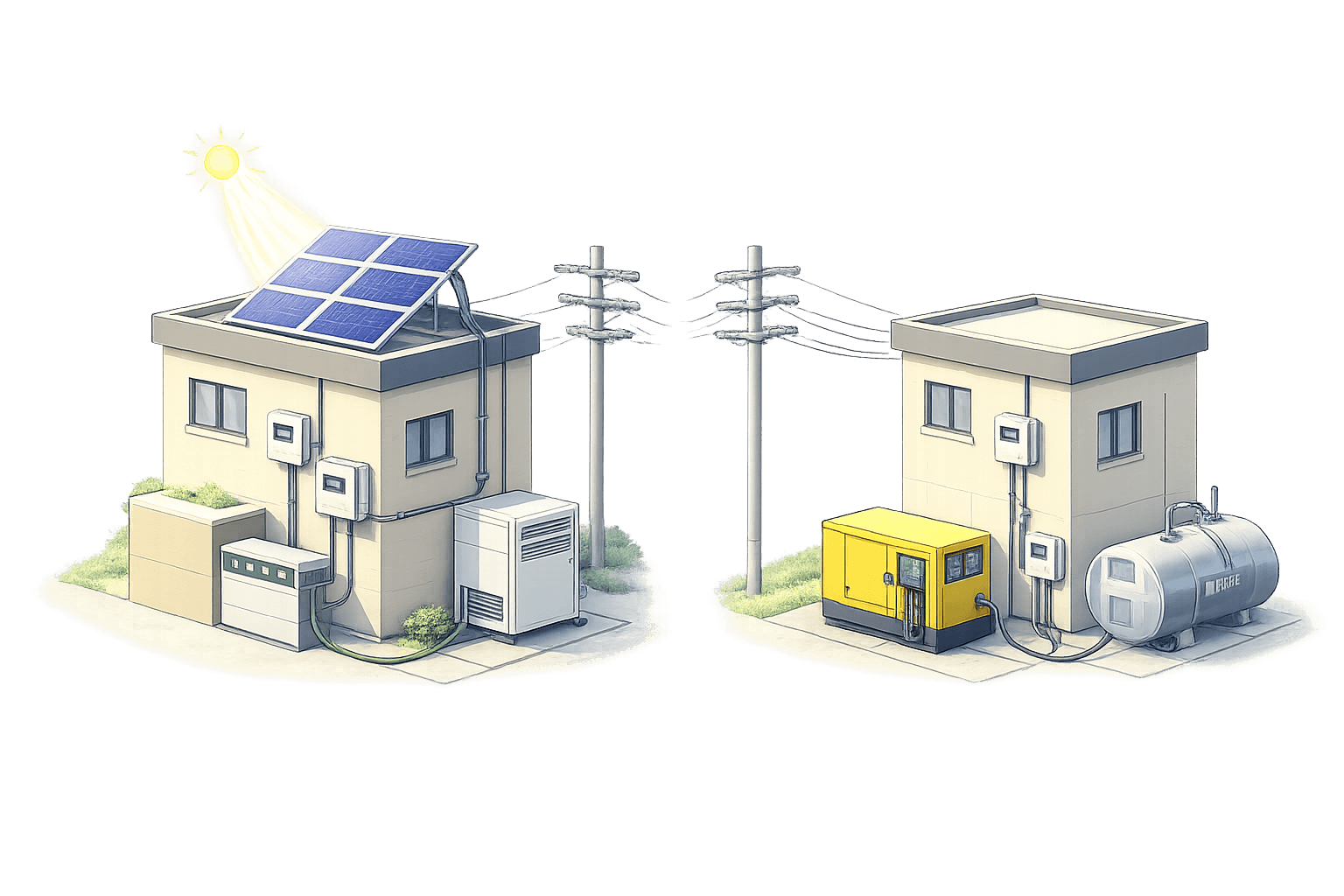
Upgrading isn't just about the money; it's about the lifestyle change. Is lithium battery worth it for luxury and convenience? Absolutely.
- Wall Mounting & Space Saving: A 5kWh lithium battery is roughly the size of a carry-on suitcase and can be mounted on the wall. Lead-acid batteries require floor space and heavy trolleys.
- Fast Charging: Lithium can charge from 0% to 80% in 2 hours. If you have a power cut, and the electricity returns for only a short window, lithium will be ready for the next cut. Lead-acid needs 8–10 hours to recover.
- No Toxic Fumes: Lead-acid batteries release small amounts of hydrogen and lead particles during charging. Lithium is sealed and safe for indoor installation near bedrooms.
- Full Discharge Capability: You can use 90% of a lithium battery's capacity safely. For a lead-acid battery, using more than 50% significantly reduces its life.
- Smart Monitoring: Most modern lithium batteries come with Wi-Fi/Bluetooth. You can check exactly how many minutes of backup are left via a mobile app.
When You Should NOT Upgrade
At Bridgeway Power, we don't believe in selling what you don't need. You should probably skip the lithium upgrade if:
- Your monthly bill is under ₹2,000: Your energy consumption is too low to justify the ₹50,000+ spend.
- You have zero power cuts: If your grid is 99% stable, your battery is just an expensive paperweight.
- You are on a tight budget: If spending ₹50,000 today puts a strain on your finances, stay with lead-acid. It is a proven, reliable technology for basic needs.
Financing Your Upgrade
We understand that the upfront lithium battery upgrade cost in India can be a barrier. That is why we partner with various institutions to make it accessible:
- For residential solar + battery setups, the SBI PM Surya Ghar Loan offers excellent rates.
- Private partners like ECOFY Solar Financing and Aerem Solar Finance provide quick, paperless EMI options for rooftop systems.
- National banks like PNB and Canara Bank also offer dedicated solar schemes.
All these partners are equally valued and provide different benefits depending on your CIBIL score and documentation.
Conclusion: Should You Make the Switch?
The decision to upgrade to a lithium battery should be calculated, not impulsive.
- Upgrade if: You are installing solar, you have frequent power cuts, or you hate the mess of battery maintenance.
- Stay with Lead-acid if: You want the lowest possible cost for occasional backup and don't mind the 3-year replacement cycle.
Bridgeway Power has been serving Delhi NCR for 35+ years, installing over 25 MW of solar capacity. We don't just sell batteries; we design energy solutions that last a decade.
Ready to see if lithium fits your home? Get a Free Solar & Battery Consultation today.
FAQ
Is it possible to replace my old inverter battery with a lithium one?
Yes, but you usually need to change the inverter as well. Traditional inverters are designed for the charging profile of lead-acid (slow, steady). Lithium batteries require a specific charging voltage and a Communication Port (BMS) to ensure safety and long life. Using a standard inverter with a lithium battery can void the warranty and lead to safety risks.
How much does a 5kWh lithium battery cost in India for 2026?
A high-quality 5kWh Lithium Ferro Phosphate (LFP) battery with a built-in Battery Management System (BMS) typically costs between ₹50,000 and ₹70,000, including GST. Prices may vary based on the brand, warranty terms, and whether it includes smart monitoring features.
Does a lithium battery require distilled water?
No, lithium batteries are completely sealed and maintenance-free. They do not require any water topping, cleaning of terminal corrosion, or specific ventilation for acid fumes. This makes them ideal for indoor installation in apartments and builder floors.
Can I run my AC on a lithium battery during a power cut?
Yes, a lithium battery can handle high discharge rates better than lead-acid. A 5kWh system can typically run a 1.5-ton inverter AC for 2–3 hours. However, you must ensure your inverter capacity (kVA) is high enough (usually 5kVA or more) to handle the AC’s compressor load.
Is lithium battery technology safe for Indian summers?
Yes, modern Lithium Ferro Phosphate (LFP) chemistry is extremely stable and has a high thermal runaway temperature (unlike the NMC batteries used in some older electric scooters). When installed with a proper BMS in a ventilated area, they are perfectly safe even in temperatures exceeding 45°C.
What is the ROI of a lithium battery in India?
If you have 2 or more power cuts per day, the ROI is typically 4–5 years. This is calculated by avoiding the cost of three lead-acid battery replacements over 10 years and the increased efficiency in charging (lithium is ~95% efficient vs ~75% for lead-acid). If combined with solar, the ROI improves further through lower electricity bills.
Every 1 kW of solar on your roof offsets 1.5 tonnes of CO₂ per year
That's 40 trees planted — every year, for 25 years.
A typical 5 kW home system offsets 187 tonnes of carbon over its lifetime. That's equivalent to taking 8 cars off the road.
See your impact →How much can you save with solar?
Enter your electricity bill → get system size, subsidy amount & payback period
Get StartedLiked this article? Get a free solar quote
Tell us about your rooftop — we'll call with exact savings for your home.
Related Articles
Net Metering in India: How to Sell Solar Power Back to the Grid
Learn how net metering in India allows you to sell solar power back to the grid. Discover state policies, savings examples, and how to reduce your bill by 90%.
Read moreWhat Is Captive Open Access Solar (100% Equity Model)
Learn how Captive Open Access Solar (100% Equity Model) helps Indian businesses cut electricity costs by 40% using off-site solar plants. Guide on rules, savings & ROI.
Read moreSolar Installation Cost in Delhi NCR 2026: 3 kW at ₹1.32L net
Updated 2026 guide to solar costs in Delhi NCR. Learn about PM Surya Ghar subsidies, system pricing from 1kW-10kW, and how to reach zero electricity bills.
Read moreRelated guides
Delhi Electricity Rate 2026
BSES & Tata Power per-unit rates, PPAC, subsidy — sourced from DERC.
ExploreDelhi Solar Policy 2026
Free rooftop solar up to 3 kW for homes under 400 units. Eligibility & apply.
ExploreSolar Panel Price in Delhi
Live 2026 rooftop prices in Delhi after ₹1.56L subsidy. 1,200+ installs.
ExploreSolar Company in Gurgaon
Gurgaon's rooftop solar installer — 800+ systems, ₹78K PM Surya Ghar subsidy.
ExploreSolar Company in Noida
Noida & Greater Noida rooftop solar — 500+ installs, ₹1.08L stacked subsidy.
ExploreSolar Panel Price in Faridabad
Live 2026 Faridabad prices after ₹78K PM Surya Ghar subsidy. 350+ homes.
Explore