
By Kajal Rajpoot · Reviewed by Arshi Chadha, Founder
Why Most People Overpay for Inverter Batteries in India
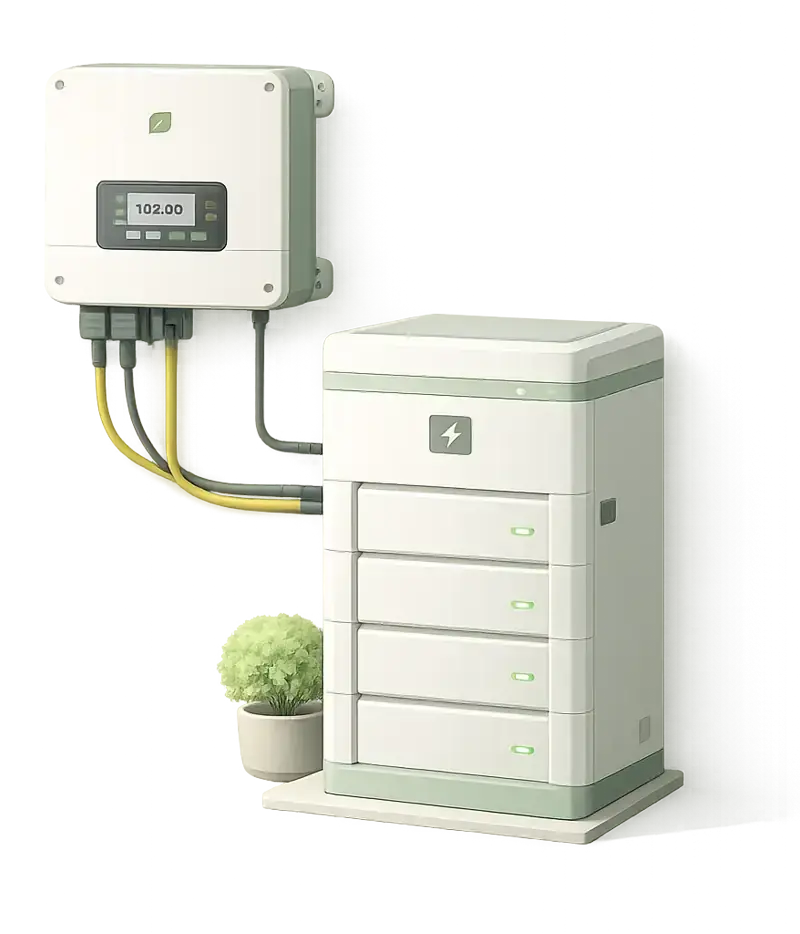
- •Lead-Acid Cycle: ₹12,000–₹18,000 every 3-4 years.
- •10-Year Waste: ~₹48,000 on just battery replacements.
- •The Alternative: Solar + Lithium (Backup + ₹0 Electricity Bills).
- •LFP Lifespan: 10–12 years vs. 3 years for Lead-Acid.
Imagine it’s a sweltering July afternoon in Delhi. The power goes out. You wait for the familiar 'beep' of your inverter, but instead, the fan stutters and stops. Your inverter battery, barely three years old, has died again. You call the local dealer, and within an hour, he’s at your door with a "heavy-duty" 200Ah tall tubular battery, charging you ₹18,000.
You pay it because you need the cooling. But here’s the cold truth: you just overpaid by at least 40%, and in another 36 months, you’ll be doing it all over again.
The Indian inverter battery market is built on a cycle of "planned obsolescence" and information asymmetry. While we’ve upgraded our phones every two years and moved from petrol to EVs, the average Indian home is still stuck in the 1990s lead-acid battery trap. In this guide, we’ll expose why the inverter battery price India overpay phenomenon happens and how you can break the cycle.
The Information Asymmetry: Why You Pay More Than You Should
The primary reason for the inverter battery price India overpay is a lack of price transparency. Most consumers buy batteries from local "battery wallahs" or electrical shops under duress (during a power cut). Dealers take advantage of this urgency.
The Markup Chain: From Factory to Bedroom
When you buy an inverter battery, you aren't just paying for lead and plastic. You are paying for a multi-layered distribution network.
| Battery Stage | Estimated Price (150Ah Tall Tubular) | Who Profits? |
|---|---|---|
| Manufacturing Cost | ₹5,000 – ₹7,000 | Factory / Raw Material |
| Wholesale / Online Price | ₹9,500 – ₹13,000 | Stockists / Aggregators |
| Retail / Dealer Price | ₹14,000 – ₹18,000 | Local Shops (Highest Margin) |
| Scrap Value (Old Battery) | ₹2,500 – ₹3,500 | Dealer (Often under-reported to you) |
The dealer often quotes a high price but "generously" offers to take your old battery for ₹2,000, when its actual scrap value might be ₹3,500. This is a classic inverter battery scam India tactic that inflates the dealer's profit margin.
The 'Tall Tubular' vs. 'Size' Myth: Are You Being Upsold?
Every inverter battery buying guide India usually recommends "the biggest battery possible." Dealers love selling 200Ah or 220Ah batteries because the margins are higher. But do you actually need it?
Engineering vs. Upselling
A 150Ah battery holds roughly 1.8 units (kWh) of electricity. If you are only running 3 fans and 4 LED bulbs (approx. 250 Watts), a 150Ah battery will give you over 5 hours of backup. Most urban areas in the NCR region rarely see power cuts longer than 2 hours.
Buying a 200Ah battery for a 2-hour power cut is like buying a 100-liter fuel tank for a car that only drives 5km a day. It’s extra weight and extra cost with no actual utility. This is a major factor in why people overpay for inverter batteries in India.
The Warranty Trap: Reading the Fine Print
"60 Months Warranty!" the sticker screams in bold red letters. But if you read the fine print on the warranty card (which most people don't), the reality is very different.
Most lead-acid batteries follow a Pro-Rata warranty model:
- 0-24 Months: Full replacement (Free).
- 25-60 Months: Pro-rata discount.
How Pro-Rata works: If your battery fails in month 48, the company won't give you a free battery. They will give you a "discount" on the current MRP of a new battery. Since MRP is always much higher than the actual selling price, you often end up paying almost the full market price for the "replacement" battery anyway.
The Replacement Treadmill: The Invisible Cost of "Cheap" Backup
Most people focus on the inverter battery price India today, but they ignore the inverter battery replacement cost India over a decade. Lead-acid batteries are chemically designed to degrade. Heat, deep discharge, and lack of distilled water topping (especially in North Indian summers) kill them in 3–4 years.
Table: The 10-Year Lead-Acid Treadmill
| Year | Action | Cost (Estimated) |
|---|---|---|
| Year 0 | Purchase New Battery | ₹14,000 |
| Year 3.5 | Replacement 1 | ₹14,000 |
| Year 7.0 | Replacement 2 | ₹14,000 |
| Year 10.5 | Replacement 3 | ₹14,000 |
| Total 10-Year Cost | Only Backup (No Savings) | ₹56,000 |
By the end of 10 years, you have spent nearly ₹60,000 just to keep the lights on during power cuts. You didn't save a single rupee on your electricity bill. In fact, your inverter increased your bill because charging a lead-acid battery is only about 70-80% efficient.
Breaking the Cycle: Solar + Lithium-Ion
If your current inverter battery is dying, this is the most critical time to decide: do you want to keep paying the "battery tax" every 3 years, or do you want to invest in a permanent solution?
A home solar battery system using Lithium Ferrophosphate (LFP) chemistry changes the math entirely.
Comparing the Options: Lead-Acid vs. Solar + Lithium
| Feature | Standard Inverter (Lead-Acid) | Solar + Lithium (Hybrid) |
|---|---|---|
| Initial Cost | Low (₹15k–20k) | High (₹3L–5L) |
| Lifespan | 3–4 Years | 10–15 Years |
| Electricity Bill | Increases (Charging cost) | Decreases (Goes to near Zero) |
| 10-Year Return | Negative ₹56,000 | Positive ₹15 Lakh+ Savings |
| Maintenance | High (Water topping) | Zero |
Lithium batteries can handle 6,000+ cycles. In a typical Indian home, that’s 12–15 years of service. When paired with solar panels, you aren't just getting backup; you are turning your roof into a mini-power plant.
Talk to a solar engineer — not a salesperson
Check whether we install in your area, then get your answer on WhatsApp. No forms, no call centre.
What would solar save on YOUR bill?
Real-Life Example: A Delhi Homeowner's Transition
Meet Mr. Sharma from Sushant Lok, Gurgaon. For 12 years, he followed the standard routine. Every 3 summers, his inverter would fail, and he'd spend ₹15,000 on a new battery.
In 2024, when his battery died again, he did the math. Instead of buying a 4th replacement battery, he installed a 5kW Hybrid Solar System.
- Investment: ₹4,50,000 (after PM Surya Ghar subsidy).
- Previous Monthly Bill: ₹8,500.
- New Monthly Bill: ₹500 (Fixed charges).
- Monthly Savings: ₹8,000.
- Annual Savings: ₹96,000.
- Payback Period: Less than 5 years.
For the next 20 years after payback, Mr. Sharma’s electricity and backup are effectively free. Meanwhile, his neighbors are still paying ₹15,000 every 3 years for lead-acid replacements.
How to Choose Inverter Battery (If You Aren't Ready for Solar Yet)
If you must buy a lead-acid battery today, follow these steps to avoid the inverter battery price India overpay trap:
- Calculate Actual Load: Don't let a dealer tell you that you need 200Ah. If your power cuts are short, 150Ah is plenty.
- Check the Manufacturing Month: Never buy a lead-acid battery that has been sitting on a shelf for more than 3 months. Lead-acid batteries self-discharge; a "new" battery that’s 6 months old already has permanent plate damage.
- Buy Online or Compare: Check prices on Amazon or specialized battery portals. Use that price to negotiate with your local dealer.
- Confirm the Scrap Value: Demand at least ₹3,000 for your old 150Ah battery. Don't let them "bundle" it into a confusing discount.
Why Your Installer Stopped Picking Up (The AMC Problem)
Many people overpay initially because they think they are buying "service." But as we've discussed in our article on solar AMC, local battery dealers often disappear when the pro-rata warranty period kicks in because there is no profit in helping you claim a discount.
At Bridgeway Power, we emphasize choosing systems that don't require constant "babysitting." A Solar-powered backup is a "fit and forget" solution compared to the constant maintenance of lead-acid.
Conclusion: Stop the "Battery Tax"
The inverter battery price India overpay issue isn't just about the first transaction; it's about the endless cycle of replacements. For 35+ years, we at Bridgeway Power have seen thousands of homeowners regret the "cheap" lead-acid route once they see the long-term math.
If your inverter battery is showing signs of weakness—smelling like rotten eggs, requiring frequent water toppings, or giving less than 30 minutes of backup—don't just blindly buy another one.
Take a moment to calculate your solar potential. You might find that the money you’re about to "throw away" on a new battery is better spent as a down payment for a system that pays you back every single month.
Ready to break the cycle? Contact Bridgeway Power for a free rooftop solar feasibility study and see how you can replace your "dumb" inverter with a smart solar plant.
Frequently Asked Questions
Why is the online price of inverter batteries so much lower than the dealer price?
Online platforms have lower overheads and work on high volume. Local dealers often mark up prices by 20-30% to cover shop rent and "free" home delivery/installation. Always use online prices as a benchmark for negotiation.
Is a 200Ah battery better than a 150Ah battery for home use?
A 200Ah battery provides more backup time, but it also takes longer to charge and costs more. If your power cuts are less than 3 hours, a 150Ah battery is usually more than enough. A 200Ah battery is often an upsell by dealers to increase their margin.
What is the average lifespan of an inverter battery in India?
In most Indian cities like Noida or Gurgaon, a lead-acid tall tubular battery lasts 3 to 4 years. Poor maintenance (not topping up distilled water) or high ambient temperatures can reduce this to 2 years.
Should I buy a lithium battery for my existing inverter?
Most old-style lead-acid inverters are NOT compatible with lithium batteries because the charging profiles (voltages) are different. To move to lithium, you usually need to upgrade to a lithium-compatible inverter or a Hybrid Solar System.
How do I know if I am overpaying for a battery?
Check the total cost including the "Exchange" value. If the dealer is charging you more than ₹14,000 for a 150Ah tall tubular battery after taking your old battery, you are likely overpaying. The net price should usually be between ₹10,500 and ₹12,500.
Why do batteries fail faster in summer?
Lead-acid batteries involve a chemical reaction. High temperatures (above 35°C) accelerate the internal corrosion of the plates and cause the electrolyte to evaporate faster. This is why most batteries "die" exactly when you need them most — in June and July.
Every 1 kW of solar on your roof offsets 1.5 tonnes of CO₂ per year
That's 40 trees planted — every year, for 25 years.
A typical 5 kW home system offsets 187 tonnes of carbon over its lifetime. That's equivalent to taking 8 cars off the road.
See your impact →How much can you save with solar?
Enter your electricity bill → get system size, subsidy amount & payback period
Get StartedLiked this article? Get a free solar quote
Tell us about your rooftop — we'll call with exact savings for your home.
Related Articles
Net Metering in India: How to Sell Solar Power Back to the Grid
Learn how net metering in India allows you to sell solar power back to the grid. Discover state policies, savings examples, and how to reduce your bill by 90%.
Read moreWhat Is Captive Open Access Solar (100% Equity Model)
Learn how Captive Open Access Solar (100% Equity Model) helps Indian businesses cut electricity costs by 40% using off-site solar plants. Guide on rules, savings & ROI.
Read moreSolar Installation Cost in Delhi NCR 2026: 3 kW at ₹1.32L net
Updated 2026 guide to solar costs in Delhi NCR. Learn about PM Surya Ghar subsidies, system pricing from 1kW-10kW, and how to reach zero electricity bills.
Read moreRelated guides
Delhi Electricity Rate 2026
BSES & Tata Power per-unit rates, PPAC, subsidy — sourced from DERC.
ExploreDelhi Solar Policy 2026
Free rooftop solar up to 3 kW for homes under 400 units. Eligibility & apply.
ExploreSolar Panel Price in Delhi
Live 2026 rooftop prices in Delhi after ₹1.56L subsidy. 1,200+ installs.
ExploreSolar Company in Gurgaon
Gurgaon's rooftop solar installer — 800+ systems, ₹78K PM Surya Ghar subsidy.
ExploreSolar Company in Noida
Noida & Greater Noida rooftop solar — 500+ installs, ₹1.08L stacked subsidy.
ExploreSolar Panel Price in Faridabad
Live 2026 Faridabad prices after ₹78K PM Surya Ghar subsidy. 350+ homes.
Explore