
By Mahendra Singh · Reviewed by Arshi Chadha, Founder
How to Read Your BSES Solar Net Metering Bill
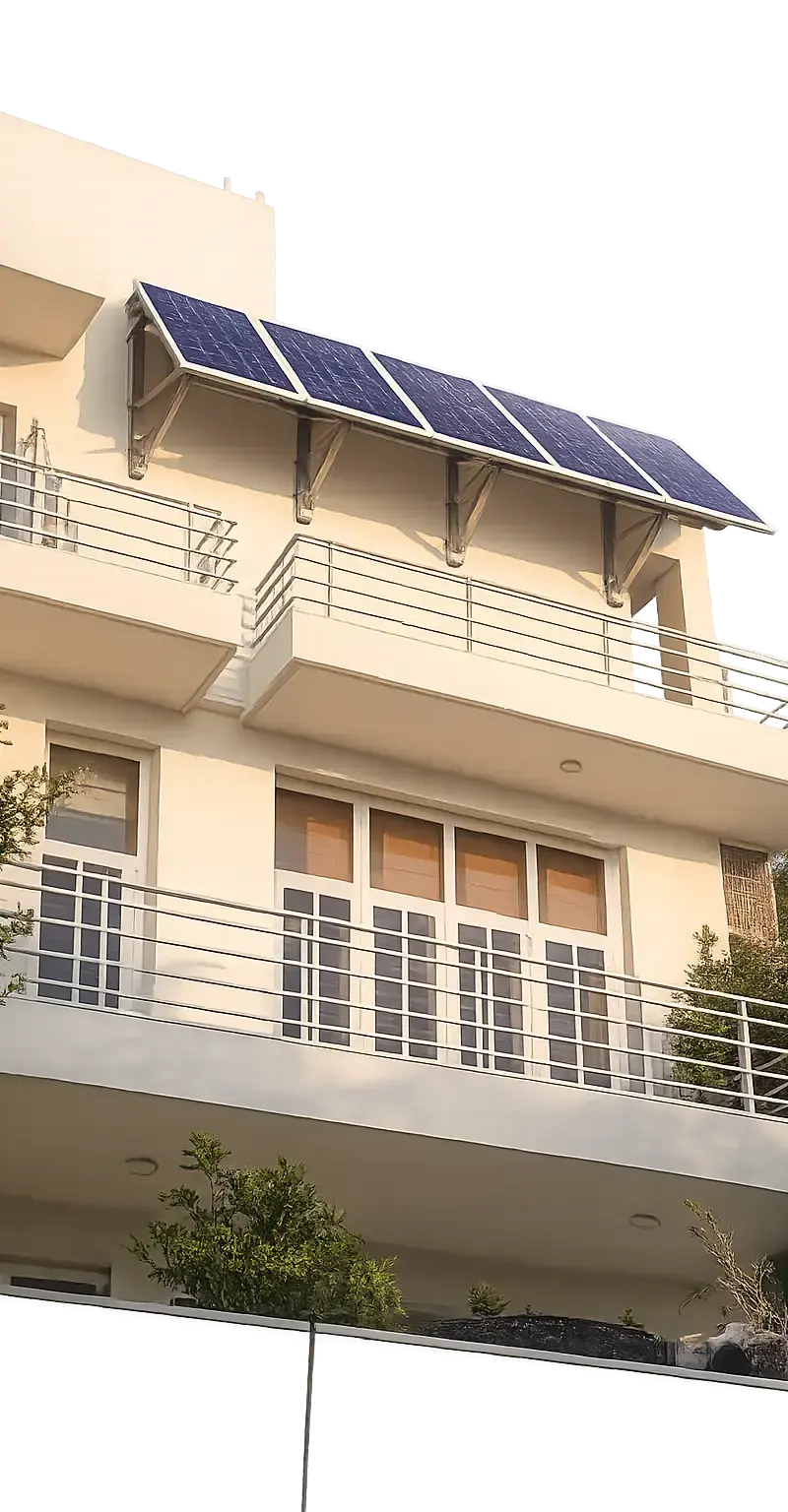
If you’ve recently installed a rooftop solar system in Delhi, receiving your first bill from BSES Rajdhani (BRPL) or BSES Yamuna (BYPL) can be a confusing experience. You might see new terms like "Export Units," "Net Energy," and "Adjusted Units." Many homeowners in areas like solar in Dwarka or solar in Janakpuri expect their bill to instantly drop to zero, only to find mysterious surcharges still lingering.
Understanding a solar net metering bill example is the first step toward auditing your system’s performance. With the recent volatility in the Delhi electricity bill per unit price, knowing how to read your bill is no longer just a curiosity—it’s a financial necessity. This guide breaks down every line item of your BSES net metering bill so you can verify your savings with 100% confidence.
What is Net Metering in the Delhi Context?
Before diving into the bill, let’s define the mechanism. Net metering allows you to send excess electricity generated by your solar panels back to the grid. In return, your DISCOM (BSES) provides you with "energy credits."
When your solar panels produce more than you consume (typical on sunny afternoons), the meter runs backward. When you need power at night, you pull from the grid. At the end of the month, you are only billed for the "Net" amount. If you’ve exported more than you’ve imported, those units are "banked" for the next month.
Visual Breakdown: Import vs. Export Units
When you look at your BSES bill post-solar, the most critical section is the Meter Reading Table. A standard solar-connected home will have a bidirectional meter (Net Meter) that records three specific parameters:
- Import (kWh): Total energy you consumed from the BSES grid (usually at night or on cloudy days).
- Export (kWh): Surplus solar energy your home didn't use, which was sent back to the grid.
- Net Energy (kWh): The mathematical difference (Import - Export).
Export Offset Solar Meaning
In industry terms, this is often called the export offset. It means the units you send to the grid are used to cancel out the units you took from the grid on a 1:1 basis. For example, if the current bses unit price in delhi is ₹8.00 per unit for the highest slab, every unit you export saves you exactly ₹8.00 in energy charges.
Sample Calculation: 5kW Solar System Impact
To help you visualize the savings, let’s look at a 5kW rooftop system in Delhi. An average 5kW system in Delhi NCR generates approximately 600 units per month (based on an avg_yield_per_kw of 120 units/month).
| Bill Component | Before Solar (1000 Units Consumed) | After 5kW Solar (600 Units Gen) |
|---|---|---|
| Gross Consumption | 1000 Units | 1000 Units |
| Solar Generation | 0 Units | 600 Units |
| Net Billing Units | 1000 Units | 400 Units |
| Energy Charges (Slab-wise) | ~₹7,500 | ~₹2,200 |
| PPAC Surcharge (~35% - 40%) | ~₹2,800 | ~₹850 |
| Electricity Tax (5%) | ~₹515 | ~₹150 |
| Fixed Charges (5kW load) | ₹625 | ₹625 |
| Total Bill Amount | ₹11,440 | ₹3,825 |
Note: In this solar net metering bill example, the user saves over ₹7,600 monthly. You can use our Solar Calculator to estimate these savings for your specific bill amount.
Calculating the Monetary Value of Banked Units
One of the most common questions we hear at Bridgeway Power is: "What happens if I export 800 units but only import 500?"
In Delhi, the net_metering_settlement_delhi rules state that surplus units are carried forward month-to-month within the same financial year.
The Banking Math
- Month 1: Export 800, Import 500. Net = -300 units. You pay only fixed charges.
- Month 2: Export 400, Import 700. Net = 300 units.
- Adjustment: The 300 banked units from Month 1 are applied to Month 2. Your billable energy units become Zero.
Financial Year Settlement
On March 31, if you still have a surplus (say 1,000 units), BSES will not credit you at the retail rate of ₹8/unit. Instead, they pay the Average Power Purchase Cost (APPC), which is significantly lower (typically around ₹3.50 - ₹4.00 per unit). This is why we always recommend sizing your system to cover your annual consumption rather than over-sizing it for profit.
Talk to a solar engineer — not a salesperson
Enter your pincode and monthly bill. If we install in your area, an engineer answers on WhatsApp with your numbers.
Translate your bill into a system size
Fixed Charges and Surcharges After Solar
Many users are surprised to see a bill of ₹800–₹1,200 even when their "Net Units" are zero. This happens because solar only offsets the Energy Charges (Variable). It does not eliminate:
- Fixed Charges: Based on your sanctioned load (e.g., ₹125/kW/month for BSES LT Domestic). Even with solar, if you have a 5kW load, you pay ₹625/month.
- Surcharges (PPAC & Pension Trust): These are calculated as a percentage of your energy charges. When your energy charges drop to zero, these surcharges also drop to zero. However, they are still applied to any "Net" units you consume.
- Electricity Tax: In Delhi, this is 5% of the total of Energy Charges + Fixed Charges + PPAC.
Impact of Recent Surcharge Increases on ROI

As of June 2026, the delhi_ppac_approved_monthly_2026 shows that surcharges have reached peak levels:
- BRPL: 35.83%
- BYPL: 40.71%
- TPDDL: 36.33%
When the bses unit price in delhi increases due to these surcharges, the "Value" of every unit your solar panel produces goes up. If your base rate is ₹8 and the surcharge is 40%, you are actually saving ₹11.20 per unit. This has accelerated the payback period for rooftop solar in Delhi from 5 years down to approximately 3–4 years.
Real-Life Example: A Bungalow in Vasant Kunj
Consider a family in solar in Vasant Kunj with a monthly bill of ₹12,000.
- They installed a 7kW system with Bridgeway Power.
- In May 2026, they imported 1,200 units and exported 900 units.
- Net Billable Units: 300.
- Without solar, they would have been billed for 1,200 units in the highest tax bracket.
- With solar, their bill dropped to roughly ₹3,500 (inclusive of fixed charges and PPAC on the remaining 300 units).
- Annual ROI: Including the Delhi Solar GBI of ₹2-3 per unit, their total "earnings + savings" exceeded ₹1.1 Lakh in the first year.
Common Red Flags on Your Net Metering Bill
If you've installed solar but don't see the savings, check for these issues:
- No Export Column: Your DISCOM may not have updated the meter profile to "Net Metering."
- High "Adjusted Units": This could mean your system is underperforming. Reference our guide on solar panel low generation to troubleshoot.
- Sanctioned Load Mismatch: If your solar capacity is higher than your sanctioned load, you might face penalties or find that net metering isn't approved.
Conclusion
Reading your solar net metering bill example properly is the only way to ensure you are getting the full benefit of your investment. With Solar in Delhi becoming more lucrative due to rising grid tariffs and the PM Surya Ghar Yojana, now is the time to go green.
At Bridgeway Power, we don't just install panels; we handle the entire net metering process with BSES and Tata Power. Ready to slash your bill? Get a free quote today or use our Solar Calculator to see how much you can save.
FAQ
Does BSES pay me cash every month for extra solar units?
No, extra units are carried forward as a "credit balance" in your units account. You only receive a monetary payment (at the APPC rate) once a year after the financial year ends on March 31.
Why is my BSES bill not zero even though I exported more than I imported?
You will always have to pay the "Fixed Charges" based on your sanctioned load and the "Electricity Tax" associated with those charges. Net metering only offsets the variable "Energy Charges."
What is the current bses unit price in delhi for residential users?
The delhi electricity bill per unit price varies by slab. For 0-200 units, it is roughly ₹3.00, but for consumption above 800 units, it goes up to ₹8.00 per unit, excluding surcharges and taxes.
How do I know if my Net Meter is working correctly?
Check your inverter's app and compare the "Export" value with the "Export" reading on your BSES bill. There might be a slight 2-5% difference due to transmission losses, but any larger gap indicates a metering or wiring issue.
Can I increase my solar capacity later and update my net metering bill?
Yes, but you must apply for a "Load Enhancement" and a revised net metering agreement with BSES. This is essential to ensure your excess generation is legally credited to your account.",excerpt:
Every 1 kW of solar on your roof offsets 1.5 tonnes of CO₂ per year
That's 40 trees planted — every year, for 25 years.
A typical 5 kW home system offsets 187 tonnes of carbon over its lifetime. That's equivalent to taking 8 cars off the road.
See your impact →How much can you save with solar?
Enter your electricity bill → get system size, subsidy amount & payback period
Get StartedTranslate your bill into a system size
Related Articles
What Is Captive Open Access Solar (100% Equity Model)
Learn how Captive Open Access Solar (100% Equity Model) helps Indian businesses cut electricity costs by 40% using off-site solar plants. Guide on rules, savings & ROI.
Read moreHow Rooftop Solar Can Eliminate Your Electricity Bill
Discover how Net Metering and PM Surya Ghar subsidies can reduce your monthly electricity bill to near-zero. Learn about system sizing, costs, and real-world savings.
Read moreSolar Subsidy in Uttar Pradesh 2026: ₹1,08,000 for Noida, Ghaziabad & Greater Noida
UP's stacked solar subsidy 2026: ₹78,000 central + ₹30,000 UPNEDA state top-up = ₹1.08L. Real PVVNL net-cost math for Noida, Greater Noida, Ghaziabad & Meerut.
Read moreRelated guides
Delhi Electricity Rate 2026
BSES & Tata Power per-unit rates, PPAC, subsidy — sourced from DERC.
ExploreDelhi Solar Policy 2026
Free rooftop solar up to 3 kW for homes under 400 units. Eligibility & apply.
ExploreSolar Panel Price in Delhi
Live 2026 rooftop prices in Delhi after ₹1.56L subsidy. 1,200+ installs.
ExploreSolar Company in Gurgaon
Gurgaon's rooftop solar installer — 800+ systems, ₹78K PM Surya Ghar subsidy.
ExploreSolar Company in Noida
Noida & Greater Noida rooftop solar — 500+ installs, ₹1.08L stacked subsidy.
ExploreSolar Panel Price in Faridabad
Live 2026 Faridabad prices after ₹78K PM Surya Ghar subsidy. 350+ homes.
Explore