
By Vansh Dahiya · Reviewed by Arshi Chadha, Founder
Troubleshooting Low Solar Output: Common Reasons and Fixes
- •Average Generation: 4 units per kW/day (Delhi NCR baseline)
- •Primary Loss Factor: Dust/Soiling (up to 25% drop)
- •Typical Payback: 3–4 years for residential systems
- •Key Solution: Professional AMC and quarterly inverter health checks
If you’ve noticed your solar generation dipping, you aren’t alone. In Delhi NCR, we’ve seen thousands of systems underperform not because the panels are faulty, but because the environment is harsh. We’ve been installing and maintaining systems for 35+ years, and I can tell you that a 5kW system that gave you 25 units a day in March might struggle to hit 18 units in November.
Asking "why are my solar panels not producing enough power" is the right first step. Most installers disappear after the final check is cleared, leaving you with a complex system you don't fully understand. At Bridgeway Power, we manage over 1,300 sites, and 90% of low-output complaints boil down to five specific, fixable issues.
The NCR Reality: Dust, Smog, and Soiling Losses
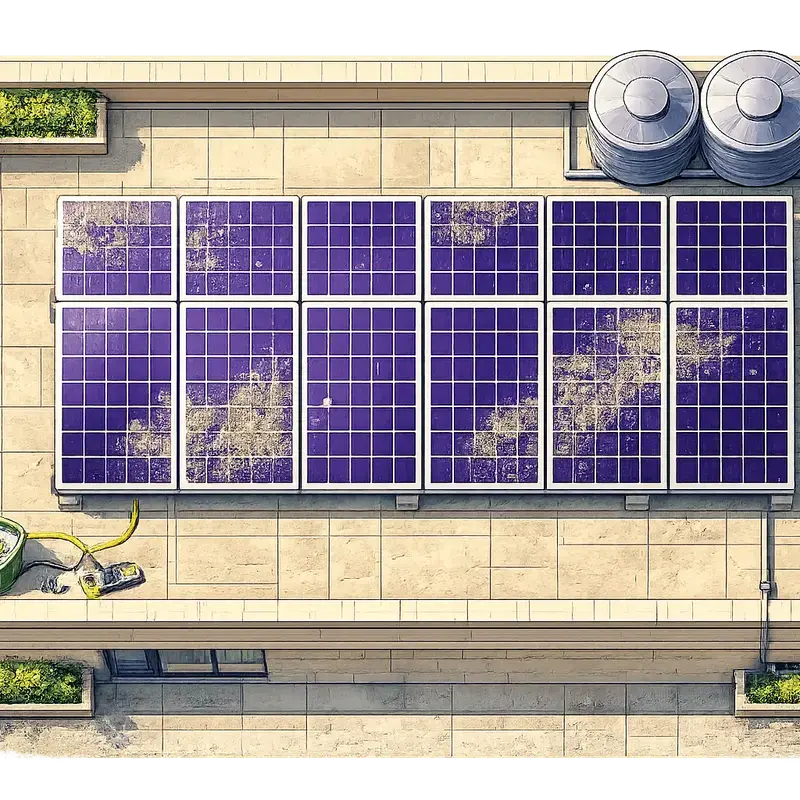
In cities like Noida and Gurgaon, dust is the biggest "solar thief." Unlike European climates where rain washes panels, the fine particulate matter (PM2.5) in North India creates a sticky layer on the glass. This is what we call soiling loss.
Our field data shows that panel soiling loss can hit 25% if you don't clean your panels for just three weeks. If you live near a construction site in Noida Extension or a high-traffic area in Lajpat Nagar, your losses could be even higher.
Cleaning Frequency vs Efficiency Gain
| Cleaning Interval | Observed Efficiency Loss | Recovery After Cleaning |
|---|---|---|
| Weekly | 2–5% | High (98% of peak) |
| Fortnightly (Recommended) | 8–12% | Excellent |
| Monthly | 15–20% | Moderate |
| Quarterly (Neglected) | 25%+ | Low (Stubborn stains) |
Don't just spray water. Hard water causes calcium scaling (white spots) which permanently damages the panel's anti-reflective coating. Use soft water or a dedicated Solar AMC service that uses the right brushes. For more solar panel cleaning tips, avoid cleaning during the afternoon; the thermal shock of cold water on hot glass can cause micro-cracks.
Identifying Shading Issues: The Silent Killer
A common mistake we see during site surveys is ignoring "soft shading." You might think a small shadow from a 1000L water tank or a neighbor's parapet wall doesn't matter because it only covers 5% of the panel.
In reality, shading impact on solar is non-linear. Most panels in India are wired in "strings." If one panel is shaded, it acts like a kink in a garden hose, slowing down the current for the entire string.
What to check:
- New Constructions: Did the house next door add a floor? Even a few inches of shadow in the late afternoon can tank your daily yield.
- Water Tanks: A full 1000L water tank is a permanent shadow fixture. If your panels are too close to it, they won't perform. Check our guide on solar panel weight on roof to understand how to space equipment safely.
- Trees: Fast-growing Neem or Peepal trees often begin to shade panels 2-3 years after installation.
If you have permanent shading that can't be moved, we usually recommend switching to micro-inverters. You can read about how they handle shade in our Enphase 10kWp Gurgaon case study.
Is Your Inverter Clipping or Failing?
The inverter is the brain of your system, and like any brain, it can get overwhelmed. Inverter efficiency loss usually happens due to heat. In Delhi's 48°C summers, an inverter installed in direct sunlight will "derate" (throttle its output) to protect its internal circuits.
How to diagnose inverter issues:
- Clipping: If your generation graph looks "flat-topped" during the afternoon instead of a smooth curve, your inverter is likely undersized for your panel capacity.
- Fault Codes: Check the display for red lights. If you see codes like "Isolation Fault" or "Grid Out of Range," it’s often a wiring issue or a DISCOM voltage fluctuation common in Faridabad.
- Heat Sink Dust: If the cooling fans are choked with dust, the inverter will overheat.
For diagnostic help, see our Solar Inverter Fault Codes & Troubleshooting Guide.
Seasonal Variations in North India
Many homeowners get worried when their winter production drops. It’s important to distinguish between a "fault" and "seasonal reality." In Delhi, the sun sits lower in the sky during winter, and fog/smog significantly reduces light intensity.
Typical Monthly Generation Chart (NCR)
Based on a 1kW system with Tier-1 TOPCon panels.
| Month | Avg. Daily Units | Monthly Total | Notes |
|---|---|---|---|
| January | 2.8 | 84 | High fog/smog impact |
| March | 4.8 | 148 | Peak performance (Clear sky + Cool) |
| June | 4.2 | 126 | Heat derating + Dust |
| August | 3.5 | 108 | Monsoon clouds |
| October | 4.5 | 139 | High clarity post-rain |
| December | 2.5 | 77 | Shortest days |
Use our Solar Calculator to see if your current generation aligns with these regional benchmarks.
Talk to a solar engineer — not a salesperson
Check whether we install in your area, then get your answer on WhatsApp. No forms, no call centre.
What would solar save on YOUR bill?
Real Example: The "Dirty String" in Saket
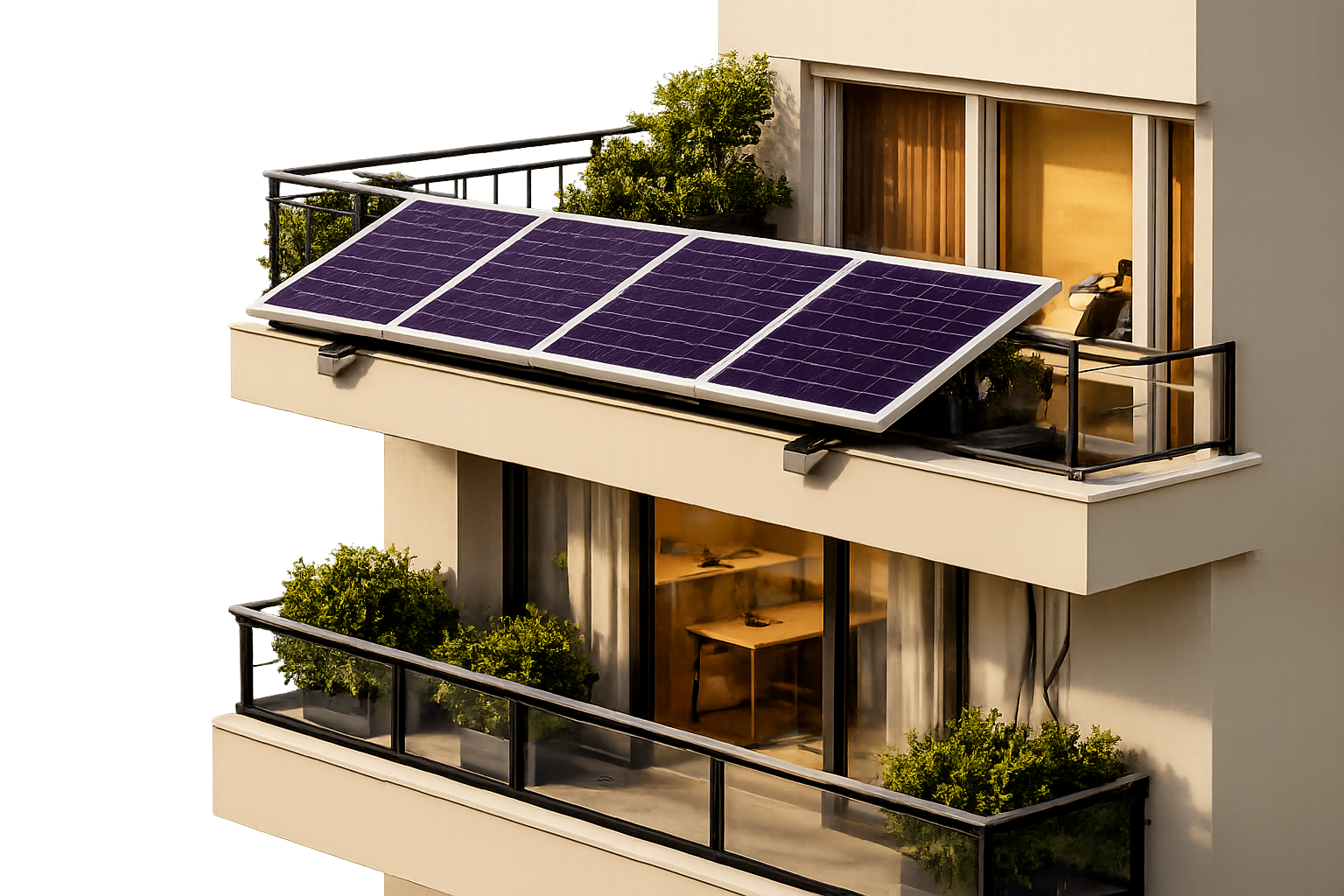
A customer in Saket called us because their 10kW system was only producing 20 units a day in April—it should have been closer to 45.
Upon inspection, we found two things:
- A pigeon nest had accumulated under one corner, and the resulting droppings had "burnt" a small section of a panel (hotspot).
- The string inverter was installed in a balcony with zero airflow, causing it to shut down every day at 1 PM due to overheating.
By moving the inverter to a shaded, ventilated area and replacing the damaged panel under warranty, we brought their generation back to 48 units/day. This is why we include 2 professional cleanings in Year 1 for all our new installs.
The Impact of Cable Losses
We often find installers using undersized DC cables to save costs. If your panels are 50 feet away from your inverter and the cable is too thin, you lose power to heat before it even reaches your home. We stick to 4sqmm or 6sqmm poly-cab DC cables to ensure minimal voltage drop. If you're seeing a steady 10% lower output than your neighbor with the same system, your cables are the prime suspect.
Check your bill against your generation. If you're not sure how, read our guide on how to read your BSES solar net metering bill.
FAQ
Why are my solar panels not producing enough power during the day?
The most common reasons are thick dust accumulation, shading from nearby objects, or the inverter overheating and throttling its output. In Delhi NCR, smog and high PM levels can reduce light penetration by 15-20% even on seemingly sunny days.
How often should I clean my solar panels in Delhi NCR?
For homes in Ghaziabad or Noida Extension, we recommend a water wash every 15 days. During the peak smog season (October–November), weekly cleaning may be necessary to prevent "caking" of pollutants on the glass surface.
Can a single shaded panel stop the whole system?
Yes, in a traditional string inverter setup, a single shaded panel can drag down the performance of every other panel in that string. This is why keeping water tanks and dish antennas away from the solar array is critical during installation.
Does heat affect solar panel production?
Counter-intuitively, yes. Solar panels prefer light, not heat. Once the panel temperature exceeds 25°C, its efficiency begins to drop. On a 45°C Delhi summer day, the panels might be at 70°C, leading to a significant drop in peak voltage.
How do I know if my inverter is the problem?
Check your inverter's mobile app or screen for "Clipping" or "Error" messages. If the generation curve is erratic rather than a smooth bell shape, it usually indicates a loose DC connection or an internal inverter component failure. We offer diagnostic visits starting at ₹1,500 in Delhi NCR.
If your generation has dropped and you can't find the cause, don't wait for the next billing cycle. Most issues like loose connectors or bird droppings can lead to permanent hardware damage if left unaddressed. Get a free quote for a system health check or an AMC plan to ensure your investment keeps paying for itself.
Bridgeway Power has been in the electrical industry since 1997 and the solar space since 2019. We've seen every possible failure mode on Indian roofs—from monkey damage to voltage spikes. Let us help you get your units back.
Every 1 kW of solar on your roof offsets 1.5 tonnes of CO₂ per year
That's 40 trees planted — every year, for 25 years.
A typical 5 kW home system offsets 187 tonnes of carbon over its lifetime. That's equivalent to taking 8 cars off the road.
See your impact →How much can you save with solar?
Enter your electricity bill → get system size, subsidy amount & payback period
Get StartedLiked this article? Get a free solar quote
Tell us about your rooftop — we'll call with exact savings for your home.
Related Articles
Net Metering in India: How to Sell Solar Power Back to the Grid
Learn how net metering in India allows you to sell solar power back to the grid. Discover state policies, savings examples, and how to reduce your bill by 90%.
Read moreWhat Is Captive Open Access Solar (100% Equity Model)
Learn how Captive Open Access Solar (100% Equity Model) helps Indian businesses cut electricity costs by 40% using off-site solar plants. Guide on rules, savings & ROI.
Read moreSolar Installation Cost in Delhi NCR 2026: 3 kW at ₹1.32L net
Updated 2026 guide to solar costs in Delhi NCR. Learn about PM Surya Ghar subsidies, system pricing from 1kW-10kW, and how to reach zero electricity bills.
Read moreRelated guides
Delhi Electricity Rate 2026
BSES & Tata Power per-unit rates, PPAC, subsidy — sourced from DERC.
ExploreDelhi Solar Policy 2026
Free rooftop solar up to 3 kW for homes under 400 units. Eligibility & apply.
ExploreSolar Panel Price in Delhi
Live 2026 rooftop prices in Delhi after ₹1.56L subsidy. 1,200+ installs.
ExploreSolar Company in Gurgaon
Gurgaon's rooftop solar installer — 800+ systems, ₹78K PM Surya Ghar subsidy.
ExploreSolar Company in Noida
Noida & Greater Noida rooftop solar — 500+ installs, ₹1.08L stacked subsidy.
ExploreSolar Panel Price in Faridabad
Live 2026 Faridabad prices after ₹78K PM Surya Ghar subsidy. 350+ homes.
Explore