
By Arshi Chadha, Founder · Bridgeway Power
Solar Subsidy in Delhi 2026: ₹1,56,000 Stacked + GBI Earnings
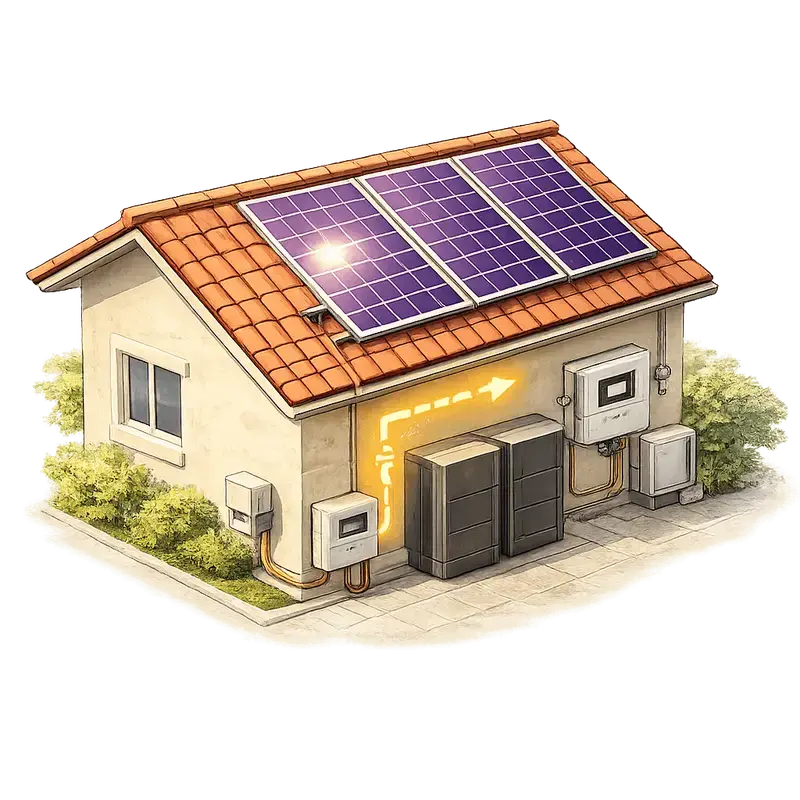
Quick answer
Delhi offers the strongest rooftop solar subsidy stack in India in 2026: the PM Surya Ghar central subsidy of up to Rs.78,000 plus a Delhi state capital subsidy of Rs.78,000 (Rs.26,000 per kW), totalling Rs.1,56,000 for a 3 kW system. Homes using up to 400 units a month with systems up to 3 kW can have the remaining cost gap covered by the Delhi government, making the installation effectively free. Delhi also pays a generation-based incentive for five years.
| Component | Amount | Condition |
|---|---|---|
| Central (PM Surya Ghar) | Up to Rs.78,000 | Residential, via DISCOM |
| Delhi state capital subsidy | Up to Rs.78,000 (Rs.26,000/kW) | Delhi domestic consumers |
| Cost-gap top-up | Remaining tender cost | Up to 400 units/month, up to 3 kW |
| Generation incentive | Rs.3/unit (up to 3 kW), Rs.2/unit above | 5 years |
If you live in Delhi, the solar subsidy Delhi 2026 equation is the most generous in the country — and it improved sharply on 2 September 2026, when the Delhi Cabinet approved the second amendment to the Delhi Solar Energy Policy 2023, raising the state top-up from ₹30,000 to ₹78,000. Most people stop at hearing "₹78,000 subsidy." The real picture is a stack of three separate cash benefits: the central PM Surya Ghar DBT, the Delhi state capital top-up, and a five-year Generation-Based Incentive (GBI). Together they are worth ₹1,56,000 upfront plus another ₹15,000–₹20,000 over five years in GBI on a 3 kW system.
Bridgeway Power — 35+ years in NCR and 5,000+ installations — files all three for every customer. Below is the exact math for 2026.

Understanding the Stacked Subsidy in Delhi
A rooftop solar system in Delhi earns three separate cash benefits. They are not mutually exclusive — you get all three.
1. PM Surya Ghar (Central — Direct to Bank Account)
| System Capacity | Central Subsidy |
|---|---|
| 1 kW | ₹30,000 |
| 2 kW | ₹60,000 |
| 3 kW and above | ₹78,000 (maximum) |
Source: pmsuryaghar.gov.in
2. Delhi State Top-Up (Capital Subsidy)
Under the Delhi Solar Energy Policy 2023 (Second Amendment, approved 2 September 2026), the Delhi government adds ₹26,000 per kW, capped at ₹78,000 for residential consumers. It is paid in addition to the central CFA after net meter installation and is credited via the Delhi Solar Portal.
Zero-upfront route: if your household averages up to 400 units/month, the Delhi government additionally covers the gap between the combined ₹1,56,000 subsidy and the tendered cost of a system up to 3 kW — so eligible homes can be installed at no upfront cost, with 5 years of free maintenance included.
3. Delhi GBI (Generation-Based Incentive — 5 Years)
This is the part nobody talks about. Delhi pays you per unit generated for the first five years after commissioning:
| Consumer Type | GBI Rate | Duration |
|---|---|---|
| Residential ≤ 3 kW | ₹3 per unit | 5 years |
| Residential 3–10 kW | ₹2 per unit | 5 years |
| RWA (up to 500 kW) | None | — |
| Commercial | ₹1 per unit | 5 years |
RWAs get a capital subsidy of ₹29,000 per kW (up to 500 kW) — ₹18,000 central plus ₹11,000 Delhi state, DCR panels — separate from the residential ₹78,000 cap. There is no GBI on society plants.
The Real Net-Cost Example: 3 kW in Delhi
Take a 3 kW residential rooftop in South Delhi (BSES Rajdhani area), at 2026 pricing:
| Item | Amount |
|---|---|
| Gross system cost (3 kW × ₹80,000/kW benchmark) | ₹2,40,000 |
| Less: PM Surya Ghar central subsidy | – ₹78,000 |
| Less: Delhi state top-up (3 × ₹26,000) | – ₹78,000 |
| Net cost out of pocket | ₹84,000 |
| Plus: Delhi GBI (≤ 3 kW @ ₹3/unit × 360 units/mo × 60 months) | – ₹64,800 over 5 years |
After five years, the effective net cost is closer to ₹19,200 for a system that will run another 20 years and zero out a ₹3,000–₹4,000 monthly bill. That is a payback of roughly two to three years — and households under the 400-unit line can skip even the ₹84,000 via the zero-upfront tendered route.
DISCOM-by-DISCOM Net Metering in Delhi
All four Delhi DISCOMs offer bi-directional net metering from 1 kW to 500 kW:
- BSES Rajdhani (BRPL) — South and West Delhi. Net meter installed within 15–20 working days of application.
- BSES Yamuna (BYPL) — Central and East Delhi. Similar timeline, slightly more paperwork.
- Tata Power Delhi (TPDDL) — North and North-West Delhi. Fastest processing, often under 10 working days.
- NDMC — Lutyens' Delhi. Manual application process.
Bridgeway Power files all DISCOM paperwork — feasibility, load enhancement, CEIG approval above 10 kW, and national portal commissioning — at zero processing charge.
Why Delhi's Tariffs Make Solar Non-Negotiable
Delhi residential tariffs under the latest DERC order:
| Slab | Rate per Unit |
|---|---|
| 0–200 units | ₹3.00 (100% subsidised below 200) |
| 201–400 units | ₹4.50 |
| 401–800 units | ₹6.50 |
| 801–1,200 units | ₹7.00 |
| Above 1,200 units | ₹8.00+ |
Delhi's free-electricity scheme does not apply to homes consuming above 200 units — i.e., every 2 BHK with an AC. Solar is the only exit from the ₹6.50–₹8/unit slabs for middle-class Delhi homes.
Talk to a solar engineer — not a salesperson
Enter your pincode and monthly bill. If we install in your area, an engineer answers on WhatsApp with your numbers.
See your exact subsidy after state stacking
Solar Depreciation & Tax Benefit Calculator
Based on Section 32 — 40% WDV + 20% additional depreciation (Year 1)
Documents Required
For the PM Surya Ghar Delhi application plus Delhi state top-up and GBI registration:
- Applicant's Aadhaar
- Latest electricity bill (within 3 months)
- Cancelled cheque or bank passbook for DBT
- Passport-size photo
- Rooftop photographs (3–4 angles)
- Property ownership proof (registry, allotment, or bill in your name)
- For RWAs: society resolution approving installation
Common Mistakes That Cost Delhi Homeowners Money
1. Installing above 3 kW without checking the GBI breakpoint
Going from 3 kW to 4 kW drops your GBI rate from ₹3/unit to ₹2/unit on every unit. A 3 kW system often paybacks faster than a 5 kW in Delhi.
2. Skipping the Delhi state portal
Some installers file only the central PM Surya Ghar form. The ₹78,000 Delhi top-up requires a separate application on solar.delhi.gov.in. If your installer does not mention it, you have left ₹78,000 on the table.
3. Not registering for GBI at commissioning
GBI is opt-in at commissioning. Missing the window means months of follow-up to recover.
Why 2026 Is the Right Year for Delhi Solar
- DERC slab inflation: Tariffs above 400 units have risen ~6% year on year. Solar locks your effective unit cost for 25 years.
- Policy certainty: The September 2026 amendment raised — not cut — the state subsidy, and Delhi's solar push is linked to GRAP pollution mandates. Subsidy reduction in the next two years is unlikely.
- Property value: A solar-enabled home in Dwarka, Vasant Kunj, or Pitampura commands a resale premium.
Frequently Asked Questions
Wasn't the Delhi state subsidy only ₹30,000 until now?
It was. Under the second amendment to the Delhi Solar Energy Policy 2023, approved by the Delhi Cabinet on 2 September 2026, the state capital subsidy rose to ₹26,000 per kW, capped at ₹78,000 for residential systems. It continues to be filed separately from the central PM Surya Ghar subsidy.
What is the difference between Delhi GBI and net metering credits?
They are independent. Net metering credits you at the retail tariff for units you export. GBI pays ₹2–₹3 on every unit generated (exported or self-consumed) for the first 5 years. You receive both.
Can I claim solar subsidy in a Delhi apartment?
Yes — via RWA-led society-wide installation (RWAs get ₹29,000/kW capital subsidy — ₹18,000 central + ₹11,000 Delhi, no GBI), or individually if you have exclusive roof rights.
How long does the Delhi solar subsidy process take?
Survey to commissioning: typically 30–45 days. Central subsidy DBT within 30 days of commissioning, Delhi state top-up another 45–60 days, GBI accrues from month one with quarterly payouts.
Is Delhi GBI applicable to commercial properties?
Yes, at ₹1 per unit for 5 years. Combined with accelerated depreciation, commercial payback in Delhi is typically under 3.5 years.
Is a loan or EMI available for solar in Delhi?
Yes. PSU banks like SBI, Union, and Canara offer 7-year solar loans at 10–10.5% under PM Surya Ghar. EMI on a 3 kW system in Delhi runs around ₹1,800/month — less than the bill it eliminates.
Conclusion
The solar subsidy Delhi 2026 stack — ₹78,000 central + ₹78,000 state + 5 years of GBI — makes Delhi the single most subsidised rooftop solar market in India. A 3 kW system that lists at ₹2,40,000 effectively costs a Delhi homeowner under ₹20,000 over its first five years — and nothing upfront for households under the 400-unit line.
The hard part is filing all three correctly. Bridgeway Power handles the entire stack — central DBT, Delhi state portal, GBI registration, BSES/TPDDL net metering, and commissioning — at zero processing charge.
Want your exact Delhi number? Use the Solar Calculator for an instant estimate, or book a free Delhi rooftop survey.
FAQ
How much subsidy do I get on a rooftop solar system in Delhi?
Delhi residents get a stacked subsidy of ₹1,56,000 for a 3 kW system — ₹78,000 from the PM Surya Ghar central scheme plus ₹78,000 from the Delhi state top-up (₹26,000 per kW, capped at 3 kW). Generation-Based Incentive (GBI) earnings are additional.
What is the net cost of a 3 kW system in Delhi after subsidy?
At a 2026 benchmark of roughly ₹2,40,000 gross, the stacked ₹1,56,000 subsidy brings net out-of-pocket cost to about ₹84,000 for a Delhi homeowner. Homes averaging up to 400 units/month can instead use the zero-upfront tendered route, where the Delhi government covers the remaining balance.
Who is eligible for Delhi solar subsidy?
Any residential consumer of BSES or Tata Power with roof rights, a valid electricity connection, and structural clearance can apply. There is no income cap, but the connection must be in the applicant's name.
How long does Delhi subsidy DBT take?
Central subsidy is sent via DBT within 30–45 days of inspection and net-meter commissioning. The state subsidy follows in roughly the same window.
Every 1 kW of solar on your roof offsets 1.5 tonnes of CO₂ per year
That's 40 trees planted — every year, for 25 years.
A typical 5 kW home system offsets 187 tonnes of carbon over its lifetime. That's equivalent to taking 8 cars off the road.
See your impact →How much can you save with solar?
Enter your electricity bill → get system size, subsidy amount & payback period
Get StartedSee your exact subsidy after state stacking
Related Articles
What Is Captive Open Access Solar (100% Equity Model)
Learn how Captive Open Access Solar (100% Equity Model) helps Indian businesses cut electricity costs by 40% using off-site solar plants. Guide on rules, savings & ROI.
Read moreHow Rooftop Solar Can Eliminate Your Electricity Bill
Discover how Net Metering and PM Surya Ghar subsidies can reduce your monthly electricity bill to near-zero. Learn about system sizing, costs, and real-world savings.
Read moreSolar Subsidy in Uttar Pradesh 2026: ₹1,08,000 for Noida, Ghaziabad & Greater Noida
UP's stacked solar subsidy 2026: ₹78,000 central + ₹30,000 UPNEDA state top-up = ₹1.08L. Real PVVNL net-cost math for Noida, Greater Noida, Ghaziabad & Meerut.
Read moreRelated guides
10 kW Solar Generation: Units per Day in Delhi NCR
40–54 units/day, 15,000/year. Net cost ₹4.42L (Noida) to ₹4.72L (DHBVN). 3.9-yr payback.
ExploreFree 3 kW Rooftop Solar in Delhi
Under 400 units/month? Zero upfront cost — ₹1.56L subsidy plus a government gap top-up.
ExploreDelhi Solar Subsidy Above 400 Units
Over 400 units/month? You still get the full ₹1.56L subsidy on 3 kW. Net ₹84,000.
ExploreDCR vs Non-DCR Solar Panels
Non-DCR panels are cheaper — and forfeit your entire ₹78,000 subsidy.
ExplorePM Surya Ghar Subsidy Amount (2026)
Exact ₹78,000 central subsidy by system size — and when it lands after commissioning.
ExploreSubsidy Stuck at the DISCOM?
The five stages of a PM Surya Ghar claim, and how to clear the one you're parked at.
Explore