
By Kajal Rajpoot · Reviewed by Arshi Chadha, Founder
Rooftop Solar vs Community Solar in India: Which One Should You Choose?
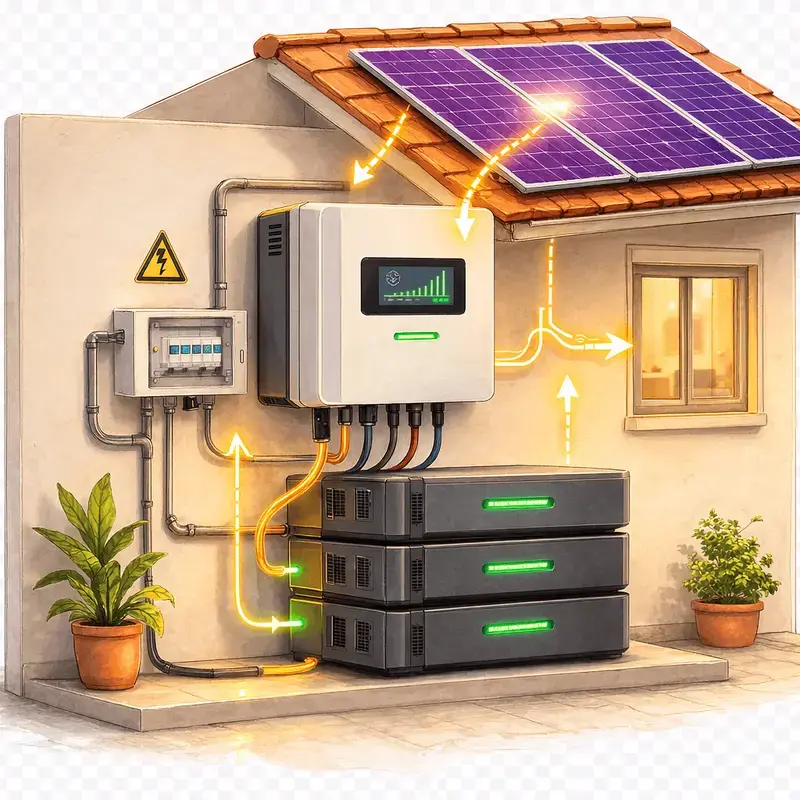
- •Rooftop Solar: Best for independent homeowners with shadow-free roofs. Requires upfront investment (₹3–6 Lakhs) but offers higher 25-year ROI.
- •Community Solar: Best for apartment dwellers, tenants, or those with shaded roofs. Zero upfront cost; instant savings through a subscription model.
- •Payback: Rooftop (4–5 years); Community Solar (Day 1 savings).
- •Maintenance: Rooftop (Owner\'s responsibility); Community Solar (Managed by Bridgeway Power).
The energy landscape in India is undergoing a massive shift. With the launch of the PM Surya Ghar Yojana, the government is pushing to put solar on 1 crore rooftops. However, there is a significant portion of the population—especially in urban hubs like Delhi, Gurgaon, and Noida—who want to go solar but physically cannot.
Perhaps you live in a high-rise apartment in Dwarka where the roof belongs to the RWA. Maybe you live in a beautiful heritage home in South Delhi shaded by 50-year-old Neem trees. Or perhaps you are a tenant who doesn't want to invest in a permanent asset on someone else's property.
For years, these scenarios meant you were "stuck" with high electricity bills. But today, the debate of rooftop solar vs community solar India has changed the game. It is no longer a question of "Can I go solar?" but "Which solar model fits my lifestyle?"
Understanding the Two Models: Shared Solar vs Own Panels India
Before we dive into the math, let’s define the players.
Rooftop Solar is exactly what it sounds like. You purchase (or finance) solar panels, and Bridgeway Power installs them on your private terrace. You own the asset, you claim the government solar subsidy, and you enjoy free electricity for 25+ years once the system pays for itself.
Community Solar, on the other hand, is the answer for anyone looking for solar without rooftop India. In this model, Bridgeway Power operates a large-scale solar farm. You "subscribe" to a portion of that farm's output. The solar energy generated is credited to your electricity bill via Virtual Net Metering (VNM).
Head-to-Head Comparison: Rooftop vs. Community Solar
| Feature | Rooftop Solar (Own Panels) | Community Solar (Shared Farm) |
|---|---|---|
| Upfront Investment (CAPEX) | High (₹3–6 Lakhs for 3–10kW) | Zero (Subscription based) |
| Ownership | You own the 25-year asset | Bridgeway Power owns & operates |
| Roof Requirement | Minimum 100 sq. ft. per kW (Shadow-free) | No roof space needed |
| Maintenance & Cleaning | Owner's responsibility (or AMC) | Included & Managed by us |
| Payback Period | 4–5 Years | Instant (Day 1 Savings) |
| Ideal For | Independent houses, villas, factories | Apartments, tenants, shaded roofs |
This Isn’t a Competition: Both Beat "Doing Nothing"
When debating community solar vs rooftop solar, it is easy to get bogged down in which gives the "best" return. But the truth is, both models are significantly better than continuing to pay standard DISCOM tariffs, which are rising by 5-7% annually across India.
If you have a monthly bill of ₹8,000 in Delhi, you are likely paying around ₹8 per unit to BSES Rajdhani. Over 25 years, that is a staggering amount of money lost to inflation. Whether you choose the high-margin ownership of rooftop solar or the zero-risk convenience of Community Solar, you are insulating yourself from price hikes.
Which Solar Option India: The Decision Matrix
Choosing the right path depends on your physical constraints and financial goals. Use this matrix to find your match:
| If you... | Your Best Match |
|---|---|
| Own an independent house with a clear roof | Rooftop Solar |
| Live in an apartment or builder floor | Community Solar |
| Want to maximize long-term wealth (25 years) | Rooftop Solar |
| Want to save money without spending any capital | Community Solar |
| Are a tenant or plan to move in 2-3 years | Community Solar |
| Want a "set it and forget it" solution | Community Solar |
The Financial Deep Dive: 10-Year Economics
To understand the real-world impact, let's look at the projected economics over a decade.
Assumptions:
- System size: 5kW
- Monthly consumption: 600 units (approx. ₹5,000–₹6,000 bill)
- Electricity tariff: ₹8/unit
| Year | Rooftop Solar (Net Profit/Loss) | Community Solar (Total Savings) |
|---|---|---|
| Year 0 | ₹(3,35,000) [After Subsidy] | ₹0 (No investment) |
| Year 1 | ₹(2,77,000) | ₹12,000 |
| Year 5 | ₹0 (Payback Reached) | ₹60,000 |
| Year 10 | + ₹3,00,000 | + ₹1,20,000 |
The Verdict: Rooftop solar offers a much higher total saving over 10-25 years because, after the payback period, the electricity is effectively "free." However, Community Solar wins on liquidity—you never spend your savings to get started, making it a "positive cash flow" from the first month.
Why "No Roof" is No Longer an Excuse
For decades, the biggest barrier to solar in India was the roof. In cities like Delhi, millions live in builder floors or multi-story apartments in areas like Lajpat Nagar or Rohini. If you live on the first floor of a four-story building, you don't have roof rights.
This is where Virtual Net Metering changes everything. Under DERC (Delhi Electricity Regulatory Commission) rules, solar energy generated at a remote location (the Bridgeway Solar Farm) can be "virtually" credited to your home connection. This makes solar without rooftop India a legal and practical reality for urban dwellers.
Talk to a solar engineer — not a salesperson
Enter your pincode and monthly bill. If we install in your area, an engineer answers on WhatsApp with your numbers.
What would solar save on YOUR bill?
The Hidden Costs of Rooftop Solar
While rooftop solar has the best ROI, many homeowners forget to account for the "ownership tax":
- Maintenance: Dust in India is relentless. If you don't clean your panels every 2 weeks, generation can drop by 25%. You'll need a Solar AMC.
- Inverter Replacement: Most solar inverters have a 5-10 year warranty, but the panels last 25. You should budget for one inverter replacement in year 12.
- Monitoring: You are the plant manager. If a fuse blows or a string goes offline, you need to spot it and call for service.
In the Community Solar model, Bridgeway Power handles 100% of the maintenance, cleaning, insurance, and replacements. You simply receive a credit on your bill.
Real-World Example: A Tale of Two Neighbors
Consider two neighbors in Sushant Lok, Gurgaon.
Amit owns a standalone villa. He installs a 6kW Rooftop Solar System.
- Investment: ₹4,02,000 (standard pricing).
- Subsidy: He receives ₹78,000 from PM Surya Ghar.
- Outcome: His ₹7,000 monthly bill drops to nearly zero. He spends 15 minutes every Sunday hosing down the panels.
Bhavesh lives in a luxury apartment nearby. He has no roof. He chooses Community Solar.
- Investment: ₹0.
- Monthly Savings: He subscribes to 600 units/month at a discounted rate compared to DHBVN.
- Outcome: His ₹7,000 bill is reduced by ₹1,500 every month automatically. He does nothing—no cleaning, no installation, no technical worries.
The Hybrid Approach
We are seeing a new trend in Delhi NCR: the Hybrid Strategy.
Some homeowners have a small rooftop area that can only fit 2kW or 3kW of panels (perhaps because of water tanks or roof gardens), but their consumption requires a 10kW system. Instead of giving up, they install a 3kW Rooftop System to cover their base load and subscribe to Community Solar for the remaining 7kW.
This gives them the best of both worlds: ownership of an asset and the scalability of a subscription.
Frequently Asked Questions
Is community solar legal in India?
Yes, it is facilitated through Virtual Net Metering (VNM) and Group Net Metering (GNM) frameworks. While rules vary by state, Delhi has some of the most progressive VNM policies under the DERC.
Can I get a subsidy for community solar?
Currently, the PM Surya Ghar subsidy of up to ₹78,000 is only applicable to residential rooftop solar installations where the homeowner owns the system. Community solar is a subscription model and does not qualify for the capital subsidy, but it requires no upfront investment anyway.
What happens if I move houses?
If you move within the same DISCOM area (e.g., moving from one house in BSES Rajdhani territory to another), your community solar subscription simply moves with you. If you have rooftop solar, you must leave the panels behind (though they add significant resale value to your home) or pay for a professional relocation service.
Does community solar work during a power cut?
Unlike a Hybrid Rooftop System with Batteries, community solar is purely a billing credit. It does not provide physical backup power during a grid outage. For backup, you would still need a home UPS or inverter.
What is the lifespan of these options?
Rooftop solar panels are typically warrantied for 25 years. Community solar subscriptions are flexible; you can subscribe for as long as you live in that DISCOM area, with Bridgeway Power ensuring the solar farm is always operational.
Conclusion: Which One Should You Choose?
The real question isn’t which model is "better"—it’s which one you can actually execute today.
- Choose Rooftop Solar if you have the roof space, the capital (or the ability to take an SBI Solar Loan), and want the highest possible long-term savings. It is a 25-year investment in your property's value.
- Choose Community Solar if you are an apartment dweller, a tenant, or simply don't want the hassle of maintenance and high upfront costs. It is the easiest way to "go green" without touching your savings.
At Bridgeway Power, we have completed over 5,000 installations and helped thousands more navigate the transition to clean energy. Whether you want panels on your roof or a credit on your bill from our solar farm, we have the solution.
Ready to see which fits your roof (or lack of one)? Contact us today for a free consultation or visit our Delhi office to see our community solar farm dashboard in action!
Every 1 kW of solar on your roof offsets 1.5 tonnes of CO₂ per year
That's 40 trees planted — every year, for 25 years.
A typical 5 kW home system offsets 187 tonnes of carbon over its lifetime. That's equivalent to taking 8 cars off the road.
See your impact →How much can you save with solar?
Enter your electricity bill → get system size, subsidy amount & payback period
Get StartedGo solar without owning a rooftop
Community Solar gives commercial & institutional consumers the same savings — zero capex, zero roof needed.
Or get a free solar quote
Tell us about your rooftop — we'll call with exact savings for your home.
Related Articles
Lock In a Fixed Electricity Rate for Your School — Before Delhi Tariffs Rise Again
Lock in your school's electricity rate before Delhi tariffs hit ₹16/unit. Learn how Community Solar offers zero-capex savings of ₹10L+ annually.
Read moreWhat Delhi's Solar Policy Means for Apartment Owners and Non-Rooftop Residents
Discover how Delhi's 2026 solar policy enables apartment owners to save 40% on bills using Virtual Net Metering. No roof access or RWA NOC required.
Read moreVirtual Net Metering (VNM) in India: How It Enables Community Solar for Homeowners
Learn how Virtual Net Metering (VNM) enables community solar in India. Discover how DERC and RERC policies allow flat owners to share solar credits without individual rooftops.
Read moreRelated guides
Delhi Electricity Rate 2026
BSES & Tata Power per-unit rates, PPAC, subsidy — sourced from DERC.
ExploreDelhi Solar Policy 2026
Free rooftop solar up to 3 kW for homes under 400 units. Eligibility & apply.
ExploreSolar Panel Price in Delhi
Live 2026 rooftop prices in Delhi after ₹1.56L subsidy. 1,200+ installs.
ExploreSolar Company in Gurgaon
Gurgaon's rooftop solar installer — 800+ systems, ₹78K PM Surya Ghar subsidy.
ExploreSolar Company in Noida
Noida & Greater Noida rooftop solar — 500+ installs, ₹1.08L stacked subsidy.
ExploreSolar Panel Price in Faridabad
Live 2026 Faridabad prices after ₹78K PM Surya Ghar subsidy. 350+ homes.
Explore