
By Sandeep Maurya · Reviewed by Arshi Chadha, Founder
Community Solar in India: How to Get Solar Without a Roof
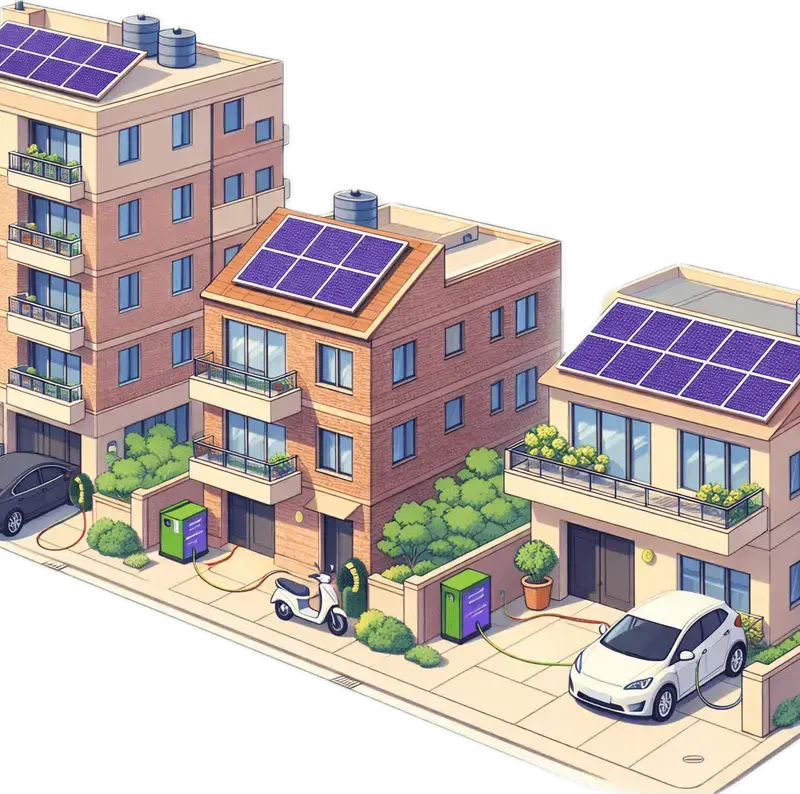
- •Eligibility: Renters, apartment owners, and businesses without roof access.
- •Primary Mechanism: Virtual Net Metering (VNM) and Group Net Metering (GNM).
- •Initial Investment: Zero-investment (subscription) or low-cap equity models.
- •Monthly Savings: 10% to 30% reduction in electricity bills.
- •Government Policy: Supported under PM Surya Ghar Muft Bijli Yojana frameworks.
The dream of switching to solar energy in India has long been tethered to one physical requirement: a private rooftop. For the millions of Indians living in high-rise apartments in Mumbai, renting compact homes in Bengaluru, or running small businesses in congested markets like Chandni Chowk, this requirement has been an insurmountable barrier. How do you harvest the sun when you don’t own the roof?
Enter community solar India. This revolutionary model is decoupling solar generation from roof ownership, allowing any electricity consumer to subscribe to a shared solar project located elsewhere—perhaps on a warehouse outside the city or a barren patch of land—and receive credits on their utility bill. As India pushes toward its goal of 500 GW of non-fossil fuel capacity by 2030, community solar is the missing piece of the puzzle that democratizes green energy for the urban masses.
What is Community Solar and How It Works in India?
Community solar, also known as solar gardens or shared solar, is a distributed energy model where a large-scale solar array is installed at a single location. The electricity generated is fed back into the grid, and "subscribers" (households or businesses) receive a proportional share of the benefits.
In the Indian context, community solar operates primarily through Virtual Net Metering (VNM). Unlike traditional rooftop solar, where the panels are physically wired to your home’s meter, community solar uses digital accounting.
The Lifecycle of a Community Solar Project
- The Plant: A developer or a housing society installs a large solar plant (e.g., 500kW) on a suitable location.
- The Grid: The energy is exported directly to the local DISCOM (Distribution Company).
- The Allocation: You, as a subscriber, "own" or "rent" a specific number of panels or a portion of the capacity (e.g., 3kW).
- The Credits: The DISCOM calculates how much energy your share produced and deducts that amount from your monthly electricity bill.
Community Solar vs Rooftop Solar Comparison
| Feature | Rooftop Solar | Community Solar India |
|---|---|---|
| Roof Requirement | Must own a clear, shade-free roof | No roof ownership required |
| Installation Site | Your own premises | Off-site (Land, warehouse, or common roof) |
| Maintenance | Homeowner's responsibility | Managed by the developer/SPV |
| Eligibility | Individual homeowners | Renters, apartments, businesses, NGOs |
| Upfront Cost | Moderate to High (₹2L - ₹6L) | Zero or Low (Subscription-based) |
| Portability | Fixed to the property | Highly portable (moves with your ID) |
Virtual Net Metering: The Engine of Community Solar
The technical backbone that makes community solar India possible is Virtual Net Metering. In a traditional setup, the meter runs backward when you generate excess power. In VNM, the "metering" happens at the solar plant, and the credits are "virtually" transferred to your home account.
Under the latest MNRE (Ministry of New and Renewable Energy) guidelines, several states have begun implementing VNM and Group Net Metering (GNM). This allows a single solar plant to serve multiple electricity connections. For example, a Resident Welfare Association (RWA) can install a plant on the clubhouse roof and distribute the solar credits to 100 different apartments, each with its own individual utility bill.
Bridging the Gap: No Upfront Cost Models
One of the biggest hurdles for Indian middle-class families is the initial capital expenditure (CAPEX). Community solar eliminates this via the Subscription Model or the OPEX Model.
In many emerging community solar projects in India, consumers do not have to pay for the panels. Instead, they sign a Power Purchase Agreement (PPA). You agree to buy solar power at a rate lower than your DISCOM’s grid rate.
For example: If your DISCOM charges ₹8 per unit, the community solar provider might charge you ₹6 per unit. You save ₹2 on every unit consumed without ever buying a single piece of hardware.
Subscription Model: Estimated Cost and Savings (2025-2026)
| Subscription Tier | Capacity Equivalent | Avg. Monthly Bill Savings | Estimated Annual Savings |
|---|---|---|---|
| Basic (Starter) | 2 kW | ₹1,200 - ₹1,800 | ₹14,400 - ₹21,600 |
| Standard (3BHK) | 5 kW | ₹3,500 - ₹4,500 | ₹42,000 - ₹54,000 |
| Premium (Bungalow/Small Shop) | 10 kW | ₹7,500 - ₹9,500 | ₹90,000 - ₹1,14,000 |
Note: Savings vary based on state-specific solar tariffs and sun exposure.
Government Push: PM Surya Ghar and Beyond
While the PM Surya Ghar Muft Bijli Yojana primarily targets individual rooftops with its massive ₹75,000+ subsidies, the policy framework also encourages "Solarization of Apartments."
The Indian government recognizes that to reach the target of 1 crore households, they cannot ignore apartment dwellers. Current policies are evolving to allow RWAs to avail of central financial assistance for common area lighting and to facilitate VNM for individual residents. State regulators (SERCs) in regions like Delhi, Odisha, and Karnataka are leading the way by clarifying rules for third-party solar developers to sell power to residential subscribers.
State-wise Community Solar Policies in India
The success of your community solar journey depends largely on which state you reside in. Net metering and VNM rules are state-governed.
| State | Status of Community Solar/VNM | Targeted Beneficiaries | Key Highlight |
|---|---|---|---|
| Delhi | Highly Active | Apartments, Hospitals, Schools | First to implement VNM and GNM successfully. |
| Karnataka | Active | Residential Complexes, MSMEs | Allows GNM for solar plants within the same DISCOM. |
| Odisha | Emerging | Government & Residential | Focus on VNM for public buildings and housing. |
| Maharashtra | In Progress | Housing Societies | Heavy focus on Group Net Metering for common areas. |
| Gujarat | Mature | Residential & Industrial | High adoption of collective solar under SURYA Gujarat. |
Talk to a solar engineer — not a salesperson
Check whether we install in your area, then get your answer on WhatsApp. No forms, no call centre.
What would solar save on YOUR bill?
Ideal Candidates: Who Should Choose Community Solar?
- Apartment Dwellers: If you live on the 4th floor of a 15-story building, you don't own the roof. Community solar India is your only viable path to green energy.
- Renters: When you move, you can’t take a rooftop system with you. With a community solar subscription, you can simply transfer your account to your new address within the same DISCOM.
- Shaded Properties: Even if you own a roof, it might be shaded by trees or taller neighboring buildings. Off-site community solar ensures maximum generation.
- Small Businesses: Shops in dense urban pockets (like Mumbai’s retail hubs) lack roof space but face high commercial electricity rates.
- Low-Income Households: The lack of an upfront "deposit" in subscription models makes solar accessible to those who cannot afford a ₹3 lakh rooftop system.
Real-Life Example: The Impact of Community Solar
Case Study: The "Green Sky" Apartment Project, Bengaluru (2025)
A 120-unit apartment complex in Whitefield, Bengaluru, wanted to reduce energy costs. However, their roof was occupied by water tanks, HVAC units, and a terrace garden.
- The Solution: They partnered with a developer who installed a 250kW solar farm on the outskirts of the city.
- The Mechanism: Through Virtual Net Metering, each of the 120 residents opted into a 2kW share of the plant.
- The Result:
- Average monthly bill before solar: ₹4,500.
- Average monthly bill after solar credits: ₹2,800.
- Monthly Savings: ₹1,700 per household.
- Environmental Impact: Equivalent to planting 4,000 trees annually.
This project demonstrated that you don't need a single panel on your own building to become a solar producer. To learn more about how groups can benefit, check out our guide on community solar.
How to Get Started with Community Solar in India
- Check Local Regulations: Verify if your state DISCOM supports Virtual Net Metering.
- Find a Provider: Look for developers specializing in shared solar or VNM projects. Bridgeway Power can assist in navigating these technical requirements.
- Review the Subscription Agreement: Understand the "price per unit" and the duration of the contract (usually 10–25 years).
- Utility Notification: Your provider will handle the paperwork to link your electricity consumer ID (CA Number) to the solar plant.
- Start Saving: Once synchronized, your electricity bill will show a "Solar Credit" line item, reducing your total amount due.
Challenges and the Road Ahead
While the potential for community solar India is massive, there are challenges:
- Regulatory Lag: Not all states have clear VNM guidelines yet.
- DISCOM Resistance: Some utility companies fear losing high-paying residential and commercial customers.
- Awareness: Most Indians still think "solar = panels on my roof."
However, with the 2024-2025 push for decentralized solar, these hurdles are rapidly vanishing. The digital infrastructure for billing is becoming more robust, and consumer demand is forcing regulators to act.
Frequently Asked Questions
What is the difference between Group Net Metering and Virtual Net Metering?
Group Net Metering allows a single consumer with multiple connections (like a factory and a nearby warehouse) to offset bills. Virtual Net Metering allows multiple different consumers (like neighbors in an apartment) to share the benefits of a single solar plant.
Can I get the PM Surya Ghar subsidy for community solar?
Currently, the individual ₹78,000 subsidy is geared toward rooftop owners. However, Resident Welfare Associations (RWAs) can receive subsidies for common area solar installations (up to 500kW), which indirectly reduces maintenance costs for all residents.
What happens if I move to a new house?
As long as you stay within the same electricity distribution company (DISCOM) territory, you can usually transfer your community solar subscription to your new address. It is as simple as updating your Consumer Account (CA) number with the solar provider.
Is community solar cheaper than rooftop solar?
In the long run, rooftop solar is slightly cheaper because you own the asset. However, community solar has a lower "barrier to entry." It requires zero maintenance from your side and zero upfront investment in subscription models, making it more accessible.
Does community solar work during power cuts?
Since community solar is grid-tied and typically off-site, it does not provide backup power during a local blackout unless paired with on-site battery storage—which is rare for community models. Its primary benefit is financial savings on your bill.
Conclusion
Community solar is the next frontier of the Indian energy transition. It breaks the "roof-ownership" barrier and invites everyone—from the student living in a rented flat to the small-scale professional—to join the solar revolution. By leveraging community solar India, we can transform our cities into sustainable hubs without changing the skyline.
Ready to explore how you can benefit from solar without the hassle of installation? Contact Bridgeway Power today for a free consultation on our community and rooftop solar solutions. With over 35 years of experience, we help you navigate the complexities of VNM, subsidies, and state policies to ensure you get the maximum possible savings.
Contact our experts for a free Solar Feasibility Report professionally tailored for your home or business.
Every 1 kW of solar on your roof offsets 1.5 tonnes of CO₂ per year
That's 40 trees planted — every year, for 25 years.
A typical 5 kW home system offsets 187 tonnes of carbon over its lifetime. That's equivalent to taking 8 cars off the road.
See your impact →How much can you save with solar?
Enter your electricity bill → get system size, subsidy amount & payback period
Get StartedGo solar without owning a rooftop
Community Solar gives commercial & institutional consumers the same savings — zero capex, zero roof needed.
Or get a free solar quote
Tell us about your rooftop — we'll call with exact savings for your home.
Related Articles
Lock In a Fixed Electricity Rate for Your School — Before Delhi Tariffs Rise Again
Lock in your school's electricity rate before Delhi tariffs hit ₹16/unit. Learn how Community Solar offers zero-capex savings of ₹10L+ annually.
Read moreWhat Delhi's Solar Policy Means for Apartment Owners and Non-Rooftop Residents
Discover how Delhi's 2026 solar policy enables apartment owners to save 40% on bills using Virtual Net Metering. No roof access or RWA NOC required.
Read moreVirtual Net Metering (VNM) in India: How It Enables Community Solar for Homeowners
Learn how Virtual Net Metering (VNM) enables community solar in India. Discover how DERC and RERC policies allow flat owners to share solar credits without individual rooftops.
Read moreRelated guides
Delhi Electricity Rate 2026
BSES & Tata Power per-unit rates, PPAC, subsidy — sourced from DERC.
ExploreDelhi Solar Policy 2026
Free rooftop solar up to 3 kW for homes under 400 units. Eligibility & apply.
ExploreSolar Panel Price in Delhi
Live 2026 rooftop prices in Delhi after ₹1.56L subsidy. 1,200+ installs.
ExploreSolar Company in Gurgaon
Gurgaon's rooftop solar installer — 800+ systems, ₹78K PM Surya Ghar subsidy.
ExploreSolar Company in Noida
Noida & Greater Noida rooftop solar — 500+ installs, ₹1.08L stacked subsidy.
ExploreSolar Panel Price in Faridabad
Live 2026 Faridabad prices after ₹78K PM Surya Ghar subsidy. 350+ homes.
Explore