
By Sandeep Maurya · Reviewed by Arshi Chadha, Founder
Why Your Electricity Bill Is High Even Without AC
You're checking the rate — now see how much of your bill solar erases
A 10-year-old refrigerator in an Indian kitchen consumes up to 200 units of electricity per month, which is nearly double the entire monthly consumption of a rural household. Most homeowners call us complaining their electricity bill high without AC India is impossible, assuming that if the air conditioner isn't running, the bill should magically drop to zero. It doesn't.
In our 35 years of installing over 5,000 rooftop systems, we’ve seen thousands of bills. The truth is, your "baseline" load—the stuff that runs while you sleep—is often the real reason you’re stuck in a high tariff slab. Between the Delhi GBI incentive and the rising PPAC surcharges, every wasted unit is costing you more than ever.
The Invisible Thieves: Where Your Power Actually Goes
When you ask why electricity bill so high, you’re usually looking at the big machines. But electricity theft happens in the small, continuous drips. A WiFi router consumes very little, but it never sleeps. A set-top box in "standby" mode is often still drawing 80% of its active power.
Here is the breakdown of the hidden power consumers we find during a typical site audit in Solar in Delhi or Gurgaon:
Table 1: Hidden Power Consumers (Monthly Estimates)
| Appliance | Usage Pattern | Monthly Consumption (Units) |
|---|---|---|
| Old Refrigerator (10+ years) | 24/7 Operation | 150 – 200 Units |
| Water Heater / Geyser | 30 mins, twice daily | 90 – 120 Units |
| 4 Normal Ceiling Fans | 12-15 hours/day | 120 – 180 Units |
| WiFi Router | 24/7 (Always ON) | 15 – 20 Units |
| TV Standby + Set-top Box | Plugged in 24/7 | 25 – 40 Units |
| Water Pump (0.5 - 1 HP) | 1 hour daily | 20 – 30 Units |
1. Your Old Refrigerator is a Bill Killer
If your fridge is a "legacy" model from 2012, it doesn't matter how often you clean it. The compressor technology back then was inefficient, and the door seals have likely degraded. This causes the motor to run longer to maintain cooling. A modern 5-star inverter refrigerator uses about 60% less power. Replacing it is often the single most effective way to reduce electricity bill India.
2. The Ceiling Fan Fallacy
We don't think about fans because they "only" use 75-80 Watts. But in a typical 3BHK, you have four fans running almost constantly for 8-9 months of the year. That adds up to 180 units a month. Switching to BLDC fans drops that 80W to 28W. Over a year, that’s enough savings to pay for one solar panel.
3. Standby Power (Vampire Draw)
Most people turn off the TV with the remote but leave the wall switch on. The set-top box, the red light on the microwave, and the four mobile chargers left plugged in are all "vampire loads." They can easily account for 10% of your total bill. It sounds like nitpicking until you realize that in Delhi, hitting 401 units instead of 399 units can double your bill because you lose the Delhi government domestic subsidy.
Real Audit: The "No AC" 3BHK Reality
We often meet families who are shocked to receive a ₹3,000 bill in November when the ACs are covered in plastic. They assume their meter is fast. It usually isn't.
Table 2: Typical Monthly Consumption (3BHK, No AC)
| Metric | Details |
|---|---|
| Average Monthly Units | 250 – 400 Units |
| Blended Tariff (e.g., Haryana/Delhi) | ₹7.5 / Unit |
| Estimated Monthly Bill | ₹1,875 – ₹3,000 |
| Common Perception | "It should be under 100 units" |
| The Gap | 200+ units of unexplained/hidden usage |
If your bill falls in this range, you are the perfect candidate for a small, optimized solar plant. But before you buy, you must fix the leaks.
Optimization Before Installation: Saving ₹50,000
I always tell my customers: "Don't build a bigger bucket; plug the holes first." If you have a high electricity bill reasons India problem, and you just slap solar on top of it, you’re overspending.
If your home uses 500 units, you might need a 4kW or 5kW system. But if you optimize your appliances, you might bring that down to 350 units, allowing you to install a 3kW system instead. That shift saves you roughly ₹30,000 to ₹50,000 in upfront costs.
Table 3: The "Easy Wins" Savings Guide
| Action | Monthly Savings (Units) | Annual Savings (₹) |
|---|---|---|
| Replace 10-yr-old Fridge | 80 – 100 Units | ₹7,200 – ₹9,000 |
| Switch 4 Fans to BLDC | 60 – 90 Units | ₹5,400 – ₹8,100 |
| Replace all Bulbs with LED | 20 – 30 Units | ₹1,800 – ₹2,700 |
| Install Geyser Timer/Solar Water Heater | 40 – 60 Units | ₹3,600 – ₹5,400 |
| TOTAL SAVINGS POTENTIAL | 200 – 280 Units | ₹18,000 – ₹25,000 |
Talk to a solar engineer — not a salesperson
Enter your pincode and monthly bill. If we install in your area, an engineer answers on WhatsApp with your numbers.
See how much of this bill solar erases
Real Example: A Dwarka Homeowner’s Transformation
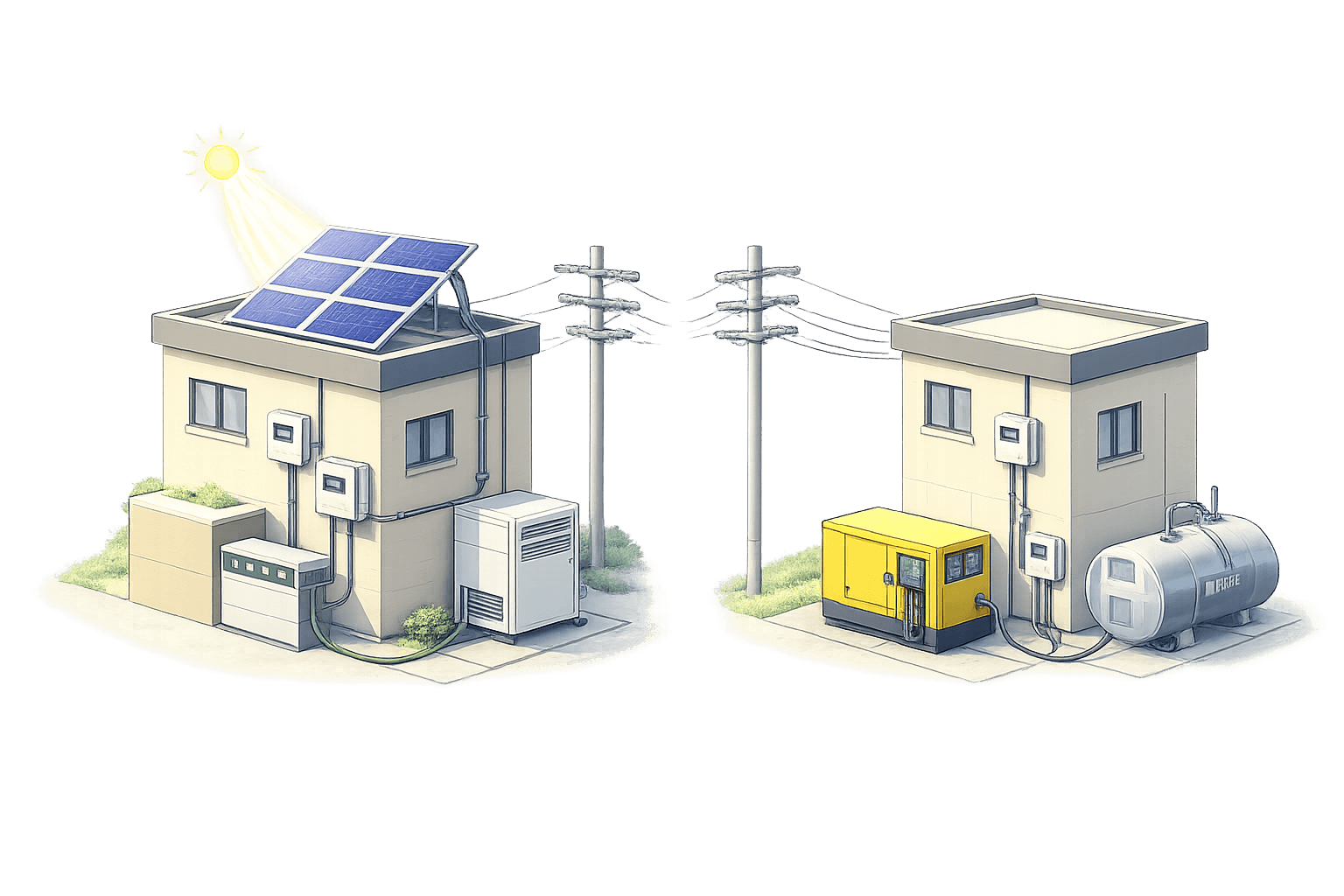
A client in a 3BHK in Dwarka was paying ₹4,500 monthly in October (no AC). They were convinced the DISCOM was overcharging them. We did a walk-through and found an old deep freezer in the balcony and a geyser that was being left on for 4 hours every morning.
We suggested:
- Selling the old freezer (Saving ~120 units).
- Switching to 5-star star rating appliances.
- Installing a 3kW Solar System.
After the PM Surya Ghar Muft Bijli Yojana subsidy of ₹78,000, their net investment was roughly ₹84,000 (based on Delhi 3kW net cost). Their bill dropped from ₹4,500 to the fixed charge of around ₹300-400. They recovered their investment in less than 2 years because they optimized their load first.
Solar is the Final Step
Once you've tackled the hidden electricity consumption home, you’ll have a clear picture of your actual needs. For most Indian homes without heavy AC usage, a 2kW to 3kW system is the "sweet spot."
Use our Solar Calculator to see how much a right-sized system would cost for your specific bill. If you're in Solar in Noida or Solar in Gurgaon, you can also benefit from state-specific net metering policies that allow you to bank excess generation during the day and use it at night.
Financing the Change
You don't need to pay for all this upfront. Several banks offer specialized loans for solar and energy-efficient upgrades:
- SBI PM Surya Ghar Loan
- PNB Solar Rooftop Scheme
- ECOFY Solar Financing
- Aerem Solar Finance
- Canara Bank Solar Loan
FAQ
Why is my electricity bill so high even when I don't use AC?
The primary culprits are usually old refrigerators (which can use 200 units/month), water geysers, and "phantom loads" like WiFi routers and TVs on standby. Even without AC, a standard 3BHK in India typically consumes 250-400 units monthly due to these baseline appliances.
Can an old refrigerator really increase my bill?
Yes. Refrigerators older than 10 years lack inverter technology and have degraded insulation. They often consume 2-3 times more power than a modern 5-star rated model, potentially adding ₹1,000 or more to your monthly bill.
How much can I save by switching to BLDC fans?
A standard ceiling fan uses 75-80 Watts, while a BLDC fan uses 28-30 Watts at the same speed. If you run 4 fans for 15 hours a day, switching to BLDC can save you approximately 70-90 units per month, which is nearly ₹600-700 in savings.
Does leaving chargers plugged in consume electricity?
Yes, this is known as "vampire power" or standby power. While a single charger uses very little, the cumulative effect of chargers, microwave clocks, WiFi routers, and set-top boxes can add up to 30-50 units per month.
Should I install solar if my bill is already low without AC?
If your bill is above ₹2,000, solar is financially viable. However, we recommend first upgrading old appliances. This allows you to install a smaller, cheaper solar system (e.g., 2kW instead of 3kW), improving your return on investment and reducing the payback period.
How do I check for electricity leakage in my home?
Turn off every single switch in your house and check your electricity meter. If the disc is still rotating or the digital numbers are increasing, you have a current leakage or a faulty meter. If it stops, your high bill is simply due to inefficient appliance usage.
If you’re tired of guessing why your meter is spinning, Get a free quote for a site audit. We’ll look at your appliances before we even talk about panels.
The best solar system is the one you don't have to overbuild because you're already living efficiently. Focus on the fridge, the fans, and the standby lights first—then let the sun handle the rest.f
Every 1 kW of solar on your roof offsets 1.5 tonnes of CO₂ per year
That's 40 trees planted — every year, for 25 years.
A typical 5 kW home system offsets 187 tonnes of carbon over its lifetime. That's equivalent to taking 8 cars off the road.
See your impact →How much can you save with solar?
Enter your electricity bill → get system size, subsidy amount & payback period
Get StartedSee how much of this bill solar erases
Related Articles
What Is Captive Open Access Solar (100% Equity Model)
Learn how Captive Open Access Solar (100% Equity Model) helps Indian businesses cut electricity costs by 40% using off-site solar plants. Guide on rules, savings & ROI.
Read moreHow Rooftop Solar Can Eliminate Your Electricity Bill
Discover how Net Metering and PM Surya Ghar subsidies can reduce your monthly electricity bill to near-zero. Learn about system sizing, costs, and real-world savings.
Read moreSolar Subsidy in Uttar Pradesh 2026: ₹1,08,000 for Noida, Ghaziabad & Greater Noida
UP's stacked solar subsidy 2026: ₹78,000 central + ₹30,000 UPNEDA state top-up = ₹1.08L. Real PVVNL net-cost math for Noida, Greater Noida, Ghaziabad & Meerut.
Read moreRelated guides
Delhi Electricity Rate 2026
BSES & Tata Power per-unit rates, PPAC, subsidy — sourced from DERC.
ExploreDelhi Solar Policy 2026
Free rooftop solar up to 3 kW for homes under 400 units. Eligibility & apply.
ExploreSolar Panel Price in Delhi
Live 2026 rooftop prices in Delhi after ₹1.56L subsidy. 1,200+ installs.
ExploreSolar Company in Gurgaon
Gurgaon's rooftop solar installer — 800+ systems, ₹78K PM Surya Ghar subsidy.
ExploreSolar Company in Noida
Noida & Greater Noida rooftop solar — 500+ installs, ₹1.08L stacked subsidy.
ExploreSolar Panel Price in Faridabad
Live 2026 Faridabad prices after ₹78K PM Surya Ghar subsidy. 350+ homes.
Explore