
By Vansh Dahiya · Reviewed by Arshi Chadha, Founder
Delhi Solar Guide: Navigating BSES Load Increase Charges
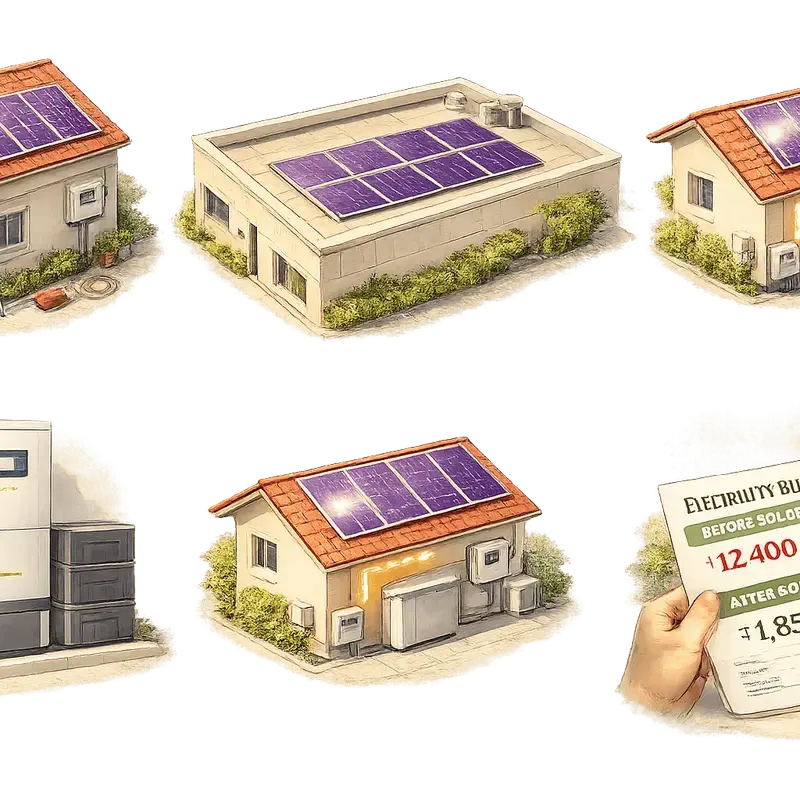
- •Mandatory Rule: Solar system size cannot exceed your sanctioned load in Delhi.
- •BSES Load Enhancement Cost: ~₹600–₹1,200 per kW (Security Deposit) + Fixed Charges.
- •Sanctioned Load Limit: Residential single-phase usually caps at 7-8 kW.
- •Payback with Solar: Even with higher fixed charges, solar ROI remains under 4 years.
If you’re planning to go solar in Delhi, the very first number you need to look at isn't the price of the panels—it's the "Sanctioned Load" on your BSES Rajdhani or Yamuna bill. Under the current DERC regulations, you cannot install a solar plant larger than your sanctioned load. If you have a 3kW load but need a 5kW solar system to wipe out your bill, you’re going to hit a wall at the BSES net metering Delhi application stage.
We’ve seen hundreds of projects get stuck because homeowners didn't account for bses load increase charges early in the process. Increasing your load isn't just about paying a fee; it’s a regulatory requirement that dictates your solar eligibility.
Why Your Solar Capacity is Capped by Sanctioned Load
In Delhi, the Delhi solar policy 2024 and DERC guidelines are clear: your solar inverter capacity must be less than or equal to your sanctioned load. The grid infrastructure in your colony—the transformers and local wiring—is designed based on the cumulative sanctioned load of all houses. If everyone installed 10kW solar on 2kW loads, the back-feeding of power during the day could technically destabilize the local transformer.
This creates a "Sanctioned Load Solar Eligibility" bottleneck. If your monthly bill is ₹8,000, our Solar Calculator will likely recommend a 5kW system. But if your bill shows a sanctioned load of only 3kW, BSES will reject your net metering application until you bridge that 2kW gap.
Current BSES Load Enhancement Fees
Increasing your load involves two main costs: a one-time refundable Security Deposit (SD) and a slight increase in your monthly "Fixed Charges." For residential consumers (LT-Domestic), these are standardized by the Delhi Electricity Regulatory Commission.
| kW Range | Security Deposit (Refundable) | Service Line Charges (One-time) | Phase Requirement |
|---|---|---|---|
| Up to 2 kW | ₹600 per kW | Minimal/Included | Single Phase |
| 2 kW to 5 kW | ₹900 per kW | ~₹500 - ₹1,000 | Single Phase |
| 5 kW to 10 kW | ₹1,200 per kW | Case-to-case basis | Single or Three Phase |
| Above 10 kW | ₹1,500 per kW | Subject to site survey | Mandatory Three Phase |
Note: The security deposit is adjusted against your existing deposit. If you already have ₹1,800 deposited for 2kW and you move to 5kW, you only pay the difference.
Step-by-Step: How to Apply for BSES Load Enhancement
Don't wait for the solar installation to start this. You can do this entirely online via the BSES Rajdhani or Yamuna portals.
- Login to the Portal: Use your CA number on the BSES website or mobile app.
- Select 'Apply for Load Enhancement': You'll need to upload a recent electricity bill and ownership proof (Sale Deed or Registry).
- Self-Declaration of Load: You don't usually need a fresh wiring certificate for minor residential increases (e.g., 3kW to 5kW). A self-declaration form provided on the portal suffices.
- Demand Note Generation: After a remote "technical feasibility" check, BSES will issue a Demand Note. This is your bill for the bses load increase charges.
- Payment & Update: Once paid, the load is typically updated in the system within 7–15 days. Your next bill will reflect the new sanctioned load.
The Cost of Waiting: Monthly Fixed Charges
A common concern we hear during site surveys in Dwarka or Janakpuri is: "Won't my bill go up if I increase my load?"
Yes, the fixed charges will increase. For BSES, the fixed charge for LT domestic is currently ₹125 per kW per month.
The Math:
- 3kW Load: ₹375/month fixed charges.
- 5kW Load: ₹625/month fixed charges.
- Difference: ₹250/month.
While you pay ₹250 more in fixed charges, a 5kW solar system generates roughly 600 units a month. At Delhi's top slab rate of ₹8/unit, that’s ₹4,800 in savings. Paying ₹250 to save ₹4,800 is a trade any rational person should take.
Real Example: A Pitampura 3BHK Transformation
A client in Pitampura had a consistent monthly bill of ₹9,500 during summers. Their sanctioned load was 4kW, but their consumption required a 7kW solar system to reach "Net Zero."
We helped them apply for a load enhancement from 4kW to 7kW.
- Security Deposit Paid: ₹3,600 (Difference for 3kW increase).
- Time Taken: 12 days for load update.
- Result: We were able to apply for BSES net metering Delhi immediately after. If they hadn't increased the load, they would have been restricted to a 4kW solar system, leaving them with a ₹4,000 monthly bill even after going solar.
Impact on Net Metering Timelines
The most common reason for solar project delays in Delhi isn't the installation—it's the paperwork. BSES will not accept a solar application if the inverter capacity mentioned in the test report exceeds the sanctioned load in their database.
If you install the panels first and then realize you need a load increase, you add at least 3 weeks to your project timeline. You’ll be sitting with a functional solar plant on your roof that you can't turn on because you don't have the green light for net metering. Always check your load 30 days before the solar crew arrives.
For those in Noida, the process is slightly different via PVVNL, but the sanctioned load rule remains identical. You can check our guide on PVVNL net metering for details on that side of the border.
Talk to a solar engineer — not a salesperson
Check whether we install in your area, then get your answer on WhatsApp. No forms, no call centre.
What would solar save on YOUR bill?
When Should You Move to Three-Phase?
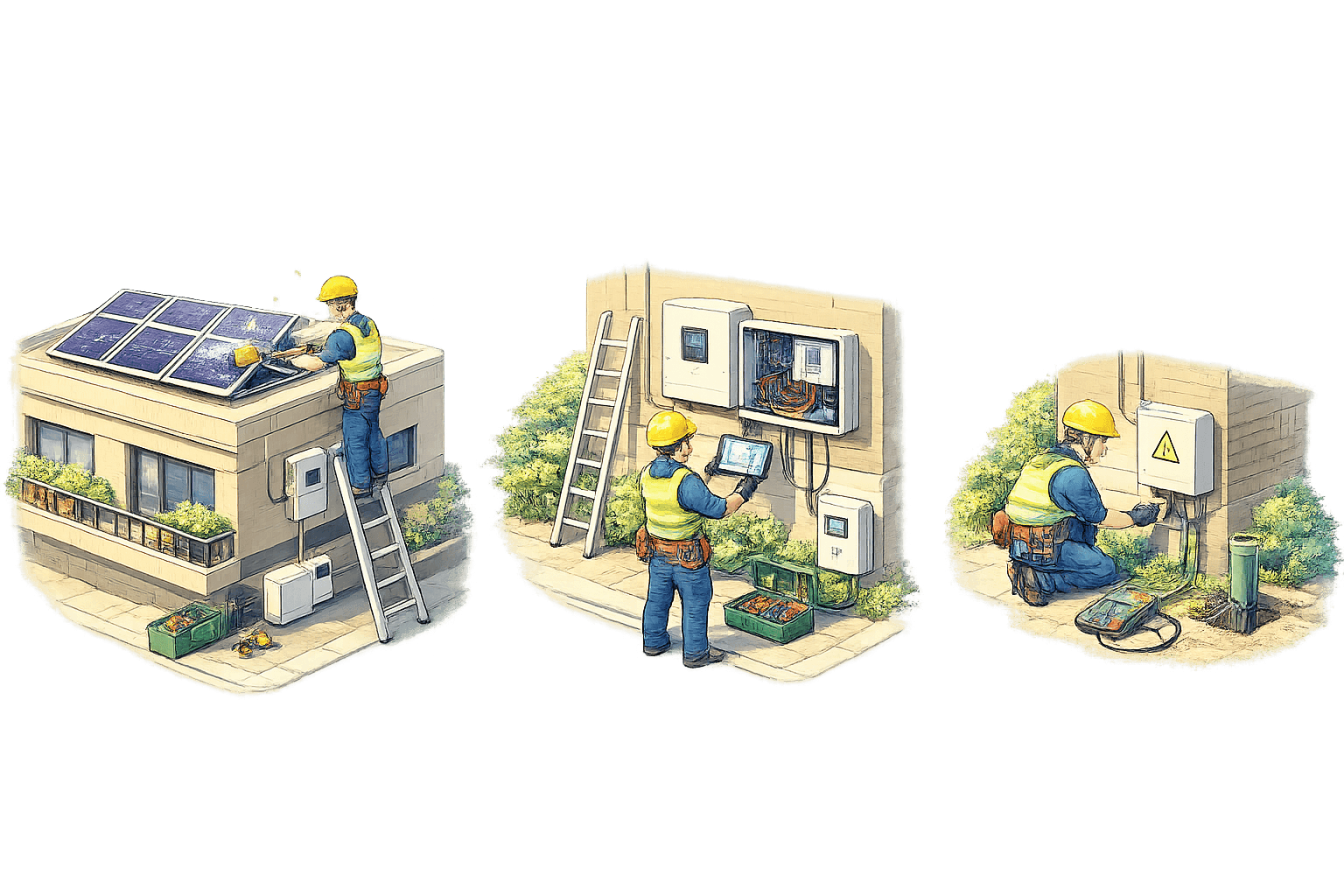
In Delhi, once your sanctioned load crosses 7kW or 8kW, BSES typically requires you to move from a single-phase to a three-phase connection. This is actually better for your home. Three-phase connections handle heavy loads (like multiple 1.5-ton ACs) much better and allow for larger solar inverters which are more efficient at that scale.
However, moving to three-phase involves changing your meter and potentially some minor rewiring in your main distribution board. Factor this into your solar installation process.
FAQ
Can I install a solar system smaller than my sanctioned load?
Yes, you can always install a system smaller than your load. For example, if you have a 10kW sanctioned load, you can install a 3kW, 5kW, or 8kW solar plant without any load-related issues. The restriction only applies when the solar capacity exceeds the load.
How do I check my current sanctioned load?
Look at the right-hand side of your BSES bill under the "Connection Details" section. It will be listed as "S. Load" in kW. Make sure this matches the kW capacity of the solar system you intend to install.
Does increasing my load affect my eligibility for the PM Surya Ghar subsidy?
Increasing your load does not disqualify you from the PM Surya Ghar Muft Bijli Yojana. In fact, it ensures you can install the capacity needed to maximize the subsidy, which caps at ₹78,000 for systems 3kW and above.
What happens if I install solar without increasing my sanctioned load?
Your net metering application will be rejected by the DISCOM. You will not be able to legally export surplus power to the grid, and your system will essentially function as a "zero-export" plant, significantly increasing your payback period.
Are load increase charges refundable?
The security deposit portion of the bses load increase charges is refundable or adjustable when you permanently surrender the connection. The processing fees and service line charges are non-refundable.
If you're unsure about your roof's capacity or how much load you actually need, Get a free quote and our engineers will audit your bill and roof to give you a clear roadmap. Don't let a simple paperwork step delay your transition to clean energy.
FAQ
What are the current BSES load increase charges for residential homes?
For residential (domestic) consumers, the primary cost is the additional security deposit, which is roughly ₹600 to ₹1,200 per kW depending on your total load bracket. There is also a small processing fee. You can pay these directly via the BSES portal once your demand note is generated.
Can I install a 5kW solar system on a 3kW sanctioned load?
No. DERC regulations require your solar system capacity to be less than or equal to your sanctioned load. You must first apply for a load enhancement to 5kW before BSES will approve your net metering application.
How long does it take for BSES to increase my load?
The online process usually takes 7 to 15 working days. Once you pay the demand note, the load is updated in the BSES system, and you can proceed with your BSES net metering Delhi application.
Do I need to change my meter when increasing my load?
If your load increase stays within the single-phase limit (usually up to 7-8 kW), you might not need a meter change. If you cross into the three-phase category (typically 10kW and above), BSES will replace your meter with a three-phase one.
Will my monthly bill increase significantly after a load enhancement?
Your fixed charges will increase by ₹125 per kW of the increase. However, if the load increase allows you to install a larger solar system, the energy savings (₹7-8 per unit) will far outweigh the slight rise in monthly fixed charges.
Is the security deposit for load increase refundable?
Yes, the security deposit is refundable. It stays with the DISCOM and is returned to the consumer if the connection is ever permanently disconnected or surrendered.
Every 1 kW of solar on your roof offsets 1.5 tonnes of CO₂ per year
That's 40 trees planted — every year, for 25 years.
A typical 5 kW home system offsets 187 tonnes of carbon over its lifetime. That's equivalent to taking 8 cars off the road.
See your impact →How much can you save with solar?
Enter your electricity bill → get system size, subsidy amount & payback period
Get StartedLiked this article? Get a free solar quote
Tell us about your rooftop — we'll call with exact savings for your home.
Related Articles
Net Metering in India: How to Sell Solar Power Back to the Grid
Learn how net metering in India allows you to sell solar power back to the grid. Discover state policies, savings examples, and how to reduce your bill by 90%.
Read moreWhat Is Captive Open Access Solar (100% Equity Model)
Learn how Captive Open Access Solar (100% Equity Model) helps Indian businesses cut electricity costs by 40% using off-site solar plants. Guide on rules, savings & ROI.
Read moreSolar Installation Cost in Delhi NCR 2026: 3 kW at ₹1.32L net
Updated 2026 guide to solar costs in Delhi NCR. Learn about PM Surya Ghar subsidies, system pricing from 1kW-10kW, and how to reach zero electricity bills.
Read moreRelated guides
Delhi Electricity Rate 2026
BSES & Tata Power per-unit rates, PPAC, subsidy — sourced from DERC.
ExploreDelhi Solar Policy 2026
Free rooftop solar up to 3 kW for homes under 400 units. Eligibility & apply.
ExploreSolar Panel Price in Delhi
Live 2026 rooftop prices in Delhi after ₹1.56L subsidy. 1,200+ installs.
ExploreSolar Company in Gurgaon
Gurgaon's rooftop solar installer — 800+ systems, ₹78K PM Surya Ghar subsidy.
ExploreSolar Company in Noida
Noida & Greater Noida rooftop solar — 500+ installs, ₹1.08L stacked subsidy.
ExploreSolar Panel Price in Faridabad
Live 2026 Faridabad prices after ₹78K PM Surya Ghar subsidy. 350+ homes.
Explore