
By Kajal Rajpoot · Reviewed by Arshi Chadha, Founder
What Is a BLDC Motor? The Technology Behind Energy Efficient Appliances
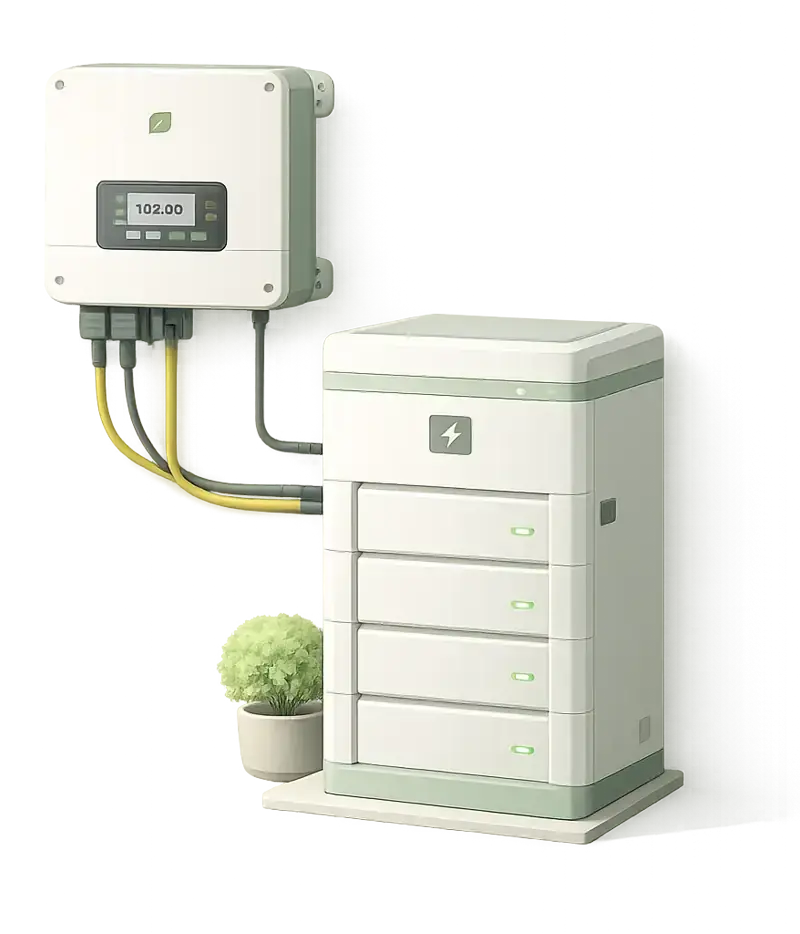
- •Technology: Brushless Direct Current (BLDC) with Electronic Commutation
- •Energy Savings: 30–60% reduction in per-appliance power consumption
- •Payback for BLDC Fan: 12–18 months through electricity savings
- •Solar Impact: Reduces required solar plant size by ~1 kW for a typical 3BHK
A standard ceiling fan in an Indian home sucks up 75 to 80 Watts of power, while a BLDC fan doing the exact same job consumes just 28 Watts. That single switch cuts your fan's electricity bill by 65%.
In my 35 years of installing rooftop solar across Delhi NCR, I’ve seen thousands of homeowners obsess over panel efficiency while ignoring the "leaky buckets" inside their homes—the old induction motors in their fans, ACs, and pumps. If you’re looking at BLDC motor meaning, you aren't just looking at a technical spec; you’re looking at the most effective way to downsize your solar investment and slash your monthly DISCOM bill.
What is a BLDC Motor? The Mechanical Shift
To understand the BLDC motor meaning, you have to look at what’s missing. In a traditional "normal" induction motor, you have carbon brushes and a commutator. These parts physically rub against each other to flip the magnetic field and keep the motor spinning. That friction creates three things we hate in engineering: heat, noise, and wear-and-tear.
A Brushless DC (BLDC) motor replaces those physical brushes with an electronic controller. We use permanent magnets and "electronic commutation." The controller precisely tells the motor when to flip the polarity. No friction means no wasted energy as heat.
BLDC Motor vs Normal Motor: The Real-World Gap
When we conduct a site survey for solar in Gurgaon or Delhi, we often audit the existing appliances. The difference between a "normal" induction motor and a BLDC version is night and day.
| Feature | BLDC Motor | Induction Motor (Normal) |
|---|---|---|
| Efficiency | 85–90% | 60–70% |
| Noise Levels | 35–40 dB (Whisper quiet) | 50–60 dB (Humming/Vibration) |
| Lifespan | 15–20 years | 8–10 years |
| Maintenance | Zero (No brushes to replace) | Periodic (Bearing/Brush wear) |
| Heat Generation | Very Low | High |
Why BLDC is a "Solar-Friendly" Technology
One thing we tell every customer at Bridgeway Power is that brushless DC motor appliances are inherently solar-friendly. Solar panels produce Direct Current (DC). Batteries store Direct Current (DC).
Traditional appliances are built for AC (Alternating Current). Every time we convert DC to AC through an inverter, we lose about 5-10% of energy. Because BLDC motors internally operate on DC, the conversion logic is much simpler and more efficient.
If you are planning a new Indian home energy stack, choosing BLDC appliances allows you to get more "runtime" out of every sun-drenched hour. If you have a home solar battery system, BLDC appliances can literally double your backup time during a power cut.
Appliances Using BLDC Motors in India
The shift to energy efficient motors India has moved beyond just fans. The technology is now the backbone of the "Inverter" revolution.
| Appliance | BLDC Application | Impact |
|---|---|---|
| Ceiling Fans | 28W consumption | 65% savings vs 75W fans |
| Washing Machines | Direct Drive Motors | 30% electricity & water savings |
| Inverter ACs | Variable speed compressors | Eliminates heavy startup current |
| Water Pumps | Solar Borewell/Submersible | Higher discharge with less power |
| Mixer Grinders | High-torque electronic control | Better grinding, less motor burning |
1. Ceiling Fans: The Low-Hanging Fruit
Most people start their BLDC journey here. A conventional fan costs about ₹1,500–₹2,000. A high-quality BLDC fan costs ₹2,500–₹3,200. That ₹1,000 premium is usually recovered in less than 18 months of Delhi summers. Read our deep dive on BLDC fan electricity savings to see the math.
2. Inverter Air Conditioners
The "Inverter" in your AC is actually a BLDC motor controller. Instead of the compressor being either "100% ON" or "OFF" (which causes those annoying voltage dips), a BLDC compressor slows down or speeds up based on the room temperature. This is one of the biggest BLDC motor advantages—it eliminates the massive "startup surge" that often trips solar inverters.
The 30% Rule: Reducing Solar System Size
When a client asks me for a quote for a 10kW solar system, I always ask: "Are you running old fans and non-inverter ACs?"
If you convert a house with 10 fans, 3 ACs, and a water pump to BLDC, you can often achieve the same comfort levels with a 7kW or 8kW solar plant. Since the cost of solar installation in Delhi NCR is roughly ₹68,607 per kW (for a 5kW tier), spending ₹30,000 on BLDC fans can save you over ₹1 Lakh on your solar bill.
Talk to a solar engineer — not a salesperson
Check whether we install in your area, then get your answer on WhatsApp. No forms, no call centre.
What would solar save on YOUR bill?
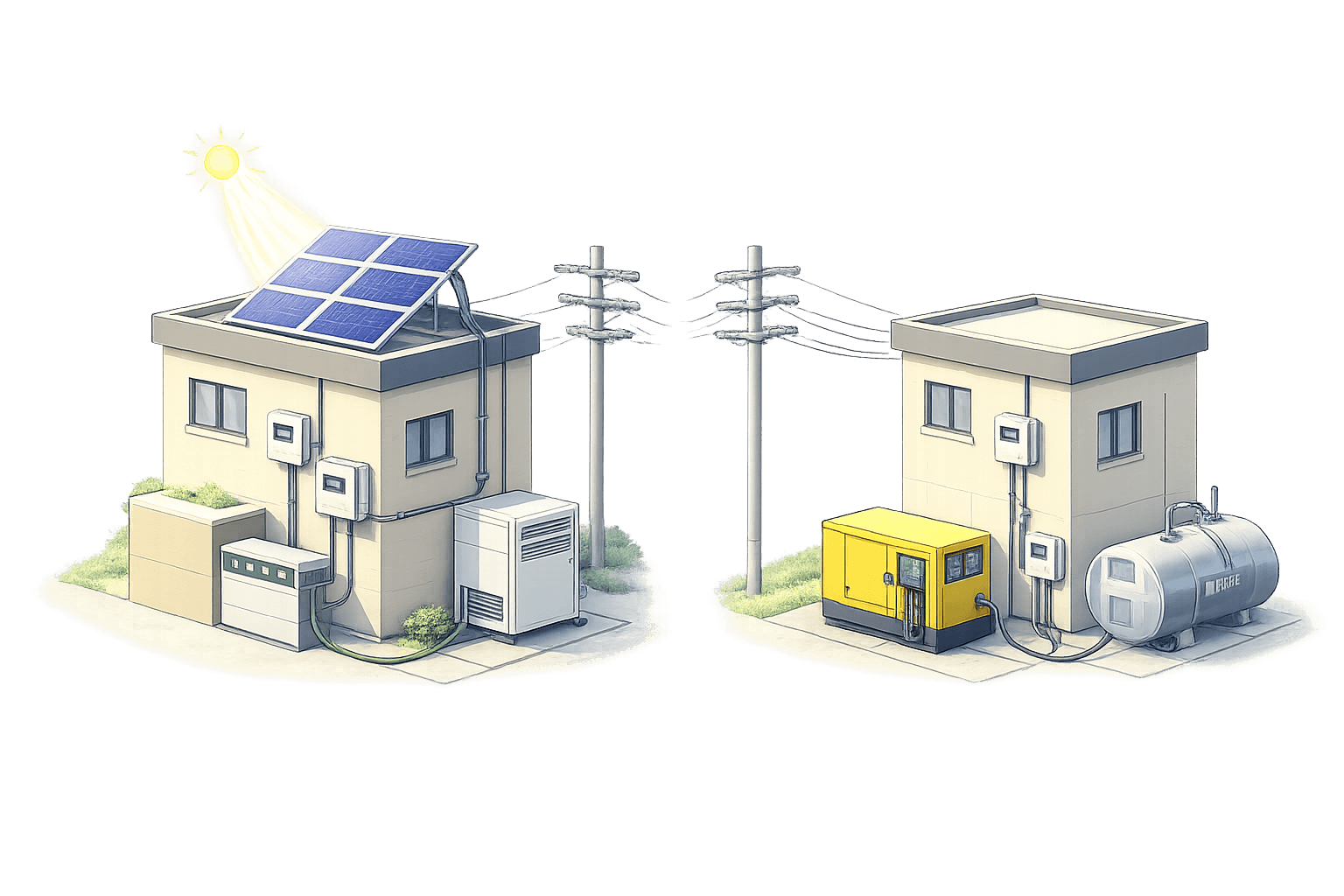
Energy Savings Potential Table
| Home Setup | Monthly Bill (Approx) | Annual Savings |
|---|---|---|
| Conventional Appliances | ₹8,000 – ₹10,000 | ₹0 (Baseline) |
| Fully BLDC Home | ₹5,200 – ₹6,500 | ₹25,000 – ₹32,000 |
| BLDC + Solar | ₹500 (Fixed charges) | ₹90,000+ |
Real Example: A 3BHK in Rohini
A family in Rohini was struggling with a ₹9,000 monthly bill. They had six old 80W fans running 18 hours a day and two 1.5-ton window ACs.
We recommended two things:
- Replace all 6 fans with 28W BLDC models (Cost: ~₹18,000).
- Install a 5kW Solar System instead of the 7kW they originally planned.
Result: The fan replacement alone dropped their consumption by nearly 200 units per month. By downsizing the solar plant, they saved enough money to pay for the new fans three times over. They now use our Solar Calculator to track how their lower "base load" makes their solar ROI even faster.
Maintenance and Reliability
I often get asked if these electronic motors fail more often because they have "circuitry." In our experience servicing 5,000+ rooftops through our AMC plans, BLDC motors actually have fewer mechanical failures. There are no carbon brushes to spark or wear out. The only vulnerability is high voltage surges, which is why we always recommend high-quality SPD (Surge Protection Devices) in your home's main distribution board.
If you are in Noida or Ghaziabad, where voltage fluctuations are common, a BLDC motor's ability to operate over a wide voltage range (typically 140V to 280V) without losing speed is a massive benefit.
FAQ
Is BLDC motor better than induction motor?
Yes, in almost every residential application. BLDC motors are up to 30% more efficient, quieter, and have a longer lifespan because they eliminate the friction caused by carbon brushes. While the upfront cost is slightly higher, the energy savings usually cover the difference within 1-2 years.
Can I run a BLDC fan on a normal inverter?
Yes. BLDC fans work perfectly with both square wave and sine wave inverters. In fact, because they consume so little power, your home inverter backup will last 2-3 times longer compared to running old induction fans.
Does a BLDC motor require maintenance?
Virtually none. Because there are no brushes to replace and the motor generates very little heat, the internal components don't degrade as fast as normal motors. You only need to keep the appliance clean and ensure it isn't subjected to extreme moisture or severe voltage spikes.
Why are BLDC motors used in solar pumps?
Solar panels produce DC power. Using a BLDC motor in a pump eliminates the need for a complex DC-to-AC converter, reducing energy loss. This allows the pump to start earlier in the morning and run later in the evening even when sunlight is weak.
Are BLDC appliances more expensive?
The price gap is closing fast. For example, a BLDC ceiling fan now costs only ₹500–₹1,000 more than a traditional star-rated fan. Given the current electricity rates in cities like Delhi and Gurgaon (₹7–₹8 per unit), the investment is a "no-brainer."
If you’re planning to go solar, don't just look at the roof. Look at what's spinning under your ceiling. Reducing your load with BLDC technology is the smartest first step toward energy independence.
Get a free quote for a system sized perfectly for your efficient, BLDC-powered home.
Every 1 kW of solar on your roof offsets 1.5 tonnes of CO₂ per year
That's 40 trees planted — every year, for 25 years.
A typical 5 kW home system offsets 187 tonnes of carbon over its lifetime. That's equivalent to taking 8 cars off the road.
See your impact →How much can you save with solar?
Enter your electricity bill → get system size, subsidy amount & payback period
Get StartedLiked this article? Get a free solar quote
Tell us about your rooftop — we'll call with exact savings for your home.
Related Articles
Net Metering in India: How to Sell Solar Power Back to the Grid
Learn how net metering in India allows you to sell solar power back to the grid. Discover state policies, savings examples, and how to reduce your bill by 90%.
Read moreWhat Is Captive Open Access Solar (100% Equity Model)
Learn how Captive Open Access Solar (100% Equity Model) helps Indian businesses cut electricity costs by 40% using off-site solar plants. Guide on rules, savings & ROI.
Read moreSolar Installation Cost in Delhi NCR 2026: 3 kW at ₹1.32L net
Updated 2026 guide to solar costs in Delhi NCR. Learn about PM Surya Ghar subsidies, system pricing from 1kW-10kW, and how to reach zero electricity bills.
Read moreRelated guides
Delhi Electricity Rate 2026
BSES & Tata Power per-unit rates, PPAC, subsidy — sourced from DERC.
ExploreDelhi Solar Policy 2026
Free rooftop solar up to 3 kW for homes under 400 units. Eligibility & apply.
ExploreSolar Panel Price in Delhi
Live 2026 rooftop prices in Delhi after ₹1.56L subsidy. 1,200+ installs.
ExploreSolar Company in Gurgaon
Gurgaon's rooftop solar installer — 800+ systems, ₹78K PM Surya Ghar subsidy.
ExploreSolar Company in Noida
Noida & Greater Noida rooftop solar — 500+ installs, ₹1.08L stacked subsidy.
ExploreSolar Panel Price in Faridabad
Live 2026 Faridabad prices after ₹78K PM Surya Ghar subsidy. 350+ homes.
Explore