
By Kajal Rajpoot · Reviewed by Arshi Chadha, Founder
How Many Units Does a 1.5 Ton AC Consume? Real Numbers for Indian Homes

A 1.5 ton non-inverter AC pulls approximately 1,500 to 1,800 watts continuously, which translates to 1.5 to 1.8 units of electricity every single hour it runs at full tilt. In a city like Delhi, where peak summer tariffs (including surcharges and PPAC) often cross ₹8 per unit, that one AC is burning through ₹12 to ₹15 every hour. If you’ve ever wondered why your June electricity bill looks like a small car EMI, this is the culprit.
As a field engineer who has audited over 2,000 rooftops in solar in Delhi and Gurgaon, I’ve seen thousands of homeowners shocked by their "AC season" bills. The AC is the single biggest electricity expense in the average Indian home, often accounting for 60-70% of the total summer load. But here is the catch: not all 1.5-ton units are equal. The AC power consumption per hour varies wildly depending on whether you’re running a legacy non-inverter model or a modern 5-star inverter unit.
The Real Breakdown: AC Power Consumption per Hour
Most people buy a 1.5 ton AC because it’s the "standard" for a 150-180 sq. ft. bedroom in India. However, the technology under the hood determines if you’ll pay ₹2,000 or ₹5,000 a month to run it.
A non-inverter AC works on a binary principle: the compressor is either 100% ON or 100% OFF. Once the room reaches the set temperature, it cuts off; when the temperature rises, it kicks back in with a massive current spike. An inverter AC, conversely, slows down the compressor motor to maintain temperature, significantly dropping the AC running cost per hour India residents have to deal with.
| AC Type & Capacity | Power Consumption (Units/Hour) |
|---|---|
| 1 Ton Non-Inverter | 1.2 units/hr |
| 1.5 Ton Non-Inverter | 1.8 units/hr |
| 1.5 Ton 3-Star Inverter | 0.9–1.2 units/hr |
| 1.5 Ton 5-Star Inverter | 0.7–0.9 units/hr |
Note: These are average hourly consumption figures once the room is stabilized. Initial startup consumption is always higher.
Monthly AC Cost: The Summer Budget Killer
Let's look at the math for a typical Indian household running their AC for 8 hours a day (standard sleep cycle plus a bit of afternoon usage). If you are using a standard residential tariff of ₹7.5 per unit—common for those in solar in Noida or Ghaziabad—the difference in annual savings is enough to buy a new AC every two years.
| AC Type (1.5 Ton) | Monthly Units (8 hrs/day) | Monthly Cost (at ₹7.5/unit) |
|---|---|---|
| Non-Inverter | 432 - 576 Units | ₹3,240 - ₹4,320 |
| 3-Star Inverter | 288 - 384 Units | ₹2,160 - ₹2,880 |
| 5-Star Inverter | 224 - 288 Units | ₹1,680 - ₹2,160 |
Running a legacy 1.5T AC for 6 months of the Indian summer will cost you between ₹19,000 and ₹25,000. In contrast, a 5-star inverter AC keeps that cost closer to ₹10,000–₹12,000. The star rating matters significantly more than the brand logo on the front panel. We’ve found that a 5-star AC saves roughly ₹8,000–₹12,000 per year compared to a 3-star AC of the same capacity.
Why Inverter AC vs Non-Inverter Power Consumption Matters
The reason a 5-star 1.5T inverter uses just 0.7–0.9 units/hr is "variable tonnage." When you first turn it on, it might consume 1.5 units to drop the room from 35°C to 24°C. But once it hits the target, the compressor draws very little power—sometimes less than a ceiling fan and a fridge combined—to stay there.
If you are still using a non-inverter AC, you are essentially paying a "legacy tax" to your DISCOM every month. The efficiency gap is nearly 50%. If you're wondering why your electricity bill is high even without AC in the winter, imagine the impact when these compressors start chugging in May.
Running Your AC on Solar: The Zero-Bill Strategy
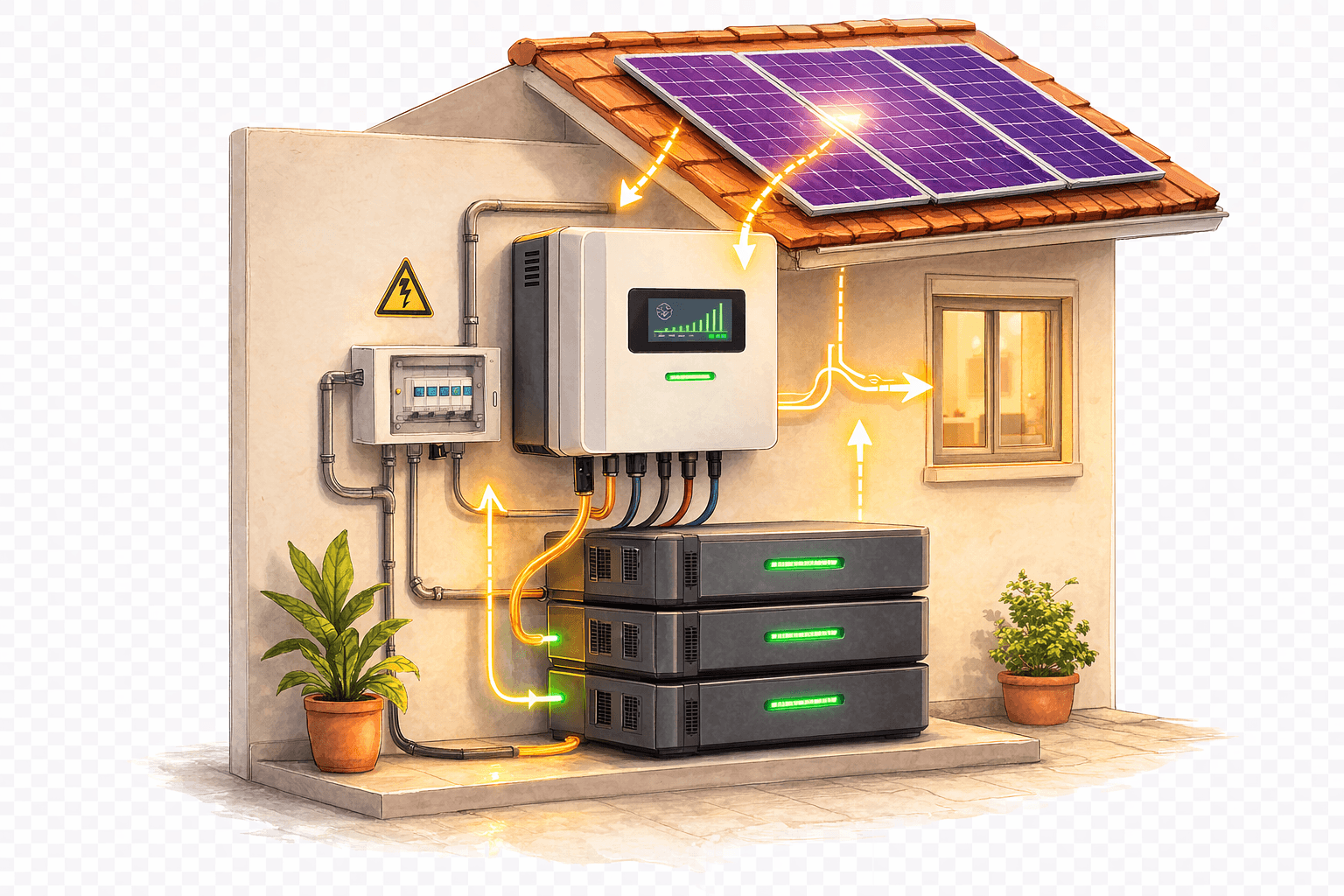
This is where my expertise at Bridgeway Power comes in. Most customers ask: "Can I run my AC on solar?" The answer is a loud yes, but the system size depends entirely on the 1.5 ton AC units per hour your specific model consumes.
If you have a 1.5T non-inverter AC, you need a larger solar plant to handle the startup surge and the continuous high draw. If you have a 5-star inverter AC, you can get away with a much smaller, cheaper system.
| AC Type (1.5 Ton) | Solar System Size Recommended | Estimated Cost (After Subsidy) |
|---|---|---|
| 1.5T Non-Inverter | 3kW Solar System | ₹84,000 - ₹1,32,000* |
| 1.5T 5-Star Inverter | 1.5kW - 2kW Solar System | ₹60,000 - ₹90,000 |
*Note: In Delhi, a 3kW system for eligible consumers can be effectively zero-cost under the Delhi Solar Policy 2026. Otherwise, the PM Surya Ghar Muft Bijli Yojana provides up to ₹78,000 in central subsidy.
A 2kW solar system generates about 8-9 units a day on average in solar in Gurgaon. That is exactly what a 5-star 1.5T inverter AC needs for 8-10 hours of daytime running. Essentially, the sun pays for your comfort. By pairing a 5-star inverter AC with solar, your cooling cost drops from ₹20,000 per summer to near zero. You can use our Solar Calculator to see exactly how many panels your specific bill requires.
Talk to a solar engineer — not a salesperson
Enter your pincode and monthly bill. If we install in your area, an engineer answers on WhatsApp with your numbers.
What would solar save on YOUR bill?
Real-World Example: A 3BHK in Janakpuri
We recently visited a 3BHK home in solar in Janakpuri. They had two 1.5T ACs (one 5-star inverter, one old 3-star non-inverter). Their June bill was hitting ₹8,500.
We installed a 5kW solar system. Because they were in Delhi and their average consumption was above 400 units, they didn't qualify for the "free" 3kW scheme but still received the maximum ₹78,000 central subsidy plus the state's ₹78,000 capital subsidy (Total ₹1.56L off).
- Before Solar: ₹8,500 monthly summer bill.
- After Solar: ₹400 (Fixed charges + taxes).
- Payback: The system will pay for itself in less than 3 summers.
If you're dealing with a similar ₹10,000 monthly electricity bill, solar isn't just an "option"—it's a financial necessity.
Pro Tips for Lowering AC Electricity Bill India
- The 24°C Rule: Every degree you lower below 24°C increases AC power consumption per hour by about 6%. Setting your AC to 18°C doesn't cool the room faster; it just makes the compressor work longer and harder.
- Maintenance is Key: Dirty filters and outdoor units (condensers) reduce heat exchange efficiency. A choked AC can consume 20% more power. We often see this during our AMC visits—cleaning the panels is vital, but maintaining the load (AC) is just as important.
- Use the Timer: Most people leave the AC on all night. Setting a timer to switch off at 4:00 AM, when the ambient temperature drops, can save 2-3 units per night.
- Check Your Insulation: Even the best solar-powered AC will fail to save money if cool air is escaping through gaps in doors or windows.
Financing Your Solar-AC Setup
If the upfront cost of a 3kW or 5kW system feels high, remember that banks like SBI PM Surya Ghar Loan or Canara Bank Solar Loan offer specialized rooftop solar loans. For those looking for private financing, ECOFY Solar Financing and Aerem Solar Finance provide quick approvals for residential installations.
Installing solar is essentially pre-paying 25 years of electricity at a fraction of the cost. When you factor in the Delhi GBI (Generation-Based Incentive) of ₹3/unit, the government actually pays you to stay cool.
Get a free quote for your roof today and stop dreading the summer heat.
FAQ
How many units does a 1.5 ton AC consume per day?
Assuming 8 hours of usage, a 1.5 ton 5-star inverter AC consumes about 6–7 units per day. A non-inverter model of the same capacity will consume 12–14 units per day. This makes a massive difference in your monthly AC electricity bill India residents see during peak summer.
Can I run a 1.5 ton AC on a 2kW solar system?
Yes, you can run one 1.5 ton 5-star inverter AC on a 2kW solar system comfortably during the day. However, a 2kW system will only cover the AC's consumption. If you have other loads like a fridge, lights, and fans, a 3kW system is recommended to reach a "zero bill" status.
Which is better for solar: Inverter or Non-Inverter AC?
Inverter ACs are significantly better for solar. They don't have the high "starting current" (surge) that non-inverter ACs have, which means you don't need a massive inverter or battery bank to handle the startup. Moreover, the lower AC power consumption per hour means you need fewer solar panels.
Does setting the AC to 16 degrees cool the room faster?
No. An AC's cooling rate is constant. Setting it to 16°C just tells the compressor to keep running until the room hits that temperature. Since 16°C is nearly impossible to reach in Indian summers with standard insulation, the compressor never shuts off, leading to a massive spike in AC running cost per hour India homeowners pay.
Is it worth replacing an old non-inverter AC with a 5-star inverter AC?
Yes. If your current AC is a non-inverter model more than 5 years old, the electricity savings alone will pay for a new 5-star inverter AC in about 3 summers. If you pair this upgrade with a rooftop solar installation, the ROI becomes even more attractive.
How much does it cost to run a 1.5 ton AC for 1 hour?
At an average Delhi/NCR tariff of ₹8 per unit (including taxes), a 1.5T non-inverter AC costs about ₹14.40 per hour. A 5-star inverter AC costs about ₹6.40 per hour once the room is cool. Over a month, this difference can exceed ₹2,000 for a single AC unit.
Stop letting your AC dictate your bank balance. A 5-star inverter AC paired with a properly sized rooftop solar system is the only way to beat the Indian summer without the bill shock. The technology exists, the subsidies are at an all-time high, and the sun is free. Check your roof's potential and start saving. ⚡",excerpt:
Every 1 kW of solar on your roof offsets 1.5 tonnes of CO₂ per year
That's 40 trees planted — every year, for 25 years.
A typical 5 kW home system offsets 187 tonnes of carbon over its lifetime. That's equivalent to taking 8 cars off the road.
See your impact →How much can you save with solar?
Enter your electricity bill → get system size, subsidy amount & payback period
Get StartedLiked this article? Get a free solar quote
Tell us about your rooftop — we'll call with exact savings for your home.
Related Articles
What Is Captive Open Access Solar (100% Equity Model)
Learn how Captive Open Access Solar (100% Equity Model) helps Indian businesses cut electricity costs by 40% using off-site solar plants. Guide on rules, savings & ROI.
Read moreHow Rooftop Solar Can Eliminate Your Electricity Bill
Discover how Net Metering and PM Surya Ghar subsidies can reduce your monthly electricity bill to near-zero. Learn about system sizing, costs, and real-world savings.
Read moreSolar Subsidy in Uttar Pradesh 2026: ₹1,08,000 for Noida, Ghaziabad & Greater Noida
UP's stacked solar subsidy 2026: ₹78,000 central + ₹30,000 UPNEDA state top-up = ₹1.08L. Real PVVNL net-cost math for Noida, Greater Noida, Ghaziabad & Meerut.
Read moreRelated guides
Delhi Electricity Rate 2026
BSES & Tata Power per-unit rates, PPAC, subsidy — sourced from DERC.
ExploreDelhi Solar Policy 2026
Free rooftop solar up to 3 kW for homes under 400 units. Eligibility & apply.
ExploreSolar Panel Price in Delhi
Live 2026 rooftop prices in Delhi after ₹1.56L subsidy. 1,200+ installs.
ExploreSolar Company in Gurgaon
Gurgaon's rooftop solar installer — 800+ systems, ₹78K PM Surya Ghar subsidy.
ExploreSolar Company in Noida
Noida & Greater Noida rooftop solar — 500+ installs, ₹1.08L stacked subsidy.
ExploreSolar Panel Price in Faridabad
Live 2026 Faridabad prices after ₹78K PM Surya Ghar subsidy. 350+ homes.
Explore