
By Kajal Rajpoot · Reviewed by Arshi Chadha, Founder
Solar Wheeling Charges in Maharashtra MERC 2026
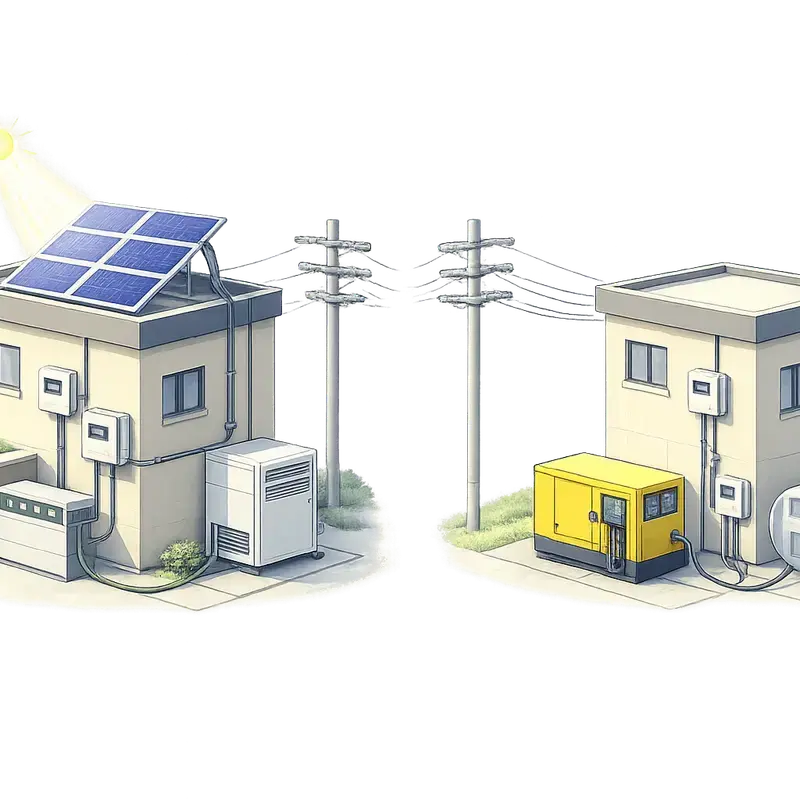
- •Primary Cost Component: Solar wheeling charges in Maharashtra are mandated by MERC for using the MSEDCL/BEST grid.
- •Who it Impacts: Commercial and Industrial (C&I) consumers using Open Access Solar.
- •Current 2025-26 Average: Ranges between ₹1.20 to ₹1.60 per unit depending on voltage level.
- •Savings Potential: Even with wheeling charges, solar reduces landed power costs by 20–35% for factories.
- •Key Policy: MERC Multi-Year Tariff (MYT) Order.
You're checking the rate — now see how much of your bill solar erases
Wheel is often a term associated with motion, but in the world of Maharashtra’s power sector, it represents the vital "toll tax" paid by businesses to transport clean energy from a solar park to their factory gates. For a business owner in Pune, Mumbai, or Nagpur, understanding solar wheeling charges maharashtra is the difference between a project that pays for itself in 3 years and one that drags on for 6.
Maharashtra has always been a leader in industrialization, but with electricity tariffs for HT (High Tension) consumers often crossing ₹9–10 per unit, the "Maharashtra Electricity Regulatory Commission" (MERC) has created a complex web of charges for those looking to bypass the grid using Open Access.
Whether you are looking at a Group Captive model or a Third-Party PPA, this guide breaks down every paisa you will pay in 2026.
What are Solar Wheeling Charges?
In simple terms, "Wheeling" is the operation of using the distribution system and associated facilities of a transmission licensee or distribution licensee. If you install solar panels on your own roof, you don't pay wheeling charges. However, if you "buy" solar power from a farm located 100km away, you are using the state's wires to get that power to your premises.
The MERC (Maharashtra Electricity Regulatory Commission) determines these charges annually to ensure that DISCOMs like MSEDCL, Adani Electricity, and Tata Power are compensated for the wear and tear of their infrastructure.
The Difference Between Transmission and Wheeling
While often used interchangeably, they are different:
- Transmission Charges: Paid for using the high-voltage "highways" (STU/MSETCL).
- Wheeling Charges: Paid for using the "local roads" or the distribution network (MSEDCL/BEST).
Solar Wheeling Charges in Maharashtra 2025-2026 Breakdown
The following table represents the projected and applicable wheeling charges for HT and LT consumers in Maharashtra for the 2025-26 fiscal year based on recent MERC tariff orders.
Table 1: Wheeling Charges by Voltage Level (MSEDCL)
| Voltage Level | Wheeling Charge (₹/unit) | Wheeling Loss (%) |
|---|---|---|
| HT Level (33 kV) | ₹0.18 - ₹0.25 | 6.0% |
| HT Level (22 kV / 11 kV) | ₹0.85 - ₹1.05 | 9.0% |
| LT Level | ₹1.45 - ₹1.70 | 12.0% |
Note: These are indicative figures based on current MERC MYT trajectories. Actual bills may vary by ±5% based on specific DISCOM surcharge adjustments.
Is solar worth it in 2026? For most Maharashtra industries, the answer remains a resounding yes, even when these charges are factored in.
Additional Charges for Open Access Solar in Maharashtra
Wheeling is just one slice of the pie. To calculate your "Landed Cost" of solar power, you must account for several other statutory entries.
1. Cross-Subsidy Surcharge (CSS)
This is the most significant "penalty" for open access. It is designed to compensate the DISCOM for losing a high-paying commercial customer. However, under the Group Captive model (where the consumer holds 26% equity in the solar plant), CSS is 100% waived.
- Typical CSS in Maharashtra: ₹1.50 to ₹2.20 per unit.
- Check out our detailed guide on Cross-Subsidy Surcharge (CSS) 2026.
2. Additional Surcharge (AS)
This charge covers the "stranded cost" of power purchase agreements the DISCOM has already signed. Like CSS, this is often waived for Captive and Group Captive projects in Maharashtra.
3. Transmission Charges & Losses
If the solar plant is connected at the 132kV level or higher, you pay State Transmission Utility (STU) charges.
- Current Rate: ~₹0.40 per unit.
4. Banking Charges
Solar energy is generated during the day, but many factories run 24/7. "Banking" allows you to store excess day-time energy with the grid and withdraw it at night.
- MERC Banking Charge: Usually 2% to 10% of the energy banked (in-kind).
Real Example: A Textile Mill in Bhiwandi
Let's look at a 1 MW Open Access Solar project for a textile mill under the Group Captive model.
- Grid Tariff (MSEDCL): ₹8.50 per unit
- Solar PPA Rate: ₹4.00 per unit
- Wheeling Charges: ₹0.85 per unit
- Transmission Charges: ₹0.40 per unit
- Transmission/Wheeling Losses: ~9% (effectively adds ₹0.45 to the cost)
- CSS/AS: ₹0 (Waived due to Group Captive)
- Landed Solar Cost: ₹4.00 + ₹0.85 + ₹0.40 + ₹0.45 = ₹5.70 per unit
Total Savings: ₹8.50 (Grid) - ₹5.70 (Solar) = ₹2.80 per unit.
With 15 lakh units generated annually, the factory saves ₹42 Lakhs per year.
For MSMEs looking for similar math on a smaller scale, check the MSME solar plant cost in India.
Talk to a solar engineer — not a salesperson
Enter your pincode and monthly bill. If we install in your area, an engineer answers on WhatsApp with your numbers.
See how much of this bill solar erases
Impact of PM Surya Ghar & MERC Updates
While the PM Surya Ghar Yojana 2026 primarily targets residential rooftops (up to 10kW), it has shifted the mindset of the state government toward decentralized energy. However, for industrial stakeholders, the MERC's focus remains on balancing the financial health of MSEDCL with the renewable energy targets set by the MNRE.
The 2026 outlook suggests that while solar wheeling charges maharashtra might see a slight inflationary climb (3-5%), the escalating costs of coal-based power will keep the "Solar-vs-Grid" gap wide enough to remain profitable.
Table 2: Comparison of Solar Models in Maharashtra (2026)
| Feature | Rooftop Solar (Capex) | Group Captive (Open Access) | Third Party PPA |
|---|---|---|---|
| Wheeling Charges | Zero | Applicable (HT) | Applicable (HT) |
| CSS / AS | Zero | Waived | Applicable |
| Initial Investment | High | Low (Equity only) | Zero |
| Landed Cost | Lowest (~₹2.5/unit) | Mid (~₹5.5/unit) | High (~₹7.5/unit) |
How to Apply for Solar Open Access in Maharashtra
- Feasibility Study: Check if your sanctioned load is above 100 kW (the minimum threshold for Open Access in most cases).
- NOC from DISCOM: Obtain a No-Objection Certificate from MSEDCL/BEST.
- MERC Registration: Register the project with the state nodal agency.
- PPA Execution: Sign the Power Purchase Agreement and Wheeling Agreement.
- Metering: Install Special Energy Meters (SEM) for time-of-day logging.
Navigating this process can be daunting. Exploring options like Commercial Solar Loans can help bridge the gap for those wanting to own their assets instead of paying wheeling charges for decades.
Why 2026 is the Year for Solar in Maharashtra
With the introduction of Green Energy Open Access (GEOA) rules, the limit for open access has been lowered from 1 MW to 100 kW. This means even a large showroom or a small cold storage unit can now benefit from solar parks located elsewhere.
However, "Solar Panels Don't Fail. Systems Do." As we often discuss in our maintenance guide, ensuring your metering and wheeling agreements are correctly audited is as important as cleaning the panels. Inaccurate billing by DISCOMs regarding wheeling losses is one of the most common reasons for "missing" ROI.
Frequently Asked Questions
What are wheeling charges for solar in Maharashtra?
Wheeling charges are the fees paid to the local distribution company (like MSEDCL) for using their network to transport solar electricity from a remote site to your facility. For 2026, these range from ₹0.20 to ₹1.70 per unit depending on the voltage.
Is wheeling charge applicable for rooftop solar?
No. If the solar panels are installed on the same premises where the electricity is consumed (behind-the-meter), no wheeling charges are applicable because you aren't using the external grid for transport.
Can I avoid solar wheeling charges in Maharashtra?
The only way to avoid these charges is to install a Rooftop Solar System on your own roof or enter into a Virtual Net Metering agreement if permitted under specific state categories.
How are wheeling losses calculated?
Wheeling losses are the units "lost" as heat during transmission through the wires. In Maharashtra, MERC sets these at roughly 6% for 33kV and up to 12% for LT lines. If you inject 100 units, you might only get credit for 88 units at the consumption end.
What is the minimum load required for solar open access?
Per the Green Energy Open Access Rules, any consumer with a contracted demand of 100 kW or more can opt for solar open access and pay the applicable wheeling charges.
Conclusion
Understanding solar wheeling charges maharashtra is the key to unlocking massive industrial savings. While these charges are a mandatory part of the Open Access ecosystem, the Group Captive model remains the "gold standard" for Maharashtra’s industries to bypass the most expensive surcharges.
At Bridgeway Power, we bring 35+ years of expertise in helping businesses navigate the complexities of MERC regulations and DISCOM paperwork. Whether you want to install on your roof or source from a solar park, we ensure your ROI is protected against hidden grid costs.
Ready to see exactly how much you can save? Use our Solar Calculator or book a free industrial site audit with our experts today.",excerpt:
Every 1 kW of solar on your roof offsets 1.5 tonnes of CO₂ per year
That's 40 trees planted — every year, for 25 years.
A typical 5 kW home system offsets 187 tonnes of carbon over its lifetime. That's equivalent to taking 8 cars off the road.
See your impact →How much can you save with solar?
Enter your electricity bill → get system size, subsidy amount & payback period
Get StartedGo solar without owning a rooftop
Community Solar gives commercial & institutional consumers the same savings — zero capex, zero roof needed.
Or get a free solar quote
Tell us about your rooftop — we'll call with exact savings for your home.
Related Articles
What Is Captive Open Access Solar (100% Equity Model)
Learn how Captive Open Access Solar (100% Equity Model) helps Indian businesses cut electricity costs by 40% using off-site solar plants. Guide on rules, savings & ROI.
Read moreHow Rooftop Solar Can Eliminate Your Electricity Bill
Discover how Net Metering and PM Surya Ghar subsidies can reduce your monthly electricity bill to near-zero. Learn about system sizing, costs, and real-world savings.
Read moreSolar Subsidy in Uttar Pradesh 2026: ₹1,08,000 for Noida, Ghaziabad & Greater Noida
UP's stacked solar subsidy 2026: ₹78,000 central + ₹30,000 UPNEDA state top-up = ₹1.08L. Real PVVNL net-cost math for Noida, Greater Noida, Ghaziabad & Meerut.
Read moreRelated guides
Delhi Electricity Rate 2026
BSES & Tata Power per-unit rates, PPAC, subsidy — sourced from DERC.
ExploreDelhi Solar Policy 2026
Free rooftop solar up to 3 kW for homes under 400 units. Eligibility & apply.
ExploreSolar Panel Price in Delhi
Live 2026 rooftop prices in Delhi after ₹1.56L subsidy. 1,200+ installs.
ExploreSolar Company in Gurgaon
Gurgaon's rooftop solar installer — 800+ systems, ₹78K PM Surya Ghar subsidy.
ExploreSolar Company in Noida
Noida & Greater Noida rooftop solar — 500+ installs, ₹1.08L stacked subsidy.
ExploreSolar Panel Price in Faridabad
Live 2026 Faridabad prices after ₹78K PM Surya Ghar subsidy. 350+ homes.
Explore