
By Kajal Rajpoot · Reviewed by Arshi Chadha, Founder
Haryana Solar Net Metering: UHBVN and DHBVN Process
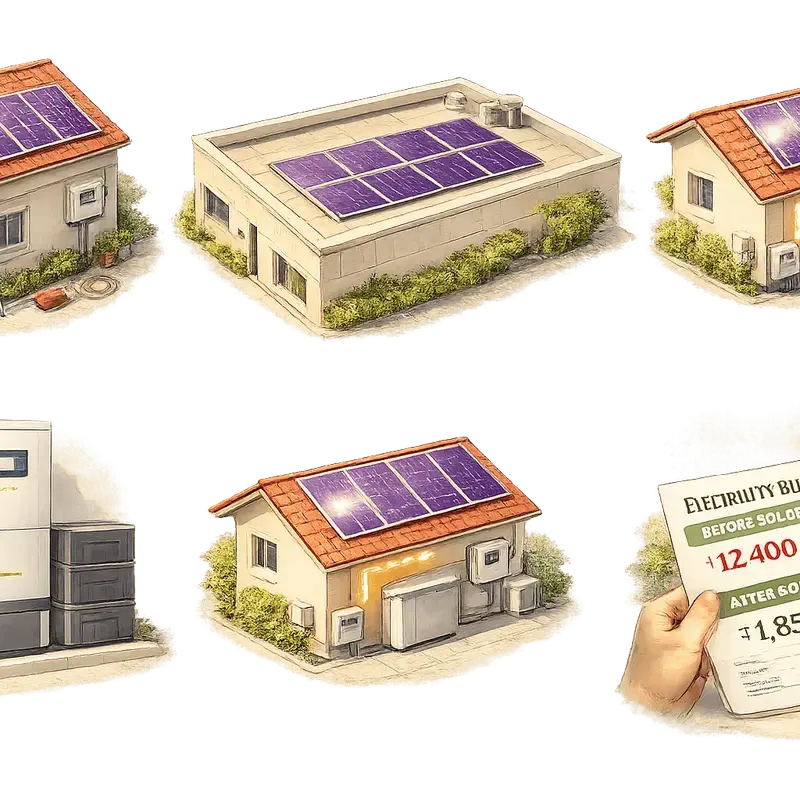
- •Average Connection Timeline: 45–60 Days
- •Primary Portals: [UHBVN](https://www.uhbvn.org.in) / [DHBVN](https://www.dhbvn.org.in)
- •Subsidy Applicable: Up to ₹78,000 (PM Surya Ghar)
- •Net Metering Settlement: Annual (Settled in April)
- •Key Benefit: Rollover of surplus units to next month
Haryana’s electricity tariffs for domestic consumers hit ₹7.1 per unit once you cross the 800-unit monthly mark. For a large home in Gurgaon or a farmhouse in Sonipat, that’s not just a bill; it’s a significant monthly liability. We’ve installed over 25 MW of solar across North India, and I can tell you plainly: the technology is the easy part. The real challenge in Haryana is navigating the solar connection UHBVN and DHBVN paperwork.
If you’re under Uttar Haryana Bijli Vitran Nigam (UHBVN) or Dakshin Haryana Bijli Vitran Nigam (DHBVN), the process is now unified under the PM Surya Ghar Yojana portal, but the field-level execution remains with your local subdivision office.
Navigating the UHBVN and DHBVN Solar Portals
Getting a uhbvn solar connection or a DHBVN one starts online. Gone are the days of chasing the Junior Engineer (JE) with physical files. Today, everything from your application to your subsidy claim happens digitally.
The first step is ensuring your "Sanctioned Load" is sufficient. In Haryana, your solar system capacity cannot exceed your sanctioned load. If you have a 5kW connection but want a 6kW solar plant, you must first apply for a load enhancement. If you’re unsure about your current load or what size system fits your roof, use our Solar Calculator to map it out.
Registration Steps
- Portal Login: Register on the National Portal using your consumer number and mobile.
- Vendor Selection: You must choose an empanelled vendor like Bridgeway Power to ensure your system qualifies for the PM Surya Ghar Muft Bijli Yojana.
- Document Upload: You'll need a recent bill, ID proof, and a site photograph.
Feasibility Approval and Site Inspection in Haryana
Once you apply for solar uhbvn or DHBVN, the file moves to the SDO (Sub-Divisional Officer). This is where most people get stuck. The DISCOM needs to verify if the local transformer can handle additional solar injection. Per MNRE guidelines, solar capacity is usually capped at 80-100% of the transformer capacity.
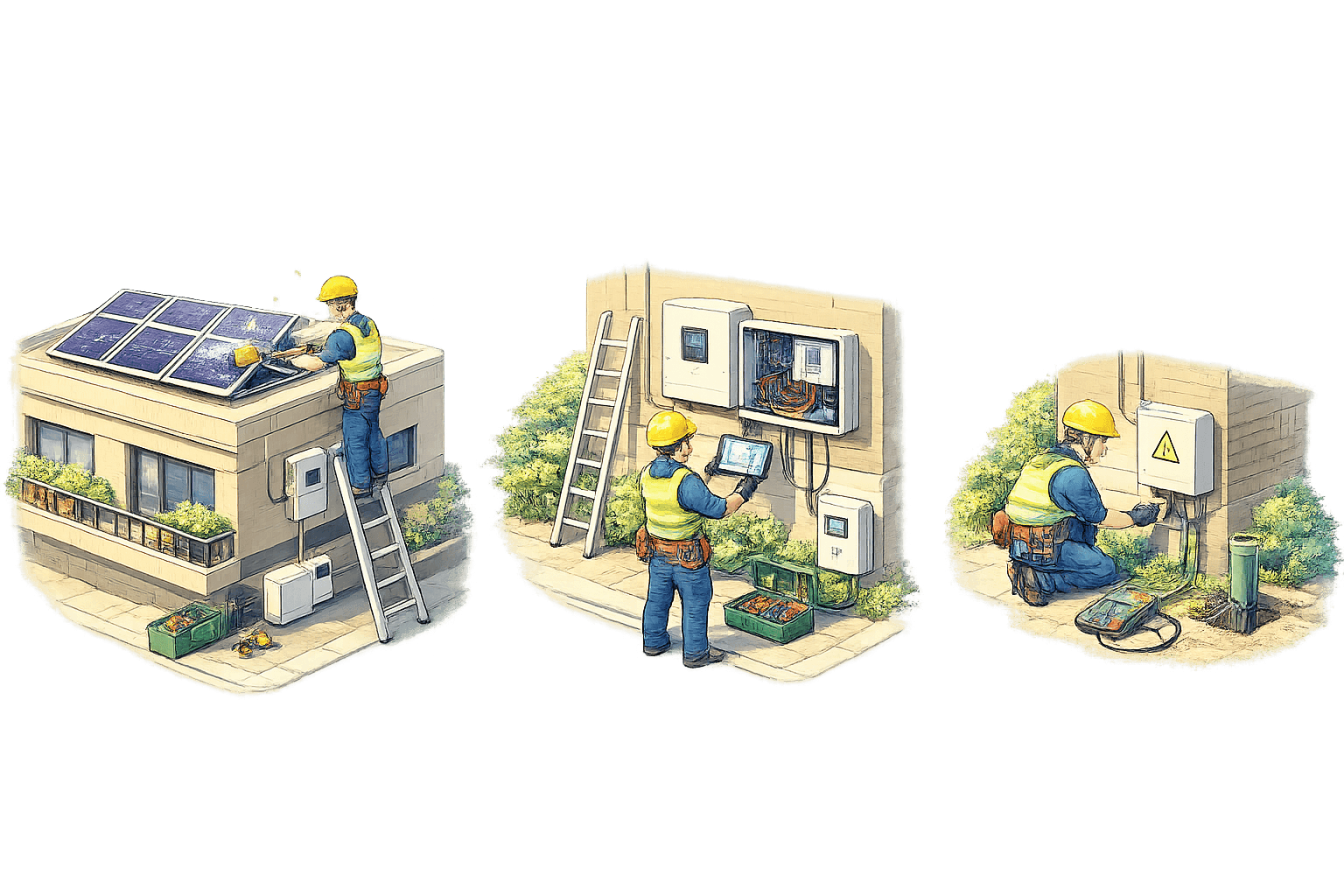
A field officer will visit your site to check:
- Roof structural integrity.
- Space for the bidirectional meter (Net Meter).
- Correct earthing and lightning arrestor placement.
We’ve seen applications in solar in Gurgaon move faster than in rural areas simply because the infrastructure in sectors is newer. However, if your local transformer is overloaded, you might face a "technical non-feasibility" report. This is why we conduct a pre-check during our site survey to catch these issues before you pay any application fees.
UHBVN vs DHBVN: Step-by-Step Connection Timeline
The timeline for a uhbvn solar connection versus a DHBVN one is largely similar, but the speed often depends on the specific circle (e.g., Hisar vs. Rohtak).
| Step | Action | Responsibility | Estimated Days |
|---|---|---|---|
| 1 | Registration & Technical Feasibility | Consumer/Vendor | 7–15 Days |
| 2 | System Installation | Empanelled Vendor | 3–7 Days |
| 3 | Work Completion Report Submission | Vendor | 2 Days |
| 4 | Inspection & Safety Certificate | DISCOM (JE/SDO) | 10–15 Days |
| 5 | Net Meter Procurement & Testing | Consumer/Vendor | 7–10 Days |
| 6 | Commissioning & Net Meter Install | DISCOM | 5–10 Days |
| Total | Applied to Commissioned | 45–60 Days |
Understanding Credits on the Haryana Electricity Bill
The magic of dhbvn solar happens in the billing. Haryana follows a "Net Metering" mechanism. If your panels produce 600 units and you only use 400, the remaining 200 units are "banked" with the DISCOM.
On your bill, you will see three main readings:
- Import: Units you took from the grid (at night).
- Export: Units you sent to the grid (during the day).
- Net Energy: Import minus Export.
If your Net Energy is negative (you exported more than you imported), you only pay the "Fixed Charges" and relevant surcharges like the FSA (Fuel Surcharge Adjustment), which in Haryana is currently ₹0.47/unit on the imported units. The surplus units roll over month-to-month. On March 31st (financial year-end), if you still have a credit balance, the DISCOM pays you at the Average Power Purchase Cost (APPC) rate, which is significantly lower than the retail tariff. This is why we always advise against oversizing your system; the goal is to zero out your bill, not to become a power plant for the government.
Check out our guide on Net Metering in Haryana for a deeper look at the math.
Talk to a solar engineer — not a salesperson
Enter your pincode and monthly bill. If we install in your area, an engineer answers on WhatsApp with your numbers.
Translate your bill into a system size
Common Hurdles in the Haryana Solar Process
We’ve been doing this for 35+ years, and the hurdles are almost always administrative, not technical.
- Net Meter Availability: Sometimes UHBVN stores run out of tested meters. We often advise clients to purchase their own DLMS-compliant meter from approved makes like Secure or Genus to speed things up.
- Load Mismatch: If your bill says 3kW but you have 5 ACs, the JE will flag it during inspection. You’ll be forced to pay for a load enhancement before the solar connection is granted.
- Subsidy Delays: If the photos uploaded to the portal aren't clear or the geo-tagging is off, the central subsidy gets stuck. We handle this entire digital trail for our clients to avoid these bottlenecks.
Real Example: A 10kW System in Faridabad
A homeowner in solar in Faridabad was paying an average monthly bill of ₹12,000. Their sanctioned load was 10kW. We installed a 10kW system using Topcon Mono PERC panels.
- Daily Generation: 40–45 units.
- Monthly Generation: ~1,250 units.
- Bill Impact: The bill dropped to just the fixed charges (~₹1,500 including taxes and surcharges).
- Payback: With the ₹78,000 PM Surya Ghar Yojana subsidy, their net investment was recovered in just under 4 years.
If you are looking for similar results in solar in Noida or elsewhere in NCR, the math remains just as compelling.
FAQ
How long does the solar connection uhbvn process take?
The entire process from applying on the national portal to the physical installation of the net meter typically takes 45 to 60 days. This includes the 15-day window for technical feasibility approval and the time required for the DISCOM to test and install the bidirectional meter.
Can I install solar if my DHBVN bill is in a tenant's name?
No, the solar application must be made by the registered owner of the electricity connection. If you are a tenant, you will need the landlord to apply. If you own the property but the bill is still in the previous owner's name, you must complete the name change process with DHBVN first.
Does Haryana offer a state subsidy on top of the central subsidy?
Currently, there is no additional state-level cash subsidy for residential solar in Haryana. However, homeowners are eligible for the Central Government's PM Surya Ghar Muft Bijli Yojana, which provides up to ₹78,000 for systems up to 3kW. Check our Haryana Solar Subsidy Guide for the latest updates.
What happens to my surplus units at the end of the year?
In Haryana, surplus units are carried forward month-to-month until the end of the financial year (March 31st). At that point, any remaining credit is settled by UHBVN/DHBVN at the APPC rate, and the credit cycle resets for the new financial year.
Is it mandatory to buy the net meter from UHBVN?
No, you can purchase a DHBVN/UHBVN approved bidirectional meter from the open market. This is often faster as DISCOM stocks can be limited. However, the meter must still be sent to the DISCOM M&T (Measurement & Testing) lab for official testing and sealing before installation.
The most important thing to remember is that solar is a 25-year asset. Don't let a 60-day paperwork cycle deter you from decades of free energy. If you’re ready to start, Get a free quote and we’ll handle the UHBVN/DHBVN headache for you.
Every 1 kW of solar on your roof offsets 1.5 tonnes of CO₂ per year
That's 40 trees planted — every year, for 25 years.
A typical 5 kW home system offsets 187 tonnes of carbon over its lifetime. That's equivalent to taking 8 cars off the road.
See your impact →How much can you save with solar?
Enter your electricity bill → get system size, subsidy amount & payback period
Get StartedTranslate your bill into a system size
Related Articles
What Is Captive Open Access Solar (100% Equity Model)
Learn how Captive Open Access Solar (100% Equity Model) helps Indian businesses cut electricity costs by 40% using off-site solar plants. Guide on rules, savings & ROI.
Read moreHow Rooftop Solar Can Eliminate Your Electricity Bill
Discover how Net Metering and PM Surya Ghar subsidies can reduce your monthly electricity bill to near-zero. Learn about system sizing, costs, and real-world savings.
Read moreSolar Subsidy in Uttar Pradesh 2026: ₹1,08,000 for Noida, Ghaziabad & Greater Noida
UP's stacked solar subsidy 2026: ₹78,000 central + ₹30,000 UPNEDA state top-up = ₹1.08L. Real PVVNL net-cost math for Noida, Greater Noida, Ghaziabad & Meerut.
Read moreRelated guides
Delhi Electricity Rate 2026
BSES & Tata Power per-unit rates, PPAC, subsidy — sourced from DERC.
ExploreDelhi Solar Policy 2026
Free rooftop solar up to 3 kW for homes under 400 units. Eligibility & apply.
ExploreSolar Panel Price in Delhi
Live 2026 rooftop prices in Delhi after ₹1.56L subsidy. 1,200+ installs.
ExploreSolar Company in Gurgaon
Gurgaon's rooftop solar installer — 800+ systems, ₹78K PM Surya Ghar subsidy.
ExploreSolar Company in Noida
Noida & Greater Noida rooftop solar — 500+ installs, ₹1.08L stacked subsidy.
ExploreSolar Panel Price in Faridabad
Live 2026 Faridabad prices after ₹78K PM Surya Ghar subsidy. 350+ homes.
Explore