
By Mahendra Singh · Reviewed by Arshi Chadha, Founder
PM Surya Ghar Subsidy Stuck? How to Clear Portal and DISCOM Queries
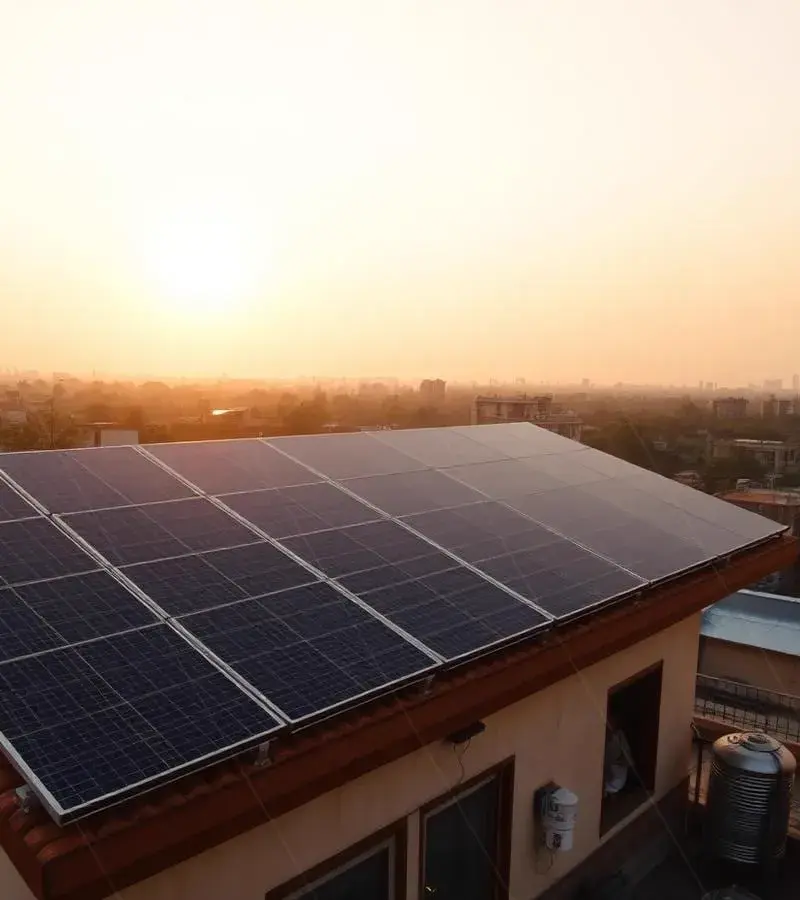
Subsidy stuck? We'll chase the DISCOM.
Send us your application number. We file and follow up PM Surya Ghar and net-metering approvals across BRPL, BYPL, TPDDL and DHBVN.
Quick answer
A PM Surya Ghar subsidy stalls at one of four checkpoints: vendor registration, DISCOM technical feasibility, post-installation inspection, or the final bank transfer. The subsidy is released only after your DISCOM inspects the plant, installs the net meter and uploads the commissioning certificate to the national portal. Central amounts are Rs.30,000 up to 2 kW, Rs.60,000 up to 3 kW and Rs.78,000 at 3 kW and above.
| Location | Central subsidy | State top-up | Total on 3 kW |
|---|---|---|---|
| Delhi (domestic, up to 400 units/mo) | Rs.78,000 | Rs.78,000 | Rs.1,56,000 |
| Uttar Pradesh | Rs.78,000 | Rs.30,000 | Rs.1,08,000 |
| Haryana (Gurugram, Faridabad) | Rs.78,000 | Rs.0 | Rs.78,000 |
- •Central subsidy: ₹30,000 up to 2 kW, ₹60,000 up to 3 kW, ₹78,000 at 3 kW and above.
- •Delhi adds a state capital subsidy of ₹78,000, stacking to ₹1,56,000.
- •Uttar Pradesh adds ₹30,000; Haryana has no state top-up — central only.
- •Money is released to your bank account only after the DISCOM uploads the commissioning certificate.
- •The most common blocker in NCR is a pending DISCOM inspection, not a portal bug.
Short answer: A PM Surya Ghar subsidy is "stuck" at one of four checkpoints: vendor registration, DISCOM technical feasibility, post-installation inspection, or the final bank transfer. The subsidy is released only after your DISCOM inspects the plant, installs the net meter and uploads the commissioning certificate to the national portal. Until that upload happens, no amount of waiting moves the money. Find which stage your application is parked at, then clear that specific query.
The five stages, and where applications actually stall
| Stage | Who acts | Typical stall |
|---|---|---|
| 1. Application + feasibility | You, then DISCOM | Sanctioned load lower than proposed system size |
| 2. Vendor selection | You | Vendor not registered on the portal for your DISCOM |
| 3. Installation | Vendor | Plant installed but details never uploaded |
| 4. Inspection + net meter | DISCOM | The big one — inspection not scheduled, meter not issued |
| 5. Subsidy release | National Portal + bank | Account name, IFSC or cancelled-cheque mismatch |
Log in to the national portal and read the current status line before doing anything else. The fix is completely different at each stage.
Stage 4 is where most Delhi NCR applications die
Once your system is installed, the vendor submits the installation details. Your DISCOM then has to inspect the plant, approve it, replace your meter with a bi-directional net meter, and upload the commissioning certificate. The subsidy clock only starts at that upload.
What to do by DISCOM:
- BRPL / BYPL (South, West, Central, East Delhi): track the net-metering request through the BSES consumer portal against your CA number. If the inspection is not scheduled, escalate in writing to the division office with your application number and installation date.
- TPDDL (North, North-West Delhi): raise the follow-up under the net-metering section with your application reference.
- DHBVN (Gurugram, Faridabad): applications commonly sit at the SDO office for want of a signed test report. Physically confirm the file has reached the SDO, not just the sub-division clerk.
- NPCL / PVVNL (Greater Noida, Ghaziabad, Meerut region): confirm the meter has been allotted from stores — meter availability, not approval, is usually the delay.
Keep every escalation in writing. A dated email or portal ticket is what gets an inspection scheduled; a phone call does not create a record.
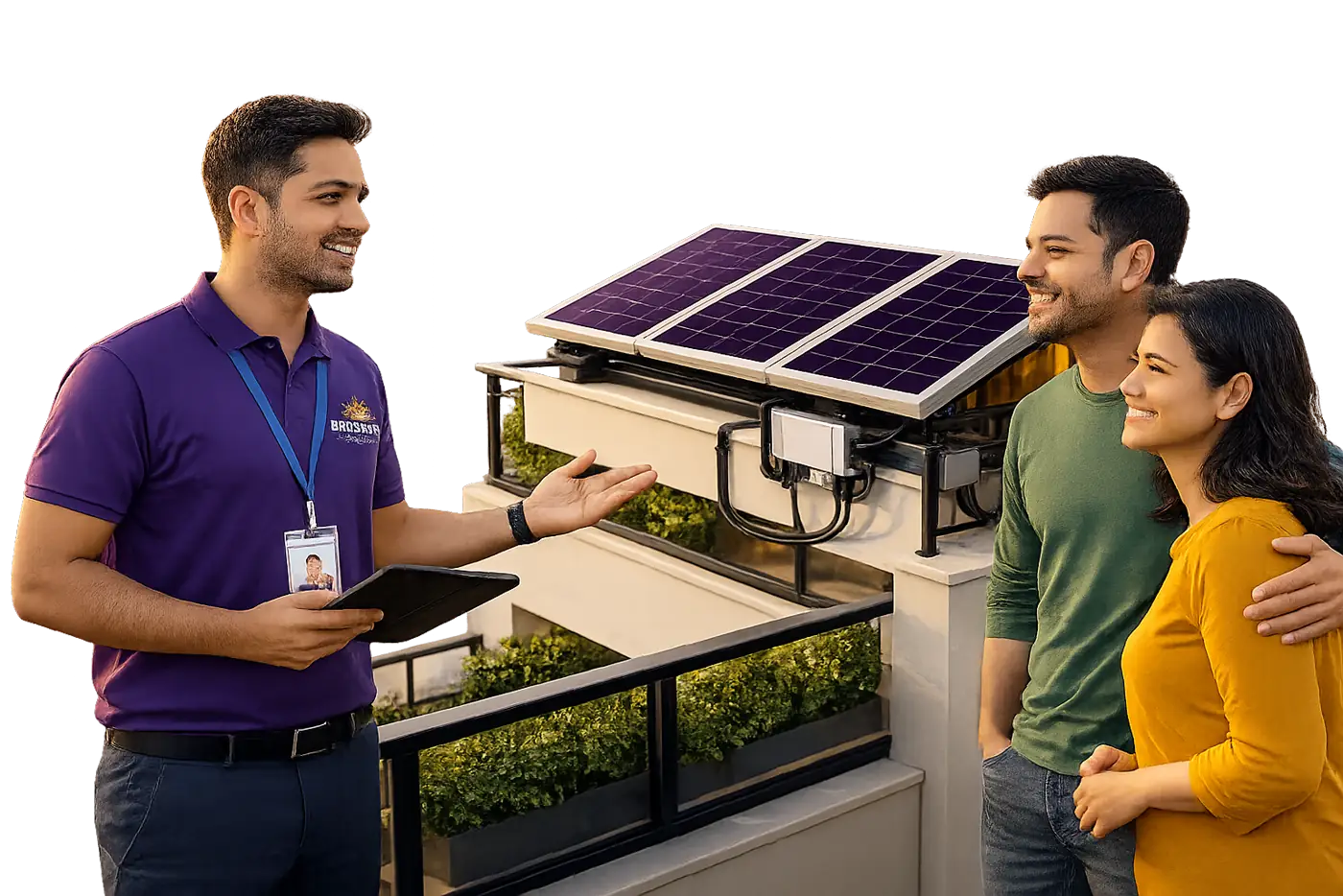
The other four blockers, and their fixes
Sanctioned load is lower than your system size. The DISCOM will not grant feasibility for a 5 kW system on a 3 kW sanctioned load. Apply for a load enhancement first; it is a separate application and it takes its own time.
Your vendor is not registered for your DISCOM. Registration is DISCOM-specific. A vendor approved in one distribution area cannot file your claim in another. Verify the vendor shows up in the portal's list for your DISCOM before signing anything.
The panels are not DCR. Only systems built with DCR modules — Indian cells and Indian modules under ALMM List-II — are eligible for the subsidy. If the installed modules are non-DCR, the claim fails at inspection and no appeal fixes it. Non-DCR modules are around ₹10,000 per kW cheaper, which is why this happens.
Bank details do not match. The subsidy is a direct transfer. The account holder name must match the applicant name on the application, and the cancelled cheque or passbook image must be legible. A joint account where the applicant is the second holder is a common rejection.
Talk to a solar engineer — not a salesperson
Check whether we install in your area, then get your answer on WhatsApp. No forms, no call centre.
See your exact subsidy after state stacking
What the subsidy is actually worth where you live
| Location | Central | State | Total on a 3 kW system |
|---|---|---|---|
| Delhi (domestic, up to 400 units/month) | ₹78,000 | ₹78,000 | ₹1,56,000 |
| Uttar Pradesh | ₹78,000 | ₹30,000 | ₹1,08,000 |
| Haryana (Gurugram, Faridabad) | ₹78,000 | ₹0 | ₹78,000 |
Delhi's second amendment to its Solar Energy Policy, cleared on 2 September 2026, raised the state capital subsidy to ₹78,000 and additionally covers the gap between the stacked subsidy and the tendered plant cost for eligible domestic consumers averaging up to 400 units a month on systems up to 3 kW.
When to hand it over
If your application has not moved in 30 days despite written follow-ups, the problem is procedural and needs someone who files these weekly. We complete PM Surya Ghar filings and DISCOM net-metering approvals across BRPL, BYPL, TPDDL, DHBVN, NPCL and PVVNL, including for systems other companies installed.
FAQ
How long does the PM Surya Ghar subsidy take to be credited?
Typically 30–45 days after the DISCOM uploads the commissioning certificate and net meter installation to the national portal. If you are past that from the upload date, the blocker is almost always bank-detail verification.
My subsidy application shows "pending at DISCOM". What does that mean?
Your plant is waiting on inspection and net-meter installation. Escalate in writing to your DISCOM division office quoting the application number and the installation date. Nothing on the national portal moves until the DISCOM acts.
Can I claim the subsidy if my system is already installed?
Only if you applied and received technical feasibility approval before installation, and used a registered vendor with DCR modules. Retrospective claims on self-arranged installations are not accepted.
Do non-DCR panels get the subsidy?
No. The subsidy requires DCR modules listed under ALMM List-II. Non-DCR modules cost roughly ₹10,000 per kW less and forfeit the entire subsidy — on a 3 kW Delhi system that is ₹30,000 saved against ₹1,56,000 lost.
My installer disappeared before filing the subsidy. What now?
Check the portal status first. If the application exists and stalled at inspection, another registered vendor can often carry it forward. If it was never filed, whether it can be started depends on the installation date and the DCR status of the modules — that has to be verified, not assumed.
Every 1 kW of solar on your roof offsets 1.5 tonnes of CO₂ per year
That's 40 trees planted — every year, for 25 years.
A typical 5 kW home system offsets 187 tonnes of carbon over its lifetime. That's equivalent to taking 8 cars off the road.
See your impact →How much can you save with solar?
Enter your electricity bill → get system size, subsidy amount & payback period
Get StartedSee your exact subsidy after state stacking
Related Articles
Annual Solar Maintenance Cost in India: DIY vs AMC vs One-Time Service
Learn the real annual solar maintenance cost in India for 2026. Compare DIY, one-time service, and AMC plans to maximize your rooftop solar savings.
Read moreHow to Correctly Read Your Solar Net Meter Display
Master how to read solar net meter displays (Secure/Genus), understand Export vs. Import codes, and verify your DISCOM bill accuracy in Delhi NCR.
Read moreNet Metering in India: How to Sell Solar Power Back to the Grid
Learn how net metering in India allows you to sell solar power back to the grid. Discover state policies, savings examples, and how to reduce your bill by 90%.
Read moreRelated guides
10 kW Solar Generation: Units per Day in Delhi NCR
40–54 units/day, 15,000/year. Net cost ₹4.42L (Noida) to ₹4.72L (DHBVN). 3.9-yr payback.
ExploreFree 3 kW Rooftop Solar in Delhi
Under 400 units/month? Zero upfront cost — ₹1.56L subsidy plus a government gap top-up.
ExploreDelhi Solar Subsidy Above 400 Units
Over 400 units/month? You still get the full ₹1.56L subsidy on 3 kW. Net ₹84,000.
ExplorePM Surya Ghar Subsidy Amount (2026)
Exact ₹78,000 central subsidy by system size — and when it lands after commissioning.
ExploreSBI Solar Loan for PM Surya Ghar
Surya Ghar loan rate, EMI and zero-down options to finance a rooftop system.
ExploreSolar Installation in Gurugram: Cost & Subsidy
DHBVN net metering + PM Surya Ghar ₹78,000. Real cost for DLF, Sushant Lok, Sector 57 — no fake Haryana stacking.
Explore