
By Vansh Dahiya · Reviewed by Arshi Chadha, Founder
Open Access Solar for IT Parks & Co-working: Shared Metering & Tenant Recovery
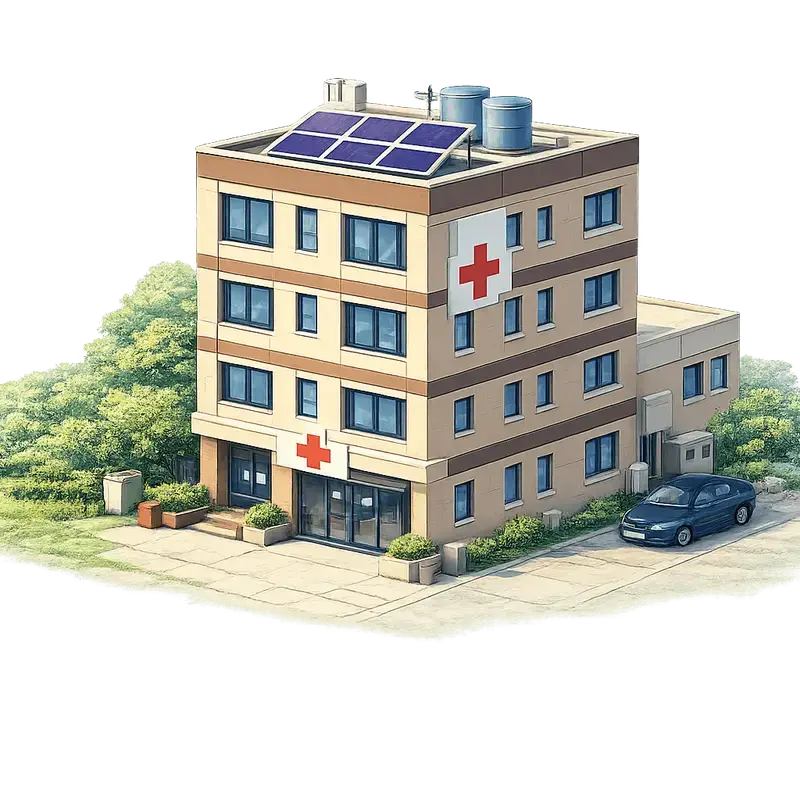
- •Primary Business Model: Open Access (Third-party or Group Captive)
- •Grid Savings: ₹4.0–₹5.5 per unit compared to DISCOM tariffs
- •Key Benefit: Reduced Common Area Maintenance (CAM) & competitive tenant pricing
- •Tenant Billing: Automated through smart metering and sub-metering systems
- •Payback Period: 3–4 years for IT/Co-working load profiles
The IT and ITES sector in India is a power-hungry engine that never sleeps. For IT parks and modern co-working spaces in hubs like Noida, Gurgaon, and Bangalore, electricity isn't just a utility—it is one of the highest operational expenses. With commercial grid tariffs in Delhi NCR often crossing ₹9–10 per unit (inclusive of taxes and PPAC), facility managers are under immense pressure to optimize costs while meeting ESG (Environmental, Social, and Governance) targets.
However, a major challenge arises: How do you implement solar when the roof is occupied by AHUs, chillers, and cafeteria sit-outs? Or, how do you distribute solar savings across 50 different tenants in a co-working space?
The answer lies in open access solar for IT parks. By sourcing solar power from off-site solar farms, IT parks can bypass rooftop space constraints and lock in electricity rates that are 40-50% cheaper than the grid.
What is Open Access Solar for IT Parks?
Open access solar allows a bulk consumer (with a sanctioned load of 100kW or more in most states) to buy electricity from a solar park located elsewhere, using the existing government transmission lines. For an IT park in Gurgaon or a co-working hub in Noida Extension, this means you don't need a single panel on your roof to go 100% green.
Why IT Parks are Ideal Candidates
- High Base Load: IT parks have a consistent 24/7 load due to servers and security.
- Daytime Peaks: Air conditioning and office equipment usage perfectly match the solar generation curve (9 AM to 5 PM).
- Creditworthiness: Larger IT hubs have the financial standing to enter into long-term Power Purchase Agreements (PPAs).
- Tenant Demand: Modern multinational tenants (MNCs) often have global mandates to operate out of "Green Buildings."
The Economics: Grid vs. Open Access Solar
The financial incentive is the primary driver. Commercial tariffs in Delhi NCR are composed of fixed charges, energy charges, and the dreaded PPAC surcharge in Delhi.
| Component | DISCOM Commercial Rate (Avg) | Open Access Solar (Landed) |
|---|---|---|
| Energy Charge | ₹8.50 - ₹9.50 | ₹3.80 - ₹4.50 |
| Transmission/Wheeling | Included | ₹1.20 - ₹1.80 |
| Cross Subsidy Surcharge | Included | ₹0.50 - ₹1.20 |
| Total Landed Cost | ₹9.00 - ₹11.00 | ₹5.50 - ₹7.50 |
| Potential Saving | - | ₹3.00 - ₹4.00 per unit |
Note: Rates vary based on state-specific wheeling and banking charges.
Shared Metering and Tenant Recovery Models
For co-working spaces and IT parks, the biggest hurdle isn't the technology—it is the billing. How do you recover costs or pass on savings to tenants? Bridgeway Power has helped multiple facilities implement three primary models:
1. The CAM Reduction Model (Common Area Maintenance)
In this model, the IT park owner sources open access solar to power common utilities like lifts, chillers, and lobby lighting. The savings are then reflected as a lower "CAM Charge" on the tenant's monthly invoice. This makes the property more competitive and attractive to premium clients.
2. Tenant Sub-Metering & Direct Pass-Through
Modern IT parks use smart sub-meters for each floor or office. Through an automated billing system, the facility manager can track exactly how many "Solar Units" were consumed by Tenant A vs. Tenant B.
- The Advantage: You can offer the tenant a "Green Power Upgrade" at a rate slightly lower than the DISCOM, but higher than your procurement cost, creating a new revenue stream for the developer.
3. Virtual Net Metering (VNM) for Multi-Tenant Buildings
In states like Delhi, virtual net metering allows a single solar plant to credit units to multiple electricity connections (CAs) within the same DISCOM area. This is a game-changer for co-working operators who manage multiple sites but want one centralized solar source.
Commercial Solar Pricing and Scalability
While open access doesn't require upfront capex if you choose the OPEX model, many IT parks prefer the Group Captive model where they own a 26% equity stake in the solar farm to eliminate certain surcharges.
Commercial Solar Capex Bands (2026)
If you are considering a captive rooftop installation alongside open access:
| System Capacity | Cost per Wp (Installed) | Total Investment (Excl. GST) |
|---|---|---|
| Up to 100 kW | ₹42 | ₹42 Lakh |
| 100 kW - 500 kW | ₹38 | ₹38 Lakh - ₹1.9 Cr |
| 500 kW - 1 MW | ₹36 | ₹1.8 Cr - ₹3.6 Cr |
| 2 MW+ | ₹34 | ₹6.8 Cr+ |
Source: MSME solar plant cost in India 2026.
Talk to a solar engineer — not a salesperson
Enter your pincode and monthly bill. If we install in your area, an engineer answers on WhatsApp with your numbers.
What would solar save on YOUR bill?
Solar Depreciation & Tax Benefit Calculator
Based on Section 32 — 40% WDV + 20% additional depreciation (Year 1)
Real-World Example: A Co-working Hub in Gurgaon
A premium co-working operator in Sushant Lok 1 with a 250kW load was paying an average of ₹10,50,000 monthly to DHBVN.
- Solution: They signed a Third-Party PPA for 200kW of solar power.
- Old Cost: ₹10.50 per unit.
- New Landed Solar Cost: ₹7.10 per unit (including all open access charges).
- Monthly Units Sourced: 24,000 units.
- Direct Monthly Savings: ₹81,600.
- Annual Impact: ~₹10 Lakhs added to the bottom line without any upfront investment.
This operator used the savings to provide free EV charging for their tenants, further increasing their occupancy rates. To see how this might look for your facility, use our Solar Calculator.
Regulatory Challenges: CSS and Additional Surcharges
The road to 100% solar isn't without hurdles. DISCOMs often apply a Cross-Subsidy Surcharge (CSS) to recover the loss of high-paying commercial customers.
- Strategy: By opting for the "Group Captive" model (26% equity, 51% consumption), IT parks can often get exemptions from CSS and Additional Surcharge, significantly lowering the landed cost.
Financing Your Green Transition
Most IT parks don't want to block capital in power plants. Bridgeway Power partners with several financial institutions to provide flexible options:
- SIDBI 4E Solar Loan: Ideal for MSME-registered IT firms, offering ₹10L to ₹10Cr at competitive rates.
- Aerem Solar Finance: Quick digital processing for co-working hubs looking for Capex loans.
- OPEX / PPA: Get solar at zero investment; pay only for the units you consume.
Technical Maintenance: Ensuring 99% Uptime
For IT parks, power reliability is non-negotiable. While open access power is balanced by the grid, any accompanying rooftop solar must be strictly maintained. Dirty panels in NCR can lose up to 25% efficiency. We recommend a professional Solar AMC plan that includes:
- Monthly robotic or pressurized cleaning.
- Thermal imaging of panels to detect hotspots.
- Inverter health checks (diagnostic starting at ₹1500).
Summary: The Future of IT is Solar
As we move toward 2030, "Green Offices" will transition from a luxury to a baseline requirement. Open access solar for IT parks provides the scale, the savings, and the sustainability credentials required for the modern Indian economy.
Whether you are an RWA managing a commercial hub in Dwarka or a developer with a million square feet in Noida, the math for solar has never been better.
Frequently Asked Questions
What is the minimum load required for open access solar?
In most Indian states, including Delhi, Haryana, and UP, a minimum sanctioned load of 100 kW is required to qualify for open access. This makes it ideal for IT parks and large co-working floors.
How does the IT park owner bill the tenants for solar?
The most efficient method is using smart energy management systems (EMS) that integrate with the facility's billing software. Tenants are billed based on their sub-meter readings, often with a "Green Electricity" line item that reflects the solar discount.
Can we do open access if we already have rooftop solar?
Yes. You can use rooftop solar for a portion of your load and source the remainder via open access. This is a common strategy for facilities with limited roof space but very high consumption.
What happens if the solar farm doesn't generate power today?
The grid acts as a backup. You will never face a blackout because of solar generation dips. You will simply draw more power from the DISCOM at your standard tariff for those hours.
Is there a tax benefit for IT parks going solar?
If you choose the Capex or Group Captive model, you can claim 40% Accelerated Depreciation in the first year, providing a significant tax shield. For more details, see our guide on Solar Panel Tax Benefits in India.
Ready to slash your IT park's operational costs? Bridgeway Power has 35+ years of experience and 5,000+ successful installations. Contact our experts today for a free feasibility study and open access savings projection.
Every 1 kW of solar on your roof offsets 1.5 tonnes of CO₂ per year
That's 40 trees planted — every year, for 25 years.
A typical 5 kW home system offsets 187 tonnes of carbon over its lifetime. That's equivalent to taking 8 cars off the road.
See your impact →How much can you save with solar?
Enter your electricity bill → get system size, subsidy amount & payback period
Get StartedGo solar without owning a rooftop
Community Solar gives commercial & institutional consumers the same savings — zero capex, zero roof needed.
Or get a free solar quote
Tell us about your rooftop — we'll call with exact savings for your home.
Related Articles
What Is Captive Open Access Solar (100% Equity Model)
Learn how Captive Open Access Solar (100% Equity Model) helps Indian businesses cut electricity costs by 40% using off-site solar plants. Guide on rules, savings & ROI.
Read moreHow Rooftop Solar Can Eliminate Your Electricity Bill
Discover how Net Metering and PM Surya Ghar subsidies can reduce your monthly electricity bill to near-zero. Learn about system sizing, costs, and real-world savings.
Read moreSolar Subsidy in Uttar Pradesh 2026: ₹1,08,000 for Noida, Ghaziabad & Greater Noida
UP's stacked solar subsidy 2026: ₹78,000 central + ₹30,000 UPNEDA state top-up = ₹1.08L. Real PVVNL net-cost math for Noida, Greater Noida, Ghaziabad & Meerut.
Read moreRelated guides
Delhi Electricity Rate 2026
BSES & Tata Power per-unit rates, PPAC, subsidy — sourced from DERC.
ExploreDelhi Solar Policy 2026
Free rooftop solar up to 3 kW for homes under 400 units. Eligibility & apply.
ExploreSolar Panel Price in Delhi
Live 2026 rooftop prices in Delhi after ₹1.56L subsidy. 1,200+ installs.
ExploreSolar Company in Gurgaon
Gurgaon's rooftop solar installer — 800+ systems, ₹78K PM Surya Ghar subsidy.
ExploreSolar Company in Noida
Noida & Greater Noida rooftop solar — 500+ installs, ₹1.08L stacked subsidy.
ExploreSolar Panel Price in Faridabad
Live 2026 Faridabad prices after ₹78K PM Surya Ghar subsidy. 350+ homes.
Explore