
By Kajal Rajpoot · Reviewed by Arshi Chadha, Founder
RWA Guidelines for Gurugram Residential Rooftop Solar
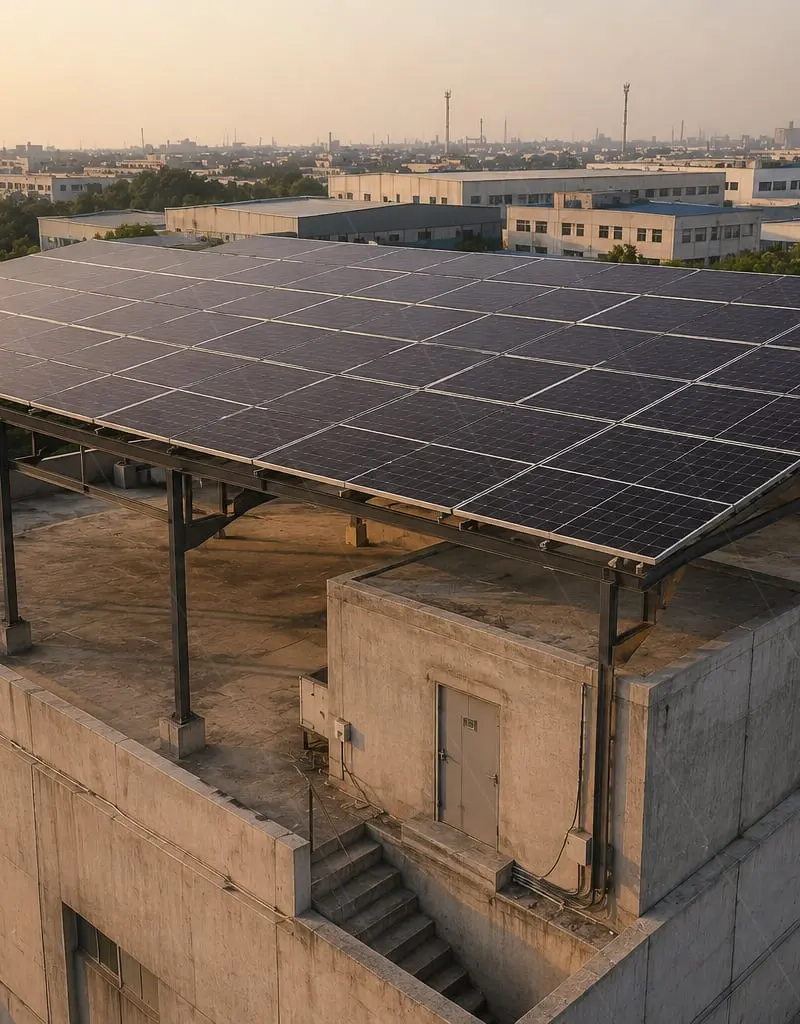
- •Primary Requirement: NOC from RWA is standard for shared roofs; individual floors usually own roof rights.
- •Savings: RWA common areas can save ₹7,000–₹15,000 per month via solar.
- •Payback: 3–4 years for common area systems in Gurgaon.
- •Key Policy: PM Surya Ghar subsidy of up to ₹78,000 applies to individual residential meters.
Rooftop solar in Gurugram isn't just about sticking panels on a slab; it's about navigating the unique "floor culture" of the city. Whether you're in a builder floor in solar in Sushant Lok or a high-rise in Sector 67, the Resident Welfare Association (RWA) often acts as the gatekeeper. We’ve seen hundreds of projects get delayed not because of technical issues, but because the homeowner didn't have the right paperwork to satisfy their RWA.
If you’re planning to install rwa gurugram power solar systems, you need to understand that Haryana’s rules are quite specific. The Haryana Electricity Regulatory Commission (HERC) and DHBVN have clear pathways for solar, but the RWA adds a layer of community governance that you can't ignore.
Navigating NOC Requirements from RWAs
In most Gurugram colonies, the roof is either owned by the top-floor owner (in builder floors) or is a common asset (in high-rise societies). Even if you own the roof rights, many RWAs insist on a No Objection Certificate (NOC).
Why? They’re worried about three things: structural damage, water seepage, and aesthetics. We’ve found that the best way to get an RWA solar NOC Haryana is to present a professional structural stability report and a layout plan. If you show them you aren't drilling holes that will cause leaks in the neighbor's ceiling, the resistance usually vanishes.
Checklist for RWA Solar Permission Documents
| Document Type | Purpose | Responsibility |
|---|---|---|
| Proposed Layout Plan | Shows exactly where panels, walkways, and inverters will be placed. | Solar EPC Company |
| Structural Stability Certificate | Proof that the roof can handle the dead load (approx. 25-30kg/sqm). | Certified Engineer |
| Sanctioned Load Copy | Verification that the solar capacity doesn't exceed the sanctioned load. | Homeowner (DHBVN Bill) |
| Workmanship Warranty | Assurance that the RWA won't be liable for installation damage. | Bridgeway Power |
| Component Data Sheets | Proof that Tier-1 modules and safe inverters (IEC certified) are used. | Solar EPC Company |
Space Allocation for Shared Buildings
High-rises present a different challenge. In a society with 100 flats but only one roof, who gets the space? This is where common area solar installation Gurugram projects make the most sense. Instead of individual residents fighting for square footage, the RWA installs a large system to power the lifts, water pumps, and streetlights.
If an individual resident in a high-rise wants solar, they typically need to apply for a specific allocation of space. We recommend RWAs create a "Solar Map" of the roof, dividing it into zones based on apartment numbers or floor area ratios.
Use our Solar Calculator to determine exactly how many square feet your specific load requires before approaching your RWA board. A typical 5kW system needs about 400-500 sq. ft. of shadow-free area.
Net Metering Benefits for RWA Common Area Bills
For an RWA, the common area electricity bill is one of the largest monthly expenses. In Gurgaon, the domestic tariff for high consumption slabs can hit ₹7.1/unit. When you factor in the DHBVN net metering benefits, the ROI becomes undeniable.
High-rise solar net metering allows the RWA to export excess energy generated during the day (when lift usage might be lower) and credit it against the heavy lighting and pump usage at night.
Example Case Study: A housing society in Sector 50, Gurgaon, had a monthly common area bill of ₹45,000. We installed a 20kW system on their clubhouse roof.
- System Cost: ~₹12 Lakhs
- Monthly Generation: ~2,400 units
- Monthly Savings: ~₹18,000
- Payback Period: Under 5.5 years (without considering tax depreciation for the RWA).
Safety and Structural Standards for Multi-Story Solar Mounting
In Gurugram, wind speeds can be a major concern for high-rise installations. You can't just use standard "L-feet" brackets on a 20th-floor roof. We follow strict IS 875 standards for wind loading.
We often see "cheap" installers skip the chemical anchoring process. At Bridgeway, we use Hilti-standard chemical grouting to ensure the mounting structure is literally part of the building. This prevents the "parachute effect" where high winds can lift panels off the roof.
Talk to a solar engineer — not a salesperson
Enter your pincode and monthly bill. If we install in your area, an engineer answers on WhatsApp with your numbers.
What would solar save on YOUR bill?
Solar Depreciation & Tax Benefit Calculator
Based on Section 32 — 40% WDV + 20% additional depreciation (Year 1)
Structural Comparison for RWA Approval
| Feature | Standard Installation | High-Rise Professional Install |
|---|---|---|
| Mounting | Mechanical Fasteners | Chemical Anchoring |
| Structure Material | Painted MS (Rusts) | Hot-Dipped Galvanized (HDG) or Aluminium |
| Wind Speed Rating | 120 km/h | 150-180 km/h (NCR Zone 4) |
| Earthing | Single Rod | Dedicated Dual Earthing + LA |
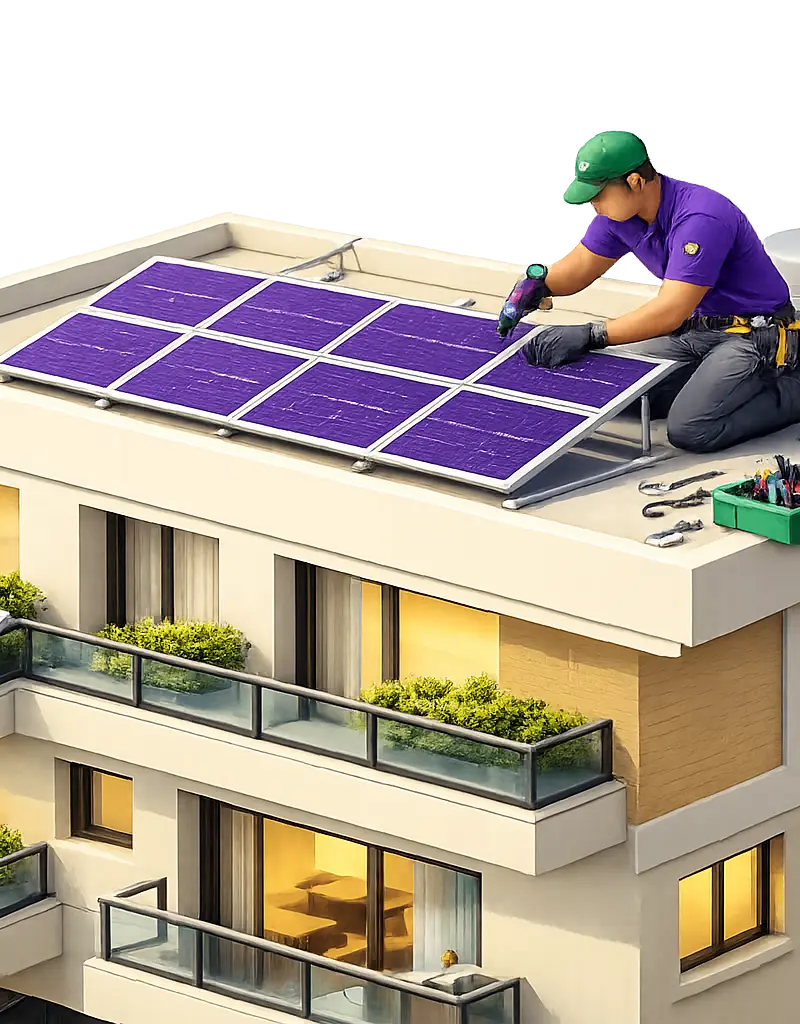
For those in solar in Gurgaon, structural integrity isn't optional. An RWA will rightly block any installation that looks like a safety hazard. We provide a 5-year workmanship warranty to give RWA boards the confidence they need.
The Real Example: A Builder Floor in Palam Vihar
We recently worked with a client in solar in Palam Vihar who lived on the second floor of a four-story building. The fourth-floor owner claimed exclusive rights to the roof. However, the building's bylaws stated that the roof was common for maintenance access.
By facilitating a meeting between the RWA and the owners, we negotiated a solution: the second-floor owner installed an elevated structure. This allowed the solar panels to be 10 feet high, leaving the roof floor entirely open for the fourth-floor owner to use as a terrace garden. Everyone won. The client got their 3kW system for a net cost of ₹1.32 Lakh after the PM Surya Ghar subsidy.
FAQ
Does an RWA have the right to refuse solar installation?
Legally, if you own the roof rights or have a common area allocation under Haryana’s solar policy, an RWA cannot unreasonably withhold permission. However, they can mandate safety and aesthetic standards. We usually suggest sharing the structural stability certificate early to prevent "unreasonable" blocks.
Who gets the subsidy for common area solar?
If the RWA installs solar for common areas (lifts, pumps) under a single residential-category meter, they can apply for the PM Surya Ghar Muft Bijli Yojana subsidy. Currently, this is capped at ₹78,000 for systems 3kW and above.
What is the height limit for solar structures in Gurgaon?
Most RWAs and building codes allow structures up to 10-12 feet. Elevated structures are popular in Gurgaon because they allow the roof to remain functional for walking or drying clothes. You must ensure the structure is wind-rated for Delhi NCR’s storm conditions.
Is an NOC from DHBVN required before RWA approval?
Actually, it’s the other way around. The DHBVN net metering process usually requires an installation report, and the RWA NOC is often a prerequisite for your solar company to start the physical work. You should secure the RWA's "Internal NOC" before paying your full project deposit.
How does solar work for renters in Gurgaon apartments?
Renters rarely install rooftop solar due to the high CAPEX. However, you can look into community solar or virtual net metering options if your society RWA participates. For most renters, a balcony solar setup is a more portable (though smaller) alternative.
If your RWA is asking tough questions about your solar plans, don't guess the answers. Get a free quote and let our engineers provide the technical documentation you need to clear the path. We’ve been handling Gurgaon’s complex rooftop hurdles for over 35 years.
Every 1 kW of solar on your roof offsets 1.5 tonnes of CO₂ per year
That's 40 trees planted — every year, for 25 years.
A typical 5 kW home system offsets 187 tonnes of carbon over its lifetime. That's equivalent to taking 8 cars off the road.
See your impact →How much can you save with solar?
Enter your electricity bill → get system size, subsidy amount & payback period
Get StartedLiked this article? Get a free solar quote
Tell us about your rooftop — we'll call with exact savings for your home.
Related Articles
What Is Captive Open Access Solar (100% Equity Model)
Learn how Captive Open Access Solar (100% Equity Model) helps Indian businesses cut electricity costs by 40% using off-site solar plants. Guide on rules, savings & ROI.
Read moreHow Rooftop Solar Can Eliminate Your Electricity Bill
Discover how Net Metering and PM Surya Ghar subsidies can reduce your monthly electricity bill to near-zero. Learn about system sizing, costs, and real-world savings.
Read moreSolar Subsidy in Uttar Pradesh 2026: ₹1,08,000 for Noida, Ghaziabad & Greater Noida
UP's stacked solar subsidy 2026: ₹78,000 central + ₹30,000 UPNEDA state top-up = ₹1.08L. Real PVVNL net-cost math for Noida, Greater Noida, Ghaziabad & Meerut.
Read moreRelated guides
Delhi Electricity Rate 2026
BSES & Tata Power per-unit rates, PPAC, subsidy — sourced from DERC.
ExploreDelhi Solar Policy 2026
Free rooftop solar up to 3 kW for homes under 400 units. Eligibility & apply.
ExploreSolar Panel Price in Delhi
Live 2026 rooftop prices in Delhi after ₹1.56L subsidy. 1,200+ installs.
ExploreSolar Company in Gurgaon
Gurgaon's rooftop solar installer — 800+ systems, ₹78K PM Surya Ghar subsidy.
ExploreSolar Company in Noida
Noida & Greater Noida rooftop solar — 500+ installs, ₹1.08L stacked subsidy.
ExploreSolar Panel Price in Faridabad
Live 2026 Faridabad prices after ₹78K PM Surya Ghar subsidy. 350+ homes.
Explore