
By Kajal Rajpoot · Reviewed by Arshi Chadha, Founder
When Does a 10 kW Solar System Need a 3-Phase Connection in Gurugram (DHBVN)?
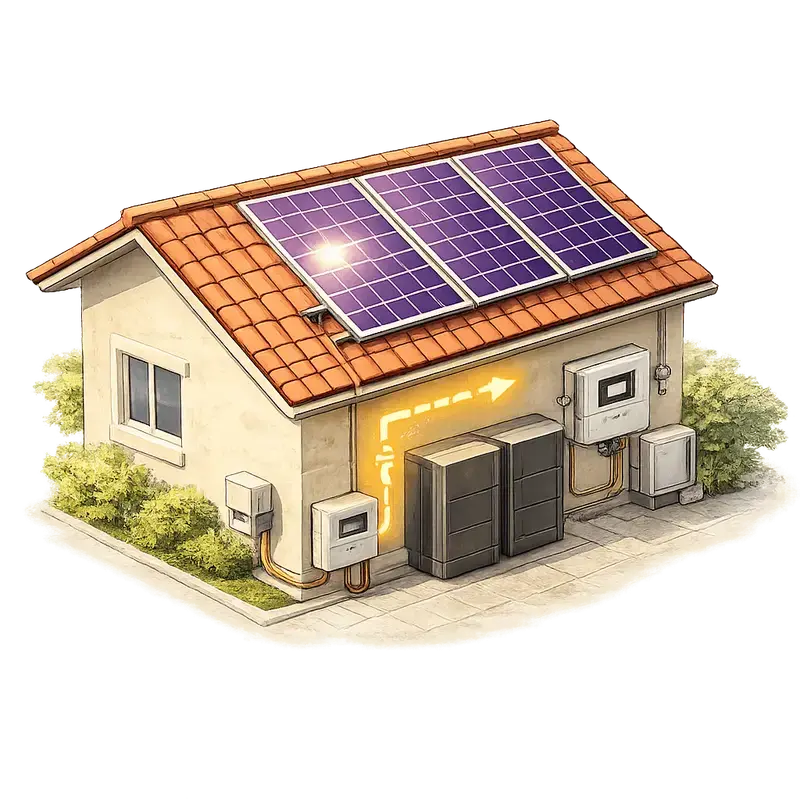
- •System size: 10 kW
- •Phase Requirement: Mandatory 3-Phase (DHBVN rules)
- •Sanctioned Load Needed: 10 kW or higher
- •Central Subsidy: ₹78,000 (PM Surya Ghar)
- •Payback Period: 4.5–5.5 years
DHBVN (Dakshin Haryana Bijli Vitran Nigam) mandates a three-phase connection for any residential rooftop solar installation where the system capacity or the sanctioned load exceeds 8 kW. If you’re planning a 10 kW solar system in Gurugram, you cannot stay on a single-phase meter. This isn't just a technical recommendation; it’s a regulatory wall you’ll hit during the net metering application process.
In my 35 years of handling electrical systems, I've seen homeowners try to bypass this by undersizing the inverter or misreporting load. It doesn't work. The DISCOM will simply reject your feasibility report. If your home currently runs on a 5 kW or 7 kW single-phase connection, your first step isn't buying panels—it’s initiating a dhbvn load enhancement solar request.
Sanctioned Load and Phase Rules Before Sizing
Before we even look at your roof, we look at your bill. Your "Sanctioned Load" (expressed in kW) determines the maximum solar capacity you can legally install. Under DHBVN net metering guidelines, your solar plant capacity cannot exceed 100% of your sanctioned load.
For a 10 kW system, you need at least 10 kW of sanctioned load. In Gurugram, DHBVN typically moves consumers from single-phase to three-phase at the 8 kW mark.
Sanctioned Load vs. Phase Requirements
| System Size | Phase Requirement | DHBVN Load Category |
|---|---|---|
| 1 kW to 5 kW | Single-Phase (1φ) | LT Domestic |
| 6 kW to 8 kW | Single-Phase or Three-Phase* | LT Domestic |
| 10 kW and above | Three-Phase (3φ) | LT Domestic (3-Phase) |
| Above 20 kW | Three-Phase (3φ) | HT/LT depending on transformer |
*While 6-8 kW can technically run on single-phase in some old circles, we always recommend moving to 3-phase for better load balancing and to avoid neutral displacement issues.
If you have a large 4BHK or a standalone villa in solar in Gurugram with multiple 1.5-ton ACs, you are likely already on a 3-phase line. If not, you’ll need to factor in the cost and time for a meter upgrade. You can use our Solar Calculator to see how this system size impacts your specific ROI.
Load Enhancement Process and Timeline with DHBVN
You cannot install a 10 kW system on a 5 kW load. To fix this, you apply for "Load Enhancement" via the DHBVN consumer portal. We handle this for our clients because the paperwork involves specific technical declarations.
- Application: Submit the request online with your latest bill and ID proof.
- Feasibility: DHBVN checks if the local transformer can handle the extra load. In sectors like solar in South City Gurgaon or solar in Palam Vihar, this is usually quick.
- Security Deposit: You’ll pay an additional Consumption Security Deposit (ACD) based on the increased kW.
- Meter Change: A DHBVN official will replace your single-phase meter with a three-phase whole-current meter (or a CT-operated meter for very high loads).
The Timeline: Expect this to take 15 to 30 days. Do not start the solar installation until the load enhancement is reflected on your official bill, or the PM Surya Ghar Yojana portal will flag your application.
Haryana Subsidy Reality: No State Top-Up
It’s important to be direct here: Unlike Delhi or Uttar Pradesh, Haryana currently offers zero state-level capital subsidy for residential solar. If you are browsing solar in Faridabad or Gurugram, ignore any marketing that promises "State + Central" double benefits.
You only get the central subsidy under the Ministry of New & Renewable Energy guidelines:
- ₹30,000 for 1 kW
- ₹60,000 for 2 kW
- ₹78,000 for 3 kW up to 10 kW (capped at ₹78,000)
For a 10 kW system, your total subsidy is fixed at ₹78,000. While the percentage of subsidy is lower for a 10 kW system compared to a 3 kW one, the absolute savings are massive because you’re likely offsetting a bill in the highest tariff slab of ₹7.10/unit.
Choosing a 3 Phase Solar Inverter 10 kW
When you move to a 10 kw solar three phase connection gurugram, you must use a three-phase inverter. This device takes the DC power from your panels and distributes it across all three phases (R, Y, and B) of your home’s wiring.
We generally recommend two paths:
- String Inverters: These are the workhorses. A single 10 kW three-phase string inverter is cost-effective and highly reliable. Brands like Sungrow, Growatt, or Solis are standard.
- Microinverters: For high-end bungalows in Gurugram where shading from water tanks or neighboring buildings is an issue, we use Enphase or Hoymiles. These allow for module-level monitoring and better performance in low light.
I’ve seen many "low-cost" installers try to use three separate single-phase inverters to mimic a 3-phase system. Don't allow this. It creates phase imbalance and will likely be rejected by DHBVN during the net meter inspection.
Talk to a solar engineer — not a salesperson
Enter your pincode and monthly bill. If we install in your area, an engineer answers on WhatsApp with your numbers.
What would solar save on YOUR bill?
Real Example: Sector 57, Gurugram

A client in Sector 57 had a monthly bill of ₹14,000 and a sanctioned load of 6 kW (single-phase). They wanted a 10 kW system to cover future EV charging needs.
- Step 1: We applied for load enhancement to 10 kW.
- Step 2: DHBVN upgraded the meter to 3-phase.
- Step 3: We installed a 10 kW system with 18 TopCon Mono PERC panels.
- Result: Their bill dropped to the minimum fixed charges (around ₹1,200 including taxes) during sunny months. They are now saving roughly ₹1.2 lakh per year.
From our installs
In the last 120 days, we have issued 218 quotations for homeowners in Haryana (primarily Gurugram and Faridabad). Here is the anonymized median data from those real-world quotes:
- 3 kW System: 32 quotes. Median price before subsidy: ₹2,49,941 | Median after subsidy: ₹1,69,287.
- 5 kW System: 51 quotes. Median price before subsidy: ₹3,62,706 | Median after subsidy: ₹2,84,706.
- 10 kW System: 47 quotes. Median price before subsidy: ₹5,82,252 | Median after subsidy: ₹5,67,697.
The most-quoted inverter brands for these sites were Hoymiles (for premium microinverter setups) and standard String inverters, followed by Enphase. Caveat: Prices vary based on the mounting structure height—elevated structures can add ₹15,000 to ₹20,000 per kW to these medians.
FAQ
Can I run a 10 kW solar system on a single-phase meter?
No. DHBVN regulations require a 3-phase connection for any solar plant capacity above 8 kW. Even if you could technically wire it, you would not be granted net metering approval, meaning you couldn't export excess power to the grid.
How much does it cost to upgrade to a 3-phase connection in Gurugram?
The cost includes a processing fee, the difference in security deposit (ACD) for the extra kW, and the cost of the new meter. For a jump from 5 kW to 10 kW, expect to pay between ₹8,000 and ₹15,000 directly to DHBVN, depending on your specific circle and existing deposit.
Does a 10 kW system require a different net meter?
Yes, a 3-phase bi-directional (net) meter is required. This meter tracks energy import and export across all three phases simultaneously.
What is the typical generation of a 10 kW system in Haryana?
On average, a 10 kW system in the Delhi-NCR region generates about 40–45 units per day, or roughly 1,200 units per month. This varies seasonally, with peaks in April-May and dips during the July-August monsoon.
Can I apply for the subsidy if my load is not yet enhanced?
You can start the application on the PM Surya Ghar portal, but you must ensure your sanctioned load matches or exceeds your solar capacity before the DISCOM technical feasibility (TFR) stage. If they don't match, the application will be returned with an error.
If you’re unsure about your current load or phase status, it's best to have a professional site survey. We’ve handled thousands of DHBVN solar net metering applications and can tell you exactly what your roof needs. Get a free quote today to start the process correctly.
Reviewed by: Gurubaksh Singh, Senior Solar Advisor, Bridgeway Power
Every 1 kW of solar on your roof offsets 1.5 tonnes of CO₂ per year
That's 40 trees planted — every year, for 25 years.
A typical 5 kW home system offsets 187 tonnes of carbon over its lifetime. That's equivalent to taking 8 cars off the road.
See your impact →How much can you save with solar?
Enter your electricity bill → get system size, subsidy amount & payback period
Get StartedLiked this article? Get a free solar quote
Tell us about your rooftop — we'll call with exact savings for your home.
Related Articles
Steps if Your Solar Subsidy is Not Credited to Account
Is your solar subsidy stuck? Learn why bank account credits fail, how to check PFMS status, and the 4 steps to get your PM Surya Ghar funds released.
Read moreWhat Is Captive Open Access Solar (100% Equity Model)
Learn how Captive Open Access Solar (100% Equity Model) helps Indian businesses cut electricity costs by 40% using off-site solar plants. Guide on rules, savings & ROI.
Read moreHow Rooftop Solar Can Eliminate Your Electricity Bill
Discover how Net Metering and PM Surya Ghar subsidies can reduce your monthly electricity bill to near-zero. Learn about system sizing, costs, and real-world savings.
Read moreRelated guides
Best Solar Companies in Delhi NCR
Eight verifiable checks to judge any installer — empanelment, scope, year-three cost.
ExploreElevated Solar Pergola for Terrace Gardens
Keep your kothi terrace usable: panels overhead, garden and seating underneath.
ExploreTop Solar Companies in Delhi NCR
Bridgeway vs Tata Power vs Luminous: legacy, MW under O&M, warranty — vetted comparison.
ExploreSolar Loans & EMI
SBI, PNB and Ecofy loan routes with a sample EMI.
ExploreSolar Savings Calculator
60-second estimate: system size, cost, savings & payback.
Explore7 Types of Solar Mounting Structures
Standard, elevated, pergola, shed and more — which structure fits your roof.
Explore