
By Bhawna Thakur · Reviewed by Arshi Chadha, Founder
Why Solar Panels Produce Less Power in Dusty Indian Cities
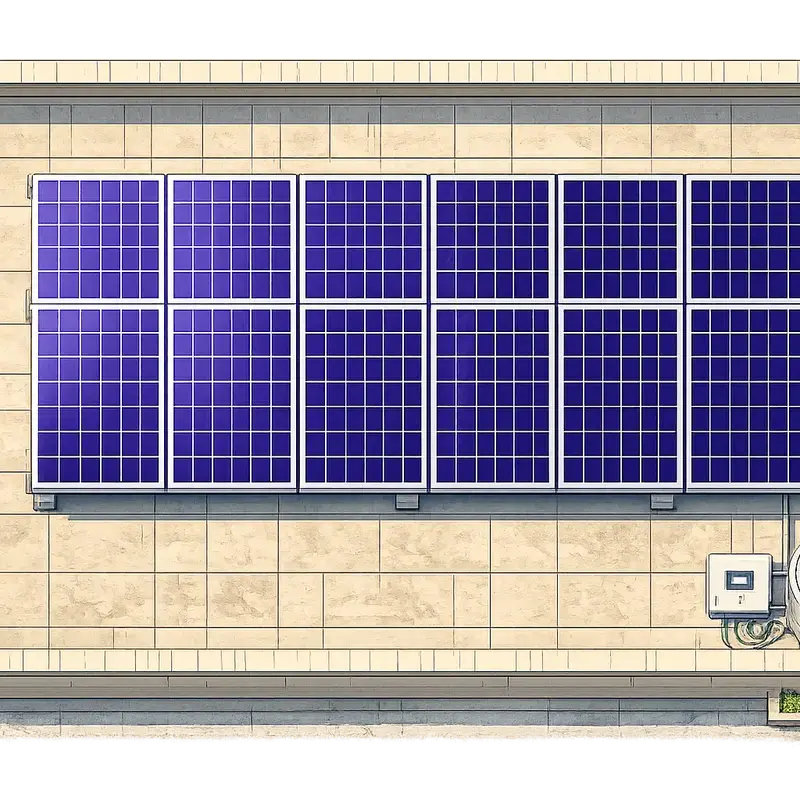
- •Primary Performance Killer: Dust and pollution accumulation in Indian cities.
- •Estimated Power Loss: 15% to 30% reduction in output within 2–4 weeks.
- •Key Diagnostic: If cleaning doesn't restore power, the issue is likely electrical or shading-related.
- •Solution: Regular cleaning cycles and annual professional audits to ensure 25-year longevity.
Imagine waking up in a solar in Delhi or Gurugram during peak summer. The sun is blazing, the sky looks clear-ish, yet your solar monitoring app shows a measly 60% of the expected output. You check the panels; they aren’t broken. You check the inverter; the green light is on. So, where is your electricity going?
This is a common frustration for thousands of homeowners across North India. In regions like Delhi NCR, Rajasthan, and Uttar Pradesh, the environment is fundamentally different from the European or American climates where solar technology was originally perfected. We deal with high particulate matter (PM10 and PM2.5), desert sand, and industrial soot.
If you’ve noticed your solar output dropping reasons and can't figure out why, this guide will help you diagnose whether you are dealing with a "dust tax," a technical malfunction, or natural solar panel degradation India.
The Dust Factor: Why Indian Cities are Different
In India, dust isn't just a nuisance; it’s an expensive economic drain. A study by IIT Delhi and international researchers found that "soiling"—the accumulation of dust and bird droppings—can reduce solar energy production by nearly 25-30% in highly polluted areas.
The Science of "Soiling"
When a layer of dust settles on your panels, it acts as a physical barrier. It reflects and absorbs sunlight before it can reach the silicon cells. In cities like Noida or Faridabad, this dust isn't just soil; it's often sticky industrial residue that doesn't simply blow away with the wind.
Without a structured cleaning schedule, your solar panel efficiency India will plummet. Unlike Germany or the UK, where regular rainfall naturally "cleans" panels, North India experiences long dry spells (October to June) where dust builds up layer upon layer.
Table 1: Cause vs. Power Loss Breakdown
| Cause | Estimated Power Loss (%) | Frequency/Risk |
|---|---|---|
| Dust Accumulation (Soiling) | 15% – 30% | Extremely high in NCR/UP/Rajasthan |
| Partial Shading (Trees/Poles) | 10% – 50% | High in dense residential colonies |
| Inverter Fault/Tripping | Up to 100% | Silent killer; often unnoticed for days |
| Wiring Issues/DC Leaks | 5% – 15% | Safety risk; caused by heat or rodents |
| Panel Degradation | 0.5% – 0.7% / year | Normal aging of the silicon cells |
Beyond Dust: Why Your Solar is Not Working Properly
While dust is the #1 culprit for solar panel low output India dust, it isn't the only one. If you’ve washed your panels and the generation still feels "off," you need to look at these three major factors.
1. The "Christmas Light" Effect of Partial Shading
Many homeowners in places like Dwarka or Janakpuri install panels near water tanks or tall parapet walls. Even if a small corner of one panel is shaded by a neighbor's chimney or a tree branch, it can drag down the performance of the entire "string."
Modern string inverters work like old-fashioned Christmas lights—if one bulb (panel) is choked by shade, the current for the whole line is restricted to that lowest level. This is why shading is disproportionately damaging.
2. Silent Inverter Faults
The inverter is the "brain" of your system. Sometimes, the grid voltage from DISCOMs like BSES Rajdhani or PVVNL fluctuates too high. To protect itself, the inverter "trips" and stops feeding power to the house. You might see the panels on your roof and assume they are working, but if the inverter is in a "fault" state, your generation is zero.
3. Hotspots and Micro-cracks
Using a hard brush or walking on panels during cleaning can cause micro-cracks. These are invisible to the eye but create "hotspots" where electricity gets trapped and turns into heat instead of flowing to your home. This is why professional AMC Plans are safer than letting a domestic help clean the panels with a hard mop.
Seasonal Variations: Don't Expect Peak Power in July
It is a common myth that solar panels work best when it is hottest. In reality, solar panels are electronic devices. Just like your phone gets slow when it's hot, solar panel efficiency India actually drops when the ambient temperature exceeds 40°C.
Table 2: Seasonal Generation Variation (NCR Context)
| Season | Months | Generation Levels | Reason |
|---|---|---|---|
| Peak | Mar – Jun | Very High | Long days, clear skies (but high heat) |
| Moderate | Oct – Feb | Medium | Short days, but cool temps (high efficiency) |
| Low | Jul – Sep | Low | Cloud cover, monsoon rain, humidity |
During the monsoon, while the rain helps wash away dust (a benefit!), the persistent cloud cover means your system might only produce 20-30% of its normal capacity. This is not a sign of solar not working properly India; it is simply the nature of the weather.
Real-Life Example: The "Dirty" Cost of Neglect
A homeowner in Sushant Lok, Gurgaon installed a 5kW system. For the first six months, the system averaged 20-22 units per day. By year two, even in the sunny month of March, the generation dropped to 14 units per day.
The homeowner assumed it was solar panel degradation India and felt the panels were "old." Upon a professional audit by Bridgeway Power, we found a thick, cemented layer of construction dust from a nearby project and a bird nest under the corner panel.
- Before Cleaning/Service: 14 units/day
- After Specialized Cleaning & Wire Check: 21 units/day
- Recovery: 50% increase in daily savings!
Talk to a solar engineer — not a salesperson
Check whether we install in your area, then get your answer on WhatsApp. No forms, no call centre.
What would solar save on YOUR bill?
How to Diagnose a Drop in Performance
If you feel your system is underperforming, don't guess. Use this diagnostic checklist before calling for a repair.
Table 3: Diagnostic Checklist for Solar Owners
| Step | Action | What to Look For |
|---|---|---|
| 1. Check Inverter | Look at the LCD or LED lights. | Green = OK. Red/Amber = Error code. |
| 2. App Sync | Open your monitoring app (SolarEdge, Enphase, Growatt, etc.). | Is the system online? Are all panels showing? |
| 3. Visual Check | Walk up to the roof (safely). | Any new shadows? Is there a visible grey film of dust? |
| 4. Check MCB | Look at the ACDB/DCDB boxes. | Has any switch tripped? |
| 5. Clean & Compare | Give it a proper water-only wash. | Does generation jump up the next day? |
If you have cleaned your panels and checked the switches, but the output still hasn't returned to the average yield per kW, you likely have an internal electrical issue. This requires a professional with a thermal camera and multimeter.
The "Degradation" Myth
Many fly-by-night installers tell customers that "panels lose power over time" to hide poor installation quality. While solar panel degradation India is real, it is very slow. Tier-1 panels (like those from Waaree, Vikram, or Adani) are warrantied to retain about 80-85% of their power even after 25 years.
If your system is only 3-5 years old and you see a 20% drop, it is not degradation. It is likely dust, a faulty connector, or a failing string in the inverter. As we noted in our guide on why systems fail, the panels are rarely the problem; the environment and maintenance are.
When to Call a Professional
There is a limit to DIY maintenance. We recommend a professional electrical audit if:
- Cleaning only improves generation by less than 5%.
- You see "Error" or "Isolation Fault" on the inverter.
- Your electricity bill has suddenly spiked despite no change in usage.
- You haven't had a Solar AMC checkup in over 12 months.
At Bridgeway Power, we’ve seen systems in Faridabad and Noida lose thousands of rupees in savings simply because a loose wire was causing a leak that the owner couldn't "see."
Frequently Asked Questions
Why does my solar output drop even when it’s sunny?
In India, "sunny" often comes with high heat and high dust. If the ambient temperature is above 40°C, the silicon cells become less efficient. Furthermore, "hazy" sun caused by smog reduces the quality of light hitting the panels. Cleaning the dust film can help mitigate some of this loss.
Is regular tap water okay for cleaning panels?
In many parts of Delhi NCR, groundwater is "hard" (high TDS). If hard water dries on your panels, it leaves white calcium scales that are harder to remove than dust. We recommend using soft water or cleaning early in the morning/late evening when the panels are cool to prevent water from evaporating instantly.
How often should I clean my solar panels in Delhi or Gurgaon?
During the dry months (October–June), a cleaning cycle every 10–15 days is ideal. In high-construction zones like Noida Extension, weekly cleaning might be necessary to prevent a 20% power loss.
Can bird droppings actually damage my panels?
Yes. Bird droppings create "hard shading." Because they are opaque, they completely block sunlight from a few cells. This causes those cells to overheat, potentially leading to permanent hotspots or "burn marks" that reduce the lifespan of the entire panel.
My inverter shows "Grid Out of Range"—what does this mean?
This usually means the voltage from your DISCOM (like BSES) is too high or too low. To protect your home appliances and itself, the solar inverter shuts down. This is common during peak summer afternoons when the local transformer is overloaded.
Conclusion: Don't Let Your Investment Gather Dust
Installing solar is only 50% of the journey. The remaining 50% is ensuring that the "fuel" (sunlight) can actually reach the cells. In the dusty urban corridors of India, a "fit and forget" approach is the fastest way to turn a 4-year payback into an 8-year payback.
If you are seeing solar panel low output India dust levels affecting your savings, or if your system hasn't been checked by an expert in over a year, it’s time for an audit. With over 35+ years of experience, Bridgeway Power helps homeowners and businesses across Delhi NCR maximize their green energy yield.
Ready to get your system back to peak performance? Contact Bridgeway Power for a Professional Solar Audit today.
Every 1 kW of solar on your roof offsets 1.5 tonnes of CO₂ per year
That's 40 trees planted — every year, for 25 years.
A typical 5 kW home system offsets 187 tonnes of carbon over its lifetime. That's equivalent to taking 8 cars off the road.
See your impact →Protect your existing solar system
Annual maintenance plans — panel cleaning, remote monitoring & emergency support
Get StartedLiked this article? Get a free solar quote
Tell us about your rooftop — we'll call with exact savings for your home.
Related Articles
Annual Solar Maintenance Cost in India: DIY vs AMC vs One-Time Service
Learn the real annual solar maintenance cost in India for 2026. Compare DIY, one-time service, and AMC plans to maximize your rooftop solar savings.
Read moreHow to Correctly Read Your Solar Net Meter Display
Master how to read solar net meter displays (Secure/Genus), understand Export vs. Import codes, and verify your DISCOM bill accuracy in Delhi NCR.
Read moreNPCL Solar Net Metering in Greater Noida: Process & Documents
Learn the exact NPCL solar net metering process in Greater Noida. Get the document checklist, application steps, and timeline for rooftop solar approval in 2026.
Read moreRelated guides
Delhi Electricity Rate 2026
BSES & Tata Power per-unit rates, PPAC, subsidy — sourced from DERC.
ExploreDelhi Solar Policy 2026
Free rooftop solar up to 3 kW for homes under 400 units. Eligibility & apply.
ExploreSolar Panel Price in Delhi
Live 2026 rooftop prices in Delhi after ₹1.56L subsidy. 1,200+ installs.
ExploreSolar Company in Gurgaon
Gurgaon's rooftop solar installer — 800+ systems, ₹78K PM Surya Ghar subsidy.
ExploreSolar Company in Noida
Noida & Greater Noida rooftop solar — 500+ installs, ₹1.08L stacked subsidy.
ExploreSolar Panel Price in Faridabad
Live 2026 Faridabad prices after ₹78K PM Surya Ghar subsidy. 350+ homes.
Explore