
By Vansh Dahiya · Reviewed by Arshi Chadha, Founder
Solar for Apartments in India: 5 Ways Residents Can Go Solar
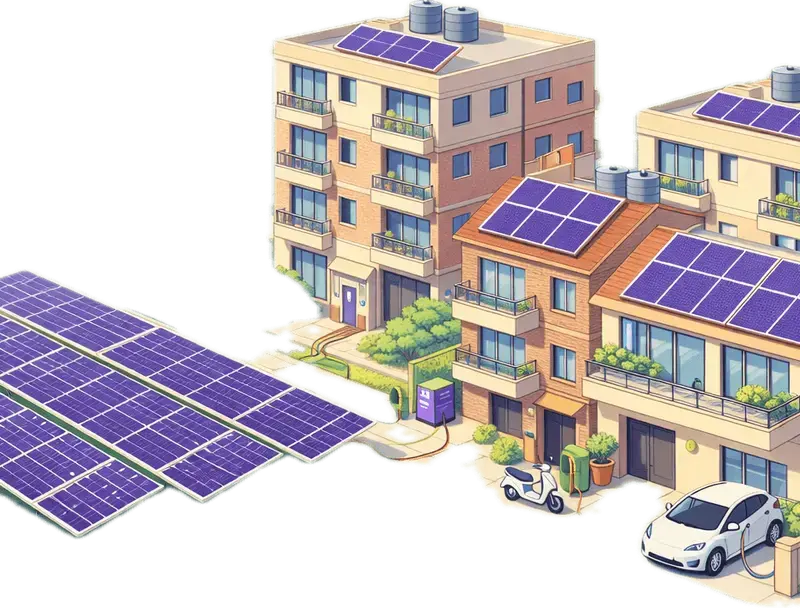
- •Primary Challenge: Limited roof space per resident in high-rise buildings.
- •Best Solutions: Society Rooftop Solar, Community Solar, and Virtual Net Metering.
- •Financial Impact: 30% to 90% reduction in electricity bills depending on the model.
- •Subsidies: Up to ₹78,000 available for Group Housing Societies (GHS) under PM Surya Ghar Yojana.
- •Payback Period: Typically 3–5 years for shared systems.
Living in an apartment in cities like Mumbai, Bengaluru, or Delhi often feels like a compromise when it comes to sustainability. While a standalone homeowner can simply install panels on their private roof, apartment dwellers face a "split-incentive" problem. Who owns the roof? How is the power shared? What if the Resident Welfare Association (RWA) doesn't agree?
In 2025, the landscape for solar for apartments India has shifted dramatically. With the launch of the PM Surya Ghar: Muft Bijli Yojana and evolving state policies on Virtual Net Metering (VNM), residents are no longer locked out of the solar revolution. Whether you want to power the society’s elevators or slash your personal flat’s electricity bill, there is now a path forward.
The Challenge of Solar for Apartments in India
In a typical Indian apartment complex, the roof-to-resident ratio is low. A 10-story building might have 40 families but only 4,000 square feet of roof space. If every resident tried to put up their own small system, the roof would become a jungle of cables and shadows.
However, by thinking collectively, residents can leverage economies of scale. High-rise buildings have high "common area" loads—lighting, water pumps, elevators, and electric vehicle (EV) charging stations. Addressing these first is the lowest-hanging fruit, but modern technology now allows the benefits to flow directly into individual homes as well.
5 Ways Residents Can Go Solar in India
To navigate the options, we must look at both physical installations and financial models. Here are the five primary ways to adopt solar for apartments in India.
1. Society Rooftop Solar (Common Area Load)
This is the most common model in India. The RWA installs a large solar plant on the common terrace. The electricity generated is first used to power common facilities like lifts, park lights, and water pumps.
- How it works: The system is connected via Net Metering. If the solar plant produces more than the common area needs during the day, the excess is fed back to the grid. At night, the society draws from the grid. The "net" bill is paid by the RWA.
- Financial Impact: Since common area maintenance (CAM) charges are shared by residents, a lower electricity bill for the RWA results in lower monthly maintenance fees for every flat owner.
2. Virtual Net Metering (VNM)
Virtual Net Metering is a game-changer for solar for apartments India. It allows a single solar project located on the rooftop to be "virtually" divided among different residents.
- How it works: The RWA installs a large system. Instead of the electricity going only to common areas, the generation is credited to the individual electricity meters of participating residents based on their share of investment.
- The Benefit: You get the credit on your personal DISCOM bill (e.g., BESCOM, Tata Power, or MSEDCL) as if the panels were on your own private roof. This is currently active or in pilot stages in states like Delhi and Karnataka.
3. Community Solar Subscription Model
Don't have enough roof space? Community solar allows you to "subscribe" to a portion of a large solar farm located outside the city.
- How it works: Bridgeway Power partners with developers to build large solar parks. Residents of an apartment can buy or lease a specific number of panels in that park.
- The Benefit: The energy produced by your "remote" panels is credited against your home electricity bill through a community solar arrangement with the utility provider. No maintenance, no roof required.
4. Balcony Solar Panels (Plug-and-Play)
While popular in Europe (especially Germany), balcony solar is an emerging DIY trend in Indian metros. These are small, portable systems (typically 300W to 800W) that hang on your balcony railing.
- How it works: A flexible or lightweight glass panel is mounted on the balcony. It connects to a micro-inverter which plugs directly into a standard 16A wall socket.
- Limitations: In India, wait for your local DISCOM rules regarding "Plug-and-Play" systems. While they can offset small loads like a fan or laptop, they rarely power heavy appliances and may require permissions from the RWA for aesthetic reasons.
5. Group Net Metering (GNM)
Group Net Metering is slightly different from Virtual Net Metering. It allows a consumer who has multiple electricity connections (e.g., a resident who owns two flats in the same city or a developer with multiple buildings) to adjust the solar energy generated at one location against the bills of other locations.
- How it works: If a society has a massive roof on "Tower A" but "Tower B" is shaded, a large system on Tower A can offset the bills for both towers.
Comparison of Solar Options for Apartment Residents
| Option | Ease of Implementation | Primary Beneficiary | Roof Space Required | Status in India (2025) |
|---|---|---|---|---|
| Society Rooftop | High | All residents (via CAM) | Shared Terrace | Widely available; highly subsidized |
| Virtual Net Metering | Moderate | Individual Apartment Bills | Shared Terrace | Selective states (Delhi, etc.) |
| Community Solar | Very High | Individual Apartment Bills | None (Offsite) | Growing in tech-cities |
| Balcony Solar | High (Internal) | Individual Resident | Private Balcony | Nascent/DIY |
| Group Net Metering | Moderate | Multiple Meters/Buildings | Common Terrace | Available in specific states |
Cost Comparison for Apartment Residents
The following table estimates the investment required and potential savings per household for a typical 40-flat complex in a Tier-1 city.
| Model | Estimated Investment (Per Household) | Govt. Subsidy Applicable? | Expected Monthly Saving (INR) | Payback Period |
|---|---|---|---|---|
| Society Rooftop (Common) | ₹15,000 - ₹25,000 | Yes (PM Surya Ghar) | ₹800 - ₹1,200 (on Maintenance) | 3 - 4 Years |
| Virtual Net Metering | ₹60,000 - ₹90,000 | Yes | ₹2,500 - ₹4,500 (Home Bill) | 4 - 5 Years |
| Community Solar Sub. | ₹50,000 - ₹80,000 | Varies by state | ₹2,000 - ₹4,000 | 5 - 6 Years |
| Balcony Solar (1kW) | ₹45,000 - ₹55,000 | No | ₹500 - ₹800 | 7+ Years |
Disclaimer: Prices are estimates for 2025-26 and vary based on component quality and state taxes.
Real-Life Example: The "Green Towers" Success Story
Location: Sector 45, Gurgaon (2025) Setup: A residential society with 64 flats and a common terrace area of 6,000 sq. ft.
The RWA was paying nearly ₹1,80,000 per month for common area electricity (lifts, 24/7 water pumps, and basement lighting). They consulted Bridgeway Power to install a 100kW Rooftop Solar System.
- Total Project Cost: ₹48,00,000
- Subsidy Received: ₹4,50,000 (Group Housing Society cap)
- Net Cost: ₹43,50,000
- Results: The society's common area bill dropped to ₹20,000 per month.
- Impact on Residents: Each flat owner saw a reduction of ₹2,500 in their monthly maintenance bill. The society also installed four EV charging stations powered entirely by the solar surplus during the day.
You can calculate your potential savings for your own society using our solar calculator.
Talk to a solar engineer — not a salesperson
Check whether we install in your area, then get your answer on WhatsApp. No forms, no call centre.
What would solar save on YOUR bill?
The Role of PM Surya Ghar Yojana for Apartments
In 2024, the government launched the PM Surya Ghar Muft Bijli Yojana, which specifically includes provisions for Group Housing Societies (GHS) and Residential Welfare Associations (RWA).
- Subsidy for Common Areas: The scheme provides a subsidy of ₹18,000 per kW for common area lighting and EV charging, capped at 500kW.
- Individual Metering: If the society chooses to use the roof for individual household connections (Virtual Net Metering), each household can claim a subsidy of up to ₹78,000 for a 3kW share.
For many societies, this makes the ROI (Return on Investment) faster than ever before. Bridgeway Power assists RWAs in the entire subsidy application process, ensuring the funds are credited directly to the society's account.
Steps for an RWA to Go Solar
- Technical Audit: Bridgeway Power conducts a site visit to check shadow-free area and roof health.
- Special General Body Meeting (SGBM): The RWA must pass a resolution to install solar. We provide the presentation deck to help explain the benefits to residents.
- Vendor Selection: Choosing an experienced partner like Bridgeway Power ensures 35+ years of engineering excellence and tier-1 components.
- Net Metering Application: We handle the paperwork with the local DISCOM (BSES, MSEDCL, etc.).
- Installation & Commissioning: High-speed installation with non-penetrating roof mounts to protect the building's waterproofing.
Frequently Asked Questions
Can I install solar on the roof if I live on the 1st floor of a 10-story building?
Yes, but since the roof is a "common area," you generally cannot occupy it for your private use without RWA permission. The best way for 1st-floor residents to benefit is through a Virtual Net Metering model or a society-wide solar installation that reduces maintenance costs.
What happens if the society building is old?
Before installing solar for apartments India, we conduct a structural integrity test. If the roof is weak, we use lightweight aluminum structures or suggest basic repairs. Most modern solar mounts are non-penetrating, meaning we don't drill holes that could cause water seepage.
Is maintenance a headache for apartment solar?
Not with Bridgeway Power. We offer Annual Maintenance Contracts (AMC) where we handle panel cleaning, inverter health checks, and performance monitoring. Residents don't have to lift a finger; everything is managed through a digital dashboard.
Does solar increase the resale value of a flat?
Absolutely. In cities like Bengaluru and Pune, "Green Buildings" command a 5-10% premium in resale and rental markets. A lower monthly maintenance bill is a huge selling point for prospective buyers.
How much space is needed for a 10kW society system?
A 10kW system typically requires about 800 to 1,000 square feet of shadow-free rooftop area. Most mid-sized apartment blocks have ample space for at least 50kW to 100kW.
Conclusion: Take the First Step with Bridgeway Power
Going solar in an apartment is no longer a logistical nightmare. Whether your goal is to eliminate common area electricity bills or to provide 24/7 green energy to every flat, the technology and policy frameworks are ready.
With 35+ years of experience in the Indian energy sector, Bridgeway Power specializes in navigating the complexities of RWA approvals and DISCOM regulations. Don't let your apartment’s roof space go to waste.
Ready to transform your society? Contact Bridgeway Power for a free site audit and solar feasibility report today.
FAQ
Can an apartment owner install rooftop solar in India?
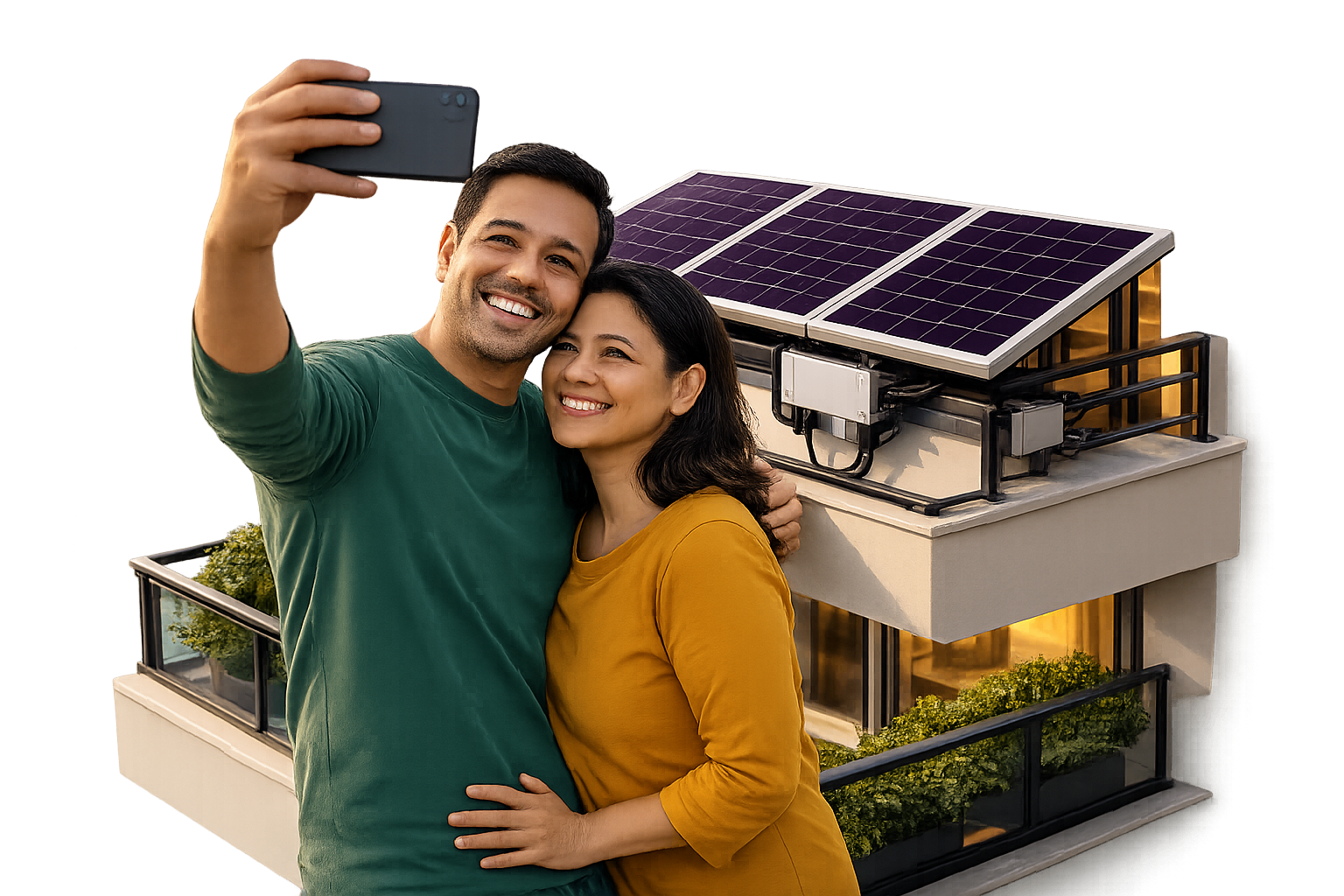
Yes, but only via the housing society (RWA/AOA) — the roof is common area. Individual balconies can host micro systems with RWA NOC. RWA-scale rooftop systems get the full PM Surya Ghar central subsidy plus ₹18,000/kW extra as Delhi RWA capital subsidy.
How is the electricity shared among flats?
Three models: (1) common-area only — solar feeds lifts, lighting, pumps, everyone benefits via lower society charges; (2) virtual net metering — units credited to individual flats proportionally; (3) hybrid — common load + peak shaving for specific flats.
What subsidy does the society itself get?
Delhi group housing societies get ₹18,000/kW capital subsidy on top of the central PM Surya Ghar for common-area systems. For a 30 kW society system that is an extra ₹5.4 lakh direct benefit.
How long to get RWA approval?
Realistic timeline: 2–4 months of committee meetings and one AGM vote. Bridgeway runs a free financial modelling session with the RWA to compress this.
Every 1 kW of solar on your roof offsets 1.5 tonnes of CO₂ per year
That's 40 trees planted — every year, for 25 years.
A typical 5 kW home system offsets 187 tonnes of carbon over its lifetime. That's equivalent to taking 8 cars off the road.
See your impact →How much can you save with solar?
Enter your electricity bill → get system size, subsidy amount & payback period
Get StartedGo solar without owning a rooftop
Community Solar gives commercial & institutional consumers the same savings — zero capex, zero roof needed.
Or get a free solar quote
Tell us about your rooftop — we'll call with exact savings for your home.
Related Articles
Lock In a Fixed Electricity Rate for Your School — Before Delhi Tariffs Rise Again
Lock in your school's electricity rate before Delhi tariffs hit ₹16/unit. Learn how Community Solar offers zero-capex savings of ₹10L+ annually.
Read moreWhat Delhi's Solar Policy Means for Apartment Owners and Non-Rooftop Residents
Discover how Delhi's 2026 solar policy enables apartment owners to save 40% on bills using Virtual Net Metering. No roof access or RWA NOC required.
Read moreVirtual Net Metering (VNM) in India: How It Enables Community Solar for Homeowners
Learn how Virtual Net Metering (VNM) enables community solar in India. Discover how DERC and RERC policies allow flat owners to share solar credits without individual rooftops.
Read moreRelated guides
Delhi Electricity Rate 2026
BSES & Tata Power per-unit rates, PPAC, subsidy — sourced from DERC.
ExploreDelhi Solar Policy 2026
Free rooftop solar up to 3 kW for homes under 400 units. Eligibility & apply.
ExploreSolar Panel Price in Delhi
Live 2026 rooftop prices in Delhi after ₹1.56L subsidy. 1,200+ installs.
ExploreSolar Company in Gurgaon
Gurgaon's rooftop solar installer — 800+ systems, ₹78K PM Surya Ghar subsidy.
ExploreSolar Company in Noida
Noida & Greater Noida rooftop solar — 500+ installs, ₹1.08L stacked subsidy.
ExploreSolar Panel Price in Faridabad
Live 2026 Faridabad prices after ₹78K PM Surya Ghar subsidy. 350+ homes.
Explore